Custom Wigs and Haircuts: Plan Samples, Fit and Finish
A custom wig haircut should follow confirmed fit, parting and daily routine before the final shape is cut. That order makes the result more wearable than copying a photograph. It lets the stylist assess placement, movement and grooming needs before reducing length or removing weight. A clear brief also replaces a vague request for something that looks natural. It narrows the important choices before you commit.
Hypothetical planning example: allow three to five working days for making after choices and measurements are arranged. If an event is ten working days away, reserve separate time for consultation, production, fitting and finishing. This is a calendar exercise, not a promise about appointments, production, delivery or stock. Write each date down before treating the event as a deadline. It is not a service promise.
This guide explains how to prepare samples, test fit and choose a cutting direction. It compares custom and ready-made options, then covers budget, care and health boundaries. You will also find questions for a salon conversation and a final decision checklist. The aim is a specific plan that you can revisit after seeing the piece in motion. It also identifies what should be confirmed.
Canvas Texture Editorial · 2026-10-16
1. What a custom wig haircut actually involves
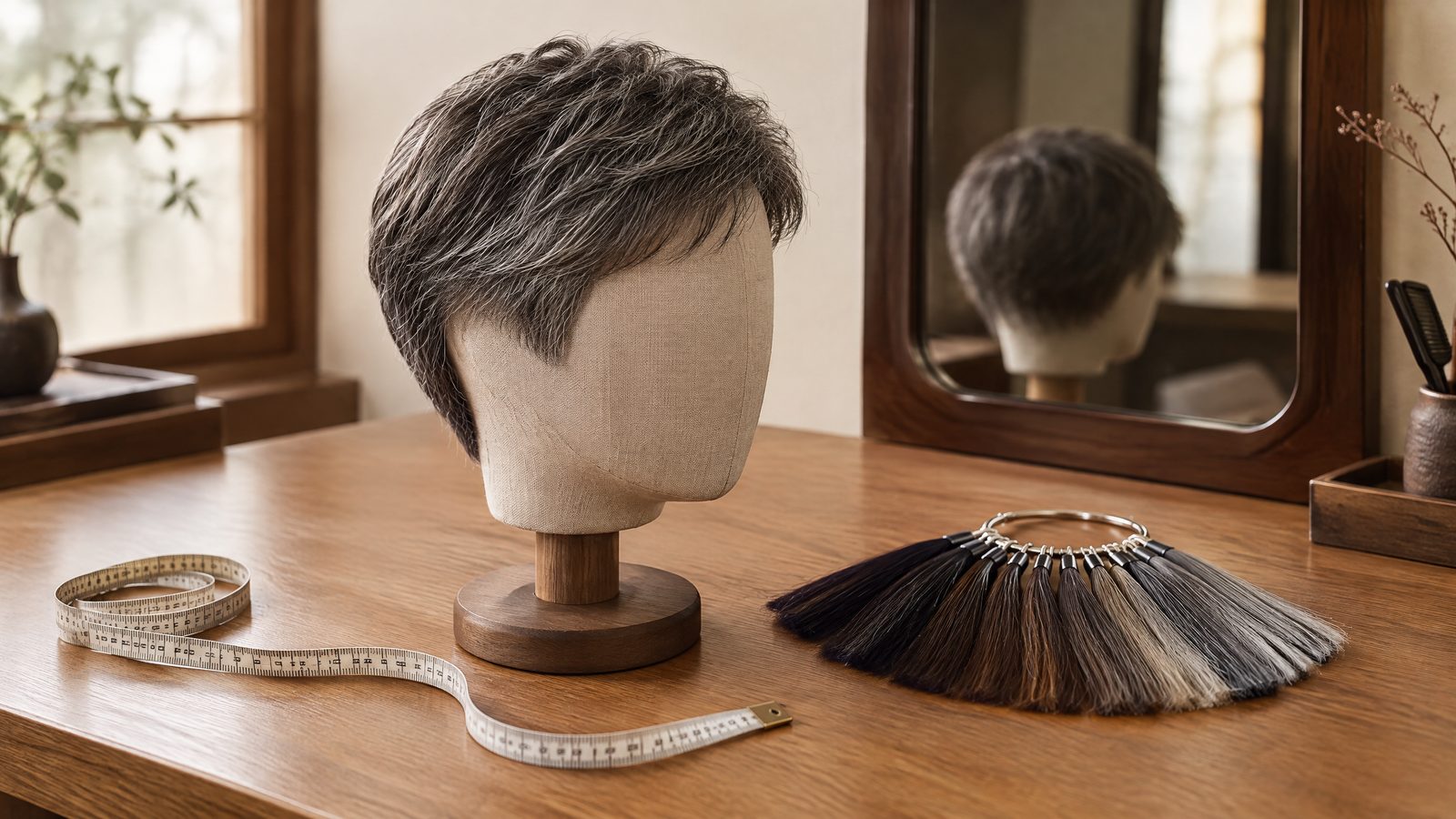
A custom wig haircut is a sequence of decisions, not one quick trim. Begin with the silhouette, texture, colour direction, grey proportion and preferred parting. Samples and head measurements then turn those preferences into a workable brief. After the piece is made, a return fitting checks it on your head. The fringe, sides, neckline and movement should be refined only after that check.
For men, the useful question is not whether a style looks current. Ask whether it suits your wardrobe, glasses, facial hair and morning routine. A quiet side part may require less work than a high-volume quiff. A shorter nape can sit more cleanly above a collared shirt. These choices help create a finish that feels considered, rather than borrowed from an unsuitable reference image.
The haircut connects the piece to the way you already present yourself. Cap position affects where a fringe lands. Density influences how much layering makes sense. Fibre affects the products and tools that may be appropriate. Planning these limits before cutting protects the overall shape. It also gives you precise language when discussing a change during the fitting. This helps prevent needless re-cutting later.
2. How to prepare samples and a clear style brief
Bring one or two reference images, then say what each image contributes. One may show the fringe, another the side profile, and another the colour direction. A celebrity photograph is not a complete instruction. Hairline, head shape, density and lighting vary. A focused brief gives the stylist features to test, rather than an image to imitate without question. Use daylight comparisons when possible.
Before visiting, note your normal parting and the areas you want covered. Mention glasses, helmet use, commuting, perspiration and whether you tuck hair behind an ear. Say how much styling time feels realistic. A five-minute routine calls for different choices than a thirty-minute routine. These details matter most when the desired change is intended to be discreet. Note anything you do not want.
Decide whether you prefer a darker overall tone, a visible blend or a softer temple transition. View samples under salon lighting, then ask how the shade may appear outside. Colour names alone are too broad for a final decision. The chosen sample, agreed specification and professional assessment should guide the result. Write down three priorities and three boundaries before the appointment.
A practical list might prioritise a familiar parting, light movement and an easy neckline. It might rule out high shine, a short fringe and lengthy morning styling. That list gives the stylist a basis for trade-offs. For example, extra fringe length may preserve a familiar look, but it can need more daily direction. Specific limits make the haircut discussion more useful.
- Bring reference images with notes on the fringe, profile or colour you prefer.
- Describe your normal parting, eyewear and movements during an ordinary day.
- State the time, products and heat tools that belong in your actual routine.
- Ask to view colour and density from the front, sides and back before deciding.
3. Why fit must come before the final cut
Fit means more than a head measurement. It includes front-edge placement, temple contact and stability at the back. A piece may look polished on a stand yet feel wrong when you look down, speak, wear glasses or turn. During fitting, inspect the front, temples, ears and nape. Those areas establish the position from which the final cut should begin. They are the cut’s foundation.
Use your ordinary parting, then turn left and right and look down briefly. If the piece shifts, pinches or opens a noticeable gap, identify the location. Say which area moves and when it moves. This gives the stylist a testable fitting concern. Do not use a dramatic cut to conceal an unresolved fit problem. Shorter sides can expose a gap, while extra weight can create a heavy outline.
Settle placement before discussing adjustments, then shape the hair around that position. This sequence protects comfort and proportion. The American Academy of Dermatology says pulling styles can contribute to traction alopecia 1. It adds that pain may indicate excessive tension. This information is not a fitting diagnosis. Pause wear and seek clinical advice for pain, irritation or persistent shedding. Act promptly.
For the sample-to-measurement sequence, see the OWNSTRAND custom human hair wig Hong Kong guide. It describes sample viewing, style and grey discussions, head measurements, then a return for fitting and finishing. Treat it as a process guide, not a guarantee of appointment availability. Confirm your selected service, timing and scope directly before making plans. Ask questions that affect your own decision.
4. Custom or ready-made: which route suits you?
Custom and ready-made wigs address different priorities. A ready-made piece starts with an existing design and specification. It can suit someone who values immediate comparison and finds a comfortable option quickly. A custom route starts with agreed choices and measurements. It can suit someone who wants more discussion of fit, samples and the finishing appointment. Neither label guarantees a better appearance.
Compare the actual hairline, cap feel, density, colour, length and styling needs. A catalogue entry does not confirm local availability or an immediate try-on. A custom route also requires time, clarification and an agreed quotation. Choose according to priorities, not the prestige of the word bespoke. A simple scorecard can keep the decision concrete rather than emotional. Compare like with like.
Weight the factors that matter most to you. These may include measured fit, speed, sample access, price clarity or styling support. The scores are a personal decision aid, not a product rating. Ask whether a ready-made option can be seen, measured or adjusted locally. Ask whether the custom route allows enough time to review samples and confirm a finishing appointment.
The ownstrand-wigs.com · custom vs ready-made wigs guide compares shape, hairline, colour, cap feel and styling needs. Use those categories as a checklist, then apply your own budget and timing. One route is not inherently more premium in practical terms. The better route is the one whose fit, timing and compromises you can explain clearly. Record the answer beside each option.
| Decision factor | Custom route | Ready-made route |
|---|---|---|
| Starting point | Agreed brief and measurements | Existing design and specification |
| Main advantage | More room to discuss fit and finish | Faster comparison when available |
| Main trade-off | Requires planning and an expected making period | May require compromise on fit or details |
| Best question | What must be measured or refined? | What is available and confirmed now? |
Choose the route whose compromises you understand before the hair is cut, not the route with the grander label.
5. What timing and budget should you plan?
OWNSTRAND lists three named custom references. 遞針旋 is HK$2,780, 全遞針 is HK$3,280, and 瑞士網 is HK$5,680. These figures are starting references for named constructions, not a promise for every item. Ask what the selected specification includes. Confirm the current quotation before deciding. The published making estimate is approximately three to five working days after choices and measurements are arranged.
That estimate concerns making, not shipping or guaranteed collection. If the date matters, ask when the estimate begins and which fitting appointments are available. Ask whether the chosen style requires any additional arrangement. Keep a written line for consultation, measurement, estimated making window, fitting and event date. This record makes assumptions visible and reduces the pressure to rush a final haircut.
Here is a hypothetical calendar example. Imagine a Monday consultation, a three-to-five working-day making estimate, and an event the following week. Ask about the earliest possible fitting before confirming event styling. The example plans time only. It does not predict production, stock, shipping or salon availability. A haircut is easier to refine when the fitting is not forced against an immovable date.
| Budget item | What it may cover | What to confirm |
|---|---|---|
| Custom reference | A named construction and quoted service | Current price and included work |
| Fitting visit | Trying on and discussing practical adjustments | Appointment timing and eligibility |
| Haircut finish | Fringe, sides, length and blow-dry decisions | Exact scope and any extra charge |
| Ongoing care | Suitable products, tools and routine | Fibre instructions and safe methods |
6. How the fitting becomes a wearable haircut
Start with the whole outline before chasing small details. Check front-to-back balance, temple width and nape length. Then test the familiar parting. A stylist can assess the silhouette before refining fringe edges or isolated strands. This order avoids making one area look good while the rest feels disconnected. Describe how you move through the day instead of posing only for the mirror.
Walk a few steps if practical, turn your head and put on your glasses. Demonstrate how you brush the hair if you usually sweep it back. A cut that works only in a fixed pose can disappoint during work, commuting or conversation. Name the result you want when asking for change. “Less weight at the temple” gives a clearer direction than “make it natural.”
Ask to keep enough length for tucking behind the ear. Avoid the vague instruction, “Do not cut too much.” Specific requests can be tested after each adjustment. Collection finishing may include washing, cutting and blow-drying for a completed custom item, subject to confirmed arrangements. Do not assume every human-hair piece suits bleaching, perming or a particular heat setting. Confirm the selected item and method before chemical or heat work.
7. Care, comfort and health boundaries
A good finish needs a routine you can maintain. Ask which products suit the actual fibre, how often washing is appropriate, and how the piece should be dried. Follow the manufacturer’s directions for heat, chemicals and storage. Human hair is not a universal care rule. Construction, condition, treatment history and tool use all affect what may be suitable. Write the agreed routine down.
Check whether the front, temples or nape feel tight. Notice redness, pain, itching or repeated movement. Do not force yourself to tolerate discomfort for a particular look. Request an adjustment or pause wear if the piece feels wrong. Comfort is practical evidence about fit, even though it cannot identify the medical cause of a symptom. Note which movement triggers discomfort.
The NHS says that hair loss can have different causes 2. It advises anyone who is concerned to seek medical advice. A wig consultation can discuss appearance, fit and styling. It cannot diagnose a condition, promise regrowth or replace clinical care. Commercial appearance services cannot assess the cause. If symptoms persist, a clinician is the appropriate source of individual health guidance.
A companion can help compare photographs, remember questions or support a private appointment. They should not take over choices about fit, comfort or style. The wearer’s priorities remain central. A short written record of answers can help after the visit. It can also list any follow-up questions. Later adjustments then focus on the agreed brief instead of an uncertain memory.
8. A Hong Kong salon decision checklist
Before confirming a custom wig haircut, make the decision visible. Note the chosen shape, colour direction, grey preference, parting, expected length and daily styling goal. Add the measurement process, making estimate, fitting appointment and price questions. A short record prevents a rushed conversation becoming an uncertain memory. It also gives a salon a practical brief to work from. Keep it with your references.
Mention your usual sideburn shape, beard length, neckline preference and work setting. A believable finish often comes from continuity with familiar grooming details. The aim is not to erase every difference. It is to make the piece sit comfortably within your usual presentation. Small choices around the temples and nape can matter more than a dramatic change in overall length.
The comparing wig fitting Hong Kong options page explains the return fitting. It covers trying on a completed custom item, checking fit and discussing practical adjustments. It also notes washing, cutting and blow-drying for eligible OWNSTRAND custom work. Confirm the current scope before booking. Use the fitting to establish what is fixed, what can change, and what needs a later decision.
End the consultation with questions you can answer. What shape is being requested? Which details are fixed, and which wait for fitting? What price and services are confirmed? When does the making estimate begin? Who should be contacted if the fit becomes uncomfortable? Write the answers down before you leave. Clear answers separate a useful consultation from a rushed purchase.
Use this final checklist before leaving: confirm what is measured, what is made, what is included and what remains open. Ask whether the stated time is making time or delivery time. Ask how movement will be tested during fitting. Choose the route that serves your actual priorities, rather than an imagined perfect photograph. OWNSTRAND is a related brand resource; Canvas Texture provides this separate men’s hair-planning perspective.
A wearable haircut is an agreement between fit, movement and the routine you can actually keep.
Sources and useful reading
[1] American Academy of Dermatology: Hairstyles that pull can lead to hair loss
[2] NHS: Hair loss
Continue reading
Continue with natural hair planning: Korean Men's Perm
Another related decision guide: Wig Prices and Online Shopping: Compare the Whole Plan
Read our studio background: Vit So and Canvas Texture
Plan your Canvas Texture hair consultation
Bring your style references, usual parting and daily routine to a Canvas Texture hair consultation. We can discuss how a planned haircut may connect with your men’s grooming goals. Wig fit, measurements, construction details and collection arrangements must be confirmed separately with OWNSTRAND.
Canvas Texture WhatsAppFrequently asked questions
How long does a custom wig haircut take in Hong Kong?
Published OWNSTRAND information gives an approximate three-to-five working-day making period after the relevant choices and measurements. That period is production time, not shipping or a guaranteed collection date. Confirm the start point and fitting appointment directly.
Should the wig be cut before or after fitting?
Fit should be checked first. Once placement, movement and comfort are understood, the stylist can refine the fringe, sides, neckline and overall weight. This reduces the risk of cutting around an unresolved cap-position problem.
Can every human-hair wig be bleached or heat-styled?
No universal rule should be assumed. Suitability depends on the selected fibre, construction, condition, previous treatment and tool settings. Follow product instructions and obtain a specific assessment before chemical or heat work.
Can a salon diagnose hair loss during a wig consultation?
No. A salon can discuss appearance, fit and styling. Hair loss has multiple possible causes. If you are concerned, have pain, irritation or ongoing shedding, consult a qualified clinician rather than seeking a diagnosis from a shop.