Hair Loss and Wig Planning: Separate Styling from Care
A wig plan can improve presentation, but it cannot identify why hair is changing. For a Hong Kong man, begin with the setting, coverage area, and routine you want. Separate that styling choice from questions about symptoms, treatment, or scalp health. This approach gives the salon a clear appearance problem to solve. It also prevents a promising mirror result from being mistaken for care advice.
Use a labelled planning assumption before comparing pieces. Assume four office days, one evening event, and ten minutes each morning. Bring one recent outdoor photo and one indoor photo with glasses. The numbers describe a hypothetical routine, not a forecast of hair loss. They tell the stylist whether a quick adjustment matters more than a different texture. Change the assumption if your actual week looks different.
This guide turns that assumption into an appointment checklist. It covers preparation, coverage, fibres, fitting movements, and a fallback plan. It also explains when the next action is a salon question, a product instruction, or medical support. Each section asks for an observable detail rather than a vague promise. Record the answers in one note, then compare only options that meet your stated use case.
Canvas Texture Editorial · 2026-10-16
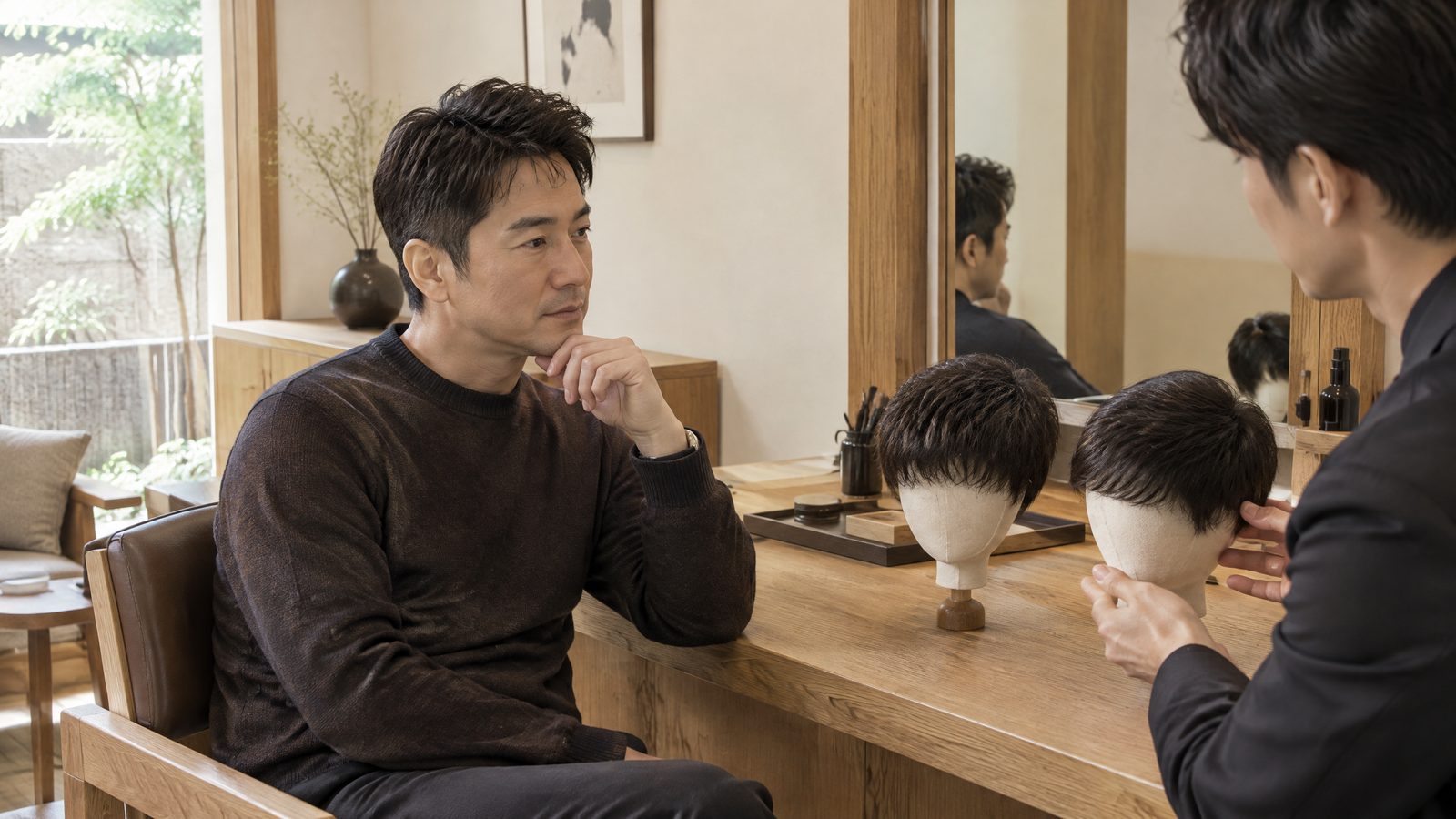
What should you decide first?
Start with the situation you want to handle, not a product name. You may want less crown visibility in the office. You may want a finished outline for dinner or a close-cropped look on video calls. Those are different styling jobs. Write the three situations in order of importance. The first situation determines which view, movement, and care step deserve the longest test during fitting.
Separate appearance, sensation, and maintenance before viewing samples. Appearance includes parting, front edge, density, and colour. Sensation includes pressure near the temples, ears, and nape. Maintenance includes brushing, washing, storage, and morning adjustment. Give each category a rank from one to three. If comfort ranks first, reject an impressive style that distracts you after ten minutes. That choice prevents later regret over a detail visible only in photographs.
Choose two reference photographs with a job. The first should show your usual parting and length. The second should show a change you would genuinely consider. Add a note beside each image. For example, circle a low fringe, softer grey at the side, or a shorter nape. The stylist can then explain whether that effect comes from the cut, the fibre, or your remaining hair.
See the OWNSTRAND chemotherapy wigs guide. Use it to list appearance questions before booking. Bring those questions to the appointment with your photographs. Keep any treatment question for your healthcare team. This division matters because an attractive style does not answer whether a material or fixing method suits your circumstances. The next action is to identify the one visual feature you would not trade away.
Why must styling stay separate from care?
Hair loss can have different causes, so appearance cannot establish one. The NHS advises seeing a doctor when hair loss is worrying 1. A salon can assess visible blending, shape, and fit. It cannot diagnose a condition or predict what will happen next. Record the date and pattern of a change for your clinician. Bring only practical limits to the styling conversation, such as wearing hours or areas to avoid.
Use separate question lists for the two conversations. Ask a clinician about sudden change, pain, broken skin, treatment effects, or scalp symptoms. Ask the salon about cap edges, colour placement, trimming, and care instructions. Do not ask a stylist to interpret a symptom from the mirror. Do not ask a clinician to select a fringe. Distinct lists make it obvious who can answer each point, and they stop one appointment from carrying an impossible decision.
Pain is a stop signal, rather than a challenge to tolerate. The American Academy of Dermatology notes that prolonged pulling can contribute to traction alopecia 2. Remove or loosen a style that hurts or pulls. Persistent discomfort belongs with a healthcare professional. During a fitting, name the exact contact point. “Pressure behind my left ear” gives the stylist a usable adjustment, unlike “It feels wrong.”
Keep a simple boundary note on your phone. Label one column “appearance decisions” and another “health questions.” Put colour, coverage, and routine in the first column. Put symptoms, prescribed products, and treatment timing in the second. Show the relevant column at each appointment. The result is a more focused discussion and a written trail of what each professional actually addressed.
A useful wig plan improves presentation without turning a styling chair into a medical consultation.
How do you prepare for a men’s wig consultation?
Prepare a one-page wearing profile before you go. Note your usual parting, preferred length, and the area you want covered. Add typical wearing hours and the clothing you wear most often. A collared work shirt can alter how a nape length looks. A motorbike helmet can change what feels practical. These observations help the stylist compare pieces against your actual day, rather than against a generic “natural” result.
Bring two photographs taken in different lighting. One can be a daylight image with your normal hairstyle. The other can show office lighting, evening lighting, or a video-call frame. Save them without filters if possible. Colour that seems right against a phone screen may read differently beside your skin and glasses. Ask to view the front, side, and crown under the available lighting. Record which shade works in both views, not just one.
Pack the accessories that touch your head or face. Glasses, headphones, a helmet, a cap, and a mask can reveal competing edges. Put them on during the fitting. Notice whether the temple arm catches hair or the mask loop lifts a side section. If an item conflicts with the front, decide what changes. Alter the style, change the accessory, or reserve the piece for different occasions. That is a workable trade-off, not a fitting failure.
Ask the stylist to repeat back your top priority before samples appear. Then write down the proposed size, colour family, length, and alteration. Photograph the label only if the salon permits it. A written record stops a later quotation from being compared with a different configuration. It also lets you return after a pause. Ask which listed detail changed from the version you tried.
- Photographs: one daylight view and one ordinary indoor view.
- Routine: planned wearing hours, morning time, and regular activities.
- Accessories: glasses, headphones, helmet, cap, or mask.
- Questions: the visual feature to preserve and the care step you will actually follow.
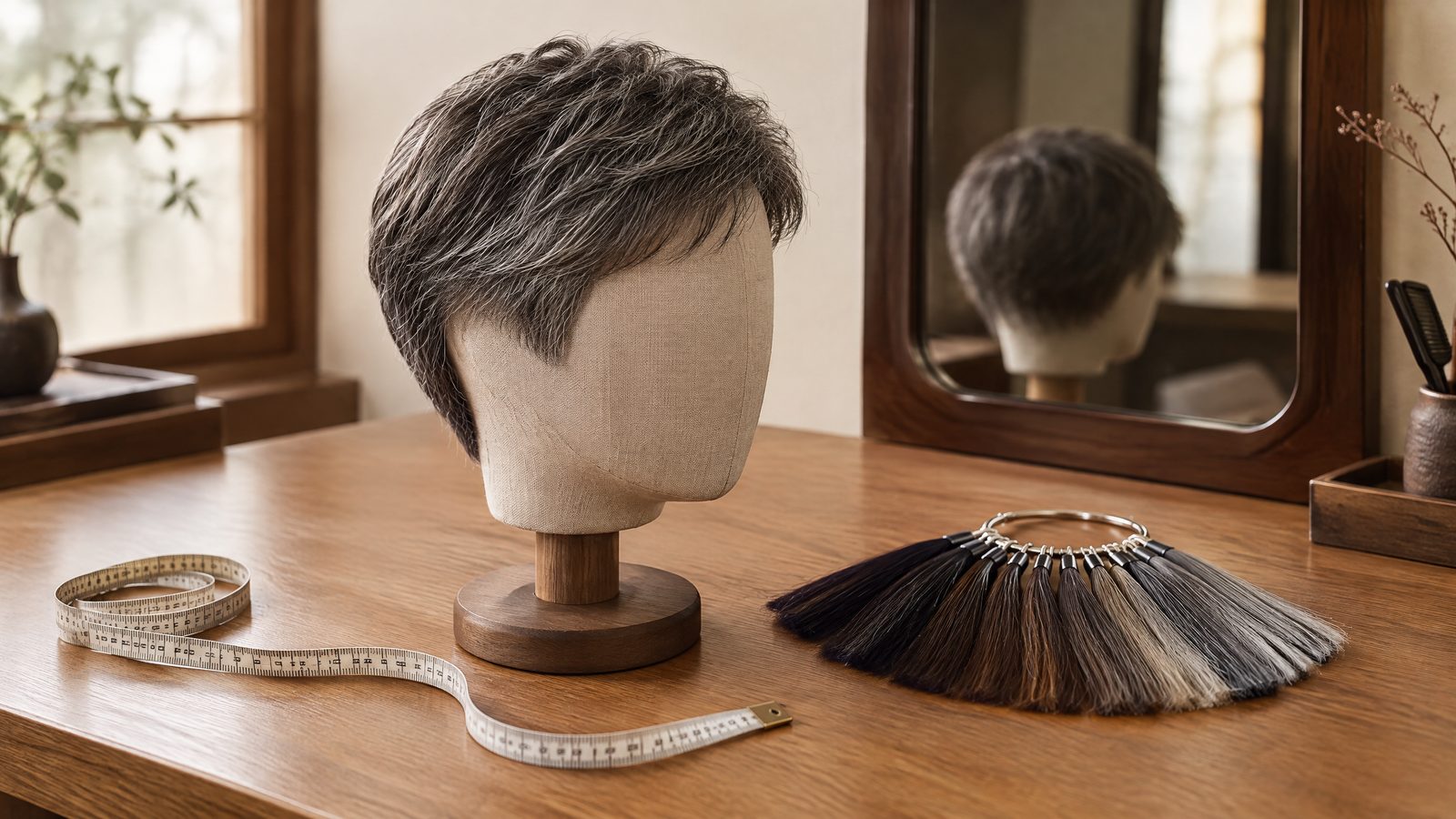
Which cap and coverage choices matter?
Coverage should follow the area you want to manage. A topper may address a focused crown concern. A partial piece may work when existing hair will provide a visible blend. A full cap creates a more consistent overall outline. None is automatically the better option. Start by drawing the visible area on a simple head sketch. The sketch tells the stylist whether the decision concerns local coverage, a transition zone, or the full silhouette.
Ask what each construction term changes in ordinary use. Lace front, monofilament, hand-tied, and machine-made describe features of the base. They do not automatically promise the same appearance or feel. Ask where the parting can sit, how the edge behaves, and what care the construction needs. Compare those answers with your planned hairstyle. A side part may make the front edge important, while a fringe may shift attention elsewhere.
Check fit beyond the straight-on mirror view. Sit down, stand, look at a phone, and turn both ways. Notice the forehead, temple, ear, and nape areas separately. If one zone feels distracting, state the zone and movement. Ask whether position, size, trimming, or a different construction is the relevant change. That answer tells you whether to continue with the sample or compare another coverage approach.
Plan for visible changes without treating them as a prediction. If your density changes, the original blend may need reassessment. Keep the head sketch, measurement date, and fitting notes together. Bring them back if the outline no longer matches the first goal. A new evaluation can then begin with the coverage area that changed. It need not restart every styling choice from zero.
| Option | Useful planning question | Trade-off to test |
|---|---|---|
| Topper | Is the crown the main visible area? | Check blending with existing hair. |
| Partial hairpiece | Will nearby hair create the intended transition? | Check colour and edge placement. |
| Full cap | Do you want one consistent overall outline? | Check coverage, fit, and daily routine. |
How should you compare hair fibres?
Compare fibres through the routine you can repeat, not through a prestige label. Human hair may offer styling flexibility and natural movement. Synthetic fibre may hold a designed shape with fewer daily steps. Blended options need their own instructions. Ask to handle the specific item and describe your normal morning. If you never use a dryer, a routine requiring frequent restyling may be a poor match, whatever the fibre name.
Treat heat guidance as item-specific. Do not assume that human hair can be permed, bleached, or heated in every way. Do not assume every synthetic fibre tolerates heat. Ask for the manufacturer’s instructions for the exact model. Write down the tool, temperature guidance, and prohibited treatments if they are supplied. If instructions are unavailable, choose a style that needs no unverified heat step. That decision protects the piece and simplifies your routine.
Assess colour and density before deciding that one fibre looks more natural. A correct colour family can matter more than a costly label. View the parting, sideburn area, and nape from conversational distance. Then step back and inspect the overall silhouette. If the front looks good, check density against your normal style. Ask whether trimming or another option will solve the mismatch. Use the answer to compare like with like.
Make a scorecard with four headings: appearance, comfort, maintenance, and budget. Give each option a score from one to five. Add one observed reason beside every score. Record two adjustments after glasses, rather than felt odd. Choose the option with the fewest deal-breaking notes, not the highest single score. Bring the scorecard to a return fitting, because it shows which compromise you knowingly accepted.
| Factor | Human hair | Synthetic or blended |
|---|---|---|
| Daily look | May offer styling flexibility. | May keep a designed shape. |
| Care question | What styling steps will I repeat? | Which item instructions limit heat? |
| Fitting test | Does the movement match my reference? | Does the shape work after normal movement? |
| Decision basis | Choose for routine and feel. | Choose for consistency and ease. |
What should you check during fitting?
Test a fitting as a sequence, not a photograph. Start seated, then stand and walk a few steps. Lower your chin as if checking a phone. Turn to both sides as if greeting someone. Put on your glasses or headphones. Look at the front, each temple, and the nape after every movement. Note the first movement that changes the look or feel. That observation identifies the adjustment worth discussing first.
Ask before any trimming begins. A shorter fringe, reduced density, or reshaped sideburn can alter the balance of a men’s cut. State what you want preserved, then ask what the proposed cut will change. If a mirror view feels unfamiliar, request a pause rather than a dramatic correction. Take permitted photographs from several angles. Compare them later with your reference images and fitting notes. The next action can be a small adjustment, another sample, or time to consider.
OWNSTRAND describes viewing samples, head measurement, custom making, and a return fitting. Its stated three-to-five-working-day estimate applies to that defined custom-making option. It is not a stock-item or delivery promise. Ask which option the estimate covers, when the schedule starts, and what return fitting includes. Those answers determine whether the arrangement suits an event date. Confirm current scope, availability, and quotation before relying on a calendar.
- Move: sit, stand, turn, lower your chin, and walk.
- Inspect: front edge, temples, ears, and nape after each movement.
- Record: size, placement, alteration, care instructions, and remaining question.
- Decide: adjust, compare another sample, or pause before confirming.
How can you plan for changing needs?
Build a main plan and a fallback rather than chasing one perfect solution. The main plan might be a short piece for work meetings. The fallback might be a cap, scarf, or a simpler style for a lower-energy day. This is a styling contingency, not a prediction about treatment or hair loss. It gives you an option when time, comfort, or weather changes. Write which situations trigger the fallback, so you do not decide under pressure.
For a preparation checklist, see ownstrand-wigs.com · wig before chemotherapy. Use the page to organise photographs, colour references, and fit questions. Keep treatment decisions with your medical team. In the four-day hypothetical week, test the chosen piece on the longest planned day first. If it requires more than the assumed ten-minute adjustment, revise the routine or compare another style. The result changes the plan without making a claim about your health.
Review your notes after the first fitting, before committing. Mark each item as works, needs clarification, or unsuitable. For example, an office-ready front may work, while a helmet conflict needs clarification. A high-maintenance style may not suit a ten-minute morning. Take only the unresolved items to the next conversation. This stops the second appointment from repeating the whole comparison and focuses it on the decision still open.
A fallback style is planning discipline, not evidence that the first choice has failed.
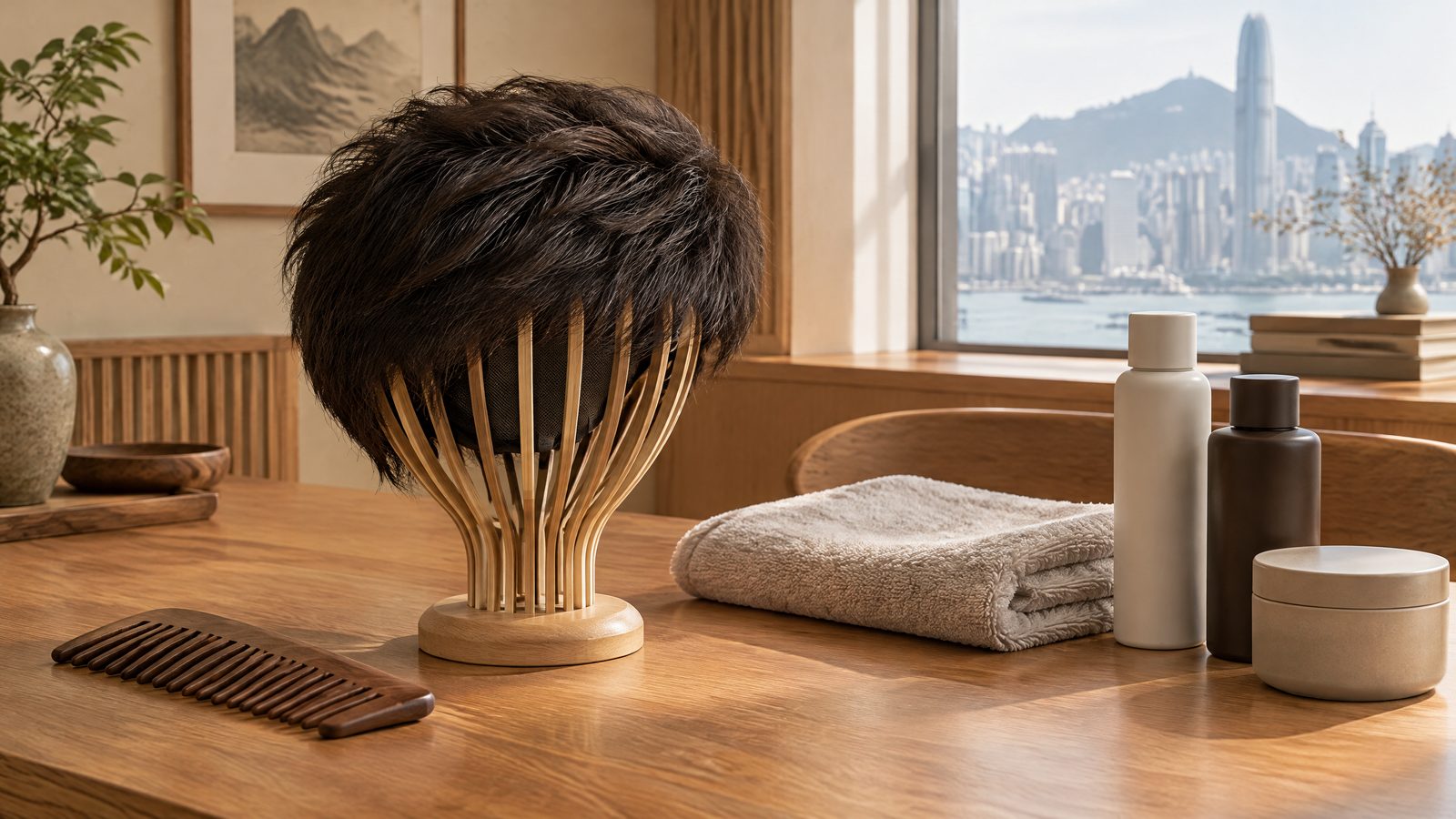
Where can Hong Kong men get practical support?
A men’s salon can translate a broad concern into a wearable shape. Start with your face outline, current haircut, visible density pattern, and usual routine. Ask which details can change during a haircut and which require a different piece. That distinction prevents a custom order from being used to solve a trimming issue. It also shows whether you should book a styling consultation, arrange sample viewing, or wait for more information.
For coverage-focused reading, see comparing alopecia wigs options. Use it to prepare questions about coverage area, daily styling, and fitting. It cannot establish why hair has changed. If loss is sudden, painful, or distressing, seek medical support as well. Let the question determine the next step. A stylist can test the outline. A clinician can assess a health concern. The separation protects both discussions.
OWNSTRAND is a related same-owner brand resource, not an independent endorsement. Its published custom information can help frame service questions. It does not replace an in-person fit check or current confirmation of price and scope. Before you confirm, ask what is included, which measurements will be kept, and which care instructions apply. Keep the answers with your photographs and scorecard. That file makes a later adjustment easier to discuss accurately.
Sources and useful reading
[1] NHS — Hair loss
[2] American Academy of Dermatology — Hairstyles that pull can lead to hair loss
Continue reading
Continue with natural hair planning: Pre-Perm Treatment HK
Another related decision guide: Men’s Wig Fittings: Prepare Privacy, Samples and Travel
Read our studio background: Vit So and Canvas Texture
Book a Canvas Texture hair consultation
Bring photographs, routine notes, and questions to a Canvas Texture hair consultation. Styling priorities can be discussed there. Wig fit, custom details, quotation, and availability are confirmed separately with OWNSTRAND.
Canvas Texture WhatsAppFrequently asked questions
Can a salon tell me why I am losing hair?
No. A salon can discuss appearance, fit, and styling. A doctor or dermatologist should assess worrying, sudden, or changing hair loss.
Is human hair always the most natural choice?
No. Fibre, colour, density, trimming, and fit affect the result. Human hair may need more styling, while synthetic options may hold shape more consistently.
How long does a custom wig arrangement take?
OWNSTRAND states an estimated three to five working days for the defined custom-making option. Confirm the current schedule. This is not a stock-item or shipping guarantee.
What should I do if the fit hurts?
Remove or loosen the piece and ask for a fitting review. Persistent pain, scalp change, or pulling should be discussed with a healthcare professional.