Men’s Wig Fittings: Prepare Privacy, Samples and Travel
A private wig consultation is most useful when you arrive with a specific coverage question. Decide whether you are comparing a crown area, hairline, temples, or full-head coverage. Bring your ordinary hairstyle into the discussion rather than chasing a display look. The appointment can then test colour, direction, and fit against how you actually present yourself. It cannot promise that one sample will suit every man.
For planning only, OWNSTRAND states about three to five working days for defined custom human-hair work. That figure describes production, not delivery, stock availability, or every catalogue item. A return fitting may require a separate visit after production. Treat an important event date as a constraint to discuss, not as a deadline already met. This assumption helps you ask whether the schedule is workable before committing travel time.
This guide separates visual choices from clinical questions and online research from in-person observation. It explains what to bring, what to inspect, and what to write down. Each section links one observation to a practical next action. You will compare samples by your usual parting, movement, lighting, and routine. The aim is a calmer decision with fewer unspoken assumptions about service, timing, or care.
Canvas Texture Editorial · 2026-10-16
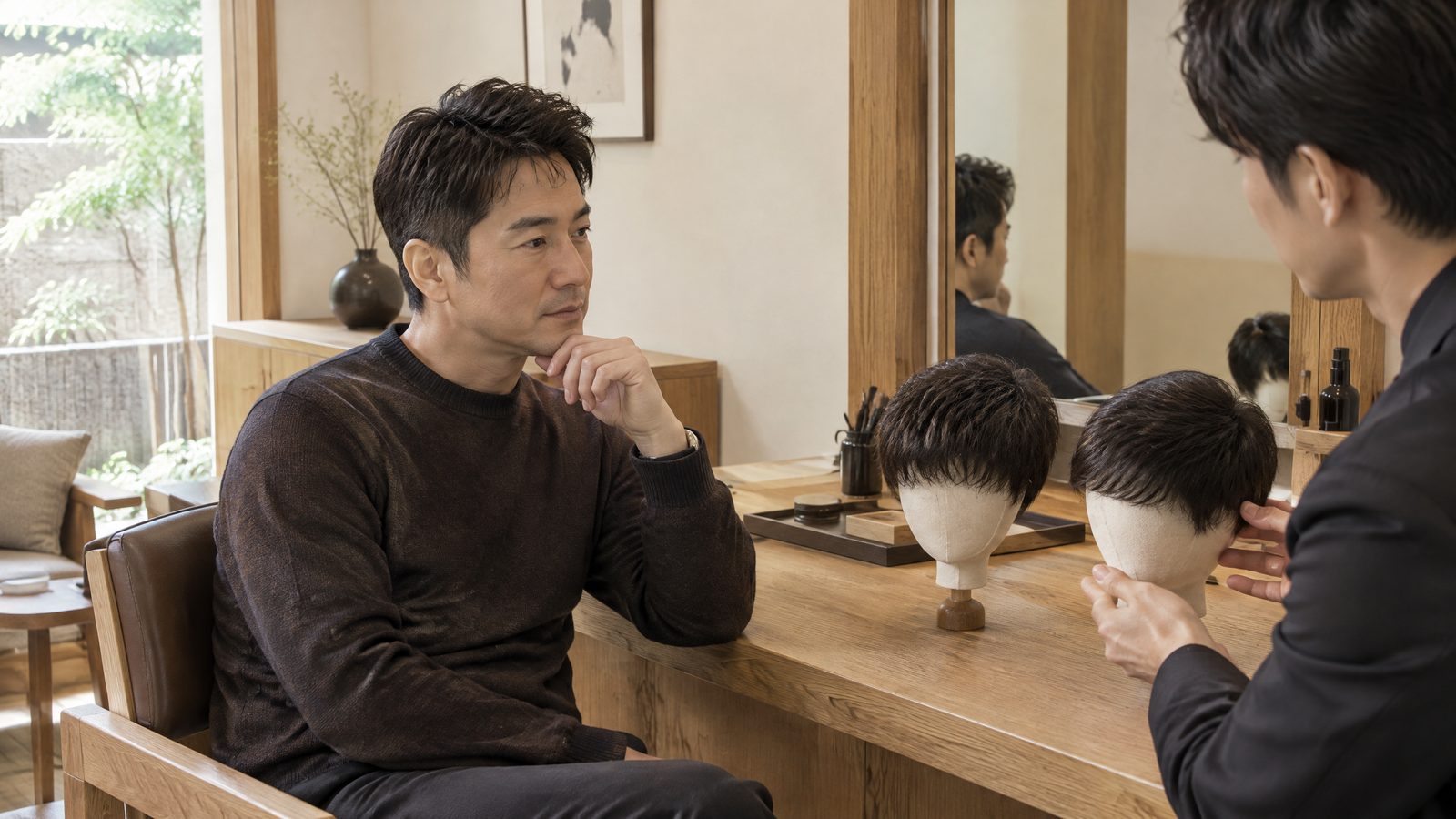
What belongs in a private wig consultation?
Start by naming the area you want to change. A partial hairpiece can cover a limited area. A full wig covers the whole head. Hair system is a broader term that may include several constructions. Ask the consultant which option is being discussed, then describe the visible result you want. That distinction matters because a crown concern, an exposed hairline, and a full-coverage preference require different observations. Write the coverage area on your notes before comparing any sample.
A commercial fitting is an appearance service, not a medical assessment. Hair loss can have different causes, and worrying changes deserve medical advice. The salon can discuss samples, measurement, styling, and comfort observations. It cannot diagnose the cause of shedding or prescribe treatment. For the clinical boundary, read 1. If you are already receiving treatment, ask your clinician which wearing questions need their answer before arranging a fitting.
Bring two or three recent photographs that show your normal haircut. Choose one front view, one side view, and one image in ordinary indoor light. Mark the parting you use most often. A photograph shows proportion and direction, but it does not prove an identical item is available. During the visit, compare the sample beside your existing hair instead. Then note which feature changed your judgement: colour at the temple, crown flow, or visible edge.
Privacy should be planned as part of the visit, not assumed from the word consultation. Ask whether a private appointment can be arranged and how long the conversation may take. Say if you prefer to avoid a waiting area or need time to remove a cap. These questions affect whether you travel now or begin with an enquiry. They also prevent a private preference from becoming an awkward detail after you arrive.
A useful fitting turns a vague wish into a short list of visible tests.
How should you prepare before travelling?
A first message should describe the decision, not just request a price. State the coverage area, normal length, parting, colour family, and preferred visit timing. Ask whether a relevant sample discussion and private appointment can be arranged. See the OWNSTRAND men's hairpiece Kwun Tong guide. Use the reply to decide whether the unanswered issue is sample availability, measurement, or service scope. An enquiry does not reserve a sample or appointment.
Plan the journey around the questions that require your presence. Allow time for arrival, sample comparison, measurement discussion, and note-taking. If custom work is selected, allow for a later return fitting as well. OWNSTRAND lists its only physical shop at Unit 2103, 50 Hoi Yuen Road, Kwun Tong, Hong Kong. Confirm the visit arrangement directly before travelling. The address helps route planning, while confirmation determines whether the journey is timely.
Bring the items that change how a piece must sit during your day. Glasses show whether the temple area conflicts with your usual frames. A cap reveals whether you need a particular profile underneath. Your usual comb shows how you make a parting. If you use a helmet for commuting, mention it rather than testing an improvised substitute. These ordinary objects create practical questions that a posed mirror view may hide.
Write down three movements you repeat at work or during travel. Examples include looking down at a phone, turning to speak across a desk, and bending to tie a shoe. Test only movements the consultant says are appropriate during the viewing. Observe the front, side, and crown after each movement. If one action matters most, rank it first in your notes. That ranking tells you which fit issue should be resolved before colour refinements.
- Coverage priority: crown, hairline, temples, or full head.
- Reference material: recent front and side photographs in ordinary lighting.
- Daily-use items: glasses, cap, comb, or work headwear.
- Timing: event date, travel windows, and possible return visit.
- Open questions: sample, privacy, service scope, and care instructions.
How can you compare samples without rushing?
Compare colour where your existing hair remains visible. Hold the sample near the temples and the back of the head, not only above the forehead. Look once in the room lighting and again near a window if that is possible. Record whether the difference is depth, warmth, grey placement, or shine. A colour that photographs well can still look abrupt beside your own hair. That observation may lead you to discuss another shade before any measurement begins.
Density should be judged against the surrounding hair, not against a mannequin. A fuller sample may appear reassuring when viewed alone. It can create a sudden transition when your sides are lighter or shorter. A less dense option may blend more quietly, yet cover less from above. Ask to view the target area from the front, side, and slight overhead angle. Write which angle matters in your ordinary day, then use it to choose the next sample.
Direction is easiest to assess when you reproduce your usual styling. If you wear a left part, move the sample in that direction before judging it. If you brush forward, inspect how the fringe approaches the forehead. Do not rely only on a centrally styled display. A sample may have workable colour but an unsuitable flow for your routine. In that case, ask whether another design is relevant instead of trying to force the display arrangement.
Grey deserves a separate note because its placement changes the comparison. Identify whether your grey is strongest at the temples, crown, or throughout the sides. Ask whether grey proportion can be discussed for the selected design. Do not assume a percentage from one sample will translate to every option. Record the direction you prefer, such as retaining grey at the temples. That note makes a later colour conversation more precise than simply requesting dark hair.
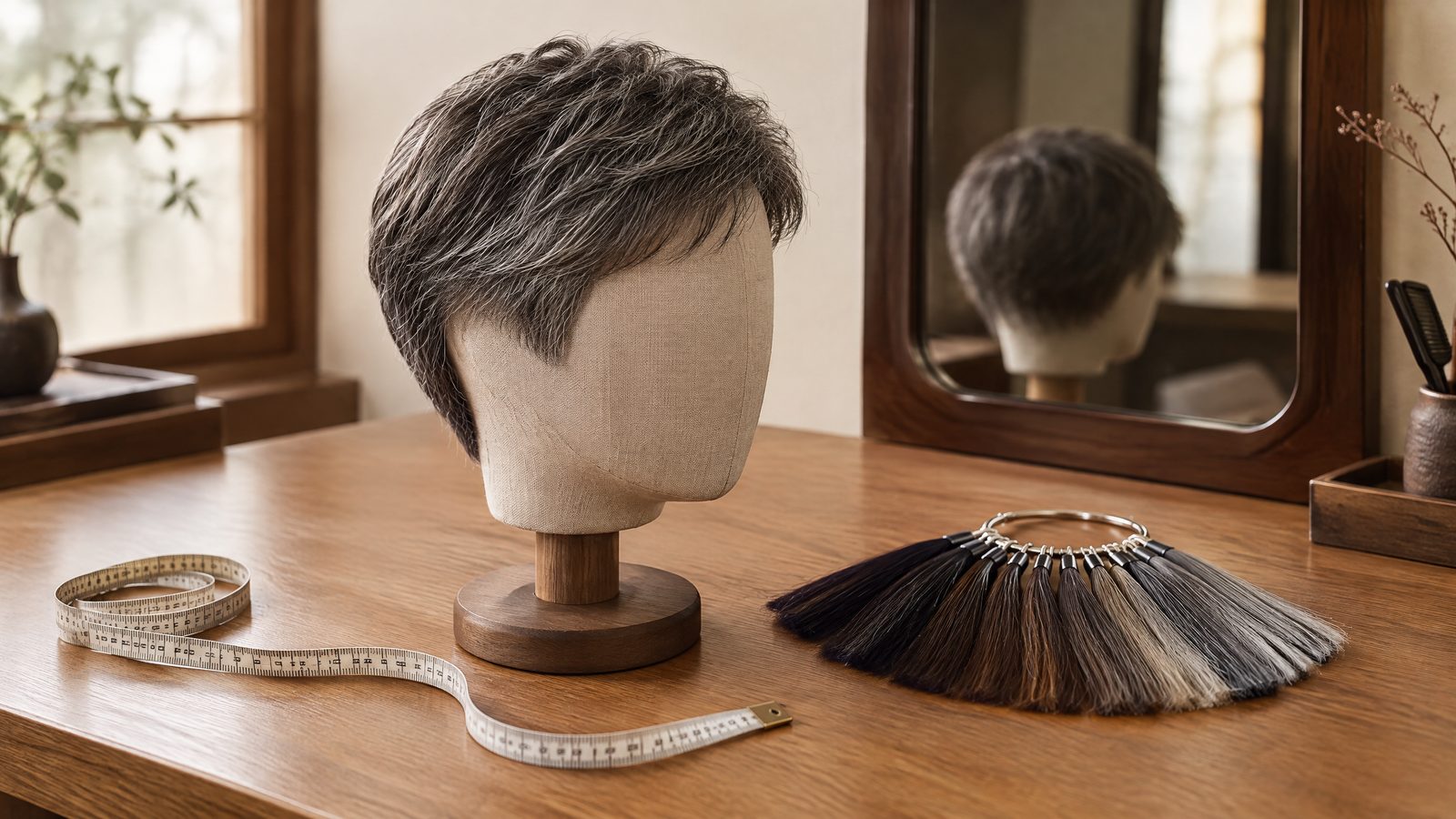
When is an in-person fitting worth the journey?
An in-person visit is most valuable when touch, placement, or head shape could change the decision. It can help you compare texture, edge visibility, colour beside your hair, and coverage boundaries. A screen remains useful for narrowing categories and preparing questions. See the ownstrand-wigs.com · wig shop in Kwun Tong. Use that location information to plan travel, then ask directly about current samples and appointment arrangements. Do not treat website images as a fitting result.
Travel may be unnecessary for an early category decision. You can first decide whether you are considering partial or full coverage. You can also collect your hairstyle photographs and list important dates at home. Travel becomes more useful when you need to see colour beside your hair or discuss measurement. This distinction saves a journey that would only repeat basic information. It also gives the visit a focused purpose rather than a general browse.
Include the cost of a second journey in your planning. Custom production and a completed fitting are different stages. A return visit may be needed to inspect placement, adjustment, and the finished styling. If your calendar has little flexibility, ask which stage requires attendance before choosing the route. A man with an upcoming photograph may decide to wait for enough fitting time. Another man may only need an initial comparison and can begin remotely.
Privacy, travel, and certainty pull in different directions. A private visit can support detailed discussion, but it takes time and transport. An online enquiry is convenient, but it cannot reproduce contact with a sample or the contour of your head. Decide which unknown carries the greater consequence for you. If colour is the concern, viewing may be decisive. If timing is uncertain, obtain the schedule details before setting out.
| Decision need | Private fitting | Online-first enquiry |
|---|---|---|
| See tone beside existing hair | Compare samples in person | Use images only to shortlist questions |
| Discuss head measurement | Raise it during the visit | Identify whether a visit is needed |
| Limit initial travel | Requires a planned journey | Useful for basic category questions |
| Plan an event | Ask about return-fitting timing | Collect schedule details before travel |
How should private and online routes be compared?
Compare the scope of the service rather than a headline description. Ask whether the route involves sample viewing, head measurement, custom work, completed fitting, adjustment, and finished styling. Ask which steps are optional and which are included with the selected option. Put the answers in two columns when comparing providers or routes. A lower number cannot be evaluated fairly if one route stops at the piece and another includes later work. The next action is to clarify the missing scope item.
OWNSTRAND describes a sequence of sample selection, measurement, custom production, return fitting, adjustment, and wash, cut, and blow-dry arrangements. Treat that sequence as planning information for the relevant custom option. It does not establish every product’s availability, price, or included service. Ask which parts apply to the specific choice you are considering. If the answer changes the number of visits, revise your travel plan. If it changes the styling scope, revise your budget comparison.
Comfort requires an honest observation, not a promise that every construction feels identical. The American Academy of Dermatology notes that hairstyles which pull can lead to traction alopecia. It also says pain can signal excessive tension. Read 2 for that general context. If a fitting feels painful, stop the test and say exactly where. Persistent pain, irritation, or scalp concerns belong with a clinician, not a cosmetic workaround.
For an online-first comparison, request the details that determine whether a visit is still necessary. Ask about the relevant category, colour direction, available viewing, custom timing, payment, delivery, and return terms. Keep product information separate from appointment information. A remote answer can narrow a choice without pretending to verify fit. If the answer leaves colour, edge placement, or measurement unresolved, mark that as the reason for an in-person consultation.
What fit questions make the fitting useful?
Fit is more than whether something feels tight. Ask how the chosen design sits at the front, crown, sides, and back. Explain your usual parting and whether you wear glasses, hats, or a helmet. Look for shifting after the movements you listed earlier. Describe the location of any pressure instead of saying the whole piece feels wrong. That detail tells the consultant whether the next conversation concerns placement, adjustment, styling, or a different coverage plan.
Ask how the completed piece will be checked after production. Confirm which changes can be discussed at the return fitting, including length, parting, edge appearance, or blending with existing hair. Do not translate a sample impression into a guaranteed final result. The piece may need finished styling before its proportion can be assessed. Write the agreed follow-up step beside each concern. This prevents a small adjustment question from becoming an assumption about a permanent feature.
Use a simple record while observing the sample. Give each issue a location, a condition, and an effect. For example, note a noticeable left temple edge after turning. Avoid labels such as natural or unnatural without the observation behind them. A record like this lets you compare two samples fairly. It also tells you what to raise at a later fitting. The next action follows from the condition: retest movement, discuss colour, or ask about another design.
Be clear about boundaries if your scalp is sore, broken, irritated, or under treatment. A salon conversation can help with appearance choices and practical fitting questions. It cannot decide whether wearing a piece is appropriate for a medical condition. Tell your clinician about the type of product and the fitting question you need answered. Then return to the salon with that boundary stated. This keeps appearance planning separate from health decisions without delaying either conversation unnecessarily.
| Area | Observation to record | Question it creates |
|---|---|---|
| Front edge | Appearance while looking down | Does placement need further discussion? |
| Temple | Contact with glasses arms | Will my normal frames affect the fit? |
| Crown | Direction after a head turn | Does the flow match my usual parting? |
| Sides and back | Transition beside existing hair | Should density or coverage be reconsidered? |
How do time and budget change the plan?
Use a labelled planning assumption when an event matters. Assume a Monday consultation, a stated five-working-day production estimate, and a separate return fitting. Friday is not automatically the finished appointment. Production may start later, a weekend may intervene, and fitting arrangements need confirmation. This example is not a promise of a schedule. It shows why the production start date matters. A return-fitting date matters too.
Keep three cost categories separate: the selected custom construction, any fitting or finishing work, and your travel or later care. OWNSTRAND lists HK$2,780, HK$3,280, and HK$5,680 for stated custom options. Those figures are not a complete catalogue price list. Ask for the current quotation and what it covers. Compare like with like before choosing the lowest figure. A change in included adjustment or styling can change which route is better value for your situation.
The stated three-to-five-working-day figure applies to defined custom human-hair production. It is not a delivery promise, a stock statement, or a promise for all products. Ask when production begins for the selected option. Then ask whether the finished piece requires a return fitting before your event. Record those answers next to the date you need it. If the schedule is narrow, postpone the event-dependent choice rather than compressing the fitting conversation.
Care rules belong in the budget decision because they affect the routine you can maintain. Do not assume every human-hair piece can be bleached, permed, bonded, or heated in the same way. Ask for instructions for the selected material and construction before using chemicals, adhesives, heat tools, or strong styling products. Note the product name and instruction source. If a care method is unclear, pause the experiment. The next step is a product-specific question, not a universal heat setting.
A short deadline is a reason to map stages carefully, not to skip the questions that protect the decision.
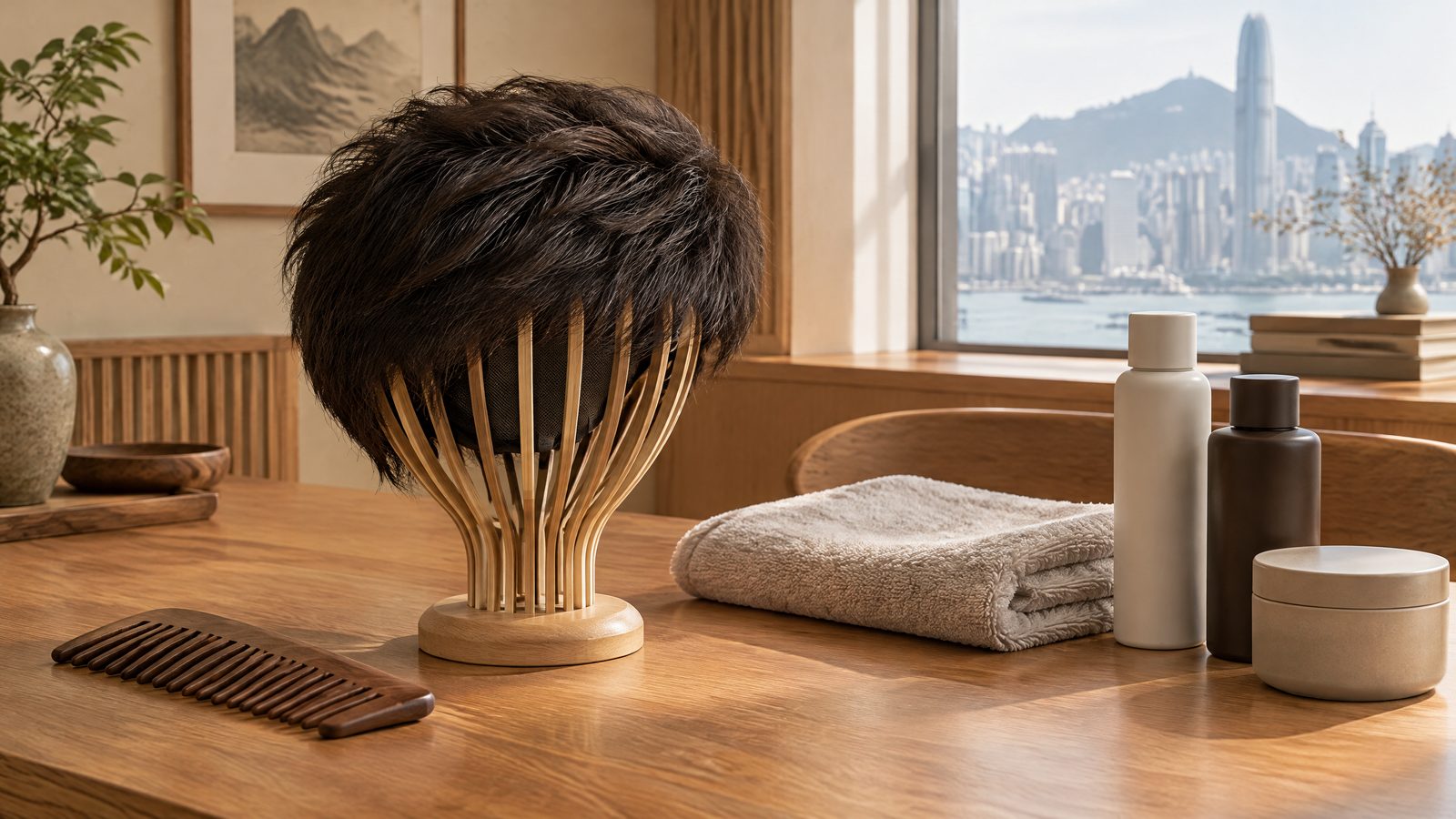
What should you record after the consultation?
Use related resources to frame questions, not to treat another person’s route as your result. See comparing compare wig shops in Hong Kong options. Keep your own comparison focused on coverage, colour, fit, travel, timing, and price scope. If another guide raises a new issue, add it to your open-question list. Do not replace a direct answer about the selected option with a general article summary.
After the appointment, write down the confirmed coverage area, preferred colour direction, usual parting, sample observations, and unresolved questions. Note who needs to answer each question: the salon, the product instructions, or your clinician. Add the date and the condition of each observation, such as indoor lighting or wearing glasses. This record prevents memory from turning a quick impression into a certainty. It also gives you a clear starting point if you compare another sample later.
End with a one-sentence decision statement and a fallback. For example: choose a partial comparison because the crown is the priority, but wait if the grey blend remains unclear. The statement should name the trade-off, not just the preferred look. A fallback prevents pressure when a sample is unavailable or a private slot changes. Before paying or travelling again, check that your decision still matches the written priority, timing, and service scope.
- Record the coverage area and the preferred parting.
- Describe observations by place, movement, lighting, and effect.
- Separate confirmed details from questions still awaiting answers.
- Keep production timing distinct from delivery or appointment timing.
- Store item-specific care instructions with the product details.
Sources and useful reading
[1] NHS: Hair loss
[2] American Academy of Dermatology: Hairstyles that pull can lead to hair loss
Continue reading
Continue with natural hair planning: Kwun Tong Men's Perm
Another related decision guide: Wig Accessories: Match Brushes, Adhesives and Care Tools
Read our studio background: Vit So and Canvas Texture
Plan your Canvas Texture hair consultation
Use a Canvas Texture hair consultation to discuss haircut shape, density, and daily styling. Confirm the selected wig sample, fit, construction, availability, and terms separately with OWNSTRAND.
Canvas Texture WhatsAppFrequently asked questions
Can I request a private men’s wig consultation?
Ask the salon whether a private appointment can be arranged, which details it needs beforehand, and whether a relevant sample discussion is possible. A private setting may support a more comfortable conversation, but it does not reserve a sample or guarantee an outcome.
What should I bring to a men’s wig fitting?
Bring recent hairstyle photographs, notes on your usual parting and coverage priority, plus everyday items such as glasses or a cap. These give the fitting concrete comparison points. The final choice should still be based on the actual sample and discussion.
Does three to five working days mean delivery within that period?
No. The stated OWNSTRAND figure concerns production for defined custom human-hair work. It is not a delivery promise or a statement about every catalogue item. Confirm when production starts, whether a return fitting is needed, and any delivery or collection arrangement separately.
Can a wig consultation diagnose hair loss?
No. A fitting can discuss appearance, samples, fit, and styling. Hair loss can have several causes. If it worries you, or if your scalp is painful, irritated, broken, or under treatment, seek advice from a qualified clinician.