Men’s Hair System Bases: Check Parting, Fit and Texture
Men’s hair system bases should be chosen by the zones that will be seen, not by one construction label. Start with the hairline, parting, crown, and side blend. Then compare samples in the hairstyle you wear most days. That order clarifies whether the decision concerns a softer front, a movable top, stable coverage, or an easier blend. It also prevents a technical term from promising results outside its actual area.
Planning assumption: OWNSTRAND lists three custom-option figures: HK$2,780, HK$3,280, and HK$5,680. They correspond to a needle-punched swirl, a fully needle-punched option, and Swiss lace. Its stated production period is about three to five working days. That period does not cover every stock item or delivery. Ask which specification matches the figure before using it to plan timing or budget.
This guide turns cap terms into salon checks for Hong Kong men. It covers exposed edges, scalp effect, movement, measurements, care boundaries, and a written consultation plan. Bring a current hairstyle photograph and note your usual part before viewing samples. The aim is not to find a universally best base. It is to select a known compromise that suits your ordinary styling, visible angles, and maintenance tolerance.
Canvas Texture Editorial · 2026-10-16
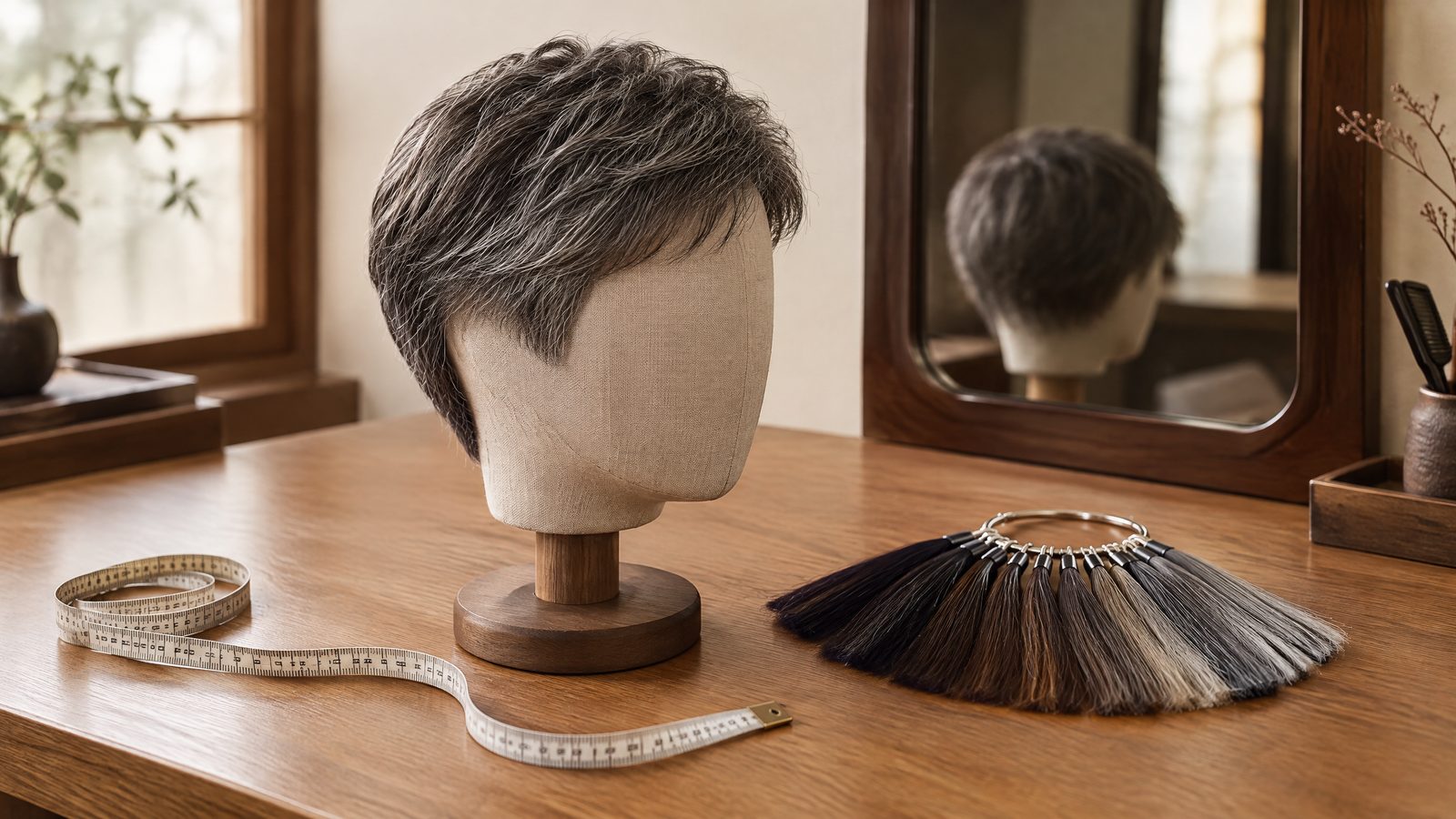
What a hair system base controls
Every base supports hair fibres, yet its important job changes by location. At the front, it affects the visible transition from forehead to hair. At the top, it affects parting and lift. Around the sides, it affects how the system joins existing hair. Begin by marking those zones on a photograph. The marked areas tell the stylist where construction matters most, rather than letting a product label set the whole agenda.
Lace, monofilament, wefted, and hand-tied descriptions may apply to only one portion of a system. A hybrid can use different structures at the front, top, and back. Turn each sample inside out and identify each area. Ask where hair is individually anchored, where rows sit, and where the edge begins. This inspection changes the next action: request a zone map if the specification names only one feature.
Write three observations before your appointment: normal direction, forehead exposure, and the side that faces people during conversation. A brushed-back style exposes the hairline and temples. A forward fringe can conceal more of the front, but still needs a believable density. A fixed side part prioritises a different area from a changeable part. Those observations help the stylist compare structures against one predictable hairstyle.
Decision insight: judge a base by the visible job assigned to each zone, not by its most impressive label.
How to inspect the front hairline
Inspect the front edge first when your hairstyle exposes the forehead. View the sample straight on, at a slight angle, and after lifting your brows. Then brush the hair backward without changing its intended direction. Look for a gradual transition, not a sharp line. Density, colour, knot placement, trimming, and fit all affect that result. A lace edge can assist a softer transition, but it cannot correct an unsuitable hairline shape or loose fit.
Choose the conditions that resemble your routine. Overhead office lights, a phone held above eye level, and damp styling can reveal different contrasts. If you usually wear a textured fringe, inspect how it separates after a finger sweep. If your temples show, check their outline while you turn sideways. Record the angle that concerns you most. That record determines whether a sample needs a different front shape, density, or styling plan.
Use the same front test for every candidate. Stand at conversation distance, move closer, then look down as if reading a phone. Ask whether existing hair changes direction abruptly beside the edge. Take a reference photograph only with permission, using the same light and distance. Compare the photographs later beside your written notes. A repeatable test is more useful than selecting the best single mirror moment.
Parting, crown, and scalp effect
A scalp-effect area must make sense from above as well as from the front. Open the hair at the intended parting and examine fibre direction, visible base, and nearby attachment placement. Compare the sample’s direction with your usual crown swirl. A straight part can look forced when the natural pattern pushes hair diagonally. State whether you want one stable part or occasional changes. That answer decides how much top movement is actually useful.
Compare colour before judging texture, then assess density and wave beside your own hair. Texture includes bend, lift, root direction, and how fibres separate. A close colour match may still look conspicuous when the top is much straighter than the sides. Test a usual part, a quick finger sweep, and a forward bend. Note which movement opens the area you care about. That observation directs the next sample comparison.
For terminology and preparation, see ownstrand-wigs.com · men's hair system base types. Bring its relevant terms to the appointment, not a fixed product choice. Ask the stylist which zone on the actual sample addresses your recorded concern. A guide cannot show your crown pattern, haircut, or light. The in-person sample check supplies those missing facts before you decide properly in person.
Do not judge a parting from a staged overhead photograph alone. Request a view under salon light and near a window, if available. Ask the stylist to separate hair only as far as you would normally part it. An exaggerated opening creates a misleading test. If the desired part stays coherent through your ordinary movement, retain it in the plan. If not, alter the part, density, or construction priority.
Decision insight: a successful top remains plausible through your usual movement, not only in a still image.
Hand-tied, machine-made, and hybrid bases
Hand-tied construction generally anchors individual hairs through a base. Machine-made construction commonly joins prepared wefts in rows. These descriptions explain attachment methods, rather than guaranteeing comfort, weight, or realism. Base size, lining, density, and fitting also change the result. A hybrid places different methods where they serve different jobs. Read each specification by location, then connect that location with the hairstyle you need to maintain.
The practical trade-off is often movement against structure. Individually anchored hair may allow freer direction in a selected area. Wefted rows may create organised coverage and a defined silhouette. Someone who changes a part often may prioritise top movement. Someone who repeats one shape may prioritise steady coverage. Neither construction wins by default. The deciding question is which movement you need on an ordinary weekday, not during a demonstration.
Turn the sample inside out with the stylist. Locate the front, crown, sides, and back before discussing a craft term. Ask where hair can shift and where it is held in a row. Next, match those zones to the planned cut. A short faded side may make a bulky edge more noticeable. This comparison may lead to changing the haircut plan rather than changing the whole base.
If fibre labels affect your choice, read comparing Remy human hair wigs options. Remy refers to hair-direction handling, not a universal promise about processing or chemical suitability. Compare the fibre with the base, density, and written care directions. Ask which exact label applies to the selected system. That answer directly affects whether you need different styling expectations or maintenance products.
| Construction | Useful strength | Check before choosing |
|---|---|---|
| Hand-tied area | Flexible individual movement | Confirm density and maintenance |
| Machine-made area | Structured row coverage | Check bulk and parting limits |
| Hybrid base | Different zones serve different needs | Map every zone to the hairstyle |
| Lace or mesh edge | Supports a softer transition | Inspect edge, fit, and viewing angle |
Choosing a base for your hairstyle
Match the base to the hairstyle you will maintain most often. A swept-back crop exposes the front and makes edge planning important. A side part draws attention to the top and crown. A forward textured style can hide some transition, yet still needs believable density. Short sides increase contrast around the perimeter. Inspect the side blend from arm’s length before selecting the base. The preferred system should support the intended shape without demanding constant correction.
Fit changes both appearance and comfort. A shifting base can move the parting or reveal an edge. A tight base can create pressure during normal wear. The American Academy of Dermatology says prolonged pulling can contribute to traction alopecia. It also notes that pain can signal excessive tension.2 Stop and reassess discomfort rather than tightening the arrangement. This is general hair-health guidance, not product approval or diagnosis.
Think about coverage and integration together. A smaller piece can preserve more existing hair for blending. A broader system may be considered when the visible area extends further back. Neither size is automatically preferable. The perimeter should sit where the visual change begins, with enough surrounding hair for the planned transition. Measure the visible need instead of choosing a category first. That measurement can change the requested coverage area.
Use a weighted comparison only to expose priorities. For example, assign four points to front exposure, three to parting movement, two to fit, and one to styling ease. Score each sample from zero to five after the same checks. The arithmetic does not predict an outcome. It reveals why one sample leads. If a different priority changes the winner, discuss that trade-off before ordering.
| Check | Question | Decision signal |
|---|---|---|
| Front | Does the edge suit normal exposure? | Adjust style or sample |
| Top | Does the part follow your movement? | Prioritise direction |
| Fit | Does it stay secure without pressure? | Recheck measurements |
| Care | Are instructions product-specific? | Record limits before ordering |
Fit, care, and medical boundaries
A hair system consultation concerns appearance, styling, and fitting. It does not identify the cause of hair loss. Hair loss has different causes. The NHS advises medical help if hair loss worries you 1. Bring a simple timeline if changes feel sudden or concerning. Record when you noticed them, alongside products or styling practices used. A clinician can assess those details without relying on a salon assumption.
Pause fitting if the scalp is painful, inflamed, broken, or persistently itchy. Also pause when pulling produces repeated discomfort. Do not make medical treatment changes because a base or attachment appears convenient. A salon can explain its fitting limits and make an appearance plan. It cannot diagnose a condition or promise regrowth. Separating those roles keeps the next step clear: medical advice for symptoms, salon comparison for styling.
Care instructions must belong to the exact fibre and base. Attachment, cleansing, drying, heat, and chemical work may vary between systems. Do not assume every human-hair system can be bleached, permed, or used at one temperature. Ask for written manufacturer directions before any chemical or heat service. Note the answer beside the sample name. That record changes the next step from general advice to product-specific care.
Preparing for a Hong Kong salon consultation
Bring evidence of the look you actually wear, not only an aspirational reference. Bring two or three recent photographs showing the front, side, and crown. Add one image taken in your normal indoor light. Tell the stylist whether you use a side part, sweep hair backward, or wear a fringe. These examples let the sample review begin with your real exposure pattern instead of a generic salon pose.
Prepare measurements as questions, not self-diagnoses. Ask which dimensions are needed for the chosen coverage area. Head circumference alone may not explain a front-to-back or side-shape issue. During fitting, note where the perimeter sits relative to your hairline and ears. If pressure appears after ordinary head movement, state the exact location. That description helps distinguish a shape issue from a styling or attachment adjustment.
Use this practical appointment checklist: - Bring recent style photographs and a note of your normal part. - Ask to see the cap inside and identify its visible zones. - Test conversation, finger-sweep, and downward-looking positions. - Write the selected density, measurements, care limits, and accepted trade-off. These steps create a handover note that can guide the fitting, first trim, and later fitting review.

Ordering, fitting, and review decisions
A polyurethane option deserves a separate conversation because its edge and attachment plan affect the visible result. OWNSTRAND PU wig cap guide can help you name the construction before that conversation. It does not settle suitability for your head shape or hairstyle. Ask what portion of the actual system uses polyurethane. Then assess that portion beside your exposed front, side blend, and planned maintenance routine.
Before requesting a quotation, state the selected base zones, desired parting, target density, and coverage perimeter. Include the haircut you expect to maintain. Ask which elements are custom measured and which are adjusted after fitting. This distinction matters because a change after cutting may not solve an unsuitable starting specification. The reply should tell you whether a fresh sample check, a measurement session, or a revised style is needed.
Price needs a defined specification. The listed HK$2,780, HK$3,280, and HK$5,680 figures belong to specified custom options. They do not establish the price of every item in a catalogue. Ask what the quotation includes, whether fitting is separate, and which cap construction it names. That discussion turns a headline figure into a comparable plan. If inclusions differ, compare the scope before comparing amounts.
Production timing also needs a defined question. The stated three-to-five-working-day period concerns the described custom production arrangement. It is not a delivery guarantee. Ask when measurements, payment confirmation, production, fitting, and any later adjustment occur. This sequence identifies the date that matters to your schedule. It is more useful than treating one production number as the entire timeline for your appointment.
At the fitting, repeat the exact checks used for the sample. Look at the front in normal conversation posture, the part from above, and the side blend while turning. Wear the planned hairstyle before agreeing on the trim. If a concern remains, describe its location and movement. Say that a crown opens after a finger sweep. That detail identifies whether the next adjustment concerns direction, density, or fit.
Keep the final plan in a short record. List the sample name, construction zones, measurements, parting, density, care limits, and the compromise you accepted. For example, a stable daily side part may matter more than moving the part freely. A different wearer may prioritise a softer exposed front. Naming the priority helps future trimming decisions remain consistent with the original visual goal.
Canvas Texture Editorial provides this planning guide for men considering hair systems. A Canvas Texture hair consultation can discuss style, visible zones, texture, fit, and routine. Wig arrangements, availability, pricing, and final fitting are confirmed separately with OWNSTRAND. OWNSTRAND is a related same-owner brand resource. This guide is not an independent review or a promise about any individual result for each selected system.
Sources and useful reading
[1] NHS: Hair loss
[2] American Academy of Dermatology: Hairstyles that pull can lead to hair loss
Continue reading
Continue with natural hair planning: Perm for Thin Hair Men HK
Another related decision guide: Grey Hair Systems: Match Natural Hair, Beard and Colour
Read our studio background: Vit So and Canvas Texture
Book a Canvas Texture hair consultation
Discuss your hairstyle, visible areas, texture, fit, and daily routine with Canvas Texture hair. Wig arrangements and product details are confirmed separately with OWNSTRAND.
Canvas Texture WhatsAppFrequently asked questions
Is a lace front always the most natural choice for men?
No. It may support a softer front transition, but fit, density, colour, direction, and lighting also matter. Choose according to exposed areas and daily styling.
Are hand-tied bases always cooler or lighter?
No. Comfort depends on the whole construction, including mesh, lining, density, size, and attachment. Compare the actual sample and follow its product instructions.
Can I bleach or perm any human-hair system?
No. Do not generalise heat or chemical safety. Confirm manufacturer instructions for the exact system and ask a qualified stylist before chemical work.
When should I see a doctor before a fitting?
Seek medical advice for concerning, sudden, painful, inflamed, or persistent hair-loss changes. A salon can discuss appearance and fit, but cannot diagnose or guarantee regrowth.