Grey Hair Systems: Match Natural Hair, Beard and Colour
Match a grey hair system to the visible pattern of your remaining hair, beard, and everyday parting. Choose grey placement and undertone before selecting a percentage or colour name. A close visual relationship matters more than a shade label because the hairline, temples, and sideburns are read together. The goal is a believable transition in the style you actually wear, not a perfect swatch viewed alone.
For a hypothetical planning exercise, imagine 30% visible grey at the temples and 10% through the top. Those figures are assumptions, not a rule, study result, or prediction. They help separate two questions: where should grey be seen, and how strong should that contrast look? A stylist can then test whether a darker crown or quieter temple blend better supports your usual haircut and beard.
This guide explains how to compare distribution, tone, beard continuity, lighting, and texture before a consultation. It also sets out the trade-offs between a close match and an intentional silver change. You will find a simple viewing routine, fitting questions, and a checklist for a Hong Kong appointment. The aim is a clear brief that makes colour decisions easier to explain and revisit.
Canvas Texture Editorial · 2026-10-16
1. What a grey blend actually needs to match
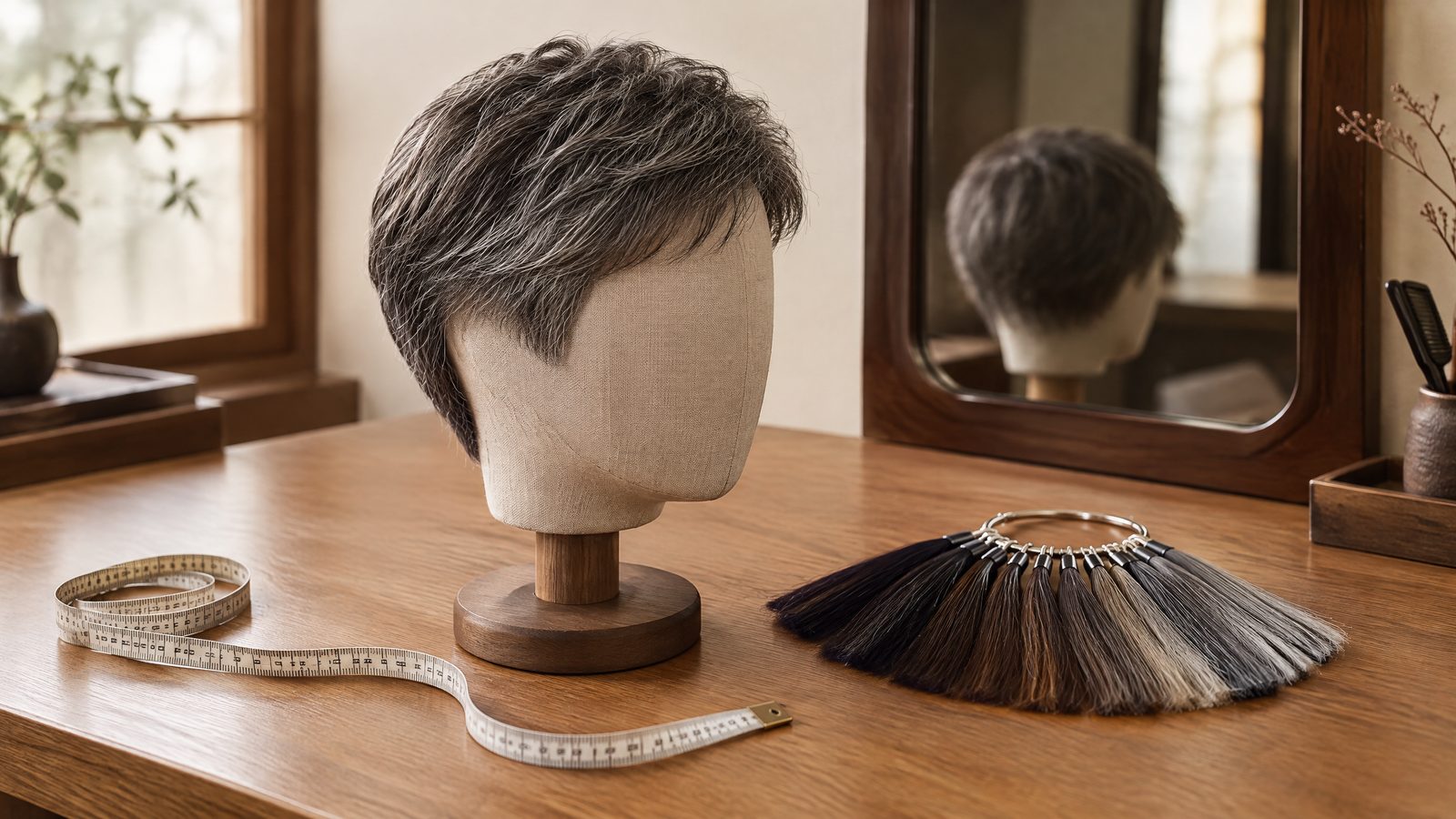
A grey blend is a relationship between a base shade, lighter strands, and their placement. It should sit beside your own hair without becoming a separate block of colour. Beard colour can alter that relationship. A cool silver beard may expose warmth in a brown system. A darker beard can make the same blend read softer. Compare the entire face rather than judging a small swatch in isolation.
Start with the hair that remains visible after styling. Look at the temples, parting, crown, sideburns, and nape. Those areas often show different amounts of grey. A system can suit the crown yet contrast sharply at one sideburn. Hair direction also matters. Grey placed with the natural flow usually looks quieter than strands crossing it. Discuss the intended cut and parting before settling on colour.
Grey placement also changes the apparent weight of a style. Lighter strands can soften a dense area, while a dark base can make it look more solid. That is a visual effect, not a claim about hair quantity. Check the silhouette as well as the shade. A blend that works in a close mirror may look heavy at conversation distance. Ask to view it from several normal social positions before deciding.
Treat the colour decision as a short visual brief. Identify the exposed edge, the dominant base, and the places where grey should remain visible. For example, a man with grey at both temples may prefer scattered lighter strands there and a darker crown. This preserves contrast without trying to make every area identical. The brief gives the stylist a reason for each choice, rather than a vague request for something natural.
A natural blend is judged at the transitions people see, not on a swatch viewed by itself.
2. Why grey distribution matters more than one number
A grey percentage is not a paint formula. The same proportion can look restrained when scattered through the crown. It can look pronounced when concentrated at the temples. Distribution affects contrast, the apparent depth of the base, and the overall character of the haircut. Ask where lighter strands should appear before asking how many there should be. That sequence produces a clearer choice when two samples share a similar label.
Use three positions when comparing samples. Check the front for hairline contrast. Check a forty-five-degree angle for temple continuity. Check the top for the parting and crown. Keep your usual styling direction in every view. A blend that looks quiet when brushed forward may look too dark when swept back. Note which angle feels least connected, then name the cause: placement, base depth, or an exposed edge.
The OWNSTRAND custom wig grey percentage guide describes grey percentage as a discussion alongside a chosen natural colour. It says possible proportions are confirmed case by case. Use that distinction when preparing questions. Ask to compare the visible effect of a few directions rather than requesting an exact formula. The useful outcome is a shared colour brief, not an assumed promise of an identical match.
A practical test is to cover part of a sample with your hand. First view the darker base, then reveal the grey strands. If the grey only works when seen alone, the mixture may be too contrasty for the exposed hair beside it. If it disappears completely, the planned grey effect may be lost. This small test helps decide whether to adjust distribution or choose a different base before discussing a final shade.
3. How to compare grey, salt-and-pepper, and silver tones
Grey is not a single temperature. It can appear neutral, blue-cool, beige-warm, or close to white. Salt-and-pepper usually means dark and light strands are visibly mixed. Silver generally reads brighter and more reflective. Compare the system with your roots and beard under the same light. Then choose whether you want continuity, a deliberate refresh, or a softer transition. Each objective permits a different amount of tonal distance.
A mixed shade can prevent the flat look of one dark colour. However, excessive variation can compete with a very short haircut. A silver-forward direction can look considered, but it may emphasise dark sideburns. A darker blend retains familiar depth, although the edge may need closer cutting. Balance visual character against the natural hair left exposed. The right direction depends on the cut, the beard, and which transition is most visible.
The ownstrand-wigs.com · grey wigs page can help distinguish grey, silver, white, and salt-and-pepper directions. Treat photographs and shade names as a shortlist only. Confirm the colour information for the particular style you are considering. Not every pictured tone is necessarily available in every construction. Bring two preferred directions to the consultation, then compare them beside your exposed hair rather than choosing from a screen.
Make one decision at a time. First choose depth: dark, medium, or light. Next choose temperature: warm, neutral, or cool. Finally choose variation: scattered, blended, or strongly contrasted. This order prevents a descriptive word such as silver from doing too much work. It also reveals the trade-off. A cool, bright blend may suit the beard but make the temples more obvious. A warmer blend may soften the temples yet sit less comfortably beside silver facial hair.
| Option | Strength | Trade-off |
|---|---|---|
| Salt-and-pepper mix | Soft transition | May look busy on very short hair |
| Silver-forward blend | Clear mature character | Can contrast with dark sideburns |
| Dark base with grey accents | Keeps familiar depth | Edges need careful blending |
4. What your beard and sideburns change
A beard creates a second colour frame around the face. It may be warmer, lighter, fuller, or greyer than the scalp. Compare samples with the beard at its usual length, not immediately after a sharp trim. Sideburns matter because they connect the top, ear, and jaw. If that transition is ignored, a well-matched crown can still feel separate. The aim is connection across the face, not identical colour in every area.
Decide whether the scalp blend should follow the beard or the remaining hair. Following the beard can create a coherent silver impression. Following the scalp can retain a familiar top and make the beard a deliberate contrast. Neither choice is automatically right. State which area people notice first when they meet you. The stylist can then prioritise that transition instead of averaging colours that serve different visual purposes.
For a hypothetical 30% temple-grey plan, photograph the beard at its normal length. Compare two samples beside both the temple and jawline. Assume that both areas remain visible after the haircut. Choose the sample that creates the smoother face frame, even if its label seems less exact. This is a planning method, not a prediction of anyone's result. It gives the discussion a repeatable comparison instead of a guess from memory.
Before a visit, try comparing wig color matching options by depth, undertone, and visible variation. Use a chart to narrow choices, then verify style-specific options with a physical reference where possible. A shared colour name does not establish identical results across ranges. Keep your usual beard length and haircut in the comparison. That prevents a colour choice from being based on a reference that does not resemble your everyday face frame.
The beard belongs on the colour map; treating it as background breaks the face frame.
5. How light, screens, and texture alter colour
Illumination changes colour judgement. Warm indoor bulbs can make brown look richer. Cool office light can make grey look flatter or bluer. Phone screens add their own brightness and colour settings. Compare physical references in consistent daylight when possible. Place the sample beside roots, mid-lengths, and ends. Give your eyes time to adjust before choosing. A repeatable light check is more useful than trying to remember how a screen image looked the night before.
Texture changes colour impact as well. Straight, smooth hair reflects light across a broader surface. Wavy or layered hair divides reflection into smaller highlights. A dense, short style can appear darker than a longer style with movement. Judge colour with the proposed cut and texture whenever possible. A model image cannot prove that the same shade will behave identically. Movement, reflection, length, and density all affect how strongly grey contrasts with the base.
Cancer Research UK notes that private fitting and photographs can help with wig selection 1. Use photographs to document your normal parting, beard length, and lighting conditions. They are comparison aids, not proof that a system will match. For a Hong Kong appointment, mention whether you spend most days in offices, outdoors, or under retail lighting. The most familiar setting should guide the final colour check.
Separate colour feedback from general hesitation. First say which area blends well. Then identify the area that feels too bright, too dark, or too uniform. For example, you might keep the temple colour but ask for more depth at the crown. Specific feedback makes a second comparison faster. It preserves the strongest part of the first direction. Check the same angle in daylight.
6. How to decide between a close match and a style change
A close match reduces attention at the transition. It suits men who want their existing haircut and beard to remain the main visual focus. A style change uses an intentional difference in depth, warmth, or silver content. It can make grey a visible design choice. The trade-off is a stronger edge where natural hair remains exposed. Even a deliberate contrast needs a believable relationship with the temples, sides, and beard.
Use a simple decision test. Name the area you want people to notice first. If the answer is the haircut, favour continuity. If the answer is a silver character, allow measured contrast. Then consider maintenance. A close match may need reassessment as natural grey becomes more visible. A deliberate contrast may depend on sharper cutting around exposed edges. Choose for your preferred appearance, not because every grey strand must be hidden.
Bring one recent front photograph and one side photograph to the consultation. Keep the usual beard length visible. State whether you prefer low-key blending or a recognisable silver look. Mention your normal parting and whether you use a fringe, side sweep, or brushed-back style. These details turn natural into a useful instruction. They give the stylist a reason to adjust depth, placement, or variation instead of relying on a broad colour label.
Glasses, hats, and helmets belong in the conversation. Frames can cast shadows near the temples. Headwear can change how much of the top stays visible after commuting. These factors do not choose the colour by themselves. They do affect where contrast is noticed. Include the accessories you use most often when comparing directions. A mirror-only blend can look unbalanced in your ordinary daily routine.
| Decision | Best when | Main caution |
|---|---|---|
| Close match | You want continuity | Grey growth can change the balance |
| Moderate contrast | You want gentle definition | Visible edges need styling control |
| Silver-forward change | You want grey as a feature | Dark beard may need discussion |
| Very uniform tone | You prefer a graphic look | Can look less like natural variation |
7. What fitting, timing, and care questions belong in planning
Colour cannot be separated from coverage and fit. A good sample can still look wrong if the base sits too far forward or the edge is placed poorly. Discuss the area to cover, edge position, and your usual movement. OWNSTRAND describes a process that begins with samples and measurements, then returns to fitting, adjustment, and wash-cut-blow-dry. Its stated three-to-five working days is production timing, not a delivery or appointment promise.
Confirm what is agreed before any custom arrangement. Record the reference, grey direction, coverage, measurements, fitting steps, and current quotation. OWNSTRAND lists HK$2,780, HK$3,280, and HK$5,680 for specified constructions. Those are published examples, not a catalogue-wide price list. Ask which construction each figure refers to and what it includes. This protects the colour discussion from being confused with an assumption about price, timing, or availability.
Care instructions must be product-specific. Do not assume every human-hair system can be bleached, permed, or used with the same heat setting. Ask for the manufacturer's instructions and handling advice for the selected item. If wearing causes pain or irritation, stop and seek appropriate medical guidance. A salon can discuss appearance and styling, but it cannot diagnose scalp or hair-loss concerns. Product instructions take priority over general habits, especially with chemicals or heat.
Before the appointment, rank three priorities. You might put a quiet temple transition first, beard continuity second, and a low-maintenance haircut third. Priorities resolve trade-offs when no sample meets every preference. They also stop a dramatic silver direction from winning simply because it looks striking under studio lights. Write down the practical consequence of each option. That creates a useful record for comparing the proposal with your daily haircut and grooming routine.
Keep event planning realistic. Production begins after the relevant details are confirmed, and it is separate from delivery or fitting availability. Ask what happens if measurements, construction, or colour references require clarification. A short written summary helps both sides check the same choices. It can state the base depth, where grey should be visible, and the intended haircut. That is more useful than relying on a remembered conversation when the appointment date approaches.
- Bring photos showing your normal parting and beard length.
- Compare samples beside roots, temples, and beard.
- Confirm fit, construction, quotation, and production timing separately.
- Record care limits before using chemicals or heat.
8. A Hong Kong consultation checklist and next step
A useful consultation ends with a decision you can explain. For example: choose a medium cool base, restrained temple grey, a darker crown, and a softened sideburn edge. That is more actionable than asking for a natural result. It gives the stylist clear points to test against the sample, haircut, and beard frame. A well-defined sentence also makes later adjustment more focused because everyone can identify which element needs reconsideration.
Hair loss has different possible causes, and a commercial appearance service should not diagnose them. The NHS advises speaking with a doctor if you are concerned about hair loss 2. Seek medical advice before appearance planning when shedding is sudden, painful, or accompanied by scalp symptoms. Medical assessment and a hairstyle decision are separate matters. Keeping them separate makes the consultation more honest and keeps cosmetic choices within their proper scope.
Canvas Texture readers can use this framework before a HAIR consultation. Bring your preferred look, lighting concerns, beard details, and styling questions. The consultation can focus on haircut direction, beard balance, and how your usual routine affects the visual plan. Any wig fit, construction, colour availability, and custom specification should be confirmed separately with OWNSTRAND. Bring written notes if time is limited, so the salon discussion stays practical and specific.
Think through the decision in reverse before confirming it. Ask what you would change if the blend feels too dark, too bright, or too uniform. Clarify which changes concern colour, cutting, or fitting. This helps avoid treating a single sample as the answer to every practical question. It also leaves room for a measured second comparison. A clear process is more valuable than a rushed commitment to one percentage or one shade name.
The useful next step is a comparison plan that you can explain and test.
Sources and useful reading
[2] Hair loss
Continue reading
Continue with natural hair planning: Business Men's Perm
Another related decision guide: Hairpiece Fit and Fixing: Measure Before Choosing Hold
Read our studio background: Vit So and Canvas Texture
Plan your Canvas Texture hair consultation
Bring your haircut, beard, colour, and styling questions to Canvas Texture. The consultation focuses on your hair plan and everyday style. Confirm any wig colour, construction, fit, availability, or custom specification directly with OWNSTRAND.
Canvas Texture WhatsAppFrequently asked questions
Should a grey hair system match my beard exactly?
Not always. Match the most visible face frame first. A slightly different tone can look intentional, but a sharp temperature change may appear disconnected.
Is a custom grey percentage an exact formula?
No. It describes a discussion about visible grey alongside a chosen base. Possible proportions and references require case-by-case confirmation.
Can I choose from a photo on my phone?
Use photos to narrow direction only. Screens and lighting alter colour. Compare physical references beside your hair in consistent light.
How long does custom production take in Hong Kong?
The verified OWNSTRAND information states about three to five working days for production after measurement and confirmation. It is not a delivery promise.