Hairpiece Fit and Fixing: Measure Before Choosing Hold
Choose hold only after the base covers the intended area, sits level, and stays comfortable through ordinary movement. A secure-looking hairpiece should not rely on painful pressure, hidden folds, or a fixing method copied from another design. First, map where coverage begins and ends. Then compare that map with the real base dimensions. This order makes later fitting questions concrete.
Hypothetical planning example: a circumference measured twice at 56 cm and 56.1 cm is repeatable. Record it as 56 cm. It does not select a base by itself. A 10 cm by 8 cm crown map adds information about local coverage. A fitter must still check head shape, edge placement, and construction. Treat the figures as screening notes, not proof of fit.
This guide explains how to measure coverage, inspect base edges, and compare fixing choices. It also covers movement tests, local versus wider coverage, and practical fitting questions in Hong Kong. You will find a decision table, a measurement checklist, and reasons to pause before purchase. The aim is a specific plan for one piece and one routine. It is not a promise that every design will behave alike.
Canvas Texture Editorial · 2026-10-16
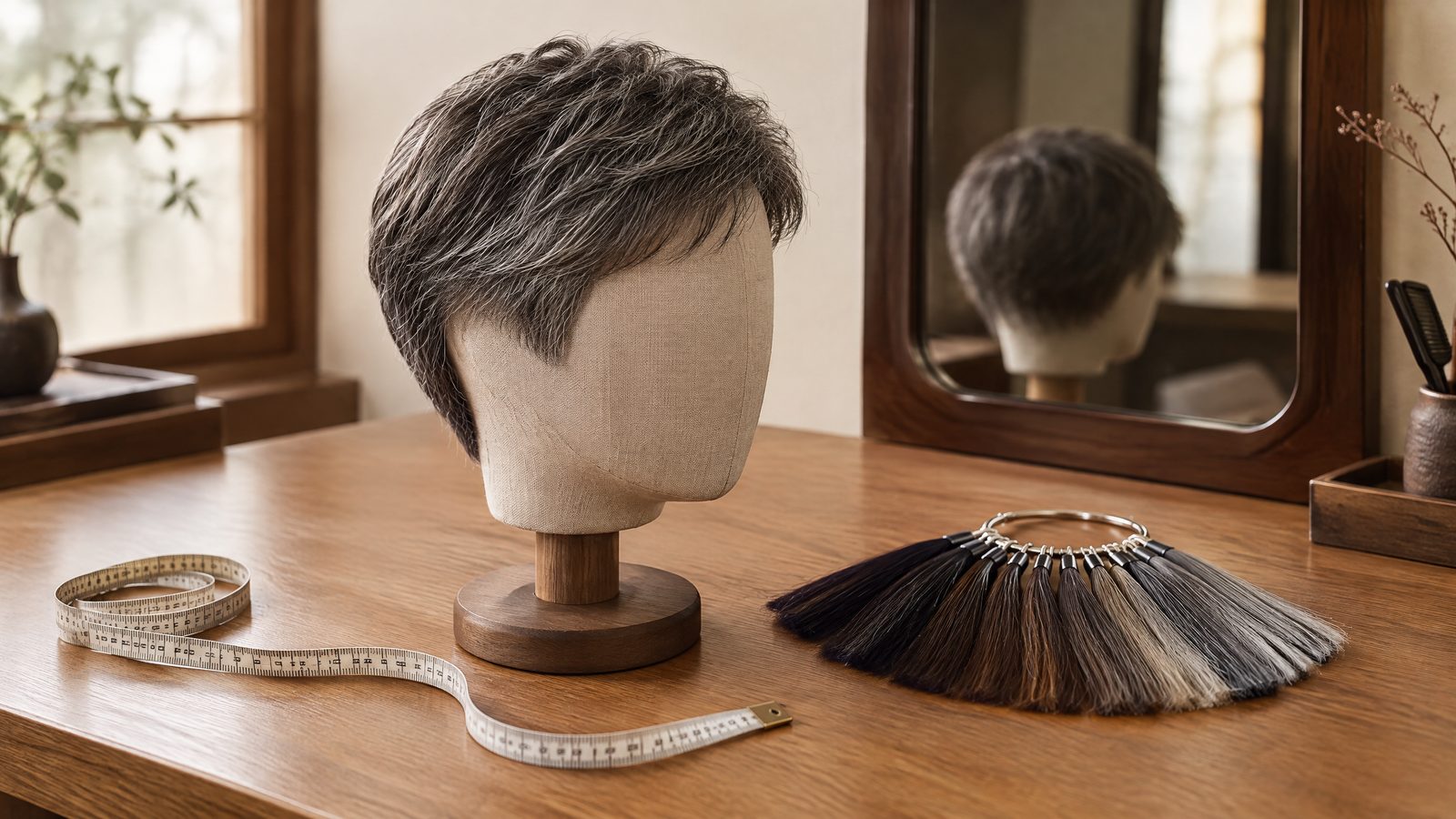
1. What does a proper hairpiece fit mean?
Proper fit describes how the base, head shape, remaining hair, and planned movement work together. The front edge should sit where you intend it to sit. Both sides should be level, and the rear should follow the head without buckling. Fit is not merely a mirror-front judgment. Check the position before styling, because hair can hide an edge that is wrongly placed.
The base is the material structure that carries the hair. A partial piece covers a defined area, while a larger system covers more of the head. Fixing means the method used to hold that base in place. Clips, tape, or adhesive are not interchangeable labels. Each requires a compatible construction, suitable contact area, and a routine you can follow safely.
For men, inspect the fringe, parting, crown, temples, and neckline from ordinary viewing angles. A piece can look convincing from the front but sit too far back when you bend. Look down, turn your head, and view the rear with a second mirror. The test is whether the transition remains believable and comfortable during the moments that matter to you.
Fit is a position decision first, and a fixing decision second.
2. How should you measure before choosing a piece?
Use a soft tape and repeat the same route each time. Mark the intended front edge, then record front-to-back coverage and the widest side-to-side span. Let the tape follow the head’s curve without pulling it tight. Write the unit beside every figure. A measurement without its route is difficult to compare with a base specification or a later fitting note.
A full circumference can help when considering a larger system, but it does not describe a local top piece. For local coverage, mark the visible boundary, the widest point, and the normal parting direction. Check the area under indoor and daylight conditions. This gives a fitter more useful information than one head-size number. It also prevents a generic size label from deciding the purchase.
Do not confuse hair length with base size. Hair length describes the finished style, while base size describes the area supported by the structure. A product listing may show both measurements in inches. Ask which dimension belongs to the base and where its edges are measured. Convert units only after confirming that the routes are comparable, rather than matching numbers that describe different things.
If two readings differ enough to change the shortlist, stop and repeat the process. Ask another person to read the tape around the crown or rear curve. Keep both readings, the date, and the parting used. That record helps distinguish a measuring inconsistency from an uneven coverage area. It also gives the fitter a clear question to resolve during the consultation.
- Measure with your usual parting, not a deliberately flattened style.
- Record front-to-back and side-to-side coverage as separate dimensions.
- Label each figure with its unit, route, and date.
- Use private photographs only as your own angle and placement record.
3. How do base dimensions affect comfort?
Base dimensions affect comfort because every edge creates a contact boundary. A base that stops inside the visible area can leave a gap. One that extends beyond useful coverage may meet hair, temples, or skin unnecessarily. Finished styling can disguise this at first. Inspect the bare placement before hair is arranged, then check whether each edge has a clear purpose on the head.
Assess front, side, and rear edges separately. The front determines the hairline or parting position. Side edges influence temple blending when you turn. The rear must follow the curve without making a ridge. A larger base may add coverage, but it also adds more edge to align and maintain. Styling can soften a transition, yet it cannot correct a base that has been placed incorrectly.
A compact base may suit a defined crown area when there is hair available for blending. Wider coverage may reduce exposed boundaries when the visible area extends further across the top. The trade-off is greater alignment responsibility and more contact area. Ask where each edge will land after normal movement. A useful answer names locations, rather than simply calling the piece secure or natural.
The NHS explains that hair loss can have different causes and advises seeking medical advice when it is worrying. A salon can discuss appearance and fit, but cannot diagnose the cause of hair change. Keep a medical concern with a clinician, especially if it is sudden, painful, or persistent. That boundary keeps a cosmetic fitting conversation focused and responsible. 1
| Situation | Potential advantage | Main check |
|---|---|---|
| Defined crown area | Smaller coverage can preserve surrounding blending hair | Does the rear edge clear the visible area? |
| Wider top area | More coverage may reduce exposed boundaries | Can the side edges transition without strain? |
| Changing parting | Placement options may support styling flexibility | Does the base stay aligned after turning? |
| Very short surrounding hair | Edges are easier to inspect before styling | Is the proposed fixing compatible with available support? |
4. Which fixing method should you compare?
Choose fixing after reviewing the base and the hair available to support it. Clips may suit a removable arrangement when the selected design provides appropriate attachment points. Tape or adhesive may be considered only where the product instructions allow them. A fitting can reveal whether another configuration is more appropriate. Do not copy an online method from a piece with a different base, edge, or purpose.
Hold strength is only one part of the choice. Compare removability, cleaning, skin contact, daily activity, and the styling you expect to do. A method that seems convenient in a short fitting may create work you dislike at home. Conversely, a method with more steps may suit someone who values a particular routine. Evaluate the ordinary week, not only the first impression in a mirror.
Before fixing, ask where the product contacts, how removal works, and which areas must be prepared. Ask what signs mean you should stop rather than tighten or add more attachment. The answer should come from the instructions for that item and from the person fitting it. Write down the guidance while the piece is present. It is easier to follow than an improvised recollection later.
The guide on comparing removable vs bonded hair system for men options can help frame the routine question. Use it to compare attachment styles, then return to the chosen base and your available hair. The relevant decision is not which label sounds stronger. It is whether the selected configuration is intended for the design and practical for your day. Review the item instructions before fixing anything.
5. How can you test movement and comfort?
Test movement during the fitting instead of judging only a still pose. Look straight ahead, turn left and right, then bend gently as if checking a phone. Raise your head again and inspect the front edge, temples, crown, and rear boundary. Notice any shift, lift, fold, or pull on surrounding hair. Repeat the movements you regularly make at work, during travel, or when dressing.
Comfort gives more than one signal. Pressure in one small spot can point to an edge or attachment issue. A general feeling of heaviness can raise a question about design or coverage. Remove the piece if there is pain, marked pulling, or skin irritation. Discomfort is not evidence that the hold is working. Judge comfort while moving, sitting, and speaking normally, not by pressure alone.
The American Academy of Dermatology notes that hairstyles which pull can contribute to traction alopecia. It also says that pain can signal excessive tension. This is general health information, not a diagnosis or an endorsement of any provider. Stop an irritating arrangement and seek a qualified clinician’s advice for ongoing pulling or concerning shedding. 2 Keep that health boundary clear.
Keep a short fitting note on your phone. Record the movement that caused concern, the side that lifted, and whether it happened before or after fixing. For example, note that the right temple lifted when you looked down. That note is more useful than a general comment. A specific observation gives the fitter a starting point for checking position, base shape, or the chosen configuration.
A movement test reveals fit risks that a perfect mirror pose can conceal.
6. What is the decision between local and wider coverage?
Local coverage can be efficient when the concern stays within a clear crown, parting, or small top area. Wider coverage may make more sense when the visible area crosses those local boundaries. Neither option is automatically better. Start with a coverage map, not a preference for the smallest or largest piece. The map clarifies where an edge could blend and where it would remain exposed.
Ask whether surrounding hair can blend at the intended edge. If it can, a local piece may offer a lighter transition. If the edge would land on an exposed area, wider coverage may be easier to position. This is a practical styling decision, not a claim about the cause of thinning or future hair change. Recheck the proposed edge after you turn, bend, and change your parting.
At home, use two mirrors or a phone camera held above eye level. Inspect the crown and rear edge under indoor lighting and natural daylight. Repeat the check with your ordinary parting and the movements you use at work. Note the lighting and angle used. Matching those views during a fitting stops one flattering mirror angle from carrying the whole decision.
Consider this hypothetical screening example: a repeatable 56 cm circumference accompanies a crown map measuring 10 cm by 8 cm. The circumference informs larger-system discussions, while the map informs local coverage discussions. Neither number tells you where every edge should sit. Compare the actual base outline, leave room for blending, and request a fitting before treating either option as final.
| Choice | Useful when | Trade-off to review |
|---|---|---|
| Local top piece | The visible area has clear boundaries | Edges need surrounding hair for blending |
| Wider top system | Concern extends beyond one small area | More alignment and coverage decisions |
| Fuller coverage option | Local edges would remain exposed | Comfort and daily maintenance may change |
| Delay and re-measure | Readings or boundaries are inconsistent | More information can prevent a poor fit |
7. How should Hong Kong salon readers plan the fitting?
Bring your measurement notes, usual parting, and a clear description of a typical day. Mention glasses, forehead exposure, wind, exercise, and whether you want the piece to be removable. A salon consultation is a design conversation, not a medical assessment or an automatic promise of hold. These details help the fitter ask better questions about placement, removal, activity, and the style you actually intend to wear.
OWNSTRAND describes a custom process with viewing options and head-shape measurement. After the piece is made, the process includes a return visit for fit adjustment, washing, cutting, and blow-drying. Its website states that custom making takes about three to five working days. That is not a delivery promise. Ask OWNSTRAND to confirm the selected wig specifications, current timing, quotation, and inclusions for the actual design.
The OWNSTRAND wig cap sizes guide is useful preparation for reviewing circumference, ear position, rear-neck position, and adjustment details. Do not transfer a size from one model to another. Compare your notes with the measurement method and construction of the specific piece. A cap-size reference can prepare the conversation, but it cannot replace an in-person check of placement and comfort.
Published custom prices can help you form a preliminary budget without acting as a catalogue-wide price list. OWNSTRAND lists HK$2,780 for a needle-parting custom option and HK$3,280 for a full needle-parting option. It lists HK$5,680 for a Swiss lace option. Confirm the current quotation, what it includes, and whether the construction suits your plan. Price does not settle the questions of fit, movement, or daily care.
8. What should you confirm before choosing hold?
Before committing, ask the supplier to identify the base material, edge positions, fixing area, and removal steps. Confirm whether the chosen piece is intended for your available hair and normal styling direction. Ask how a later fit check would address lifting, pressure, or an edge that remains visible. Written answers clarify whether an arrangement has been considered or rushed. They also provide a record for later comparison.
Care instructions affect the fixing decision as well. Follow the selected product’s directions for washing, heat, chemicals, and adhesive removal. Do not assume every real-hair piece can be bleached, permed, or exposed to the same heat. A photograph cannot prove compatibility. Clear, item-specific care instructions protect the piece. They also make later fitting discussions more precise, especially if you want to restyle it between appointments.
Use a simple go-or-pause rule. Proceed when measurements repeat, coverage is clear, edges can blend, movement is acceptable, and removal is understood. Pause when pressure is needed to keep position, base dimensions are undocumented, or the method was copied from another model. Pausing is not indecision. It is a practical response when information about fit, hold, or comfort remains incomplete.
For a second measurement reference, ownstrand-wigs.com · hair topper base size explains front-to-back and side-to-side coverage. Use it to organise your notes, then request confirmation of the chosen base dimensions and placement. A useful reference does not establish suitability on its own. The final check still concerns one wearer, one piece, and one intended routine. Bring those notes to the fitting.
Describe the result you want in concrete terms during the consultation. You might want a visible fringe, a softer crown, or a style that can be restyled during the day. Explain your natural hair direction and the moments when the area concerns you most. This language helps the fitter evaluate proportion, edge placement, and density. It also avoids the vague request for maximum coverage at any cost.
Plan a follow-up question before leaving. Ask what to check after the first wear, how to report movement, and which changes need professional adjustment. Keep the original measurements, model name, base dimensions, and care notes together. If you consider another piece later, repeat the comparison. A new construction should not be assumed to behave like the first, even when the style appears similar.
The practical conclusion is straightforward. Measure the intended coverage, compare it with the real base, test ordinary movement, and choose hold only after those steps. Comfort belongs within fit, not outside it. A polished haircut may improve blending, but it cannot correct a misplaced base or an unsuitable fixing arrangement. When facts remain uncertain, arrange a fitting instead of making a rushed purchase.
- Ask for base dimensions and the route used to measure them.
- Confirm edge locations before styling conceals them.
- Test normal movement rather than standing still only.
- Get removal and care instructions in writing.
- Seek medical advice for persistent pain or concerning shedding.
Sources and useful reading
[1] NHS: Hair loss
[2] American Academy of Dermatology: Hairstyles that pull can lead to hair loss
Continue reading
Continue with natural hair planning: Perm for Thin Hair Men HK
Another related decision guide: Custom Wigs and Haircuts: Plan Samples, Fit and Finish
Read our studio background: Vit So and Canvas Texture
Book a Canvas Texture hair consultation
Bring your measurements and styling routine to a Canvas Texture hair consultation. We can discuss the men’s haircut, density, blending, and presentation. Hairpiece fit and fixing details are confirmed separately with OWNSTRAND for the selected piece.
Canvas Texture WhatsAppFrequently asked questions
Is a tighter hairpiece always more secure?
No. Excess pressure can create pain, pulling, or irritation. Security depends on suitable dimensions, alignment, compatible fixing, and the wearer’s routine. Test movement and remove the piece if discomfort persists.
Can I use my old wig size for a new hairpiece?
Not reliably. Different bases, shapes, adjustment ranges, and coverage areas can fit differently. Re-measure and compare the new product’s actual specifications before choosing.
Should I choose clips, tape, or adhesive?
That depends on the base, available hair, skin contact, removability, activity, and product instructions. Ask the fitter to explain the selected configuration rather than copying another model.
When should I ask a doctor instead of a salon?
Ask a clinician about sudden, painful, inflamed, or worrying hair loss, or persistent scalp symptoms. A salon can discuss appearance and fit, but it cannot diagnose the cause.