Men’s Hairpieces or a Perm? Compare Coverage and Shape
Choose a perm when enough existing hair remains and movement is the main goal. Choose a hairpiece when a defined area needs cosmetic coverage. Neither option decides the best outline by itself. First identify the visible area, surrounding density, preferred parting, and morning routine. Those observations prevent a product label from making the decision too early. Compare those details before making any booking.
Planning assumption: a man has a stable-looking crown concern, short sides, and three styling mornings each week. This is a comparison example, not medical advice, evidence of a condition, or a predicted result. He wants a neat side part for work and does not routinely expose his hairline. Different coverage, activity, or styling habits would change the consultation questions. Use that assumption only as a planning example.
This guide separates texture from coverage, then examines the crown, front, materials, consultation, care, and safety. It explains what to photograph, what to measure, and what each answer changes. Use the notes to compare a perm with a piece before chemical work or a bespoke order. A practical decision can remain provisional until samples, fit, and ordinary movement are considered.
Canvas Texture Editorial · 2026-10-16
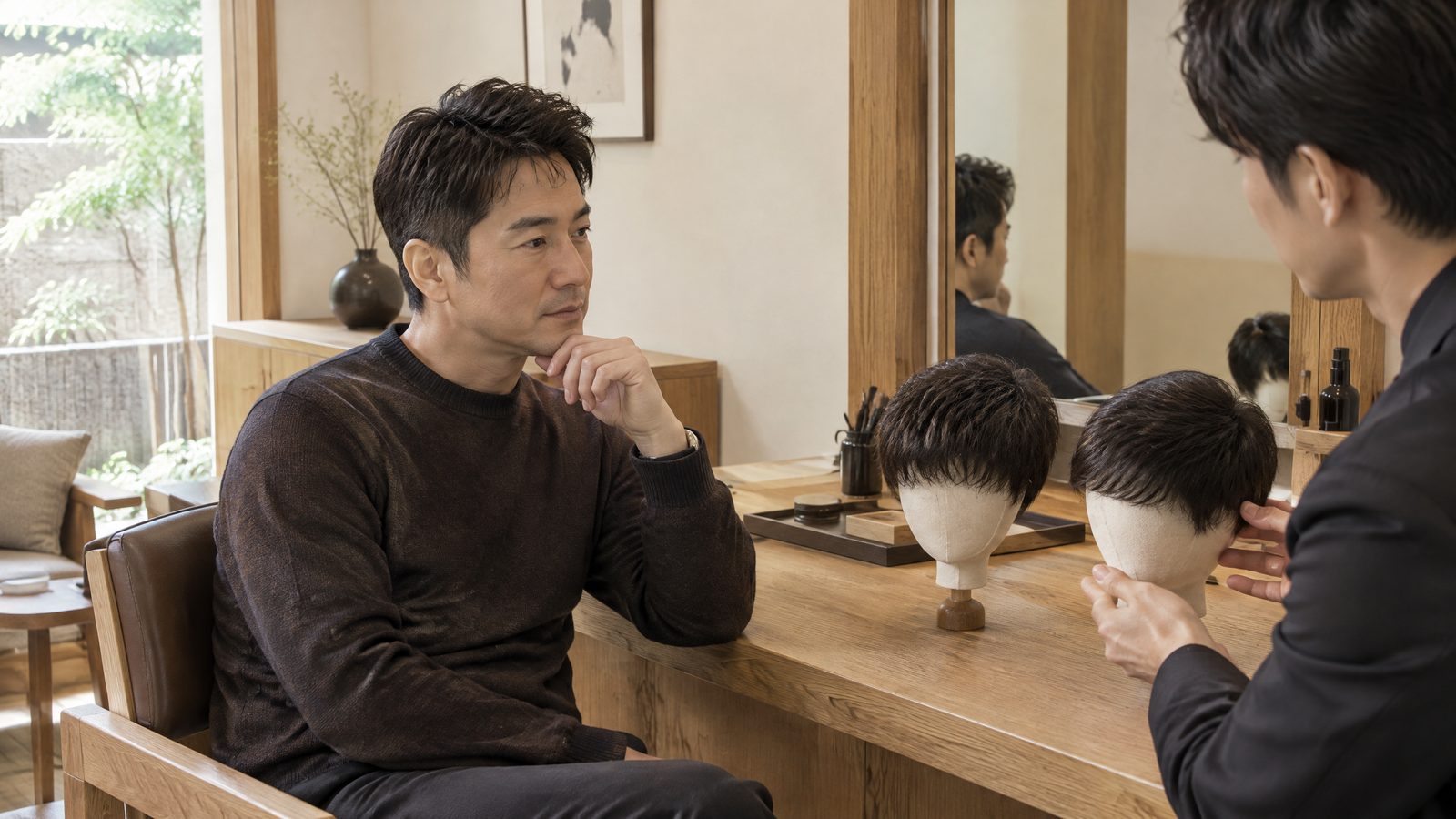
The short answer: texture or coverage?
A perm changes the movement of hair that is already present. It may make retained hair easier to direct across a sparse-looking crown or through a side part. It does not add a new hairline or cover a bare-looking section. Look in a mirror from front, side, and above. If the concern remains obvious after changing direction, investigate coverage rather than promising texture can solve it.
A hairpiece adds hair over a chosen area, so its decision begins with the desired footprint. A crown piece, front arrangement, and broader top option answer different outline questions. Sketch where coverage should start and stop on a photo of your own head. That mark changes the next step. Compare dimensions for a piece, or discuss movement when the boundary is already supported.
Keep the choice framed as a visual task. State whether you need lift around the part. Or state that the marked area needs coverage. Add your usual weekday hairstyle. The first statement leads to a texture discussion. The second leads to a fit and blending discussion. This distinction avoids comparing a chemical service with a product as though they offer identical changes.
Decide what must change in the mirror before naming the method.
Map the area before choosing a solution
Divide the top into crown, part, front edge, temples, and the transition to short sides. Stand under usual bathroom lighting, then inspect in daylight near a window. Note which view bothers you most. A crown that opens under overhead light needs its own discussion. Temples that show when you turn need another. Bring these observations rather than a single general complaint.
Take three unfiltered photographs: front, side, and overhead or rear view. Keep the same dry styling in each image. Label the date, parting direction, and light source. Record whether the concern changes after showering, wearing a helmet, or using product. The record does not diagnose hair loss. It lets a stylist compare your stated boundary with the hairstyle you need to repeat.
Do not self-prescribe a base size from a photograph. Instead, bring the marked images and say what hair must remain visible. For a side part, show which side carries the heavier sweep. For short sides, describe clipper length only if you know it. These details help test whether an edge can sit within a workable transition. They can also expose when a fuller plan needs a different hairstyle.
Crown and hairline coverage are different
A crown follows a swirl, so surrounding hair direction matters as much as apparent thickness. Ask the stylist to show the proposed path from the whorl toward the sides. Move your head while viewing a sample or styled option. If the hair separates at the edge, reassess density, direction, or footprint. Adding height alone may emphasize a break under overhead lighting.
The front is judged differently because conversation exposes its edge and temples at close range. State whether you wear the hair forward, side-swept, or brushed back. Then look at normal speaking distance, not only directly in a mirror. A front plan that suits a fringe may not suit an exposed forehead. If your preferred style reveals the edge, give hairline shape priority over a generic coverage label.
For terminology before an appointment, read the OWNSTRAND hair system guide. Bring its terms back to the item you are considering. It is a related same-owner resource, not an independent endorsement. Ask which dimensions, base, and styling direction apply to the selected piece. Do not treat a category description as proof of fit, appearance, or availability. Write the replies beside the item.
A crown needs a believable direction; a hairline needs a believable boundary.
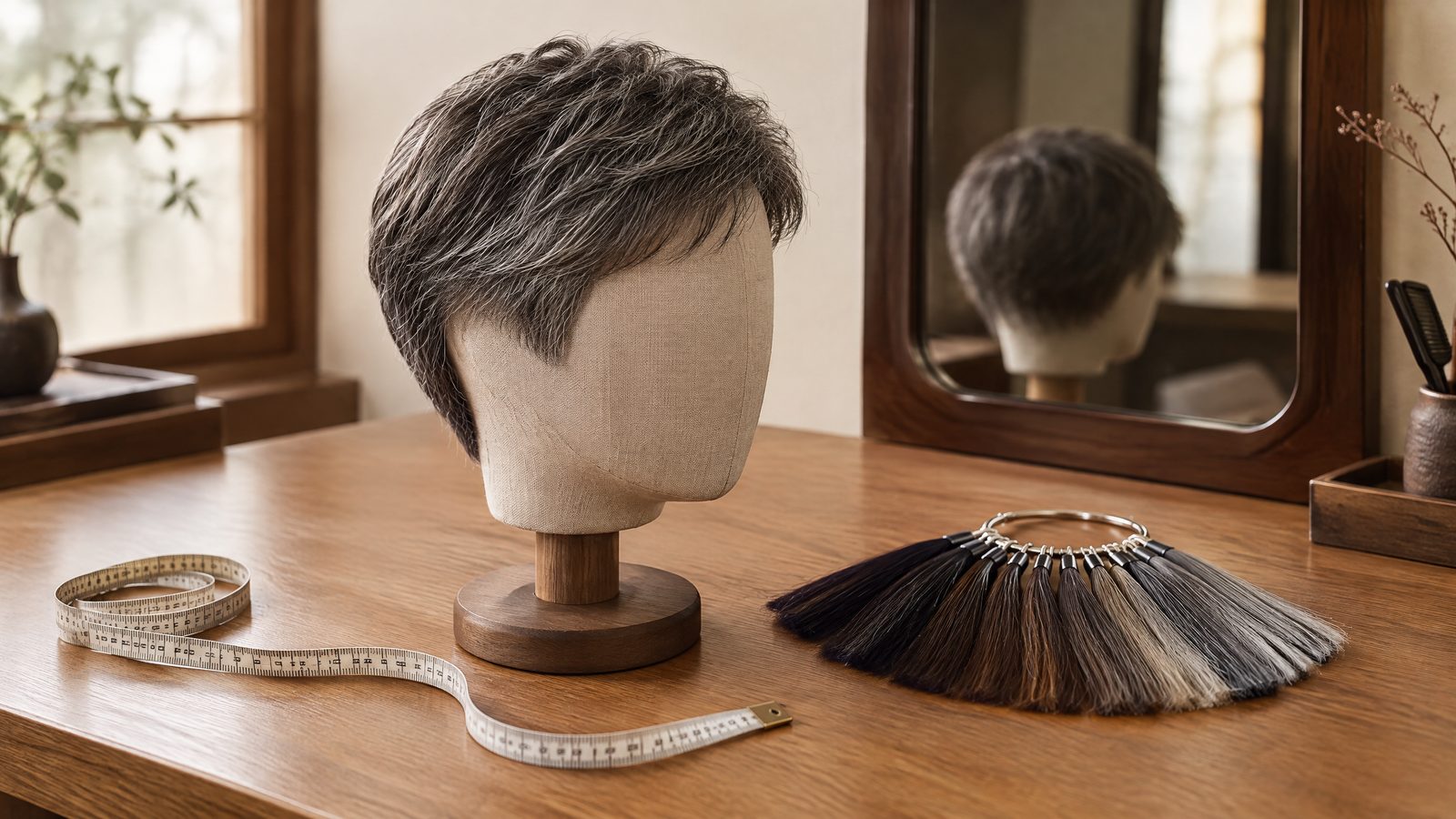
Compare fibres, bases and everyday shape
Fibre affects the way a piece reflects light, moves, and is cared for. Human hair, synthetic fibre, and blends should not be assumed to accept identical heat or chemical treatment. Ask for the fibre listed for the exact item. Then ask what product instructions permit. That answer changes the plan: choose a less demanding style, or reserve a flexible request for a different confirmed material.
Base construction affects where a piece can part, how its edge is seen, and how it sits during styling. Labels such as lace, monofilament, or hand-tied identify features, not a guaranteed natural result. Place the sample beside your own hair. Check the part, edge, and visible top with your normal glasses or beard. If an exposed feature distracts you, change the design before discussing colour refinements.
Use a simple comparison note while viewing materials and bases. Write the candidate name beside its stated fibre and construction. Add one unanswered question, such as heat limits or part placement. This prevents remembered impressions from replacing product details. The table below separates questions that belong to texture from questions that belong to cosmetic coverage. Keep that note with the item details.
| Check | Perm | Hairpiece |
|---|---|---|
| What changes? | Movement in existing hair | Visible coverage and outline |
| What must be inspected? | Retained hair, direction, and condition | Footprint, fibre, base, and edge |
| What changes the next step? | Whether movement supports the intended shape | Whether the boundary can blend with retained hair |
What to check at a Hong Kong consultation
At a Hong Kong consultation, bring one current photograph and one reference hairstyle. Bring a note of your usual part, grey proportion, and when you wash or exercise. Wear your usual glasses if they affect visual balance. Seeing a sample beside your own hair gives a more useful colour comparison than a screen image. The stylist can then separate your preferred shape from the coverage you actually need.
Ask four direct questions: What area will be covered? Where does the edge sit? What hair remains visible? How will I maintain it? Add questions about attachment, cleaning, heat limits, chemical limits, and adjustment arrangements. Write the replies beside the item name. A perm discussion needs comparable notes about current hair condition, service scope, and later regrowth. The list reveals when two quotations include different responsibilities.
OWNSTRAND describes a custom human-hair process with sample viewing, head measurement, later fitting adjustment, washing, cutting, and blow-drying. Its published estimate is about three to five working days for defined custom production. It is not a delivery promise or a timetable for every stocked item. Ask whether your selected option uses that process. Then confirm the current quotation, scope, and appointment timing directly. Record which custom option is being discussed.
- Bring current and reference hairstyle photographs.
- Describe hats, exercise, washing, and usual parting.
- Request the stated dimensions, fibre, and base details.
- Ask whether timing refers to production, fitting, or delivery.
Costs, timing and care without false certainty
Read any price with its named option and included work. OWNSTRAND publishes references of HK$2,780, HK$3,280, and HK$5,680 for listed custom options. Those figures do not describe every catalogue item or every appointment. Ask which option produced the figure, whether fitting is included, and when payment is due. If a comparison lacks that scope, it cannot yet decide between a perm and a hairpiece.
Compare time after the appointment as well as the initial figure. A perm calls for attention to regrowth, cut shape, and the condition of existing hair. A piece can involve cleaning, storage, fitting checks, and styling within its instructions. Write your weekly routine beside each task. If one plan demands steps you will not perform, change the proposal before committing money.
Use the following table as a planning screen, not as a promise of equal results. Put a tick beside the question you can answer confidently. Leave uncertain points blank until an item or service is specified. The empty fields are useful because they show what must be clarified at the next appointment. Take the unanswered list to the consultation before booking.
| Consideration | Perm | Hairpiece |
|---|---|---|
| Central visual task | Direct existing hair into a chosen shape | Cover a defined area and blend its boundary |
| Regular review | Regrowth, cut shape, and hair condition | Cleaning, fit, storage, and styling instructions |
| Question before payment | Does retained hair support the intended movement? | Does the selected footprint suit the intended outline? |
A price becomes comparable only after its scope is named.
Health boundaries and responsible planning
The NHS notes that hair loss has many possible causes and advises seeing a GP if you are concerned 1. A perm or hairpiece cannot identify the cause. Pause cosmetic planning when a change is sudden, patchy, painful, or otherwise worrying. Take dated photographs and list recent changes for the appointment. That record helps a clinician understand the concern without making a salon service carry a medical role.
Pain from tight styling is a reason to stop rather than endure it. The American Academy of Dermatology links repeated pulling with traction alopecia and advises action for symptoms 2. Do not let a cosmetic plan override scalp discomfort, irritation, or ongoing shedding. Seek appropriate medical advice before resuming a tight arrangement. A comfort check changes the next action from styling to pausing.
For a non-medical crown planning resource, read ownstrand-wigs.com · men's hairpiece for thinning crown. It is a related same-owner guide, not an independent review. Use it to compare coverage boundaries, not to decide whether a symptom has a medical cause. If your marked crown area exceeds a stated footprint, request a measurement discussion instead of guessing the size. Bring the marked image with you.
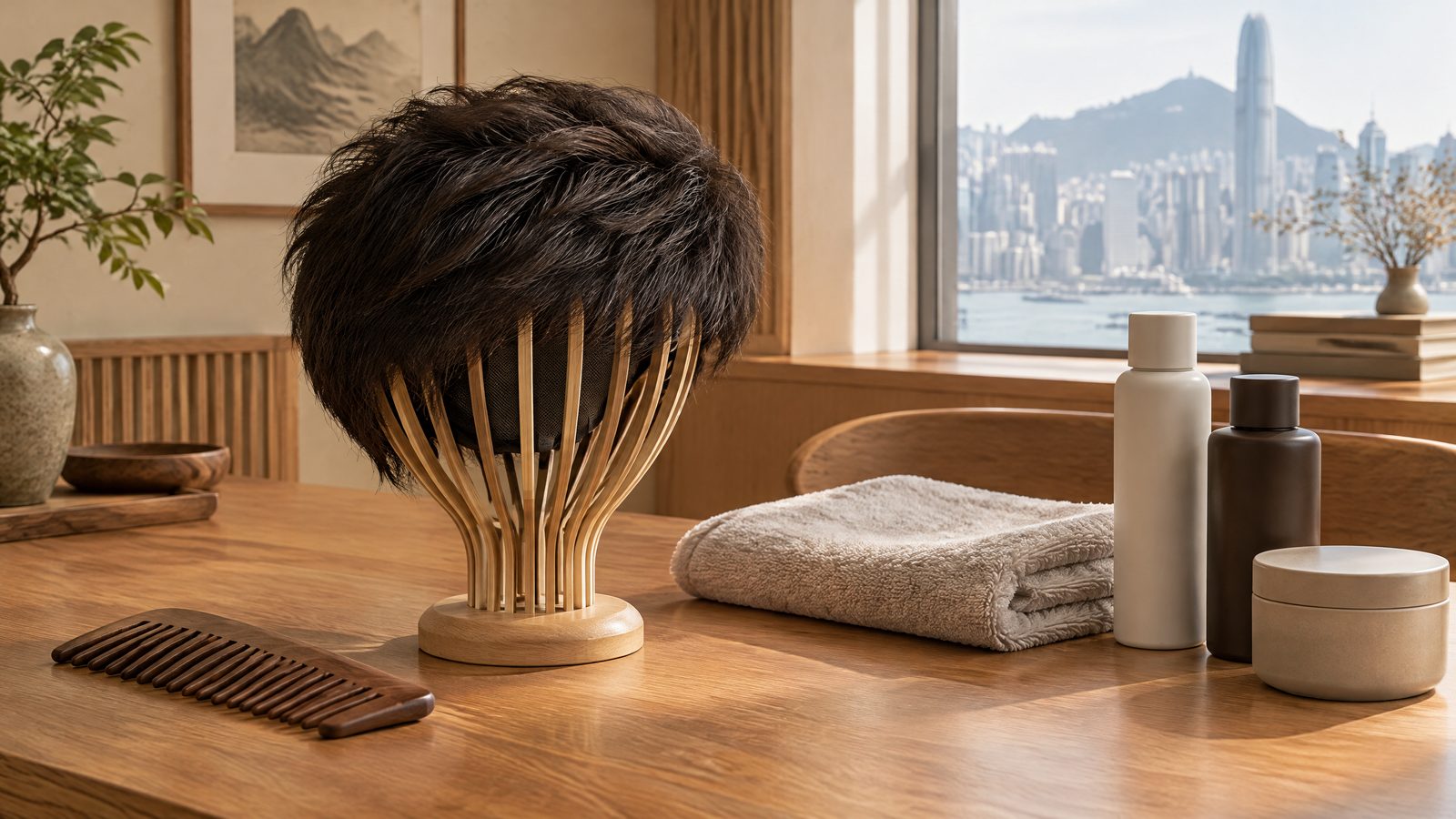
A decision you can take to the salon
Begin with one sentence that names the visible goal. For example, write: ‘I want my crown to look less visible.’ Keep short sides. Add your parting and weekly styling time. This statement becomes the test for both options. If a proposed perm cannot direct retained hair across the marked area, examine coverage. If a proposed piece cannot preserve the short-side transition, revise the footprint.
Under the stated planning assumption, test the crown in its normal side part before choosing a service. Brush it as you would for work. Then photograph the crown under indoor and daylight conditions. If movement improves the outline in both views, ask about a conservative texture discussion. If the boundary remains the concern, bring the marked images to a hairpiece measurement consultation.
At the piece comparison, place the proposed edge against retained hair before discussing a final hairstyle. Check colour beside roots, not only against a swatch. Check density from the front and above. Ask where the part will fall after cutting. If one observation changes the intended style, record that objection. It may matter more than a preferred base label or promotional photograph.
At a perm consultation, explain the exact direction you want after washing and on rushed mornings. Ask how your present length and cut support that direction. Discuss what happens as new growth appears. A texture plan is useful only if it still matches the next haircut cycle. If the answer depends on growing more length first, decide whether waiting suits your calendar.
Create a small comparison card with appearance, time, comfort, and uncertainty as headings. Under appearance, name the view you want to change. Under time, list morning styling and maintenance tasks. Under comfort, note tightness, heat, and scalp sensations. Under uncertainty, write questions about material, fit, or availability. The option with fewer unresolved essentials is normally the wiser next step. Revisit it after viewing samples.
If your concern focuses on the front, read comparing men's hair system for receding hairline options. It is a related same-owner guide, not an independent review. Use it to describe whether the issue is the temples, centre, or whole front edge. Bring that description to measurement. It changes what should be checked: hairline shape, exposed edge, or the wider footprint needed behind it.
Keep the earliest step reversible when possible. View samples, inspect a proposed shape, or discuss texture before making irreversible chemical changes or placing a custom order. Note what looked acceptable in stillness and what changed while you moved. If the answer differs, prioritise the moving view. Daily life involves turning, bending, and speaking, not only facing a mirror. Test ordinary head movement too.
Do not treat discomfort as a detail to solve later. A tight sensation, irritation, or a style you cannot recreate changes the decision immediately. State where the issue occurs and when it begins. That detail helps separate fit, technique, or a personal routine mismatch. If it persists, pause rather than adding more product or stronger styling. Cosmetic goals should not require you to ignore a warning.
Before you leave a consultation, write down the selected area, proposed outline, and unanswered question. Include material instructions, appointment timing, and price scope discussed. Photograph the sample only when permitted. Keep the notes beside your original reference images. On the next review, compare the proposal against your stated goal instead of relying on memory or a general description. Date the note for later comparison.
Choose the next action, not a permanent label. Book a texture discussion when retained hair and desired movement are central. Request measurements when a coverage boundary is central. Seek medical advice when symptoms need it. Wait when material, fit, or scope remains unclear. A well-defined next action protects both the look you want and the questions that remain unresolved. It also keeps the choice flexible.
Sources and useful reading
[1] NHS Hair loss
[2] American Academy of Dermatology: Hairstyles that pull can lead to hair loss
Continue reading
Continue with natural hair planning: Perm for Thin Hair Men HK
Another related decision guide: Natural Hairline Wigs: A Guide to Fringe and Forehead
Read our studio background: Vit So and Canvas Texture
Plan your Canvas Texture hair consultation
Bring your usual hairstyle, coverage concern, and upkeep routine to a Canvas Texture hair consultation. We can discuss perm shape and styling direction. Hairpiece fit, construction, availability, and exact arrangements are confirmed separately by OWNSTRAND.
Canvas Texture WhatsAppFrequently asked questions
Can a perm hide a thinning crown?
A perm can change the movement of retained hair. It cannot add coverage where hair is absent. Compare the crown boundary and available hair before booking.
Is a hair system the same as a full wig?
Not necessarily. A hair system may cover a partial or broader area, while a full wig covers the head. Confirm the selected item’s dimensions, base, and intended coverage.
Can I bleach, perm, or heat-style a human-hair piece?
Do not assume so. Ask about the selected item’s material, construction, and product instructions. Heat and chemical limits must be confirmed for that specific piece.
When should I speak with a doctor first?
Seek medical advice for sudden, patchy, painful, or worrying hair loss, scalp symptoms, or ongoing shedding. Cosmetic services cannot diagnose a cause or promise regrowth.