Human Hair or Synthetic Wigs? Texture and Care Choices
Choose human hair when approved styling flexibility matters. Choose synthetic fibre when a preset shape and simpler mornings matter more. Neither label settles the result alone. Texture, density, cap construction, attachment, and fit shape how a wig looks and feels. Start with the routine you can maintain, then check the exact model’s instructions. That order avoids paying for flexibility you will not use
Here is a hypothetical planning example. Imagine a short weekday style, ten minutes for grooming, no planned colour work, and one fitting visit. Those limits favour a style requiring little reshaping, but they do not predict comfort, price, or availability. They simply clarify the trade-off between routine consistency and styling freedom. Confirm the selected model’s care instructions and fitting route.
This guide explains what each fibre label means and why texture and construction change the decision. It then covers samples, fitting, realistic care boundaries, and Hong Kong planning. It provides definitions, trade-offs, and actions. The aim is not to declare one material better. It is to help you identify the option whose care limits still work on an ordinary week.
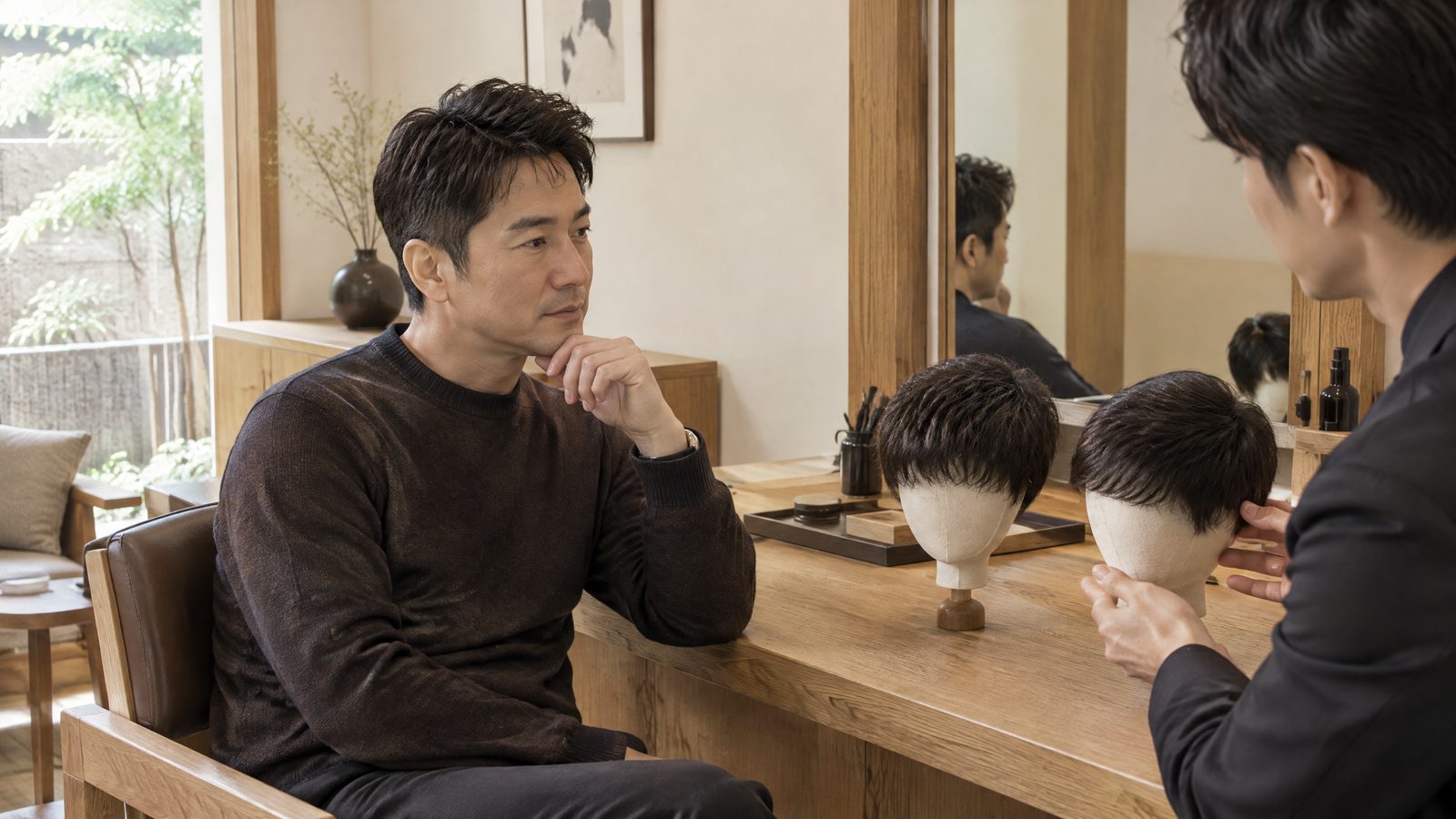
01
What the two wig materials actually mean
Human hair describes the fibre, not the cap, density, hairline, or fit. Synthetic describes manufactured fibre, but its finish and construction also vary by model. Compare the complete system rather than a label. Ask how the fibre reads in daylight, how the base sits, and which styling steps you will repeat. A premium-sounding material cannot correct an unstable perimeter or an unsuitable silhouette.
Human hair can offer more styling change when the maker permits it. See OWNSTRAND human hair wigs guide. Permission for reshaping does not automatically include bleaching, perming, or frequent heat. Previous processing and cap design affect every service decision. Synthetic fibre often holds its original contour more readily. That can simplify mornings, although major changes may be restricted. Compare permitted care with your intended look.
Hand-tied describes a construction method. It does not mean that every part of the cap uses hand work. Check the base, lace, monofilament panel, wefting, and attachment plan individually. A natural-looking top may still need attention at the perimeter. Ask where the hand-tied work appears and how that area responds to movement. Record the answer beside your preferred part, fringe direction, and expected wearing time.
The useful distinction is flexibility versus predictability. Human hair may support a more personal finish, but it usually requires active care. Synthetic fibre may make repeat wear simpler, but alterations can be narrower. Neither label decides whether a piece suits your cut or routine. Treat fibre as one input. Then test texture, cap structure, density, attachment, and the final haircut as one working system.
Choose the fibre by the routine you can sustain, not the finish you admire once.
02
Why texture and movement matter for men's styles
Texture is the visual language of a haircut. Straight fibre reflects light differently from wave or curl. Excessive gloss can look disconnected beside a matte, natural cut. Density also changes the silhouette. Too much crown volume can make a short style look heavy. Too little density can expose the base during movement. Compare texture, shine, and density together, because each changes how the style reads at a distance.
Begin with your outline. Note the temples, fringe direction, crown whorl, and neckline. Decide whether the piece should blend into that outline or create a different one. A short look needs proportion before length. A longer top needs a plan for separation, lift, and daily control. Write those priorities before comparing fibres. No material can repair an unsuitable silhouette or an unplanned transition.
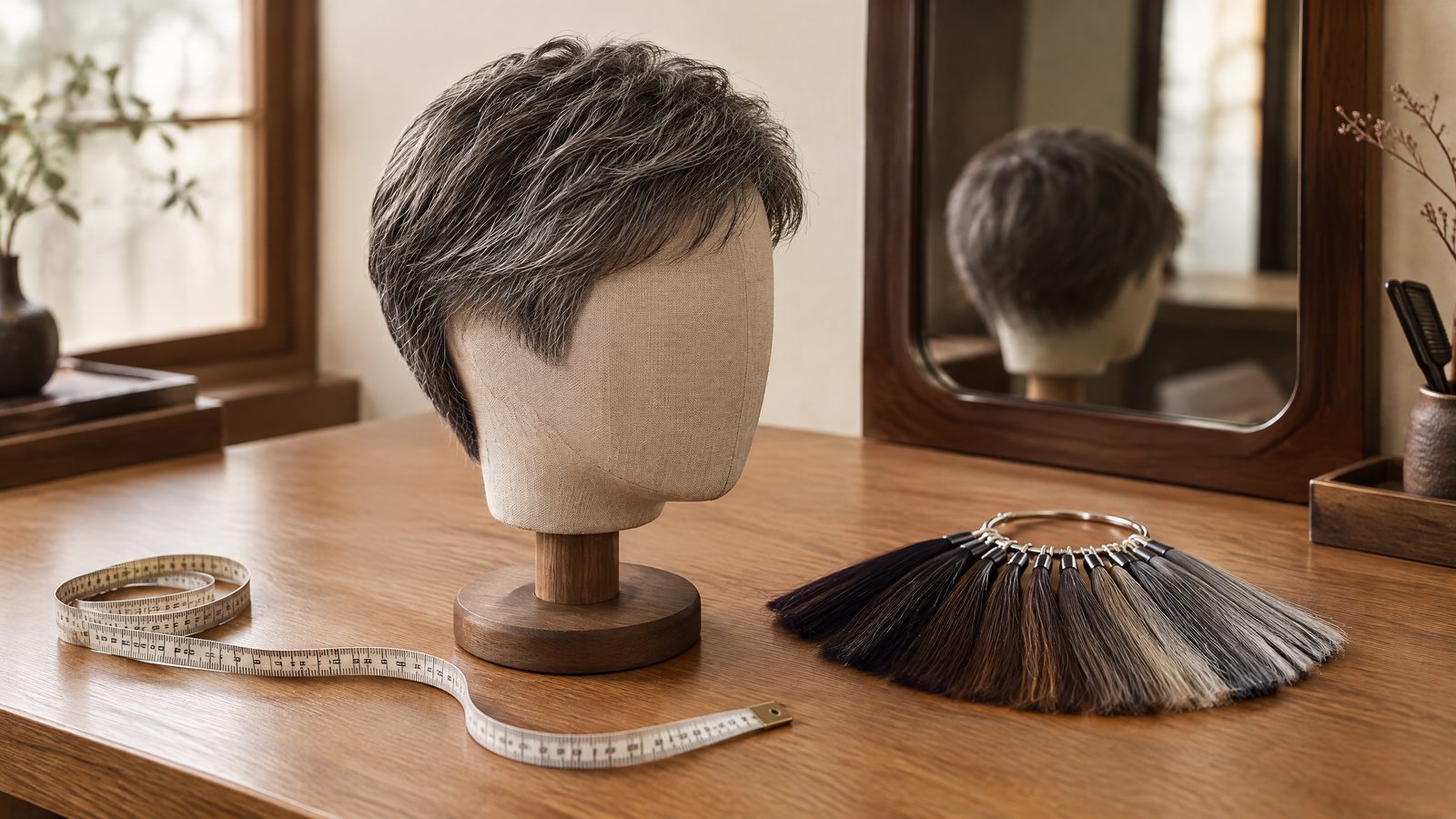
Inspect a sample from the front, side, and below eye level. Turn your head, lower your chin, and look again. These movements show whether shine, direction, and hairline remain believable. A model photograph can hide those details. A sample, colour card, or fitting gives better evidence than one screen image. Use lighting close to your ordinary day. Then repeat the check after the movements you make while moving.
Name the movement you want during the consultation. Explain whether you part left, show the forehead, wear a fringe, or prefer a softer crown. Then state the minutes available for grooming. This converts “natural” into decisions about direction, density, and finish. It also stops fibre from hiding cap or perimeter concerns. A useful comparison begins with a visible target rather than a vague promise of realism.
03
Human hair: strengths, limits, and care
Human hair can suit someone who wants a changing silhouette. When instructions allow, it may be shaped toward a side part, textured crop, or swept top. The benefit is control over the finish. The cost is responsibility for brushing, drying, products, and service choices. Ask what the selected piece permits before planning a haircut or treatment. Do not infer permission from the fibre name.
Treat human hair as processed hair, not an unlimited substitute for growing hair. Friction, repeated heat, and unsuitable products can affect its appearance. Detangle from the ends while supporting the base. Let a trained stylist assess proposed colour or curl changes against the model’s instructions. A restrained adjustment may preserve the piece better than an ambitious transformation with no confirmed method.
The controlling evidence is the selected model’s care instruction. General hair-care advice does not create a heat rating for a wig. Ask which tools, temperatures, products, and services apply to that exact piece. If the answer is unclear, retain the original texture. General rules may not account for fibre history, cap materials, attachment, or previous processing. Keep the written answer with fitting notes for later care.
Before ordering, list every planned activity and service. Include trimming, drying, colour work, exercise, and swimming. Ask which actions the model and attachment method allow. Keep the answer with the quotation and fitting notes. Choose flexibility only when you will use it responsibly. Otherwise, a stable finish with fewer interventions may be the stronger long-term match. The best choice is often the one that removes an unnecessary care task.
04
Synthetic fibre: convenience without assumptions
Synthetic wigs can suit a wearer who values repeatable shape. A preset wave or short contour can simplify mornings. The trade-off is narrower reshaping. Washing, brushing, and cutting can also change the intended balance. Choose a style already close to the desired result. Convenience is most useful when the fibre supports the target outline without routine correction. Ask how the original shape should be restored after cleaning before choosing.
Terms such as heat-friendly, high-temperature fibre, and synthetic are not universal temperature specifications. Read the exact product label. Check whether a stated limit applies to the whole piece or only a stated fibre type. If the maker does not name a permitted tool and temperature, treat heat styling as unverified. For a category reference, see ownstrand-wigs.com · synthetic wigs. Keep the model label with your fitting notes.
Do not assume household dye will colour synthetic fibre as expected. It may not take colour evenly and can damage the fibre. The same caution applies to perming, straightening, or changing the curl pattern. A stylist may discuss a cut that respects the preset shape. That is different from claiming the fibre can be chemically rebuilt. Tie every proposed alteration to the written instructions for the selected model,
The most practical synthetic choice already resembles the target with modest adjustment. Compare fringe length, crown lift, side profile, and nape finish. Check colour under similar light, because screens shift tones. If the model works without repeated heat or chemical change, its convenience becomes meaningful. If it needs constant correction, reconsider the material or silhouette. Low maintenance starts with a closer shape, not stronger product.
05
A practical comparison for daily wear
Use this table as a decision aid, not a product guarantee. It describes common planning tendencies, Models vary in fibre, cap, density, processing, and instructions. The helpful question is not which material wins. Ask which limitation you can manage consistently. That framing admits either a well-fitting synthetic or maintained human hair piece. It also stops price or material status from replacing an honest discussion of routine.
Return to the weekday example. The target is a short side part, worn weekdays, with ten grooming minutes and no colour work. Under those assumptions, a shaped synthetic option may be efficient. If the part must change frequently, human hair may justify more care. This is a planning comparison, not a statement about stock, price, or performance. A fitting must still test the selected model’s cap and texture.
Use this three-part sequence at the fitting: - Define the silhouette and movement you want. - List every care action you will accept at home. - Verify the cap, attachment, and maker’s instructions for the exact model. This prevents labels obscuring a structural mismatch. Write each answer down before comparing prices or photographs. It also gives the stylist a clear order for testing the same priorities.
| Priority | Human hair tendency | Synthetic fibre tendency |
|---|---|---|
| Changing shape | More adaptable when approved | Usually keeps preset shape |
| Morning routine | Needs more active care | Often more repeatable |
| Heat or chemical work | Must be confirmed per model | Only if maker clearly permits |
| Texture consistency | Can vary with styling | Preset finish can be stable |
06
How to compare a sample and cap
A sample review should move from fibre to structure. Feel direction and softness gently. Inspect the base inside and outside. Look at the front, part, crown, sides, and nape. Then place it on the head or a suitable form and observe the outline. This sequence stops striking colour or styling from hiding a poor fit. It also creates notes that remain useful after first impressions fade.
Study the front perimeter. Brush the hair in your normal direction and inspect the temple transition. Lift your chin, turn sideways, and speak naturally. If the edge moves, identify whether size, attachment, or styling causes it. Do not mask a structural issue with extra product. The observation should direct a fitting adjustment. It should not encourage repeated manipulation of the fibre,
Fitting should record more than circumference. Note depth, front-to-back balance, crown position, and neckline contact. A snug cap is not automatically secure, and a loose cap is not automatically comfortable. Explain commuting, office work, exercise, and outdoor time. A broader framework appears in comparing human hair vs synthetic wigs options. Keep the questions specific, then record the answers with your style priorities.
Ask what is hand-tied, which areas are wefted, how the part forms, and which adjustments are available. Ask what changes after washing and which services the provider excludes. Clear answers let a stylist plan a cut that works with the base. They also reveal whether the selected material supports your actual week. A good fitting therefore tests movement, care, communication, and structure together, rather than treating fit as a single measurement.
07
Decision table: match material to routine
A decision becomes easier when the routine is written down. This table uses common planning profiles, not model promises. It shows the hidden cost of convenience. Less daily styling can mean less flexibility later. More flexibility can mean more time, tools, and careful handling. Select the profile closest to your week. Then verify the chosen model’s construction and instructions instead of assuming the material label settles those details.
A traveller may prefer a stable preset contour. Someone changing a part for work and weekends may value reshapeability. If scalp symptoms concern you, separate appearance planning from clinical care. The decision is still practical: select the finish you can maintain, then confirm the structure that keeps it comfortable. Review that choice if your routine changes. A material can become inconvenient after a routine change.
Bring a current photo and a preferred reference. Explain what must stay familiar, such as a low profile, visible part, or fuller crown. The stylist can then compare the material with the intended haircut. This method also helps a companion understand someone else’s preference without assuming the same solution will suit them. A shared checklist makes the conversation clearer than choosing from a model name alone.
Use the table to create questions, not a ranking. Ask what the fibre can do, what the cap requires, and what care is realistic. Compare answers with time, budget, movement, and appearance priorities. This turns a broad choice into a controlled decision. It also makes declining a model easier when its restrictions conflict with your genuine routine. A good decision is specific enough to explain why an attractive option was not selected.
| Routine assumption | Starting direction | Main check before choosing |
|---|---|---|
| Fast, repeatable weekday styling | Synthetic may fit | Preset shape and care limits |
| Frequent part or finish changes | Human hair may fit | Approved styling methods |
| No heat or colour planned | Either can work | Texture, shine, and cap fit |
| Exercise or swimming planned | Either needs planning | Attachment and care conditions |
The right choice is the one whose restrictions still fit your real week.
08
Hong Kong planning, fitting, and realistic timing
Hong Kong planning should separate making time from delivery time. OWNSTRAND describes a route involving samples, fibre and base discussion, head measurement, made-to-order work, and a return fitting. That return visit can include washing, cutting, and blow-drying. Its three-to-five-working-day estimate concerns making, not shipping. Confirm the current route for the selected model, because material, construction, availability, and fitting needs can alter the practical timetable.
OWNSTRAND publishes HK$2,780 for a needle-punched option. It lists HK$3,280 for fully hand-tied and HK$5,680 for Swiss lace. These figures do not promise a price for every catalogue item. Confirm the current quotation and inclusions before budgeting. Ask whether fitting, cutting, or later adjustments are included. That question matters more than comparing a headline figure with a different cap design, hair length, or service scope.
Consider a hypothetical office-style plan. A person wants a neat visible front and can attend one fitting. They compare a sample, record the preferred part and density, measure the head, and reserve time for the return visit. This sequence assumes the selected model remains available. Confirm availability separately. Written notes distinguish selection, production, fitting, home care, and later adjustments. That separation reduces surprises.
Canvas Texture and OWNSTRAND are related brands under common ownership. This guide uses OWNSTRAND pages as resources, not proof that every model suits every reader. Canvas Texture can help clarify haircut direction, texture references, and daily styling priorities. Wig fit, quotation, availability, and final arrangements must be confirmed with the appropriate wig provider. That division keeps hair-planning advice useful while preserving the provider’s responsibility for its own specifications and service terms.
Hair loss can have different causes, and a salon article cannot diagnose them. NHS guidance advises seeking medical advice if you are worried about hair loss 1. A wig discussion can address appearance, fit, and styling. It cannot replace clinical assessment. Pause the appearance decision if the scalp is painful, irritated, or changing unexpectedly. Take those symptoms to a clinician rather than treating hairstyle as a medical solution.
The American Academy of Dermatology notes that prolonged pulling can contribute to traction alopecia 2. Pain can indicate excessive tightness. Stop a painful arrangement and seek appropriate advice. A secure fit should not depend on persistent pulling. Discuss attachment, breaks, and adjustment with a qualified provider before extending wear time. Comfort is part of responsible fitting, not a problem to hide.
Before deciding, confirm fibre, cap construction, density, front design, size, and care method. Then check whether the intended haircut, heat, colour, exercise, or swimming plan is allowed. Finally, confirm the fitting route, quotation, and timing. This checklist keeps a sample from becoming an impractical purchase. It also creates a clear record for later questions when routine or style changes. Keep the original care instructions with that record.
Choose human hair when controlled change matters and active care is acceptable. Choose synthetic fibre when preset consistency matters and its limits are acceptable. Choose neither by label alone. Let texture, cap, routine, budget, and guidance work together. Model instructions vary, availability changes, and fitting results depend on the selected system. That is not a reason to delay the choice. It is a reason to make the final comparison with complete information.
Sources and useful reading
Continue with hair and grooming
Continue with natural hair planning: Deep Hair Treatment HK
Another related decision guide: Men’s Hair System Bases: Check Parting, Fit and Texture
Read our studio background: Vit So and Canvas Texture
Plan your Canvas Texture hair consultation
Bring your preferred haircut, parting direction, texture reference, and daily routine to a Canvas Texture hair consultation. Wig fit and final details should be confirmed separately with the relevant wig provider.
Canvas Texture · WhatsAppFrequently asked questions
Is human hair always more natural than synthetic fibre?
Not automatically. Appearance depends on shine, density, texture, hairline, colour, cap construction, and fit. A well-matched synthetic style can look more coherent than unsuitable human hair.
Can I use heat on a synthetic wig?
Only when the exact maker instructions state the permitted tool and temperature. Heat-friendly is not a universal specification. If the limit is unclear, do not guess.
Can every human hair wig be bleached or permed?
No. Processing history, fibre condition, cap construction, and maker instructions affect what is possible. Ask a qualified stylist to assess the exact model first.
How should I plan a wig if scalp or hair-loss concerns me?
Separate appearance planning from medical care. A salon can discuss fit and style, but cannot diagnose. For worrying, painful, or changing hair loss, seek a clinician. Stop painful pulling.
Related journal articles
Men’s Hairpieces or a Perm? Compare Coverage and Shape
Choose a perm when enough existing hair remains and movement is the main goal. Choose a hairpiece when a defined area needs cosmetic coverage. Neither option decides the best outline by itself. First identify the visible area, surrounding density, preferred parting, and morning routine. Those observations prevent a product label from making the decision too early. Compare those details before making any booking.
Natural Hairline Wigs: A Guide to Fringe and Forehead
Natural hairline wigs look most convincing when the front edge, fit, colour, density, and haircut agree. For a hypothetical four-day workweek side part, inspect both temples under two ordinary light sources before choosing a construction. The aim is a coherent outline in movement. No single feature can decide that outcome. Check the whole frame, not only the centre. Check it while turning your head.
Men’s Hair System Bases: Check Parting, Fit and Texture
Men’s hair system bases should be chosen by the zones that will be seen, not by one construction label. Start with the hairline, parting, crown, and side blend. Then compare samples in the hairstyle you wear most days. That order clarifies whether the decision concerns a softer front, a movable top, stable coverage, or an easier blend. It also prevents a technical term from promising results outside its actual area.