Human Hair Wig Styling: Heat, Perms and Storage Limits
Human hair wigs can sometimes be heat styled, but the individual piece sets the limit. Its processing history, fibre blend, cap construction, and manufacturer instructions should be checked before a tool touches it. A perm is a separate chemical decision, not an extension of heat styling. Treat the label as a starting point, then decide whether the requested result fits the available information.
Planning assumption: one wearer uses the wig three days weekly and heat styles it twice weekly. Over two weeks, that means six wears and four styling sessions. The count identifies repeated handling around the hairline, crown, and ends during ordinary use. Write those locations down. It is not a durability study, temperature recommendation, or promise about how the wig will respond.
This guide separates heat, permanent waving, fibre care, and storage. It is written for Hong Kong men preparing for a salon conversation. You will learn what to photograph, what to bring, and which question changes the next action. The goal is a practical appearance plan, not a broad guarantee about every human hair wig. It also explains what to do when information is missing.
Canvas Texture Editorial · 2026-10-16
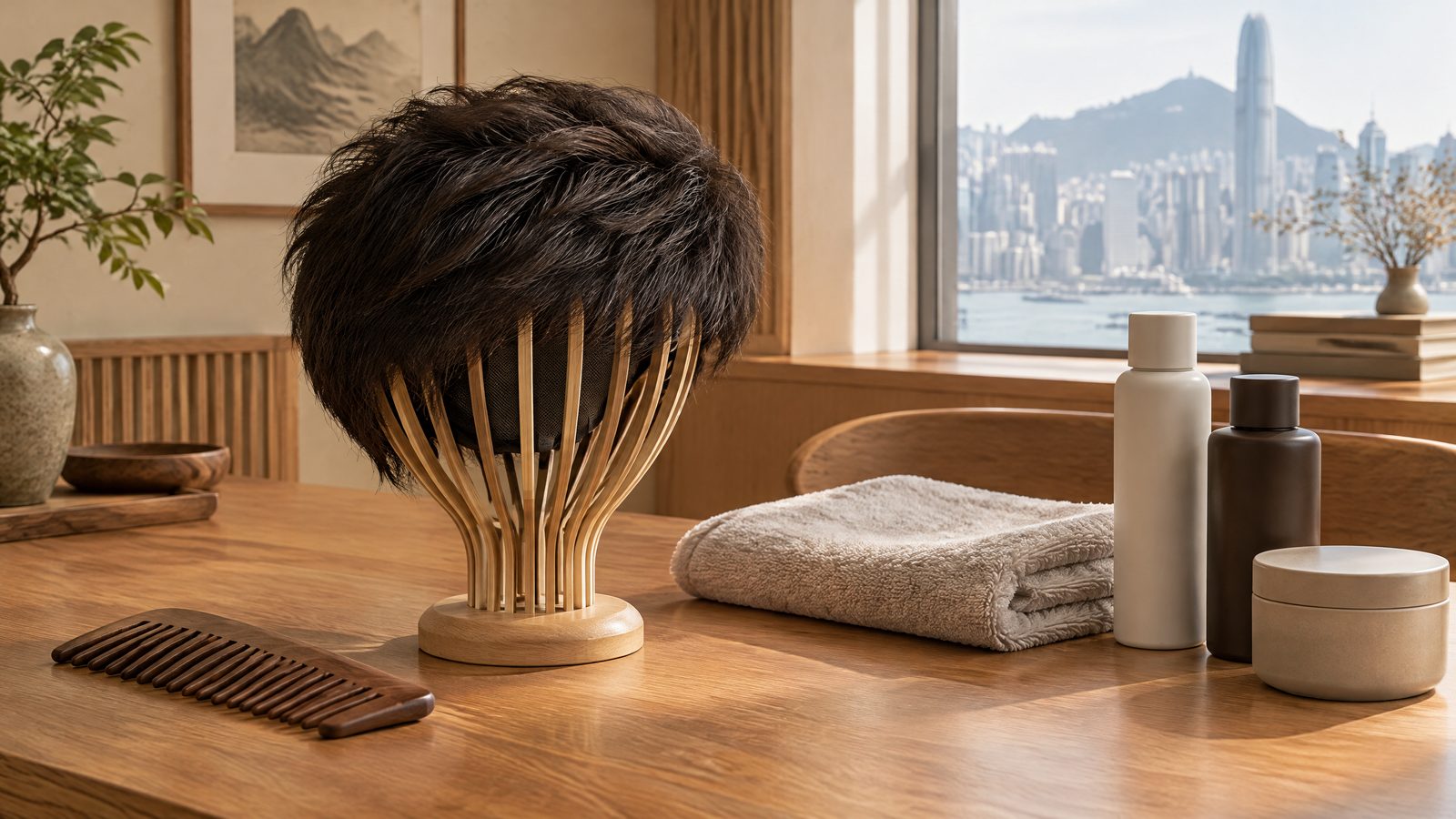
Start with the individual wig
Human hair describes the source of the fibre, not a universal styling licence. A wig may already have colour work, heat exposure, or altered texture. Lace, knots, clips, adhesive zones, and the cap can have their own limits. Ask what was previously done to the piece. If nobody can identify its history, preserve the existing shape rather than testing stronger treatments.
Before an appointment, record the current colour, curl pattern, cap type, and approximate purchase date. Photograph the front edge, crown, nape, and ends in daylight. Note new tangling, roughness, loose stitching, or changes after washing. These are observable care details, not a diagnosis. They give the stylist a clearer basis for choosing a conservative finish or delaying the request. Use one consistent location.
For a men's look, define the visual goal by area. A flatter fringe, lifted quiff, softer crown, or tidier temple requires a different approach. Say how much time you will spend each morning. Bring the wig, its label or care card, and two reference images. Ask whether the requested change affects only the hair, the cap, or both. That answer decides whether styling, selection, or waiting makes sense.
A material label starts the conversation; the piece’s history decides the treatment.
Keep heat and permanent waving separate
Heat changes the visible lay of dry hair for a temporary styling result. A permanent wave uses chemicals, tension, timing, and neutralising steps to alter curl structure. One process does not approve the other. A wig that accepts limited heat may still be unsuitable for chemical waving. Compare the desired effect with the extra daily maintenance before choosing either route.
The longest hair is not always the most vulnerable area. Lace fronts, hand-tied zones, knots, glued sections, and blended fibres may need different protection. Check where a proposed tool or solution would travel. If it approaches a delicate edge, reconsider the shape goal. A smaller adjustment may preserve the front while still improving the overall silhouette and parting. Photograph the sensitive area before deciding.
When the target is a looser wave, compare three routes before considering chemistry. Keep the original texture and change the cut direction. Use a temporary heat finish only when permitted. Or choose a wig with a closer original wave. The OWNSTRAND can you use heat on a human hair wig guide is a same-owner related brand resource. It helps frame questions, but the maker’s instructions decide the method.
Choose the smallest change that solves the visible styling problem.
Plan a controlled heat finish
Begin with clean, fully dry, detangled hair and a stable support. Identify the single area that changes the appearance most. For a side part, that may be the front direction. For a fuller crown, it may be a small root area. Styling every section increases handling and may not improve the result. A focused plan keeps the adjustment tied to one visible purpose.
Write a short plan before using a permitted heated tool. List the tool, intended section, movement direction, and visual stopping point. Make that point observable. The fringe may clear the eyebrow, or the crown may stop splitting. This record prevents repeated passes because the result lacks salon-photo symmetry. It also lets you compare the next session with a specific earlier method.
Keep the tool moving and watch the hairline, ends, and cap edge during styling. Stop if the approved method no longer gives a predictable response. After cooling, inspect for stiffness, changed curl, unusual shine, roughness, or a disturbed parting. Do not borrow a temperature from another wig or video. If instructions are missing, retain the original texture or use a no-heat direction change.
- Bring the product label and prior care notes to the appointment.
- State the one visible area that must change.
- Record the permitted tool and the visual stopping point.
- Inspect the hairline, crown, ends, and cap after cooling.
- Change the plan if the maker cannot provide a model-specific method.
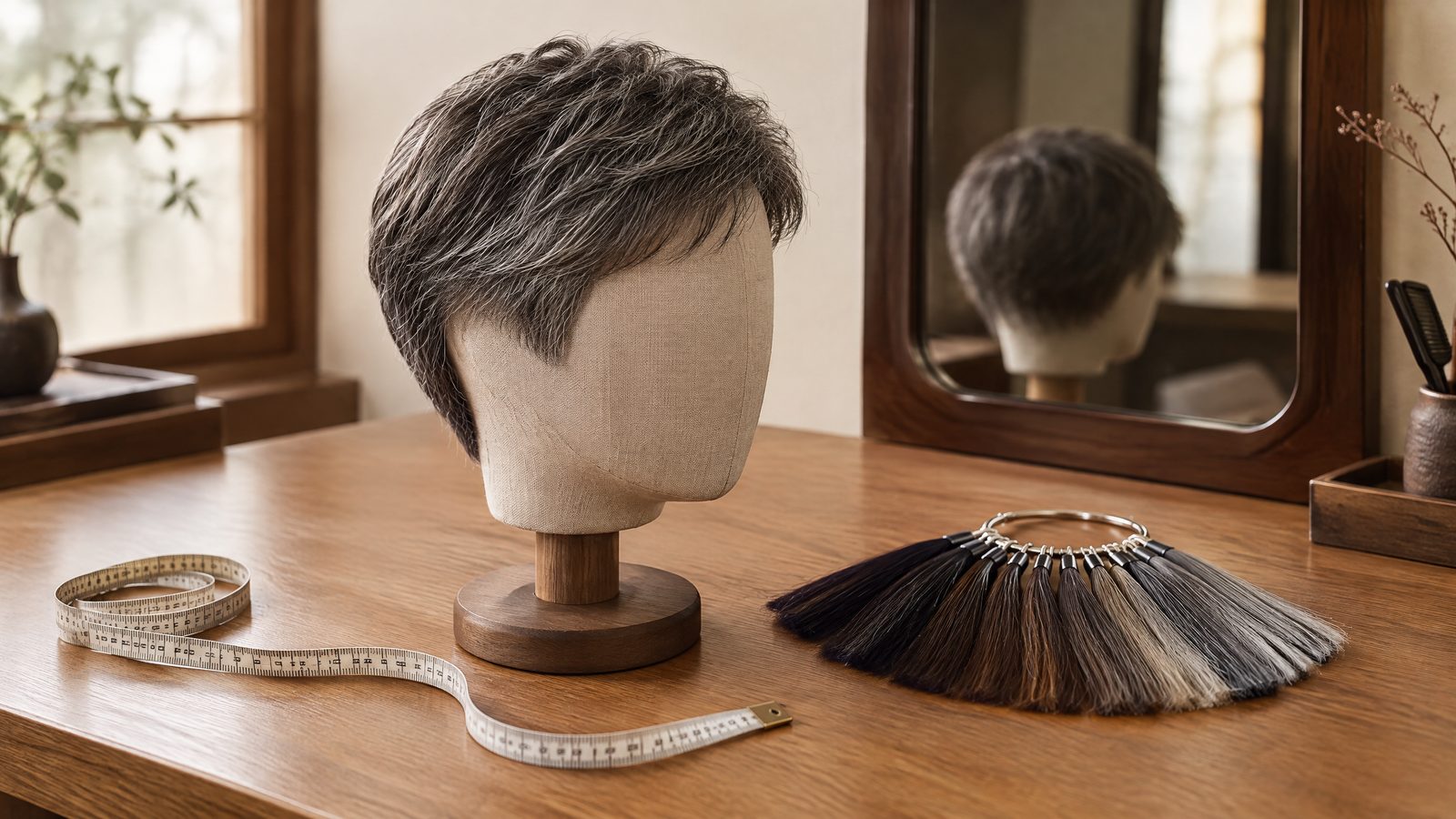
Decide whether a perm is worth the trade-off
A perm deserves a separate decision because it changes more than the first-day shape. It can affect how hair separates, dries, reflects light, and takes product. Before discussing chemistry, say whether you need volume, a softer outline, or an obvious curl. Each target may have a lower-intervention alternative. Separating the target from the process makes comparison more honest. That comparison preserves the available choices.
Unknown processing history is a reason to pause rather than test at home. Dry ends, persistent matting, uneven colour, loose knots, or cap repairs also change the calculation. These observations do not prove a poor outcome. They show that the original finish has value and may be difficult to recover. Photograph those areas and ask whether they rule out the requested chemical service.
Compare the future routine, not only the reference photograph. A tighter wave can need more separation, controlled drying, and product work. A short men’s piece can reveal uneven curl near the front edge quickly. If mornings need to be fast, a gentler wave may be more suitable. A closer ready-made texture can also deliver the silhouette without adding an uncertain chemical step.
Ask which part of the request cannot be achieved conservatively. For example, ask whether the desired lift comes from curl, cut, density, or placement. The answer changes the next action. You might choose a trim, a different texture, or no chemical service. A useful consultation names the compromise before work begins, rather than after the original finish has already changed.
Match care to the fibre and cap
Human hair, synthetic fibre, and mixed constructions can look similar under salon lighting. Their washing, drying, and shape-changing rules may differ. Check the model label before borrowing a routine from another piece. In a mixed wig, follow the most restrictive relevant instruction. That decision protects the section with the least styling tolerance, rather than assuming every visible fibre behaves identically.
Human hair may offer more styling latitude when the maker permits it. Synthetic hair may retain a designed shape with less daily reshaping. Neither quality makes one choice universally better. Decide which matters more for your routine: changing the look often or keeping a predictable outline. Write that priority beside the model name, because it changes which care burden is acceptable.
The ownstrand-wigs.com · human hair vs synthetic wig care resource can organise the comparison. It is a same-owner related brand resource, not an independent review. Use it to list fibre and cap questions for the model. Do not transfer a human-hair wash, heat, or drying method to synthetic fibre without explicit product approval. Save the answers with your care notes.
| Decision point | Human hair | Synthetic or mixed fibre |
|---|---|---|
| Shape change | Possible only when model instructions permit it | Usually retain the designed shape unless labelled otherwise |
| Heat planning | Check the exact method and protected areas | Require clear model-specific heat approval |
| Best comparison | Custom styling versus added maintenance | Predictable finish versus reduced flexibility |
| Before storage | Check hair and cap care directions | Protect set fibre and follow the label |
Store the wig for its next use
After removal, use fingers or a suitable brush to release loose tangles from the ends upward. Avoid pulling from the root or dragging the cap. If humidity reached the inside during a Hong Kong day, allow the cap to air according to its instructions. Check seams, dense areas, and attachment points, not only the outer hair. Those hidden areas determine whether storage should wait.
Do not place a damp wig in a closed bag, drawer, or cupboard. Outer hair can feel dry while the cap still retains moisture. Choose a clean, shaded, ventilated position away from steam, strong sun, and direct heat. Storage protects the present condition. It does not replace the product’s washing schedule or authorise more styling. Decide first whether the immediate need is drying, resting, or transport.
Cancer Research UK notes that wigs can use real hair, synthetic fibre, or a mixture. It advises following manufacturer instructions before using heat on synthetic wigs. It also notes that photographs and private fitting can help selection. 2 Those points support product-specific planning, not a natural-appearance guarantee. Use photographs to compare shape and fit questions during an appointment. Bring those photographs to a fitting.
Use comparing how to store a wig options to compare a stand, roomy bag, and clean drawer. It is a same-owner related brand resource, not an independent recommendation. Compare cap support, dryness, pressure, and travel needs. The appropriate option solves your actual handling problem. It should not add stretching, a sharp fold, or another unnecessary transfer. Do that before buying storage.
Choose storage by situation
For an overnight rest, a suitable stand can protect a shaped crown if the cap sits naturally. Check that the support does not stretch the cap, pinch the front, or crush the hair. A poorly fitted stand can distort the area you want to preserve. Drying support and long-term storage support are not always interchangeable. Assess the fit with the wig fully settled, not while balancing it briefly.
For travel, use a roomy protective bag or case only after the wig is fully dry. Arrange long lengths without sharp folds, then keep heavy objects away from the top. Ask whether the container leaves the front, crown, and ends uncompressed. If it does not, carry the piece separately. Saving luggage space is not worth creating a crease that changes the next day’s styling.
For a longer break, inspect hair, cap, and fastening areas before storage. Remove loose tangles, follow the maker’s cleaning method if needed, and allow complete drying. Photograph any existing crease or loose thread. That record helps distinguish an older issue from a new one when the wig returns to use. It also gives a fitter concrete details if repair or reassessment becomes necessary.
Use each storage method for one clear purpose: rest, drying, transport, or a longer break. Avoid unnecessary transfers between surfaces because each one can catch lace or disturb a parting. If your setup adds pressure or repeated handling, change it. A clean open shelf may be safer than an unsuitable accessory. The right method is the least disruptive one that protects the current shape.
| Situation | Starting option | Check before reuse |
|---|---|---|
| Overnight at home | Suitable stand or protected surface | Cap is unstretched and crown is uncrushed |
| Travel | Roomy dry bag or case | Ends and front were not folded under pressure |
| Several weeks away | Clean, dry, supported container | Seams, knots, and cap remain dry and intact |
| No dedicated storage | Clean open surface away from heat | Nothing rests on the hair or cap |
Prepare a useful salon conversation
Make a one-page record before the appointment. Include the fibre label, cap type, prior styling, current concern, and goal photograph. Add a planning assumption about weekly wear and styling frequency. A stylist can then separate documented facts from guesses. That distinction is more useful than asking whether all human hair wigs behave alike. It also shows which product detail needs confirmation before a service discussion.
For men’s blending, check the front edge, temple area, crown direction, and connection with natural hair. Take one photo facing forward and one from each side. Note where a part opens or where hair lifts after commuting. These observations let the stylist judge the visible transition. They are more useful than a reference photograph that hides the cap edge or natural hairline.
Ask a question that changes a decision. Ask whether the front edge can be redirected without heat. Ask which existing texture needs the least daily work. Ask whether the cap needs protection near the crown. Each answer points toward a route: conservative styling, a different piece, a fit review, or no service. Avoid vague requests for a result that should work for every situation.
Canvas Texture can discuss haircut direction, density appearance, and a realistic daily routine in a men’s hair consultation. Wig arrangements require separate confirmation. Bring the piece and its care information rather than relying on memory. A consultation can clarify an appearance plan, but it cannot approve undocumented chemical processing. State whether the appointment goal is assessment, a haircut direction, or a styling discussion.
Before wearing or storing the wig, inspect the hairline, ends, parting, clips, lace, and adhesive zones. Notice moisture, new tangles, sharp creases, or a changed cap shape. If the result looks rough, do not automatically add more heat. First decide whether gentle detangling, permitted washing, or professional inspection addresses the actual issue. This sequence prevents one problem from becoming several changes at once.
If the cap feels painful, irritating, or unusually tight, remove it rather than repeatedly tightening the fit. A salon can discuss appearance, placement, and routine. It cannot diagnose scalp or hair-loss concerns. NHS guidance explains that hair loss can have many causes and advises speaking to a GP if you are worried. 1 Use that boundary to decide when a medical conversation is needed.
Do not expect a fixed service life, perfect curl, or universal heat setting. Fibre condition, prior processing, cap construction, storage, and handling all affect the outcome. The next step may be a closer ready-made texture or a no-heat finish. Choose the option that remains manageable on a normal working morning. A smaller plan that you can repeat is usually more valuable than a dramatic first result.
Sources and useful reading
[1] NHS: Hair loss
Continue reading
Continue with natural hair planning: Pre-Perm Treatment HK
Another related decision guide: Hair Toppers or Full Wigs? Help Family Compare Coverage
Read our studio background: Vit So and Canvas Texture
Book a Canvas Texture hair consultation
Bring your styling goal, current routine, and reference images. Canvas Texture can discuss a practical men's hair direction. Confirm wig arrangements separately before any heat or chemical service.
Canvas Texture WhatsAppFrequently asked questions
Can you use heat on a human hair wig?
Sometimes, but the specific model decides. Check the fibre, processing history, cap, dry condition, and maker instructions. Use only a permitted method, then stop when the visual goal is met.
Can a human hair wig be permed?
A perm needs a separate assessment. Human hair alone does not show that chemical processing is suitable. Unknown history, dry ends, tangling, colour work, and cap construction can all alter the decision.
Should a wig be stored on a stand?
A correctly sized stand can suit a short rest when it supports the cap without stretching it. A roomy bag or container may better suit travel or longer storage. Store the piece dry and away from pressure.
What should I do if a wig feels uncomfortable?
Remove it if there is pain, irritation, or unusual pressure. Arrange a fit check instead of repeatedly tightening it. Persistent scalp symptoms or hair-loss concerns should be discussed with a clinician.