Men’s Corporate Portraits: A Hair and Makeup Preparation Brief
The most convincing corporate portrait is not the one with the most styling; it is the one where your hair, skin and facial hair look intentional, comfortable and consistent with your role. Start with a realistic haircut plan, control shine and flyaways without changing your identity, and agree how glasses, beard lines and lighting will be handled before the camera comes out.
01
1. Decide what the portrait needs to communicate
Before choosing a product or booking any grooming support, define the job of the image. A senior adviser may want calm authority; a founder may prefer a more relaxed, current appearance; a client-facing professional may need warmth without losing precision. The same haircut can communicate different things when paired with a sharp side part, an open collar, a matte finish or a high-gloss styling product. The useful question is not ‘How can I look younger?’ but ‘What should a first-time viewer understand about my role in two seconds?’
Your answer also sets the acceptable amount of change. If colleagues would not recognise you because your hair has been flattened, your beard reshaped or your complexion heavily altered, the grooming has gone too far. If the image is for a staff directory, consistency and recognisability usually matter more than fashion. If it is for a personal brand, you have more room to show texture or individuality, but the result still needs to look like a version of you that can walk into the meeting represented by the photograph.
Lighting changes the decision. A large soft source can make skin look even while revealing stray hairs around the crown; a harder source can emphasise shine, beard texture and dry patches. Ask the photographer what light direction and background are planned, then take a few phone photos in similar conditions. This is a better test than judging your grooming only in a bathroom mirror, where overhead light and a familiar angle hide problems a camera may reveal.
- Write down the audience, role and intended tone in one sentence.
- Choose one feature to retain as recognisably yours: natural curl, beard texture, hairline or a familiar parting.
- Identify constraints early, including glasses, headwear, religious grooming practices or a workplace dress code.
02
2. Build the haircut plan around the shoot, not the other way around
A corporate portrait is a close crop, so small transitions become visible. A fresh fade can look exceptionally crisp but may appear stark for the first few days; a blunt trim can settle into a more natural outline after washing; and a major change gives you no time to discover that the fringe falls into your eyes. For most men, the safest approach is to keep the basic shape familiar and make only controlled refinements: clean the neckline, remove obvious bulk, tidy the sideburns and preserve enough length to move naturally under the light.
Do not rely on a vague request such as ‘make it professional’. Bring one or two reference images showing the silhouette you want, and explain what must not change. Tell the stylist whether the photograph will be a front-facing headshot, a three-quarter portrait or a wider editorial image. Also mention whether you will wear a parting, push the hair back or allow a fringe. These details affect how much weight should remain at the front and crown.
A small amount of texture is often more forgiving than a rigid helmet of product. Work styling product through towel-dried hair in a modest quantity, concentrate it where control is needed, then check the profile and crown. Matte clay can reduce a wet appearance, while a light cream can preserve movement in fine or wavy hair. Product choice is not a rule about hair type; it is a trade-off between hold, separation, shine and how easy the hair will be to reset after a collar or glasses move it.
If you need specialist coordination rather than a simple haircut, a business portrait makeup artist can discuss corporate headshot makeup alongside the role, glasses and shoot lighting. This is a related-brand resource, not an instruction that every portrait needs makeup or a promise of a particular result.
| Situation | Prioritise | Avoid |
|---|---|---|
| Fine or thinning hair | Light texture, controlled direction and a natural matte finish | Heavy wet gel that separates the hair and exposes scalp |
| Thick, wavy or curly hair | Defined shape, frizz control and room for movement | Brushing the texture flat without testing the result on camera |
| Receding hairline | A familiar cut with balanced proportions and a clean outline | A last-minute dramatic comb-over or unfamiliar fringe |
| Short fade or buzz cut | Neat edges and even scalp finish under the planned light | Assuming every bright light will hide redness or shine |
03
3. Prepare skin and facial hair without disguising yourself
Skin preparation should make the surface comfortable and less reflective, not erase every line. The evening before, use the products you already know your skin tolerates; avoid experimenting with a strong exfoliant, peel, fragranced oil or new aftershave immediately before a portrait. On the morning, cleanse gently, moisturise if you normally do, and allow the product to settle before styling. A well-rested, hydrated surface is easier to manage than skin that has been scrubbed aggressively in an attempt to look ‘fresh’.
Shaving timing is personal. Some men get a cleanest line immediately after shaving; others develop visible redness or small bumps and look calmer when they shave the night before. Treat this as a testable routine, not a universal rule. If you wear stubble, choose the length and boundary deliberately. Check the neck from the side, trim stray hairs at the upper cheek only if that matches your normal appearance, and do not redesign your beard for a single photograph unless you have time to live with the change.
A small amount of camera-aware makeup can reduce uneven shine or tone while leaving beard texture and expression visible. It should be matched to the face, beard and lighting rather than applied as a generic mask. If a product stings, causes redness or feels unfamiliar, remove it rather than hoping the camera will hide the problem. The US Food and Drug Administration’s consumer guidance recommends clean hands, clean and closed containers, and following label warnings; it also notes that terms such as ‘natural’ or ‘hypoallergenic’ do not guarantee safety 1. This is general US consumer guidance, not a Hong Kong legal approval or a certification of any provider’s products.
When a team is being photographed, individual differences matter. One person may want visible freckles, another may want a small blemish softened, and another may use no complexion product at all. Agree the principle in advance: improve distracting shine and temporary redness where requested, but preserve distinguishing features and avoid making everyone look like the same face.
04
4. Make glasses, eyes and brows work with the frame
Glasses are part of your professional identity, so decide whether the portrait should show them rather than treating them as an afterthought. Clean both sides of the lenses and bring the pair you actually wear. A second frame may create a more fashionable reflection but can make the image less useful to people who know you. Ask for a few test frames with a slight chin or head adjustment before changing your eyewear or applying extra product around the eyes.
Brows should be tidy, not over-sculpted. Remove only hairs that clearly sit outside your usual shape, and avoid a first-time waxing or threading appointment close to the session. Under-eye darkness, redness and eyelid shine can be moderated with a small amount of well-blended product, but too much coverage gathers in lines and becomes more visible in a close crop. Natural blinking, relaxed eyes and a jaw that is not clenched will do more for credibility than dramatic eye definition.
Eye-area hygiene deserves particular care. FDA guidance advises not sharing eye cosmetics, avoiding eye cosmetics when an eye infection or inflammation is present, and stopping use if irritation occurs 2. It also warns against using saliva to re-wet mascara and against applying eye makeup in a moving vehicle. These are safety reminders, not claims about Hong Kong law; if discomfort persists, seek medical advice rather than trying to cover it for the photograph.
05
5. Use a practical shoot-day workflow
A reliable workflow reduces rushed decisions. Confirm the address, changing space, photographer’s arrival time, background, lighting plan, number of people and whether the image is a single headshot or a sequence of poses. Send a recent, unfiltered phone photo if the grooming professional needs to understand your hair length, beard density or glasses. Include the intended wardrobe because a high collar, tie or lapel can change how the neckline and sideburns read.
The schedule below is deliberately a hypothetical planning example, not a promised service duration. Suppose a team has four people and the organiser allows 20 hypothetical minutes per person for a pre-camera grooming check: 4 × 20 = 80 hypothetical minutes. Add a hypothetical 15-minute buffer for shared equipment and changes, giving 95 hypothetical minutes before the first portrait. Actual timing depends on the people, location, agreed work and photographer’s plan, so confirm it in writing rather than treating the arithmetic as a quote.
Pack a small personal kit: comb, the styling product you have tested, blotting tissue, lens cloth, lip balm if you use it, and any medication or skin product you normally need. Do not bring a bag full of untested solutions. Before each frame, check the parting, crown, collar, glasses, visible flakes and shine. After a few frames, look at the actual monitor or tethered preview; what feels excessive in the mirror may read as balanced on screen, while a tiny reflective patch can become distracting.
For group work or a production with repeated changes, makeup continuity product campaign support can be a useful related-brand resource for aligning reference images, scene order and touch-up timing. It is relevant when continuity is a real production problem, not a reason to add services to a straightforward single portrait.
- Bring reference images, wardrobe notes and the photographer’s lighting information.
- Keep a personal reset kit small and familiar.
- Review a tethered preview before making a major change.
- Record the final hair direction and product amount if several people must match later.
06
6. Coordinate a team without making everyone identical
A team portrait project needs a shared standard, not a shared face. Agree on broad boundaries such as ‘neat natural hair’, ‘no strong wet shine’ or ‘keep normal facial hair’, then allow each person to choose how much grooming they want. Circulate the brief early so nobody learns on the morning that a beard must be removed or a fringe must be cut. A short form can capture hair length, facial hair, glasses, sensitivities, preferred finish and whether the person wants makeup.
The organiser should separate essential corrections from optional styling. Essential might mean moving a flyaway that crosses an eye, cleaning a lens or removing temporary surface shine. Optional might mean reshaping a beard, changing a parting or adding complexion coverage. Make the optional choices opt-in. The photographer and grooming team should be able to say when a change will photograph poorly, but consent and recognisability remain more important than forcing a uniform finish.
If people are photographed in a long session, appoint one person to check references and communicate changes. A business headshot makeup resource may help with a pre-shoot consult and practical touch-ups, but written confirmation is needed for the actual scope, timing and availability. BigDeal Make Up is a related brand mentioned here for readers comparing coordination options; this article is not an independent certification, review or guarantee of its services.
| Field | Why it matters | Decision to record |
|---|---|---|
| Hair and facial-hair baseline | Prevents a stylist from assuming everyone wants the same finish | Keep, tidy or intentionally change |
| Glasses and accessories | Frames alter reflections, brow visibility and face balance | Wear, bring a backup or photograph without |
| Skin sensitivities and product limits | Avoids rushed experimentation and discomfort | Use only familiar products, or request no makeup |
| Image use and tone | A staff directory and an executive profile need different degrees of polish | Natural, formal, relaxed or personal-brand direction |
07
7. Troubleshoot common portrait problems
If hair looks flat, first change direction with your fingers and lift the roots rather than adding more product. If it looks too shiny, remove excess at the surface with a clean tissue and rework a smaller amount of a familiar matte product. If the crown separates, check whether a strong overhead light is creating the issue; a slight head angle or softer light may solve more than backcombing. If a fringe keeps falling forward, decide whether that is part of your normal look or whether a discreet pin, product adjustment or different pose is more honest.
Redness and texture need proportionate responses. A tiny temporary mark can be softened; persistent irritation should not be concealed for the sake of a schedule. Dryness may be emphasised by powder, while excessive powder can create a chalky beard or forehead. Ask to see the preview at the intended crop. A feature that is invisible in the final small profile image may not deserve aggressive correction, and a detail that dominates a large website banner may need a gentler technical solution.
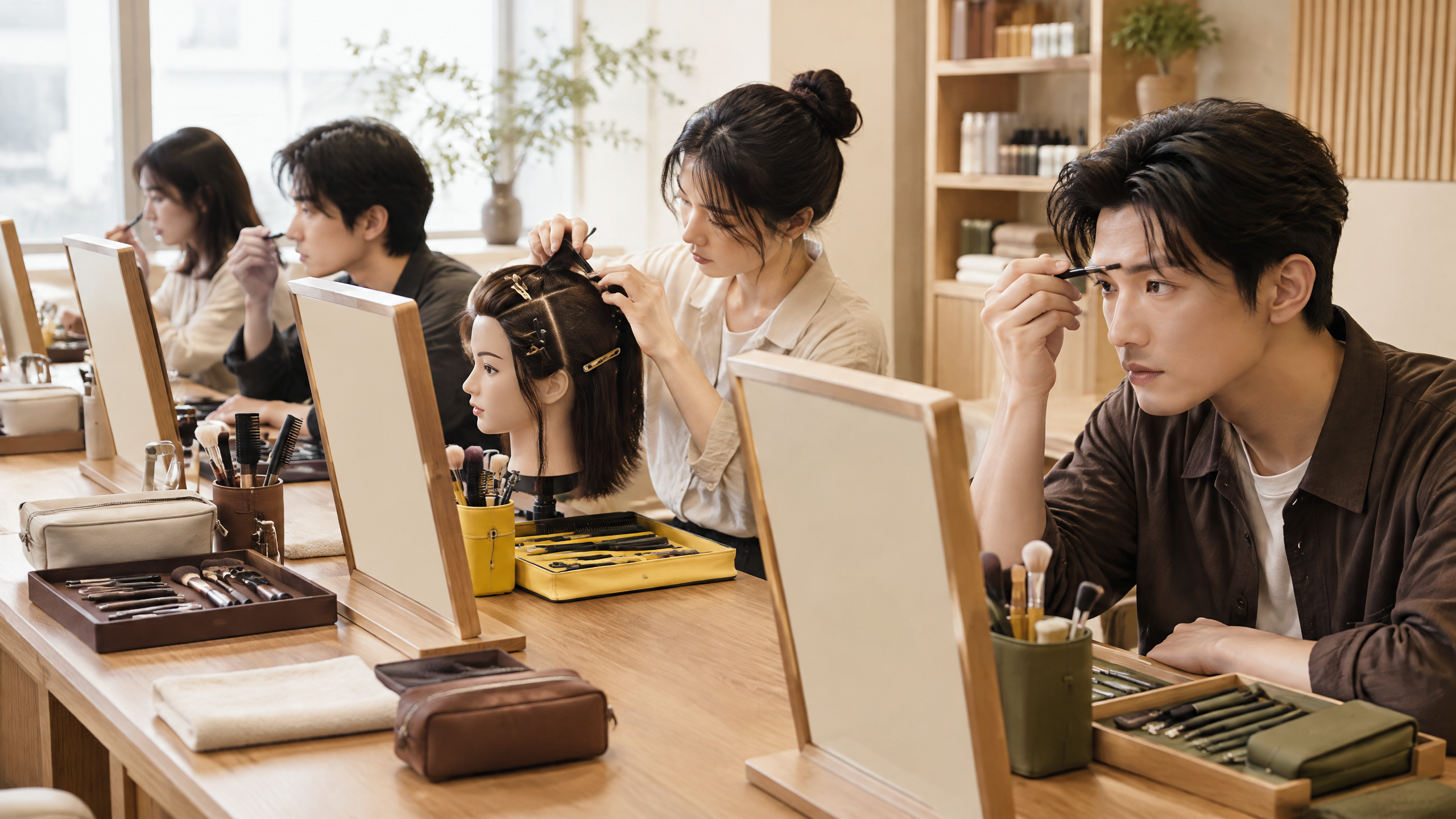
A nervous expression is often misdiagnosed as a grooming problem. Drop the shoulders, loosen the tongue from the roof of the mouth, exhale and take several frames before judging the result. A photographer can adjust posture and light, while a stylist can tidy the visible details. Treat these as separate jobs: more product cannot create a relaxed expression, and a better smile cannot fix a lens covered in fingerprints.
08
8. A final checklist and a realistic standard
The day before, confirm the purpose, clothing, glasses, hair direction and facial-hair plan. Wash and style as you normally would unless the agreed brief says otherwise. Avoid a first-time cut, aggressive skin treatment or unfamiliar cosmetic product. On the day, arrive with clean lenses, a small reset kit and enough time for a preview. Ask what will be visible in the final crop and whether any product is creating a reflection or hard line.
After the first test image, assess three things in order: recognisability, comfort and technical neatness. If you still look like yourself and can move naturally, adjust only the distracting detail. This order protects against the common mistake of optimising for a mirror or a trend instead of the image’s actual purpose. A corporate portrait should make it easy for a viewer to trust that the person in the photograph is the person they will meet.
Canvas Texture’s editorial viewpoint is that grooming works best as preparation and communication, not disguise. BigDeal Make Up is a related-brand resource for readers who need to compare makeup, hair and production-support options; services, classes, prices, locations, schedules and availability are subject to written confirmation. Choose only the level of support that solves your actual portrait problem, and keep the final brief specific enough that every participant can make an informed choice.
- Hair: familiar shape, tidy outline, controlled texture and no last-minute experiment.
- Skin: comfortable, appropriately moisturised and not overloaded with product.
- Facial hair: deliberate length and boundaries that remain recognisably yours.
- Eyes and glasses: clean lenses, safe products and no styling through irritation.
- Logistics: written scope, people count, location, lighting, sequence and touch-up plan.
Sources and useful reading
Continue with hair and grooming
Explore the hair-planning side: Business Men's Perm
For another practical image-planning guide: Commercial Shoot Styling: Brief Hair, Makeup and Camera Needs
Meet the lead stylist and learn about the studio: Vit So and Canvas Texture
Plan a portrait grooming brief that fits your role
For hair consultation at Canvas Texture, bring your portrait purpose, reference images and any requirements about glasses, facial hair or lighting. Discuss the scope and practical arrangements in writing before confirming.
Canvas Texture · WhatsAppFrequently asked questions
Should I get a haircut immediately before a corporate portrait?
Only if that timing already suits your hair. A familiar cut that has settled is usually safer than a new shape on the morning of the shoot. If you need a trim, make the change modest, tell the stylist how the image will be framed, and leave enough time to discover how the hair behaves after washing and styling.
Is makeup appropriate for men’s business headshots?
It can be, but it is optional. A small amount of camera-aware product may reduce distracting shine or uneven tone while preserving beard texture and expression. The right level depends on the lighting, crop, skin tolerance and your preferred identity; it should never be treated as a requirement to look professional.
How should I prepare if I wear glasses?
Bring the glasses you normally wear, clean both sides of the lenses and tell the photographer about them before shooting. Test reflections with the planned light. Do not switch to an unfamiliar frame solely for the portrait unless you are comfortable being represented that way in professional settings.
What should a company include in a team grooming brief?
State the image purpose and broad finish, then collect each person’s hair and facial-hair baseline, glasses, sensitivities, product limits and preference about makeup. Record what is essential versus optional, confirm the written scope and allow opt-out choices. A shared standard should make the set coherent without forcing identical faces.
Related journal articles
Camera-Ready Groom: Hair Texture and Natural Makeup
The most camera-ready groom does not look heavily made up; he looks like himself with controlled shine, deliberate hair texture and enough definition to survive changing light. Decide the hair shape first, then use restrained complexion and brow adjustments to support it, and test the complete combination under the kinds of light and movement your day will actually contain.
Wedding Morning Hair and Makeup: A Couple’s Run Sheet
The most reliable wedding morning is not one where everyone starts at the same time; it is one where each person has a clear preparation window, a defined hand-off and enough buffer before the first photograph. Build the run sheet around fixed moments, protect the groom’s haircut and grooming from last-minute experiments, and let the couple prepare in parallel whenever space and suppliers allow.
Bridal Trials and Groom Styling: Test the Whole Wedding Look
The most useful bridal trial is not a bride-only appointment: it is a controlled test of the couple’s complete visual balance. Coordinate the bride’s makeup and hair reference with the groom’s haircut, texture, facial hair and outfit, then judge the result in the lighting and photos you will actually face; this catches proportion, shine and timing problems before the wedding day.