Camera-Ready Groom: Hair Texture and Natural Makeup
The most camera-ready groom does not look heavily made up; he looks like himself with controlled shine, deliberate hair texture and enough definition to survive changing light. Decide the hair shape first, then use restrained complexion and brow adjustments to support it, and test the complete combination under the kinds of light and movement your day will actually contain.
01
Start with the photograph, not the product
A wedding image freezes relationships between surfaces: hair, skin, collar, lapel and background. A very glossy hairstyle beside a low-sheen suit can look more dramatic than intended, while a completely matte face beside reflective hair may make the face appear flat. The useful goal is balance, not a universal rule that every groom should be matte or textured.
Before choosing a finish, identify the visual jobs your grooming must do. Hair should keep its outline when you turn, hug someone or remove a jacket. Skin should look even enough for close photographs without erasing natural features. Brows, sideburns and beard edges should read as intentional, but not as drawn-on borders. These are separate decisions and can be adjusted independently.
Bring three references to a consultation: your usual front and side hair photographs, a picture of the suit in its actual colour, and examples of the photography you like. A bright banquet ballroom, a shaded outdoor portrait and a phone flash each reveal texture differently. The point is not to copy a celebrity style; it is to give the stylist a shared visual vocabulary for density, movement and shine.
- Choose one priority: clean silhouette, visible natural wave, controlled volume or a deliberately relaxed finish.
- Tell the stylist what you normally touch or re-set; an elegant plan that requires constant checking is the wrong plan.
- Say whether glasses, a watch, facial hair or a high collar will be present, because each changes the visual balance around the face.
02
Match hair texture to the suit and face
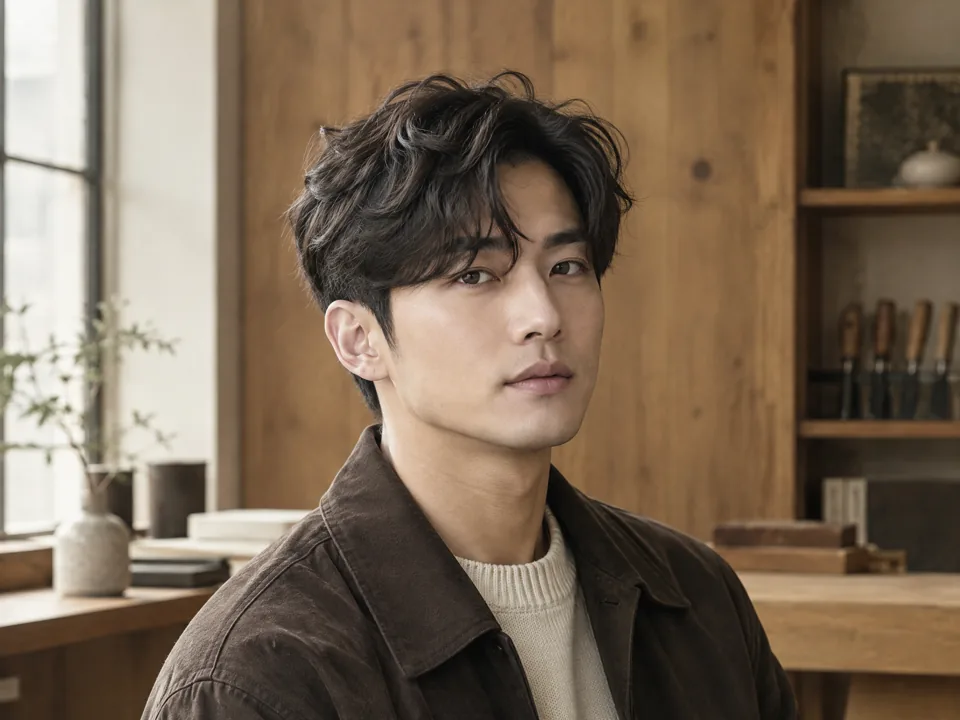
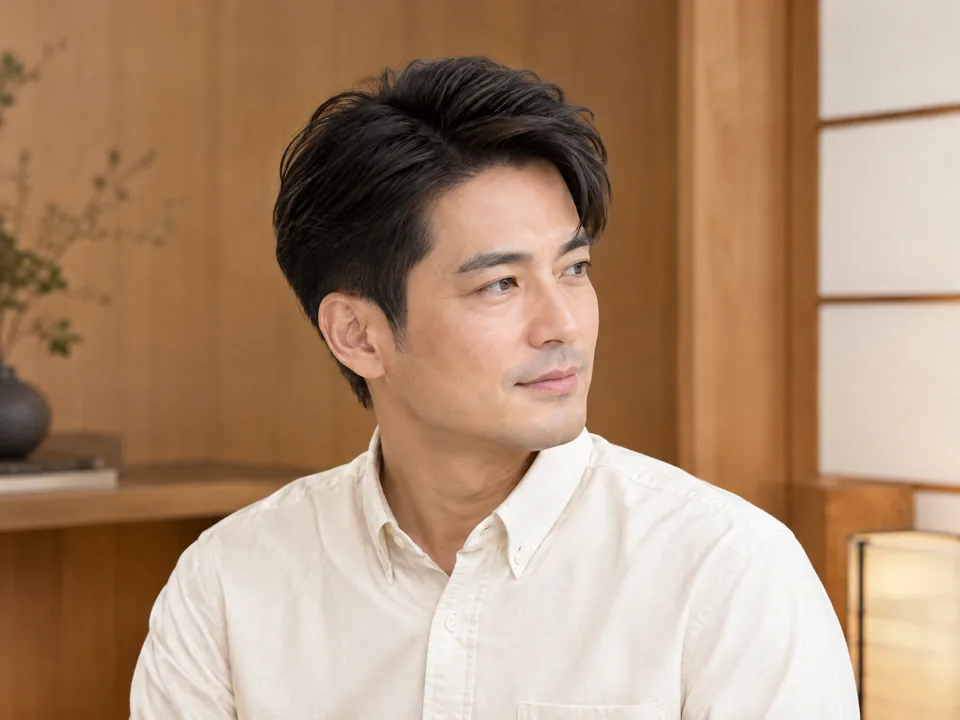
Hair texture is not simply curly versus straight. It includes direction, separation, density, lift and the amount of light reflected from the product. A neat side direction can make a formal tuxedo feel coherent; a soft, broken texture can keep a linen or less structured suit from looking stiff. Medium texture often photographs more naturally than a hard, wet-looking surface because small strands still create dimension.
For fine or thinning-looking hair, the safest camera strategy is usually a clear shape with modest lift rather than exaggerated height. Overloading the roots can separate strands and expose more scalp under overhead light. For dense or coarse hair, removing bulk at the right places and defining the outline can be more effective than forcing every strand flat. If your hair is strongly wavy, work with its direction and decide where the wave is allowed to show instead of fighting the whole head.
Length matters as much as styling. A last-minute major cut can remove the weight that makes a fringe sit properly or can reveal a growth pattern you have not learned to manage. A small clean-up and a controlled styling rehearsal are usually easier to evaluate than a dramatic transformation. Any change should be judged from front, three-quarter and side angles, because the side profile is often the view captured during greetings and table photographs.
When discussing a service, the related-brand page for groom makeup describes a camera-aware finish with complexion balancing, shine control and one tidy hairstyle. Treat that as a starting point for communication, not a promise that one preset look suits every head of hair, venue or outfit. Ask which parts are adjustable and which styling products you would need to maintain the shape.
| Your starting point | Useful direction | Trade-off to check |
|---|---|---|
| Fine, straight hair | Light root lift, directional combing, low residue | Too much product can separate strands under strong light |
| Dense or coarse hair | Reduce bulk selectively and define the perimeter | Flattening everything may remove natural movement |
| Wavy or curly hair | Enhance a consistent pattern and control flyaways | Over-smoothing can look unlike you in close portraits |
| Short cropped hair | Clarify edges and use texture sparingly | A sharp edge needs to be checked from every angle |
03
Keep natural makeup doing quiet, useful work
Natural groom makeup is best understood as selective correction rather than a full mask. The camera can exaggerate redness around the nose, uneven tone, under-eye shadow and forehead shine, especially when a flash or bright window is nearby. A thin, well-matched complexion layer can reduce those distractions while leaving beard texture, pores and expression visible.
The order matters. Start with a clean, comfortable base and only add coverage where it earns its place. Spot-correcting a small area often looks more convincing than spreading a heavy layer across the whole face. Shine control should focus on the forehead, nose and the centre of the chin, while the cheeks can retain a little natural dimension. A completely powdery face may catch light differently from your neck and hands.
Brow grooming should clarify the existing shape, not turn it into a new identity. Remove obvious stray hairs only if that is already part of your normal routine, then use minimal definition to fill gaps or calm unruly hairs. Beard lines deserve the same restraint: tidy the boundary, soften obvious redness after shaving and avoid creating a graphic edge that becomes the main subject of a close-up.
BigDeal Make Up’s guide to groom natural wedding makeup specifically frames the look around photos, complexion balance, shine reduction and tidier brows and hair texture. Use those elements as a checklist, then decide which ones you actually need. The most convincing result may involve more attention on the T-zone and less product elsewhere.
- Ask to see the complexion in neutral light and in a test photograph, not only in a mirror.
- Keep lip care subtle and comfortable; dry or visibly glossy lips can both distract in close portraits.
- If a product stings, burns or causes a new reaction, stop using it and seek appropriate medical advice rather than covering the symptom.
04
Use a rehearsal to find the real finish
A rehearsal is not valuable because it predicts an exact wedding photograph. It is valuable because it exposes friction: a fringe that falls when you look down, a collar that rubs the jaw, a beard product that transfers, or a complexion finish that becomes shiny after conversation. Wear a similar shirt or collar and take photographs from the angles your photographer is likely to use.
During the rehearsal, perform ordinary actions rather than posing for one perfect frame. Walk, sit, hug someone, turn toward a window and look down at a phone. Notice whether the hair returns to its planned direction and whether your face still feels like your own. If you need to touch your forehead every few minutes, change the product or reduce the intended lift.
Evaluate movement and maintenance together. A slightly softer style that can be reset with a small amount of product may outperform a rigid style that looks excellent only for the first ten minutes. Similarly, a modest complexion routine that survives heat and conversation is more useful than maximum coverage that feels heavy. Ask for a short written sequence of what goes on first, what to carry and what not to add.
| Test | Look for | Decision |
|---|---|---|
| Three-quarter photo | Does the hair have a clean outline without a flat patch? | Adjust direction or volume before changing the whole style |
| Window and indoor light | Does the face remain even without a grey or shiny cast? | Reduce coverage or move shine control to specific zones |
| Five-minute conversation | Does sweat or movement change the finish? | Choose a lighter layer or a practical touch-up step |
| Collar and glasses check | Are edges, temples and sideburns crowded? | Trim the visual detail, not necessarily the hair length |
05
Plan the morning as a sequence of dependencies
Hair and makeup should not be treated as two unrelated appointments. Hair preparation can create loose fibres or product on the forehead, while complexion work can make it harder to handle a fringe without disturbing the base. Decide the order with the person doing the work, and reserve a calm final check before photographs rather than filling every minute with another task.
A useful hypothetical planning example is a 10:00 ceremony with photographs beginning at 9:20: if grooming is planned to finish at 8:50, that leaves 30 minutes for dressing, a calm check and movement to the photo location. This is only an example, not a promised duration; your actual time depends on hair length, the number of people, the venue and the agreed service. Write the assumptions beside any schedule so nobody mistakes arithmetic for a guarantee.
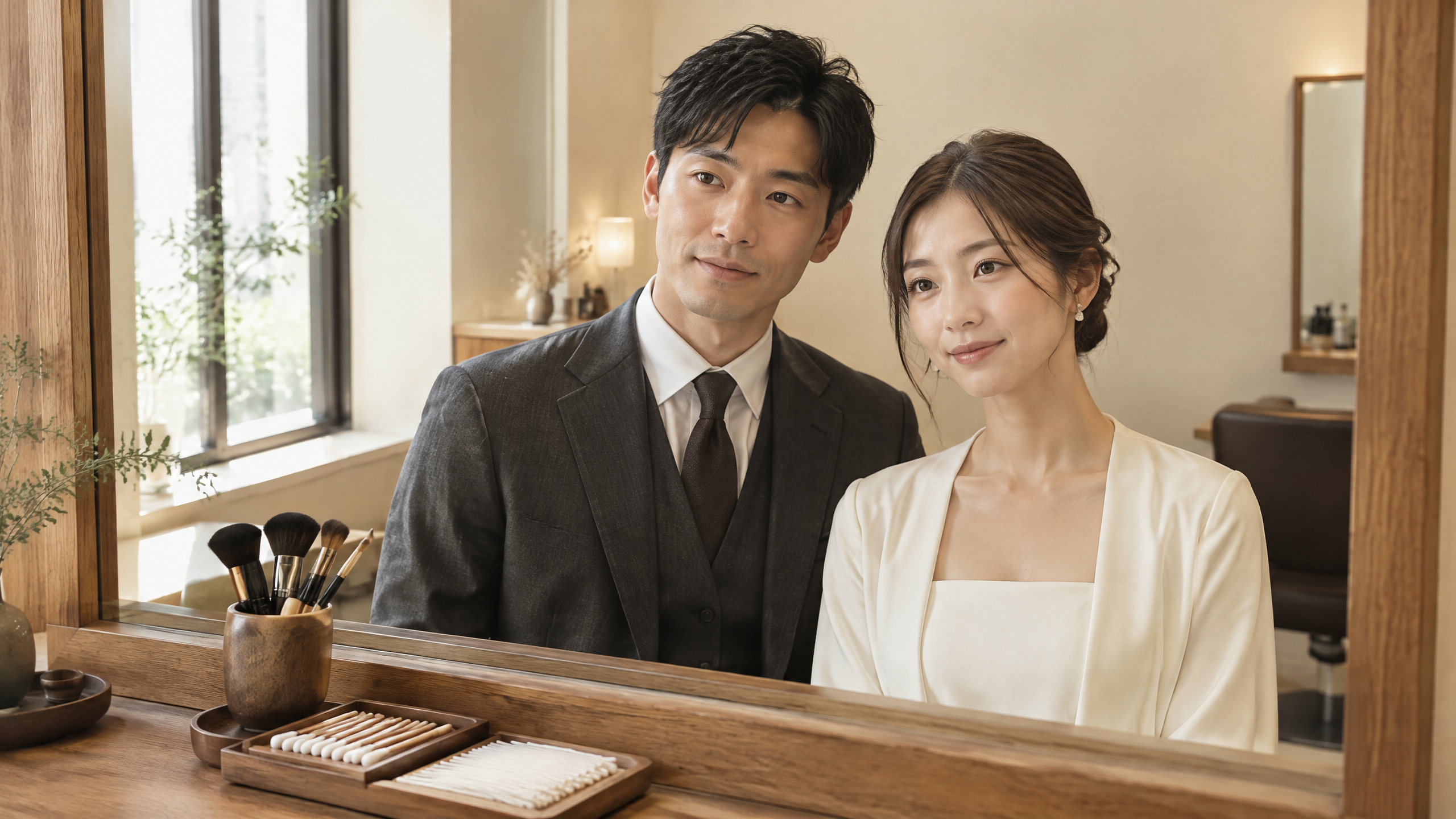
Location also changes the decision. A hotel room may offer a private mirror and controllable light but can become crowded. A venue may reduce travel between preparation and photographs but require access permissions, a suitable chair and a clear surface. When considering groom makeup at hotel Hong Kong, confirm the room, arrival window, photographer timing, access and sequencing in writing. Do not assume a location, travel area or timing is available simply because a page discusses it.
- Give the stylist the preparation address, floor or room information, contact person and access restrictions once confirmed.
- State the time you must be camera-ready, not merely the time the ceremony starts.
- Keep a small comb, blotting tissue and the agreed hair product available; avoid adding an untested product on the day.
06
Make hygiene and comfort part of the aesthetic
Comfort is visible. A groom who is distracted by itching, a tight hairline or sticky skin will pose differently and touch his face more often. Tell the professional about your normal shaving routine, known sensitivities and products you already use. This is practical information for choosing a conservative approach, not an invitation to diagnose a skin condition.
The US Food and Drug Administration advises consumers to wash their hands, avoid sharing cosmetics, keep containers clean and closed, and follow label warnings in its general cosmetics safety guidance 1. That guidance is a useful hygiene reference, not Hong Kong law and not a certification of any BigDeal product. For eye-area products, the FDA also advises against sharing, recommends single-use tools where appropriate and says to avoid eye cosmetics when the eye is infected or inflamed; stop if irritation occurs and seek medical attention for persistent discomfort 2.
Do not use the wedding morning to test a new active skincare product, unfamiliar fragrance or aggressive shave routine. A clean towel, fresh applicators where appropriate, closed containers and a tidy work surface are small details that protect both comfort and confidence. If irritation is already present, tell the professional and consider whether the planned cosmetic step should be omitted.
07
Choose a service conversation that protects your choices
A good enquiry is not a generic booking checklist; it is a compact design brief. Share your hair length and texture, facial-hair preference, outfit, glasses, preparation location, photography start time and the finish you dislike. Mention whether you want your normal parting preserved, whether you expect humidity or outdoor movement, and how much maintenance you are willing to do between photographs.
BigDeal Make Up is a related-brand resource to this editorial, not an independent external expert endorsement. Its service pages can help you describe the kind of groom hair and makeup conversation you want, while the actual arrangement, availability and scope should be confirmed directly in writing. Do not infer a price, class, location, language, credential or guaranteed result from a page alone.
For a Hong Kong groom deciding between in-room preparation and a venue setup, the trade-off is usually control versus convenience. A private room may make changing and touch-ups easier; a venue may shorten the later transition. Neither is automatically better. Ask what equipment and surfaces are needed, who must be present, how changes are handled and what happens if the photographer’s call time shifts.
Canvas Texture is led by Vit So, who entered the hair industry in 1996, studied in Japan in 2000 and founded Canvas Hair and Beauty Academy in 2017. This article takes a hair-planning perspective; the bridal makeup provider confirms its own services and arrangements.
08
A final decision framework for the camera-ready look
When choices conflict, protect recognisability first, comfort second and refinement third. Your hair should still look like your hair when the photographer catches an unplanned laugh. Your complexion should reduce distractions without becoming a visible layer. Your styling should fit the clothes and setting without requiring you to monitor it constantly.
Use the following order when you need to simplify: preserve the haircut and parting that you can manage; remove only the shine or flyaways that affect photographs; add definition to brows or beard only where it restores clarity; then stop. This sequence prevents the common mistake of solving a small camera issue by changing the entire face or hairstyle.
On the day, ask for one final check from the front and both sides, then take a quick photograph at the intended distance. If the result is balanced in motion, comfortable at the collar and recognisable to the people who know you, it is doing its job. Camera-ready grooming is not a performance of perfection; it is a set of deliberate, repeatable choices that lets the day remain the focus.
Sources and useful reading
Continue with hair and grooming
Explore the hair-planning side: Groom Hairstyle Perm HK
For another practical image-planning guide: Wedding Morning Hair and Makeup: A Couple’s Run Sheet
Meet the lead stylist and learn about the studio: Vit So and Canvas Texture
Plan a camera-ready groom look
For a hair consultation at Canvas Texture, share your hair texture, outfit, preparation location and camera-ready time so the team can discuss a practical direction. Confirm the scope, timing and availability in writing before making arrangements.
Canvas Texture · WhatsAppFrequently asked questions
Should a groom have a completely matte face for wedding photographs?
Not necessarily. Control shine mainly where light tends to reflect, such as the forehead and nose, while keeping enough natural dimension on the cheeks. Test the finish under the venue’s likely light and in a photograph before deciding how much powder or complexion product is appropriate.
Is it better to cut my hair shortly before the wedding?
A small, familiar clean-up is easier to evaluate than a major change. Avoid an untested dramatic cut close to the event because the new length, weight and growth pattern may require a styling routine you have not learned. Plan a rehearsal with the intended shape and product.
What should I tell a makeup or hair professional in my first enquiry?
Give the date, preparation location, camera-ready deadline, hair length and texture, facial-hair routine, outfit, glasses, preferred and disliked finishes, and any known sensitivity. Ask what is included and request service timing, access requirements and other details in writing rather than assuming them.
Can I use my own grooming products on the wedding day?
Bring familiar products only after agreeing how they fit the plan. Do not introduce a new skincare, fragrance or styling product that morning. Keep containers clean, do not share cosmetics, and stop using anything that causes irritation; persistent discomfort should be discussed with a medical professional.
Related journal articles
Wedding Morning Hair and Makeup: A Couple’s Run Sheet
The most reliable wedding morning is not one where everyone starts at the same time; it is one where each person has a clear preparation window, a defined hand-off and enough buffer before the first photograph. Build the run sheet around fixed moments, protect the groom’s haircut and grooming from last-minute experiments, and let the couple prepare in parallel whenever space and suppliers allow.
Bridal Trials and Groom Styling: Test the Whole Wedding Look
The most useful bridal trial is not a bride-only appointment: it is a controlled test of the couple’s complete visual balance. Coordinate the bride’s makeup and hair reference with the groom’s haircut, texture, facial hair and outfit, then judge the result in the lighting and photos you will actually face; this catches proportion, shine and timing problems before the wedding day.
Registry to Reception: Hair, Makeup and Budget Trade-Offs
The best registry-to-reception plan is not automatically two complete makeovers. Start by deciding which visual change guests will actually notice, then spend on the hair, makeup and coverage that support that change. A simple registry look can become an evening look through a controlled hairstyle adjustment, a lipstick or eye update, and a clearly agreed touch-up window—provided the schedule, outfit and service scope are planned together.