Chemotherapy wigs: plan a fitting at your own pace
Plan a wig fitting around your comfort, energy and preferred appearance, rather than a deadline to look unchanged. You can explore options without committing to a purchase. During chemotherapy, choosing how to cover your head is personal, and a wig is only one possibility. A useful first appointment helps you identify a familiar hair outline, understand the care involved and decide what needs another look. It should leave room to pause, change direction or choose no wig at all.
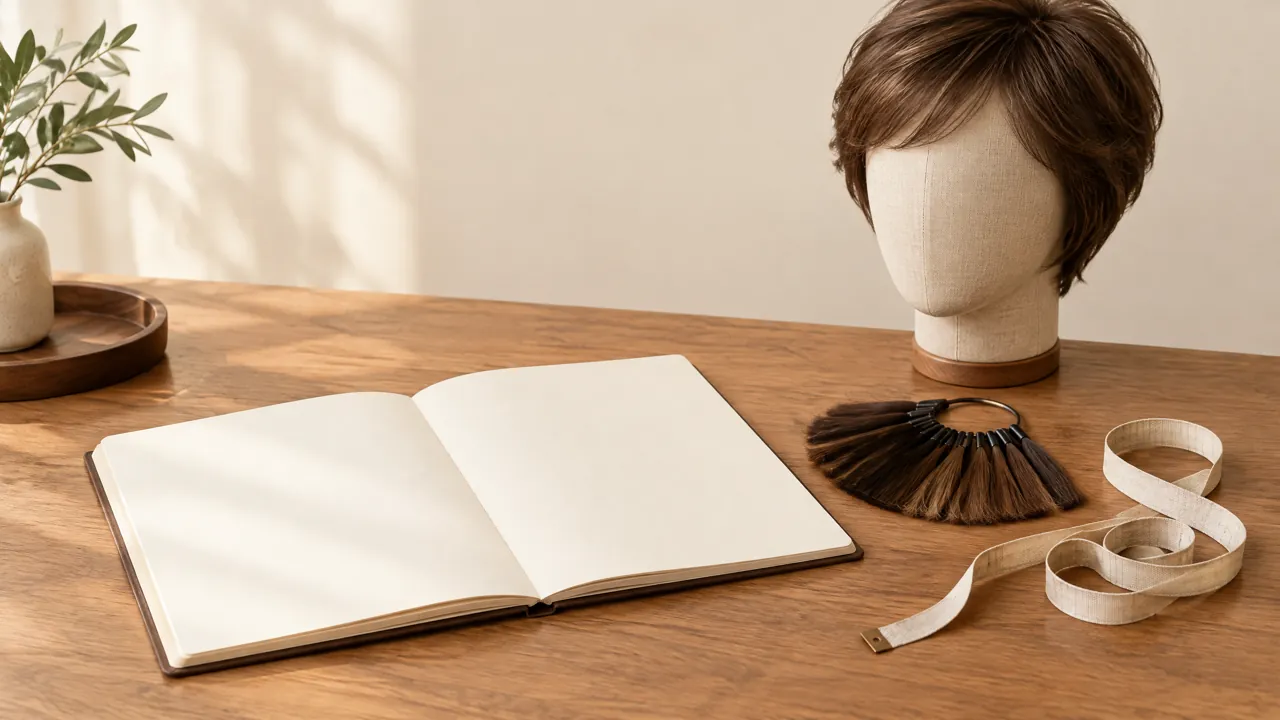
Compare the actual sample, its fibre, the cap fit and the daily handling it requires. A photograph of your usual hairstyle can be more useful than asking for something simply described as natural. If you try a wig while you still have hair, remember that its fit may feel different after hair loss. Ask how measurements and later checks will be handled. These practical questions matter more than choosing the fullest-looking style or assuming a more expensive option must be more convincing.
Separate three decisions: whether you want a wig, whether a particular design suits you, and whether the finished piece fits comfortably. They do not have to happen on the same day. For readers interested in men's hair styling, familiarity may come from a side part, temple shape or modest crown height rather than identical density. This guide focuses on those appearance decisions and their practical trade-offs. Questions about treatment, scalp symptoms or the cause of hair loss belong with your healthcare team.
01
1. Decide what you want the fitting to answer
Start with an appearance goal that you can recognise in the mirror. Perhaps you want to keep your usual side profile for work calls, or prefer an easy option for occasional outings. Neither goal requires recreating every strand of your previous hairstyle. Cancer Research UK describes wigs, hats and scarves as choices, and leaves space for not wearing a wig [1]. That is a useful starting point: the appointment should support your preference, rather than turn covering hair loss into an obligation.
For an overview of appearance-focused options, the related brand's page on chemotherapy wigs offers a starting point for questions about styles and arrangements. OwnStrand and Canvas Texture share the same owner; this is not an independent recommendation. Treat the information as a route to clarifying a service, not proof that any particular piece will suit your scalp or routine. Before arranging a visit, identify whether you want to see samples, discuss a design or check an already completed order.
Give your priorities an order instead of asking one wig to solve everything. For example, familiar fringe placement might matter first, manageable care second and styling flexibility third. An illustrative reader who mainly wants a recognisable outline for video meetings may make a different choice from someone planning frequent outdoor wear. Write down one non-negotiable and one feature you could compromise on. This makes it easier to reject an attractive sample that demands more handling than you want to undertake.
02
2. Bring references that describe your hair outline
Choose a recent front photograph and a side view that show your everyday hair, not only a carefully styled occasion. Add a brief note about the parting, fringe direction and how much ear exposure feels familiar. Old photographs can also help explain a previous style, a suggestion supported by Cancer Research UK [1]. However, say whether you want that earlier outline or your more recent look. Otherwise, a fitter may interpret greater volume as the goal when you actually prefer a restrained shape.
Compare the outline in stages: front hairline, temple width, crown height, then the back and sides. A style can look appealing straight on but feel unfamiliar in profile. For a men's cut, extra fullness above the ears may change the silhouette more than a small colour difference. Look seated and standing, using ordinary lighting where possible. Change one feature at a time when discussing adjustments, so you can tell whether it was the fringe length or the overall volume that improved the match.
A companion can help remember questions or take photographs with permission, but should not become the final judge of your appearance. Agree beforehand whether you want practical observations, emotional support or simply company for the journey. If privacy matters, ask what fitting arrangements are available before travelling; do not assume a private room is guaranteed. You can also ask to view fewer samples. A focused comparison of two distinct outlines often reveals more than a long sequence of similar-looking choices.
Keep the familiar shape before chasing the perfect strand: recognition often begins with the outline.
03
3. Compare materials through the care you can manage
Ask what fibre is used in the exact piece you are considering. Synthetic, human-hair and blended options are different categories, not interchangeable labels. Cancer Research UK notes that synthetic wigs commonly retain a preset style and that heating depends on manufacturer instructions [1]. This can suit someone who wants less daily styling, but it does not establish that every synthetic model behaves identically. Ask to see the care instructions before buying, especially if you normally use a hairdryer, straighteners or other heated tools.
Human hair may offer more styling flexibility, but flexibility brings work: washing, drying and restoring the shape still need planning. The NHS describes synthetic options as generally easier to look after, with human-hair wigs requiring more care [2]. Compare that workload against your likely routine, rather than treating human hair as automatically better. Ask how the specific piece should be dried and styled, and whether you can manage those steps yourself. A simpler outline may be more useful than versatility you rarely intend to use.
Construction needs its own conversation alongside fibre. Ask how the cap sits around the ears and nape, where adjustment is possible and which parts touch the scalp. A technical-sounding label alone cannot tell you whether a sample feels comfortable. Nor should softness in your hand substitute for a fitting. If your scalp is sensitive during treatment, discuss concerns with your healthcare team and tell the fitter before trying anything. A wig changes appearance; it does not treat hair loss or resolve a scalp problem.
| Option to discuss | Potential practical advantage | Question before deciding |
|---|---|---|
| Synthetic fibre | A preset style may reduce daily restyling | What care and heat restrictions apply to this exact model? |
| Human hair | More scope to alter styling | Can I manage the recommended washing, drying and styling? |
| Blended fibre | A different balance of fibre characteristics | What is the composition, and which instructions govern it? |
04
4. Use consultation to resolve the custom-order questions
A consultation is the stage for exploring a design, not evidence that a finished piece already fits. The custom wig consultation Hong Kong page describes discussion of styles, samples and measurements before arrangements are confirmed. Bring your priority list and ask which sample demonstrates each requested feature. Distinguish what you can inspect now from what will be made later. If the sample is only a reference, establish which elements of its density, colour and cap construction will carry into your order.
OwnStrand's documented hand-made human-hair process involves viewing samples, selecting a style and having head shape measured before production. Its stated production period is approximately three to five working days, subject to the order being confirmed. That is not a delivery promise, and it should not be applied to every product or construction. Ask how a change in hair coverage might affect measurements taken now. Also confirm the later fitting arrangements before treating a production estimate as a date when the whole process will be finished.
Request a written description of the agreed piece and the quoted scope. Separate the wig itself from any confirmed cutting, styling, adjustment or later care arrangements. Ask which decisions become difficult to change after production starts, and what happens if the agreed appearance needs reviewing at collection. Do not assume a custom order can be returned simply because a preference changes. Clear questions about alterations and cancellation are more useful than a vague assurance that everything will be sorted out afterwards.
- Confirm the exact fibre, cap construction and sample being used as the reference.
- Record the agreed outline, fringe direction, colour and density; qualify anything not yet confirmed.
- Ask when measurements may need another check and how a later fitting is arranged.
- Clarify the quoted services, alteration process and cancellation terms before authorising production.
05
5. Check fit as a sequence, especially when coverage changes
Trying a wig before hair loss can help you compare it with your usual appearance, but it does not settle future sizing. Existing hair contributes to how the cap sits. Cancer Research UK advises that fit may differ after hair loss [1]. Tell the fitter about this practical possibility without trying to predict your treatment response. Ask what should prompt a recheck and which adjustments the particular design allows. Record the placement instructions so that later slippage is not automatically mistaken for a permanent sizing fault.
During the fitting, check the front, ears and nape separately rather than relying on a general impression of snugness. Speak normally, turn your head and look down as you might when reading a phone. These everyday movements help you describe whether the piece shifts or presses in an unwelcome place. Do not tighten it repeatedly just to make movement disappear. Flag discomfort and ask for reassessment; persistent soreness or scalp changes during treatment need healthcare advice, not a stylist's guess about their cause.
Look at the outline again after the fit has been checked. A different cap position can change fringe placement and apparent crown height, so a cosmetic adjustment should not hide a positioning issue. Before any substantial cutting, ask to see the proposed length and discuss what cannot readily be reversed. If you are tired, it is reasonable to defer a style decision and confirm the next step. A careful fitting separates placement, comfort and appearance instead of altering all three at once.
| Checkpoint | What to notice | Useful next step |
|---|---|---|
| Before trying | Current hair coverage and any scalp concerns | Explain changes and ask whether measurements need reviewing |
| While seated | Placement at the front, ears and nape | Describe each area rather than saying only that it feels tight |
| During ordinary movement | Shifting or uncomfortable pressure | Ask for a fit reassessment before changing the haircut |
| Before alterations | Fringe length and overall silhouette | Agree the proposed change and its reversibility |
06
6. Make the appointment manageable, not another performance
For an OwnStrand visit, plan travel to its sole Kwun Tong showroom, at Room 2103, Li Po Time Centre, 50 Hoi Yuen Road. This is the showroom location, not a network of district branches. Confirm the appointment purpose and any privacy arrangements before setting off. A custom discussion and a completion fitting serve different purposes, so ask whether separate visits are needed for your order. Leave flexibility around the journey rather than assuming that production and collection can fit a rigid personal timetable.
Reduce the decisions you need to make on the day. Send your reference photographs beforehand if an agreed contact method allows it, and bring your questions in one short note. Decide whether the visit is mainly about materials, outline or fit. If conversation becomes tiring, summarise what has been agreed and what remains open rather than pushing towards an order. You can ask how to rearrange a visit or obtain clarification later, while checking the provider's actual arrangements rather than assuming a particular service is available.
Family members may favour a very close match because it reassures them, while you may prefer something easier to handle or visibly different. Neither preference needs to be disguised as a technical rule about what looks natural. Give the wearer the final say and distinguish comments about fit from comments about taste. It is also reasonable to alternate head coverings or leave the wig aside. A workable appearance choice fits into your life without requiring you to reassure everyone else through it.
Support means making room for the wearer's decision, not making the decision on their behalf.

07
7. Treat collection as a fit check and a care handover
For a completed custom piece, the custom wig fitting Hong Kong page describes a fit check and collection styling. OwnStrand's documented hand-made process includes returning for fitting and washing, cutting and blow-drying; confirm what applies to your own order. Compare the finished piece with the agreed reference rather than expecting the consultation sample to have guaranteed every detail. Check placement and outline before approving major alterations, and ask how any unresolved issue will be recorded and reviewed after the visit.
Ask for a practical demonstration of putting the piece on and taking it off, then clarify the care instructions for that specific construction. Record approved products, drying methods and storage guidance instead of borrowing rules from another wig. Do not infer permission to sleep, swim or use heat from a general description such as human hair. Where attachments are discussed, establish what is actually supplied and how it is intended to work; a comparison page alone does not confirm an installation service.
Keep a simple record of what works: comfortable placement, the preferred fringe direction and any difficulties with handling. This helps a later discussion stay specific instead of starting again with a request for a more natural look. If your own hair changes, reassess the outline without assuming that the previous fit or haircut remains appropriate. Medical questions stay with your healthcare team. For remaining hair, the appearance goal can still be modest: a familiar parting and proportion, without pressure to recreate your earlier hairstyle immediately.
Sources and useful reading
Continue with hair and grooming
If your question concerns styling your own men’s hair, continue with: Korean Men's Perm
Compare a related selection decision: Wig prices in Hong Kong: plan the purchase in stages
Read our male-hair styling background: Vit So and the Canvas Texture studio
Talk through the outline of your own hair
For men's styling with your remaining or returning natural hair, Canvas Texture can discuss a familiar parting, fringe direction and overall haircut shape. A styling consultation concerns your own hair and appearance, not wig fitting, wig sales or medical advice.
Canvas Texture · WhatsAppFrequently asked questions
Do I have to choose a wig before treatment starts?
No. Exploring early may help you compare samples with your current hairstyle, but it does not oblige you to order. Choose a pace that suits you, and ask how fit will be reviewed if your hair coverage changes.
Will human hair always look more like my usual style?
Not necessarily. Outline, density, colour, placement and styling all affect the result. Human hair also brings a care workload. Compare actual samples and their instructions rather than treating fibre or price as a guarantee of realism.
What if a sample looks right but feels uncomfortable?
Pause and describe where it presses, shifts or irritates. Appearance should not override fit. Ask the fitter to reassess placement and construction; discuss persistent symptoms or treatment-related scalp concerns with your healthcare team.
Can someone accompany me and help choose?
Ask the provider about the appointment arrangements. If you bring someone, agree their role beforehand: remembering questions, observing the outline or offering support. The wearer's preferences should remain central, including the choice to postpone or not wear a wig.
Related journal articles
Men’s Hairpieces or a Perm? Compare Coverage and Shape
Choose a perm when enough existing hair remains and movement is the main goal. Choose a hairpiece when a defined area needs cosmetic coverage. Neither option decides the best outline by itself. First identify the visible area, surrounding density, preferred parting, and morning routine. Those observations prevent a product label from making the decision too early. Compare those details before making any booking.
Natural Hairline Wigs: A Guide to Fringe and Forehead
Natural hairline wigs look most convincing when the front edge, fit, colour, density, and haircut agree. For a hypothetical four-day workweek side part, inspect both temples under two ordinary light sources before choosing a construction. The aim is a coherent outline in movement. No single feature can decide that outcome. Check the whole frame, not only the centre. Check it while turning your head.
Human Hair or Synthetic Wigs? Texture and Care Choices
Choose human hair when approved styling flexibility matters. Choose synthetic fibre when a preset shape and simpler mornings matter more. Neither label settles the result alone. Texture, density, cap construction, attachment, and fit shape how a wig looks and feels. Start with the routine you can maintain, then check the exact model’s instructions. That order avoids paying for flexibility you will not use