Chinese Food Catering: Dress and Hair for Shared Dining
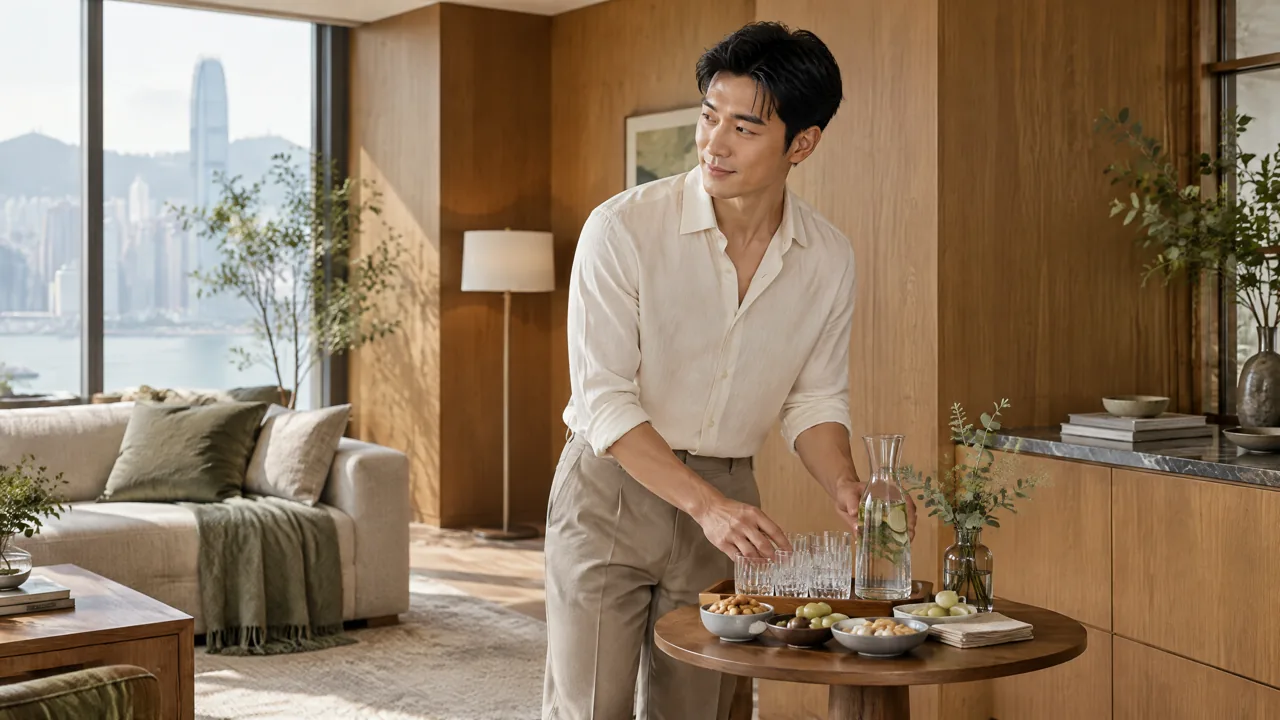
For shared dining, dress for reaching and moving, with hair that stays clear of your eyes. Finish grooming before receiving food, then keep serving arrangements separate from photographs and outfit changes. A host should be able to welcome people without repeatedly fixing a fringe or catching a cuff on the table.
In a hypothetical Hong Kong family gathering, one man might collect relatives downstairs, accept catering and join the first group photograph. Those jobs compete for the same few minutes. Choosing a hairstyle alone will not solve the problem. He also needs a realistic journey plan and someone who can cover the door.
This Canvas Texture journal guide connects men's grooming with the practical rhythm of hosting. Start with the dining format, work backwards to your departure time, and reserve a clean place for touch-ups. The following framework helps you compare seated sharing, buffet movement and individual portions without treating cuisine as a dress code.
01
Build the running order around the first serving, not the first selfie
Start by identifying when guests will actually eat. Arrival time is not always meal time, particularly when relatives arrive in stages. Write down the intended first serving, the caterer's agreed handover and the venue's access arrangements. Only then place showering, dressing and travel into the available space before those commitments.
Distinguish tasks that can move from tasks that need a named person. A portrait can usually wait; receiving an order still requires someone available at the agreed location. If you own both jobs, appoint a second receiver. Give that person the confirmed order details rather than relying on a hurried phone explanation.
In a hypothetical flat gathering, the host could complete grooming at home before a helper begins setting out dishes. At a hired room, he might need to arrive earlier to check storage and access. These are different schedules even with identical guest numbers. Build the plan from responsibilities, not an assumed universal preparation time.
Use the worksheet below to find collisions before the day. The useful question is not whether you can get ready quickly. It is whether two essential jobs require you simultaneously. A schedule with a clear substitute gives you more room for a delayed lift, a misplaced jacket or a relative needing assistance.
| Event point | Host's task | Cover arrangement |
|---|---|---|
| Before departure | Complete hair and dress checks | Helper keeps messages under review |
| Agreed handover | Receive or delegate the order | Named receiver has confirmation details |
| Guest arrival | Welcome and direct people | Helper manages the serving area |
| First serving | Explain the dining arrangement | Photographs wait until duties are covered |
02
For Chinese shared dishes, test your cuffs and seated reach
A seated sharing meal creates repeated small movements: passing bowls, reaching for serving utensils and turning towards neighbours. Test those movements while wearing your proposed shirt. An outfit that looks tidy standing up can feel restrictive at the table. Avoid loose sleeve ends that hang into dishes when you extend an arm.
When exploring Chinese Food Catering, use the sharing format to decide how guests will reach dishes and receive portions. Confirm the actual menu, portion information and serving equipment in the written order. YumYum's category page is a starting point for an enquiry, not proof that every pictured arrangement fits your table.
Leave comfortable space around each seat rather than filling every visible gap with decoration. A host wearing a jacket may need somewhere to place it without blocking a neighbour. Check the chair position before guests arrive. If serving requires standing repeatedly, choose footwear you can move in rather than shoes reserved only for photographs.
Hair also needs a seated test. Lean forward as though passing a bowl, then turn towards someone beside you. If the fringe falls across your vision, adjust the shape before leaving the grooming area. The aim is a reliable outline during ordinary movement, not a hairstyle that works only with your chin raised.
03
Choose a familiar hairstyle that survives the jobs you will do
Pick a style you already know how to manage. A demanding new finish adds uncertainty when the day also involves deliveries and relatives. For short hair, check how the front sits after walking. For longer hair, decide how to keep it out of the way without pulling it uncomfortably tight throughout the gathering.
The American Academy of Dermatology advises limiting excessive heat, keeping brushing minimal and avoiding sustained pulling from tight styles. [1] That supports a restrained preparation routine, not a promise of perfect hold. Allow time for your usual drying method rather than compensating for a late start with repeated high-heat styling or forceful combing.
Put on a narrow-neck top before completing the final hair shape, or choose a button-front shirt that avoids that disruption. Check the neckline and shoulders afterwards for loose hair. This small order change can prevent redoing the front immediately before departure. Keep any comb and product in the grooming area, away from food equipment.
If you want a haircut, perm or colour change for the occasion, discuss your hair condition with your stylist. Do not assume a universal number of waiting days suits everyone. For the event itself, make your decision by manageability: whether you can greet guests, bend down and move between rooms without constant attention to your hair.
The most useful hosting hairstyle is one you can leave alone while your guests need your attention.
04
For a Western buffet, dress for carrying a plate and greeting guests
A buffet shifts the host's movement away from one seat. He may direct the queue, introduce guests and clear a route for replenishment. Try holding a plate while offering a greeting with your other hand. If your jacket restricts that movement, reserve it for a photograph rather than wearing it through every hosting task.
Comparing Western Catering can help you consider mains, sides and the amount of space a buffet needs. Ask which dishes require particular holding arrangements and which utensils are provided. Do not assume that the cuisine label means everything can sit together on one table or be served using the same equipment.
Place the guest route where people can approach and leave without crossing the receiving route. That matters in a compact Hong Kong function room, where one doorway may serve several purposes. Your outfit should support movement through the available space. Avoid a dangling scarf or accessories that need readjusting each time you turn.
Choose the hair finish with the same task in mind. A tall front may suit a portrait but need attention after repeated bending or a windy entrance. Check the side profile and the view from normal conversation distance. A slightly simpler silhouette can be a better choice when you are moving among guests for much of the meal.
05
For Japanese selections, distinguish meal format from visual style
Individual boxes and shared platters create different jobs for the host. Boxes need a distribution plan; platters need accessible serving space and an agreed replenishment arrangement. Neither format dictates a particular haircut or outfit. Choose your grooming around the work involved, rather than trying to make your appearance resemble a cuisine's presentation.
Use Japanese Catering to compare possible meal formats before deciding how guests will dine. Confirm the actual dishes, packaging and product-specific storage instructions with the caterer. A Japanese menu is not automatically a raw-fish menu, and photographs do not establish the handling requirements of the food you order.
For a hypothetical office gathering with individual portions, a host could greet colleagues while a helper checks names against the confirmed allocation. A shared-platter reception would need another division of work. Make that distinction before choosing a formal jacket that you cannot comfortably wear while repeatedly reaching across the distribution table.
Keep photographs outside the food handover task. An attractive arrangement may tempt you to stop and take pictures, but the receiver should first complete the agreed storage or service steps. If a group portrait matters, schedule it separately and ask someone to cover the food area. Grooming should help that transition, not delay it.
06
Leave room for Hong Kong travel and the entrance-to-table transition
Plan the journey in the outfit you will actually wear. A walk to the MTR, an exposed pavement and a warm entrance lobby affect comfort differently from an air-conditioned room. Consider carrying your jacket and putting it on after arrival. That keeps the journey practical without requiring a full clothing change at the venue.
If rain is possible, decide where your umbrella and damp outer layer will go. Do not put them on the food table while searching for a hook. A clearly designated arrival spot also helps guests settle in. The host can then welcome people without balancing a wet umbrella, a phone and a serving utensil.
Use a small, separate grooming pouch rather than spreading products across the dining area. A comb and whatever you normally need for a modest adjustment are enough. Make any touch-up in a washroom or other suitable space. Do not spray hairspray around food, open containers or serving equipment, even if the correction seems quick.
Protect the transition from travel to hosting with a short arrival buffer in your own schedule. This is not a delivery guarantee or a fixed grooming duration. It is time you reserve to remove an outer layer, check your reflection and put belongings away before becoming the person everyone needs to find.
07
Separate the grooming reset from food receiving and clean handling
Hong Kong's Centre for Food Safety identifies keeping hands and utensils clean, separating raw and cooked food, and safe temperatures among its Five Keys. [2] Apply those principles to the division of space and duties. Your grooming station should not share a surface with the serving station, even when the venue is small.
Agree who receives the food and what they must do next. The written plan should cover the actual order, required storage and the person responsible for service. Do not improvise holding arrangements because a speech runs late. If the programme changes, contact the caterer or venue for instructions that apply to those dishes.
After adjusting your hair or handling personal belongings, clean your hands before handling food or serving utensils. Keep this reset distinct from checking labels and setting out equipment. A helper can continue greeting guests while you do it. This is a practical separation of tasks, not an argument that a styled appearance proves food hygiene.
Treat a delay according to what it affects. A late photograph can be rescheduled; a changed handover needs communication with the named receiver. Food awaiting service needs the agreed handling plan. The table below separates these responses so that personal presentation never becomes the reason to leave someone guessing about the food.
| Changed situation | Immediate check | Grooming decision |
|---|---|---|
| Host arrives later | Named receiver is still available | Do only an essential private touch-up |
| Speech overruns | Follow agreed food-holding instructions | Leave the portrait until duties are covered |
| Guest photograph moves | Someone remains responsible for service | Add the jacket away from the food area |
| Hair needs adjusting | Helper covers the door or serving task | Use a separate space, then clean hands |
08
Make the group photograph a planned pause, not a hosting interruption
Choose one workable photograph window instead of repeatedly calling everyone back into position. Check that food duties are covered and that guests who need a seat have one. The host should not be trapped in a portrait while the receiver is trying to reach him. A simple responsibility handoff is more valuable than another styling product.
Before that window, look at your hair from the front and side in ordinary room light. Check the shirt collar and remove any loose hair from the shoulders. Adjust only what genuinely needs attention. Repeatedly rebuilding the style can consume the pause and leave guests waiting while the host disappears for longer than expected.
Think about where you will stand relative to relatives and colleagues. A comfortable posture matters more than an exaggerated angle chosen to show the haircut. If the group includes seated guests, arrange the position around their comfort first. Your preparation should make it easy to join them naturally rather than turning the gathering into a grooming shoot.
Before the day, complete the four decisions below and share the relevant details with your helper. This turns appearance planning into a usable hosting routine. You can then spend the meal listening, introducing people and noticing who needs help, rather than repeatedly checking your reflection or trying to solve every logistical problem alone.
- Name the food receiver and give them the confirmed order and contact details.
- Test your shirt sleeves, seated reach and footwear before choosing the final outfit.
- Reserve a grooming space that is separate from food storage and service.
- Choose one photograph window and assign someone to cover hosting duties during it.
A photograph can wait for the host; food handling should not wait for the photograph.
Sources and useful reading
Continue with hair and grooming
For a separate men’s own-hair consultation: Business Men's Perm
Continue with related occasion and grooming planning: Vegan Catering: Plan Guest Needs before Party Styling
Read our men’s hairstyling background: Vit So and the Canvas Texture studio
Prepare for the meal and the moments around it
Choose the dining format, confirm the serving arrangements and rehearse your outfit's movement. For hairstyle changes, bring your hosting duties and usual routine into the conversation with your stylist.
Canvas Texture · WhatsAppFrequently asked questions
Should I finish my hair before accepting the catering order?
Ideally, complete your main grooming routine first. If the agreed handover overlaps, use a named receiver who has the order details. Do not leave food handling unattended while styling your hair. Make later touch-ups away from the food area and clean your hands before handling serving equipment.
Do Chinese, Western and Japanese menus need different dress codes?
No. The occasion and your hosting duties matter more than the cuisine label. Seated sharing calls for comfortable reach; a buffet involves more walking; individual portions need an organised distribution point. Test your outfit against those tasks and follow any dress expectations agreed with the organiser.
Can I serve several cuisine selections at the same time?
Possibly, but confirm each dish's storage, holding and serving requirements before fixing the programme. Cuisine labels do not establish equipment compatibility or food suitability. Ask about ingredients and preparation if guests raise dietary or allergy requirements, and do not promise that separate utensils alone remove every cross-contact risk.
What if I want a new perm before hosting?
Ask your stylist to assess your hair condition and discuss a manageable result. There is no universal waiting period that this guide can prescribe. Keep the event-day routine familiar, and leave enough time for dressing and travel without rushing the agreed food handover.
Related journal articles
Hong Kong Catering Service: A Host’s Grooming Plan
A host’s hairstyle has done its job when it stops competing with the welcome.
Catering Packages: Compare Food and Grooming Budgets
Editorial principle: protect the meal and the host's preparation time before spending on extra variety or a more elaborate look.
Office Lunch Catering: Keep Hair Products off Food Tables
A prepared host gives hair products a home before giving lunch a place on the table.