
Korean Cake: Photo Hair and Decorative Cake Choices
Choose your hairstyle for a clear facial outline, then choose a cake whose decoration suits the photograph and celebration. They need not share a shape or colour to look balanced together. The useful connection is proportion: how much space your hair, face and cake occupy within the same frame.
For a Hong Kong birthday dinner, the host may welcome guests, receive the cake and appear in several group photographs. An elaborate cake can sit comfortably beside an understated hairstyle. A quieter cake can also leave room for textured hair and a distinctive outfit. Neither choice requires turning yourself into part of the table decoration.
This Canvas Texture journal guide starts with the photograph you actually want. It then separates hair silhouette, cake surface detail and practical hosting arrangements. Use that sequence to prepare a focused brief for your hairstylist and baker, rather than asking either professional to reproduce an entire inspiration photograph.
01
1. Decide whether the photograph is a portrait or a table scene
Start by choosing the image that matters most. A seated birthday portrait gives the face and cake similar prominence. A standing group photograph gives more space to people and outfits. A full table scene makes the cake one object among plates and decorations. These compositions need different arrangements, even with the same hairstyle.
In a hypothetical anniversary dinner at a compact Hong Kong flat, the couple might want a relaxed seated photograph. They could leave clear table space immediately in front of them and move tall objects to the side. That decision improves the composition before anyone considers adding hair volume or elaborate cake decoration.
Use a quick phone photograph of the empty table from the intended position. Check what enters the background and where guests will sit. A bright screen, stacked boxes or another person's shoulder may compete more strongly than the cake. Remove movable distractions instead of asking your haircut to compensate for the room.
Keep one secondary photograph in the plan. A close detail shot can record delicate piping that disappears in the group image. This reduces pressure to make every decoration large enough for every frame. Your portrait can prioritise expression, while the separate cake photograph preserves the design you chose.
02
2. Check fringe, crown and side profile before increasing volume
Look at your hair from the front and a three-quarter angle in the shirt you will wear. A fringe that looks balanced in the mirror may cover one eye when you turn towards another guest. Check whether you can look down at the cake and return upright without repeatedly moving hair away.
More crown height is not automatically more flattering. In a close seated photograph, extra height may leave little space above your head. Ask your hairstylist to consider your existing texture and preferred outline. Show the likely camera angle, not only a model's haircut photographed under lighting you will not have.
The American Academy of Dermatology advises limiting brushing and excessive heat, and warns about sustained pulling from tight styles [1]. Use that guidance to keep preparation gentle. Repeatedly heating the same section to chase a perfectly symmetrical photograph is unnecessary. A comfortable, workable shape matters more than forcing every strand into position.
If you are considering a perm or colour change, ask a hairstylist to assess your hair condition and maintenance needs. There is no universal preparation interval for every person. For the occasion itself, rehearse a familiar finish. Judge it through ordinary movement and side views, rather than a single carefully arranged selfie.
A balanced celebration photograph gives the person a clear outline and the cake a clear place; it does not make them compete.
03
3. Let restrained piping stay visible beside textured hair
A restrained cake surface can give the photograph a quiet area without making the celebration feel plain. Start with one main colour and one decorative accent. Then consider how the cake separates from the tablecloth. A pale finish against another pale surface may need a different background, not additional frosting details.
The Korean Cake page offers a starting point for comparing pastel palettes and restrained decoration. Ask which finish, piping layout and writing area can actually be supplied for your chosen size. Treat the reference as a visual brief, not a promise that every pictured proportion will translate unchanged.
With textured men's hair, small piping details need not repeat the curl pattern. Keep the relationship looser: an uncluttered cake beside visible hair movement, for example. Matching every curve risks making both look busier. Ask whether the cake would still feel right without you standing beside it; that protects its independent purpose.
Choose a message before approving the decorative border. In a hypothetical birthday portrait, a short greeting could remain visible while a longer personal wish stays on a card. Ask the baker for proposed placement and line breaks. Avoid solving a crowded message by assuming smaller lettering will remain legible in photographs.
04
4. Give sculpted details their own space around the face
A cake with raised decorations creates a second silhouette in the photograph. Before choosing its height, decide where it will sit relative to the birthday person's chin and shoulders. The aim is not to align every edge. It is to prevent decorative shapes from visually cutting across a face in the intended frame.
Use the Fondant Cake page to explore smooth surfaces and shaped decorative accents when a defined design is important. Ask the baker to confirm finished dimensions, support requirements and which elements need removal before serving. A decorative finish alone does not establish transport suitability, portions or ingredient suitability.
For a hypothetical celebration with a sculpted hobby motif, place the cake on the table and shift the camera slightly sideways. This can separate the raised motif from the host's jawline. Keep the cake in an approved, stable position. Do not improvise an unstable stand merely to improve the photograph's outline.
Hair can remain simple even when the cake is elaborate. A clear side profile and comfortable fringe are enough to keep the person recognisable. Rather than copying the cake's sharp lines into your styling, concentrate on grooming details you already value. Let the object carry the theme and your expression carry the occasion.
05
5. Photograph a compact cake without hiding the recipient
A compact personal cake changes the composition because its details occupy less of the frame. Moving the camera closer can help, but it may exclude other guests. Decide whether you want a private recipient portrait or a shared dinner memory. Take separate images when those goals require different distances and arrangements.
A Bento Cake can be considered when comparing compact proportions and lunchbox-style presentation for a personal celebration. Confirm the actual container, cake dimensions and intended servings with the baker. Small-looking packaging does not establish how many people it feeds or whether it fits your planned gifting arrangement.
Keep the recipient's face visible instead of asking them to lift the cake towards their chin. A clean table position can show the person and gift together without unnecessary handling. Check whether the open lid intrudes into the composition. Follow the supplier's packaging guidance rather than bending or removing structural parts for appearance.
A hypothetical couple might keep the personal cake for their own celebration and arrange a separate dessert for dinner guests. That avoids turning a small gift into an unconfirmed serving plan. It also allows a closer photograph later, when the recipient is not simultaneously greeting people or organising plates around the table.
06
6. Test the cake, collar and background as three separate layers
Colour coordination works best when each layer remains distinguishable. Your shirt frames your face, the cake sits nearer the camera, and the room forms the background. They do not need identical colours. If all three have similar brightness, change a movable background element before replacing an outfit you feel comfortable wearing.
Consider pattern as well as colour. A checked shirt, detailed piping and patterned tablecloth can create several competing focal points. Keep two of those layers calmer if the third matters most. This is a practical editing choice, not a rule that men must dress neutrally whenever a decorative cake appears in photographs.
For group photographs, check the edges of the composition. A person at the side may be partly hidden by a tall centrepiece, while the host remains clear. Arrange people first and keep everyone's face visible. Only then decide whether the cake should stay central or appear slightly to one side of the group.
Review the test image at ordinary phone-screen size. Fine details that look beautiful up close may disappear when the photograph is shared. Preserve those details with a separate close-up rather than enlarging every element. The table below identifies one useful adjustment for each problem without treating hair as the universal solution.
| What the test image shows | Adjust first | Keep unchanged |
|---|---|---|
| Raised decoration crosses the jawline | Camera position or seated placement | The approved cake structure |
| Pale cake blends into the table | A clean, contrasting background | The chosen cake message |
| Fringe hides an eye when turning | The familiar fringe arrangement | Comfortable movement |
| Small piping disappears in a group shot | Add a separate detail photograph | The restrained overall design |
07
7. Finish grooming away from cake handling and serving
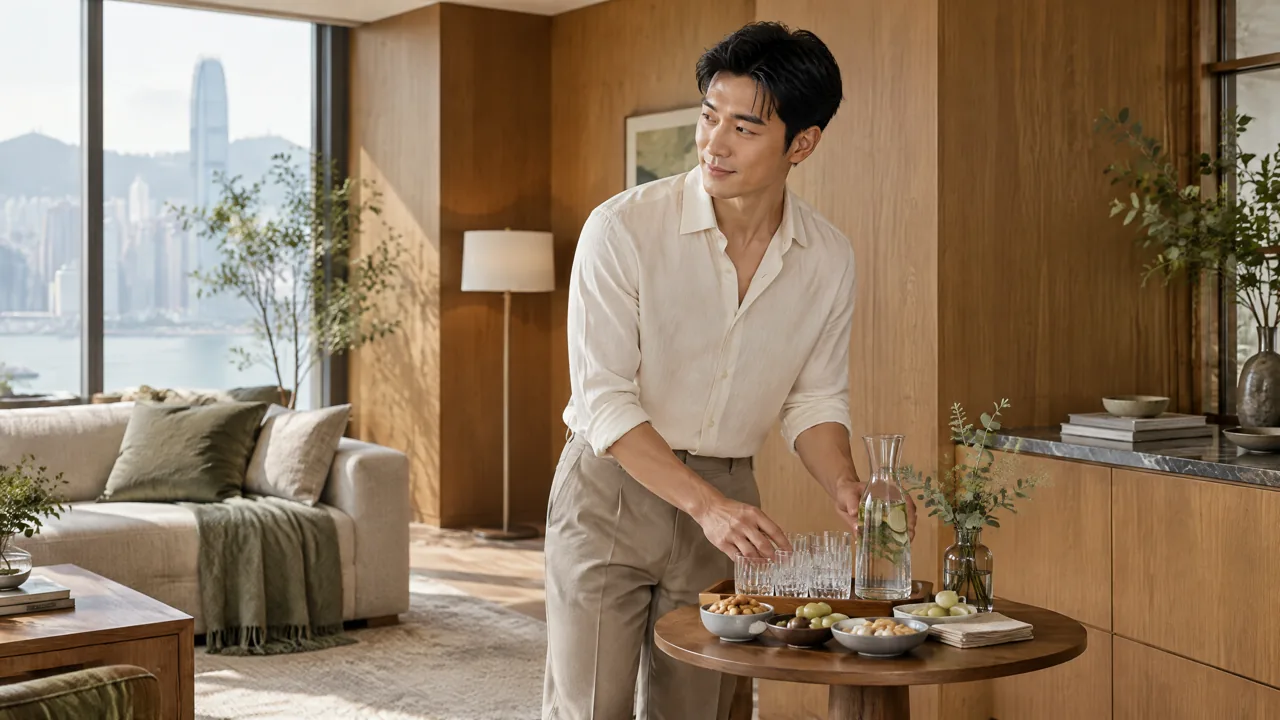
Complete your hair preparation before you begin receiving and arranging food. Choose a separate grooming space with a mirror, then put styling products away. Do not spray hairspray beside an uncovered cake or in a food preparation area. A neat photograph is not worth bringing grooming products into the serving workflow.
Hong Kong's Centre for Food Safety identifies clean hands and utensils, separation of raw and cooked food, and safe temperatures among its five keys [2]. Apply those principles to the hosting setup. Keep the cake area clear of grooming tools. Wash your hands after touching your hair before returning to food handling.
Ask the baker for storage and serving instructions for the actual cake. A decorative photograph does not tell you whether its filling or finish needs particular temperature control. Plan the photograph around those instructions, rather than leaving the cake displayed while everyone finishes getting ready. Do not infer safe display duration from its appearance.
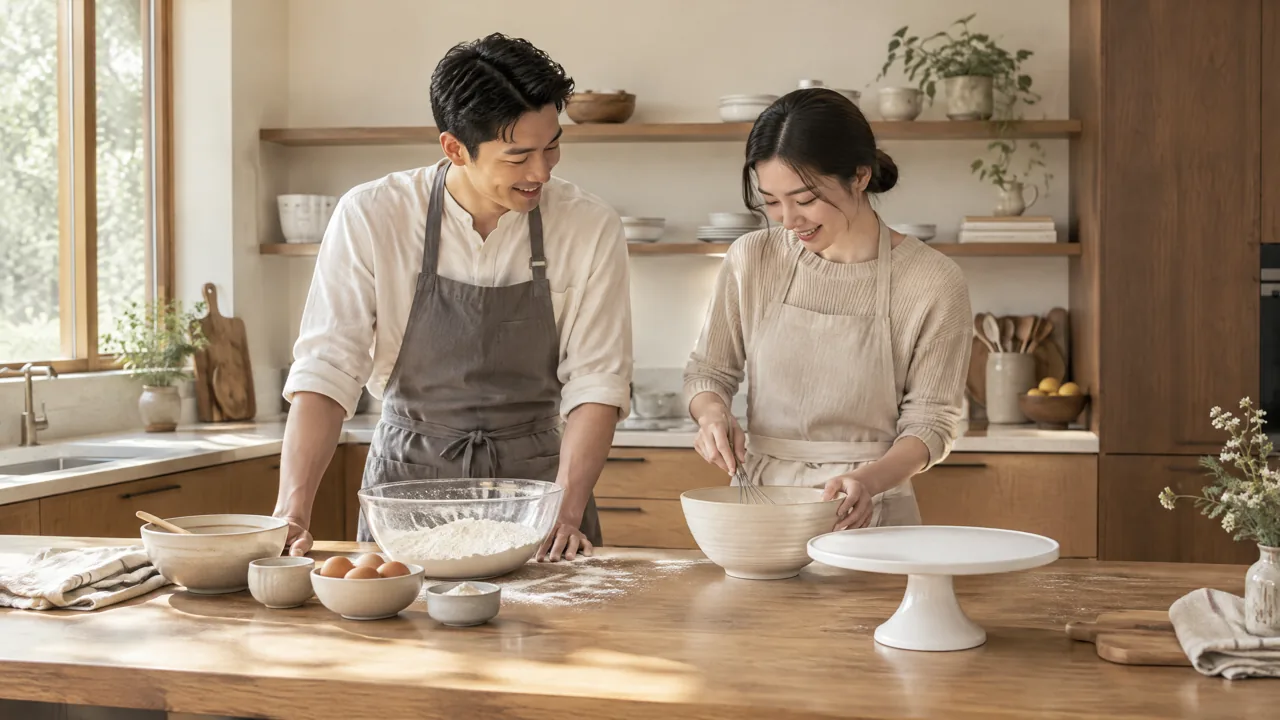
If you join a supervised baking activity before the celebration, follow the instructor's hair-restraint or head-covering requirements. Keep your fringe out of your eyes and use a comfortable arrangement. You can reassess the photographic finish afterwards in a separate area. Practical participation comes before preserving a hairstyle throughout food preparation.
Prepare the photograph around the cake's handling instructions, not the cake's handling around a prolonged photo session.
08
8. Send two focused briefs and protect the hosting handover
Your hairstylist and baker need different information. Give the hairstylist your usual routine, hair condition and likely portrait angles. Give the baker your message, design priorities and table constraints. Share the same occasion context with both, but do not ask either to make assumptions about the other's materials or practical responsibilities.
Keep your design priorities ranked. If the cake must have a particular motif, be flexible about minor accent colours. If your hairstyle must work through a busy evening, prioritise comfort over maximum height. Ranking prevents every reference detail becoming compulsory. It also makes professional suggestions easier to evaluate without losing the occasion's personal meaning.
Before confirming a YumYum enquiry, request a written description of the agreed design and order arrangements. Check dimensions, portions, ingredients and any dietary concerns directly, rather than inferring them from a style name. Confirm the total price and actual logistics charge. Do not assume cake delivery is free or a requested arrival time is guaranteed.
Finally, assign someone to receive the cake while you finish dressing, if your gathering allows it. Share handling instructions with that person and agree where packaging will go. Once the cake is safely arranged, take the planned photograph without unnecessary delay. Then let the evening become a celebration rather than an extended styling assessment.
| Recipient | Information to provide | Decision to confirm |
|---|---|---|
| Hairstylist | Front and side references, routine and outfit | A manageable silhouette for your hair |
| Baker | Message, design priority and usable table space | Finished cake and packaging dimensions |
| Cake receiver | Written handling and storage instructions | Where the cake goes on arrival |
| Person taking photographs | Portrait and group-shot priorities | A clear frame without extended display |
- Photograph the empty table from the intended seated position before selecting raised decorations.
- Show your hairstylist a three-quarter view, including the fringe position when you look down.
- Ask the baker to mark message placement separately from decorative borders in the proposed layout.
- Put the cake's handling instructions and the receiver's responsibilities in the same event note.
Sources and useful reading
Continue with hair and grooming
For a separate men’s own-hair consultation: Korean Men's Perm
Continue with related occasion and grooming planning: Anniversary Cake: Couple Hair and Flavour Comparisons
Read our men’s hairstyling background: Vit So and the Canvas Texture studio
Plan the person, the cake and the photograph separately
Choose your main photograph, check your hair from two angles, and send the baker a ranked design brief. Confirm practical arrangements before the day so you can spend the celebration with your guests.
Canvas Texture · WhatsAppFrequently asked questions
Should my hair colour match the cake's pastel finish?
No. Choose hair colour around your preferences and a hairstylist's assessment, not a single cake photograph. Visual balance can come from a calm background or a simpler shirt. There is no need to change your hair to repeat frosting colours.
What if a tall cake decoration covers my face in the seated photograph?
Change the camera angle or your seated position first. Keep the cake stable and follow any support instructions. Take a separate cake photograph if necessary, rather than removing structural elements or creating an improvised stand.
Can a personal lunchbox-style cake replace dessert for all our guests?
Only if the confirmed portions meet your guest plan. Ask about actual cake dimensions and servings. If it is intended as the recipient's personal gift, plan guest dessert separately rather than assuming the small cake can serve everyone.
How should I touch up my fringe after helping with food?
Step away from the cake and food preparation area. Use your familiar grooming method, put tools away, and wash your hands before returning to food handling. Do not spray styling products near uncovered food.
Related journal articles
Hong Kong Catering Service: A Host’s Grooming Plan
A host’s hairstyle has done its job when it stops competing with the welcome.
Catering Packages: Compare Food and Grooming Budgets
Editorial principle: protect the meal and the host's preparation time before spending on extra variety or a more elaborate look.
Office Lunch Catering: Keep Hair Products off Food Tables
A prepared host gives hair products a home before giving lunch a place on the table.

