Hong Kong Island Scuba Lessons: Hair Care for the Commute
For men fitting a water session around work, the most useful hair plan is simple: confirm where you will finish, keep dry clothes separate from wet items, and leave time to rinse and handle your hair gently. Aim for a presentable version of your usual cut, not a salon finish achieved in a crowded changing room. A towel and a realistic diary often matter more than another styling product.
An Island-area course enquiry does not establish an Island pool, permanent branch or convenient return point. The meeting place, training venue and departure point may differ. That affects whether you can wash your hair before travelling, where your office shirt stays dry, and whether you should head home rather than straight to a meeting. Plan around confirmed arrangements rather than a district name.
Canvas Texture and DiveHarbour share website ownership. This is hair and commuting guidance from the Canvas Texture editorial team, prepared with AI assistance and public sources, not an independent operator review or diving instruction. Canvas Texture helps men manage their own hair; DiveHarbour should answer activity, eligibility, equipment and timetable questions. Keeping those roles separate makes the plan more useful, particularly when a haircut appointment and water session compete for the same week.
01
1. Find the real finishing point before planning your hair
Begin with the end of the session. Ask where you are expected to finish and whether changing rooms, freshwater rinsing and showers will be available. These are separate questions: somewhere to change does not necessarily mean somewhere to shampoo or dry your hair. Check any restrictions on toiletries and electrical appliances too. Knowing the facilities lets you decide whether to carry a compact wash kit or save a fuller routine for home.
Trace the whole journey rather than only the trip from your office to the meeting point. Include changing, collecting your belongings and travelling onwards. Do not build a fixed client appointment around an unconfirmed finish time. For a hypothetical worker based in Central, the practical difference between returning nearby and finishing elsewhere is not simply distance. It is whether damp hair and wet clothes must share a bag with tomorrow's work essentials.
For the location questions behind that decision, the Hong Kong Island scuba diving course page is a relevant next read. Use it to frame an enquiry about actual meeting, pool or sea arrangements, not as evidence of a branch or pool address. Explain that you need to plan a hair rinse and dry change afterwards. Request the confirmed logistics before choosing your onward route, and take only the grooming items those facilities can reasonably support.
A district name cannot tell you where your towel will dry or where you will put on your office shirt.
02
2. Choose a hairstyle that has an easy second version
Your normal hairstyle can have a simpler version for the journey home. If you usually wear a lifted quiff, that might mean accepting a softer, flatter shape after washing rather than rebuilding height immediately. With a fringe, think about where it naturally falls once clean and partly dry. Discuss the cut's shape with your stylist beforehand. A manageable length and sensible weight distribution are more practical than relying on strong hold to preserve an office look through water exposure.
For longer hair, ask your stylist about a low-tension way to keep it organised on land. Do not pull a tie tighter merely to flatten every loose strand. Any hair arrangement used with a mask, hood or other activity equipment must be discussed with the instructor before entering the water. A neat haircut is not proof of equipment suitability, and this article does not promise a seal or suggest changing straps to accommodate a hairstyle.
Curly, straight, bleached and permed hair should not all be treated with the same combing routine. The American Academy of Dermatology recommends gentle handling and distinguishes between detangling needs for straight and textured hair.[2] Pack the tool you already use comfortably, rather than experimenting with an unfamiliar brush after class. Tell your stylist if your lengths snag easily or your scalp feels tender. The useful goal is less pulling during the reset, not forcing every hair into place.
03
3. Pack separate wet, wash and dry zones
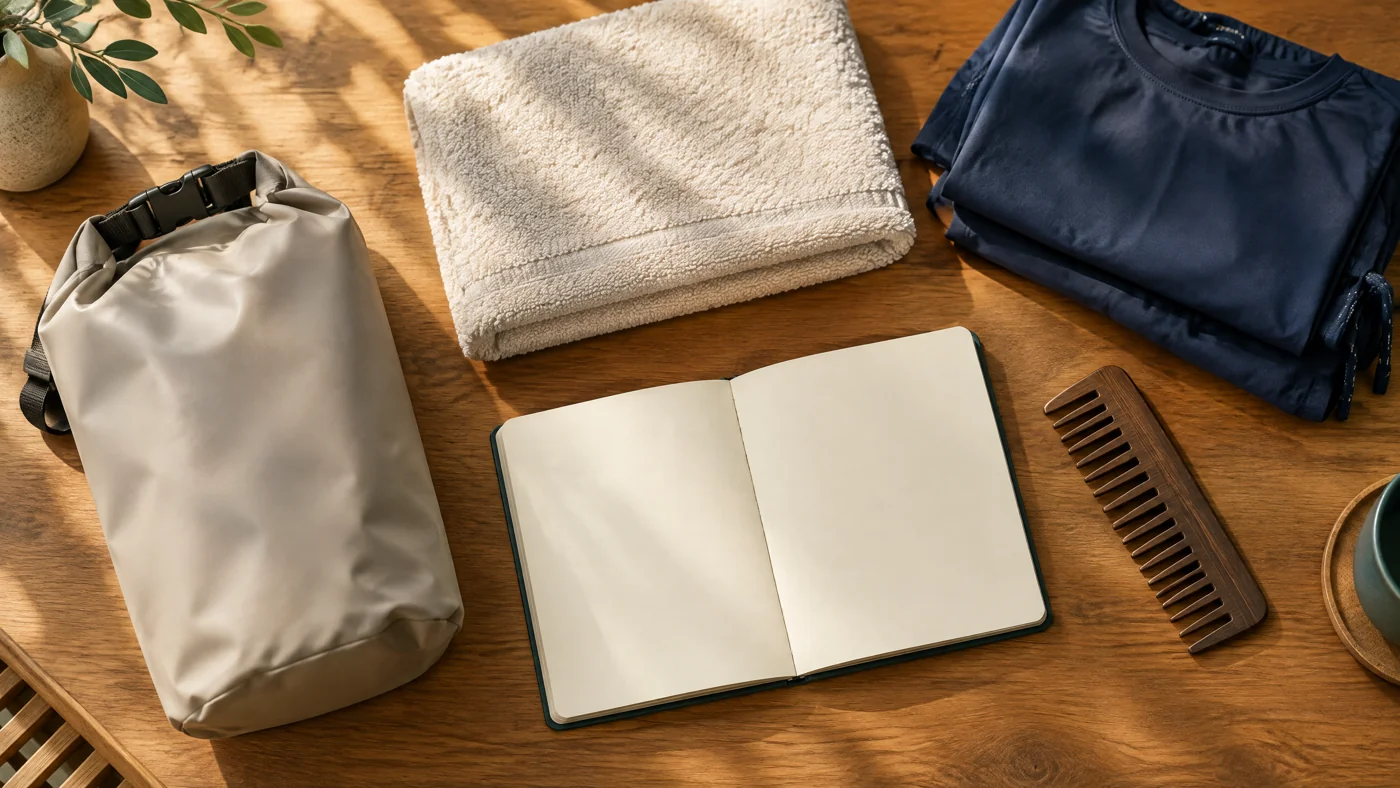
A well-organised bag protects the things you need after the water session. Keep clean clothes and your dry hair towel away from used swimwear. Give toiletries their own closed pouch, and use a separate container or bag for wet items during transport. This is temporary separation, not a reason to leave damp towels sealed overnight. Unpack them when you get home so that the next class starts with clean, dry supplies rather than yesterday's forgotten bundle.
Choose a soft towel that you can press against your hair without vigorous rubbing. A second small towel can be useful if the main one is needed for your body, but only pack what you can carry comfortably. The AAD advises against rubbing hair with a towel because rough handling can contribute to damage.[2] A portable dryer is not automatically a useful addition: first establish whether the venue permits it and has a suitable place for use.
Your work clothes deserve the same planning as your hair kit. If your shirt pulls tightly over your head, getting dressed can disturb a newly arranged fringe or catch longer strands. A button-front option may make the reset easier. Keep shoes and paperwork protected from wet items too. The table separates each packing job, while the checklist covers the questions that prevent those items from becoming dead weight on the commute.
| Zone | Useful contents | What to keep separate |
|---|---|---|
| Dry return kit | Clean shirt, underwear and soft hair towel | Used swimwear and leaking bottles |
| Wash pouch | Familiar shampoo and conditioner where permitted | Office documents and electronics |
| Gentle styling pouch | Suitable comb or brush; land-use styling product if needed | Loose wet items |
| Wet return zone | Used towel and swimwear for transport | Everything needed clean for work |
- Confirm freshwater rinsing and shower access separately.
- Check venue rules before packing toiletries or a dryer.
- Keep one towel dry until you are ready to handle your hair.
- Allow for changing and washing when planning the return journey.
- Unpack damp belongings once home.
04
4. Make the post-water wash gentle, not elaborate
Freshwater rinsing after swimming belongs in the plan, rather than being an optional extra squeezed out by a late train. The AAD notes that pool chemicals and sun exposure can damage hair and recommends appropriate washing and conditioning after swimming.[1] For a sea session, also plan access to fresh water once ashore. Follow the venue's arrangements and your usual product directions. Washing hair is routine grooming; it is not a treatment for hair loss or persistent scalp symptoms.
Avoid treating a large amount of conditioner as a substitute for a proper wash opportunity. Cosmetics should be used only where the product directions and venue rules allow. Labels such as biodegradable do not establish that a product is harmless to the sea or pool. Keep the routine modest and familiar, especially if you have sensitive skin. If irritation persists, ask an appropriate clinician rather than repeatedly adding stronger cleansing products in the hope of solving it.
After washing, press out moisture with the towel, then detangle according to your hair type without yanking through snags. Where drying facilities are permitted and available, use low heat and avoid pulling hard with a brush.[2] You do not need to reproduce every step of your normal morning routine. A clean, gently arranged fringe or softer curl pattern can be a reasonable return look. If facilities are limited, make the fuller wash and styling routine a home task instead of rushing it.
05
5. Explain your work constraints when discussing private dates
A flexible diary discussion should include the time you need after class, not only the hours you can attend. In a hypothetical example, someone with an evening client meeting might be able to attend a daytime session but have nowhere convenient to wash and dry their hair afterwards. That is a genuine practical constraint. Explain it early, alongside your available date windows, rather than expecting training to finish sooner so you can complete a full grooming routine.
The private scuba course with flexible schedule Hong Kong page is useful when a fixed group timetable does not suit your working week. Read it as a starting point for coordination, not a promise of any date or a shorter course. Ask which parts of the proposed schedule can vary and where the water session would finish. If your haircut takes time to style, protect that preparation time in your own diary without asking the instructor to compress required training.
Do not pay simply because a tentative plan appears to solve your commute. Confirm the course route, eligibility, equipment, venues, timings and written terms with DiveHarbour. Its current published position is that all paid fees are non-refundable; make-up sessions are subject to written conditions. A work clash or a missed hair appointment does not create a refund or guaranteed replacement date. Settle your own scheduling priorities before committing, including whether a calmer day would remove the need for an immediate office reset.
06
6. Compare a protected weekend with a squeezed workday
A free weekend may give you more room to wash, change and let your hair settle without a meeting immediately afterwards. It does not make every course appropriate or every date available. Compare the whole day, including travel and the facilities at the actual finish point. If you have plans that evening, ask yourself whether a simpler hairstyle would suit them. The objective is to choose a manageable personal timetable, not to make water training serve a grooming deadline.
The weekend scuba diving course Hong Kong page is a relevant next read for timetable comparisons, but it also discusses advanced training. Do not assume that a weekend label makes the advertised route suitable for a beginner. Give DiveHarbour your experience and any existing certification, then let the instructor confirm eligibility and the appropriate course. Once that is settled, decide whether the proposed arrangements leave enough room for a straightforward wash and dry change before your next commitment.
Repeated water sessions also change the conversation about colour and perms. Tell your stylist what is planned before booking chemical work, especially if your lengths are already dry or fragile. There is no universal waiting period that guarantees newly treated hair is ready for every sea or pool outing. Advice depends on the service, product and your hair's condition; activity suitability remains a separate question for the instructor and, where health is involved, a clinician. The comparison below is a personal planning aid, not a course timetable.
| Personal plan | Hair-care advantage | Decision to make first |
|---|---|---|
| Session before an office commitment | Can work if a simple reset is enough | Are the finish point and washing facilities confirmed? |
| Session on an otherwise clear weekend day | More personal room for washing and changing | Does the actual course match your experience? |
| Several water sessions in one planned period | A repeatable, minimal routine reduces packing effort | Can towels and clothes be cleaned and dried between sessions? |
| Water plans near a colour or perm appointment | Early discussion can prevent conflicting expectations | What does your stylist advise for this service and hair condition? |
Flexibility is useful when it creates room to wash and change, not when it becomes a reason to rush training.

07
7. Keep the office reset small and review what worked
Once you are clean and changed, resist the urge to fix every difference from your morning hairstyle. If permitted, apply a familiar styling product on land according to its directions, using only what your hair needs. A flatter crown does not automatically require another wash or a hotter dryer. For men with texture, keeping the curl shape comfortable and the fringe out of the eyes may be enough. Let the reset reflect the haircut rather than fight it.
If the journey means heading home first, regard that as a useful outcome rather than a failed commute plan. You can wash properly, unpack wet belongings and style your hair in familiar surroundings. At your next haircut consultation, describe the actual difficulty: tangling at the ends, a fringe that takes too long to arrange, or a style that depends on lengthy blow-drying. Those observations help a stylist suggest practical changes without promising that a cut will prevent water-related wear.
After your first session, revise the bag based on what you used. Perhaps the second towel earned its space while an extra styling bottle did not. Keep confirmed venue information with your planning notes, but recheck arrangements for later dates rather than assuming they remain identical. Ask Canvas Texture about managing your own hair and everyday presentation. Direct any uncertainty about course demands, equipment or participation to DiveHarbour, and health concerns to an appropriate clinician.
Sources and useful reading
Continue with hair and grooming
For a separate men’s own-hair discussion: Deep Hair Treatment HK
Continue with a related hair-and-water planning guide: Divemaster Study Plans: Hair That Fits a Wet Working Day
Read our hair styling background: Vit So and the Canvas Texture studio
Find an easier version of your everyday hairstyle
Ask Canvas Texture about a men's cut, fringe or texture routine using your own hair that is easier to manage around washing and commuting. Share your current styling difficulties and any planned colour or perm service. DiveHarbour-related activity, equipment and course questions belong with DiveHarbour, not the salon's styling consultation.
Canvas Texture · WhatsAppFrequently asked questions
Does an Island-area course page confirm a Hong Kong Island pool or branch?
No. Ask DiveHarbour for the actual meeting point, training venue and finishing arrangements. An area guide is not confirmation of a permanent branch or a particular pool.
What is the smallest useful hair kit for travelling home?
A soft towel kept dry, your usual suitable detangling tool and a separate wet-items bag are a practical base. Add familiar wash products only after checking facilities and venue rules.
Can I tie long hair tightly to keep it neat with diving equipment?
Avoid unnecessary tension. Ask your stylist about gentle hair handling on land, and ask the instructor to confirm any arrangement used with activity equipment. Do not modify straps or assume a hairstyle guarantees fit.
Does private scheduling guarantee I can finish before a meeting?
No. Proposed arrangements depend on the instructor, training requirements, venues and conditions. Confirm logistics and written terms before paying. All paid fees are currently non-refundable, and make-up sessions depend on written conditions.
Should I arrange a perm immediately before a weekend water session?
Discuss the specific service, products and your hair condition with your stylist first. There is no universal waiting period that guarantees suitability. Ask DiveHarbour about activity eligibility separately, and a clinician about health concerns.
Related journal articles
First Scuba Lessons: Keep Your Hair, Plan the Pool-Day Wash
Keep the haircut you want to live with; prepare for the wet-hair version of it.
Trying Scuba in Hong Kong: Prepare Your Fringe Before a Mask Fitting
Prepare the fringe you actually have, not the hairstyle you hope will stay unchanged in water.
Choosing a Hong Kong Diving School: A Men's Hair Planning Guide
Choose the learning environment with the instructor; choose an achievable hair routine with your stylist.