Wig Shop Hong Kong: Read the Fitting Terms Before Choosing
Choose a wig shop by checking what a fitting lets you assess, what the order includes and how your privacy will be protected. A convincing photograph cannot answer those questions. Before paying, ask to understand the proposed material, attachment method, alteration limits and follow-up arrangements. You should also know which decisions can still change after measurements are taken. This approach makes the consultation a useful decision point rather than a pressured choice between attractive pictures or broad promises of a natural appearance.
The right fitting arrangement depends on your circumstances, not a universal shop ranking. Someone seeking occasional coverage may prioritise easy removal and storage. Someone expecting changing hair volume may need to discuss how the fit can be reassessed. Neither situation can be resolved by a website label alone. If hair loss is unexplained or worrying, consult an appropriate clinician to understand the cause before relying on a commercial hair service. A wig is an appearance option, not a diagnosis or evidence of treatment success.
Canvas Texture and DT HUB share a website owner. The DT HUB pages linked here are therefore related-business reading, not independent recommendations or a tested comparison of competing shops. This article offers a framework for evaluating fitting terms and privacy rather than endorsing advertised outcomes. Canvas Texture provides men's own-hair styling; it does not sell wigs, provide medical care or arrange DT HUB appointments. Keep those roles separate when deciding whom to contact, what information to share and which service you actually want.
01
1. Separate business disclosure from evidence about your order
Start by separating the publisher's relationship with a business from the evidence needed for your purchase. Shared ownership explains why a service page appears in this article; it does not establish product quality, individual comfort or comparative superiority. For each claim that matters to you, identify the practical question underneath it. A statement about discretion raises questions about room arrangements and photographs. A statement about customisation raises questions about measurements, approval stages and changes. Those answers are more useful than treating an editorial mention as an independent inspection.
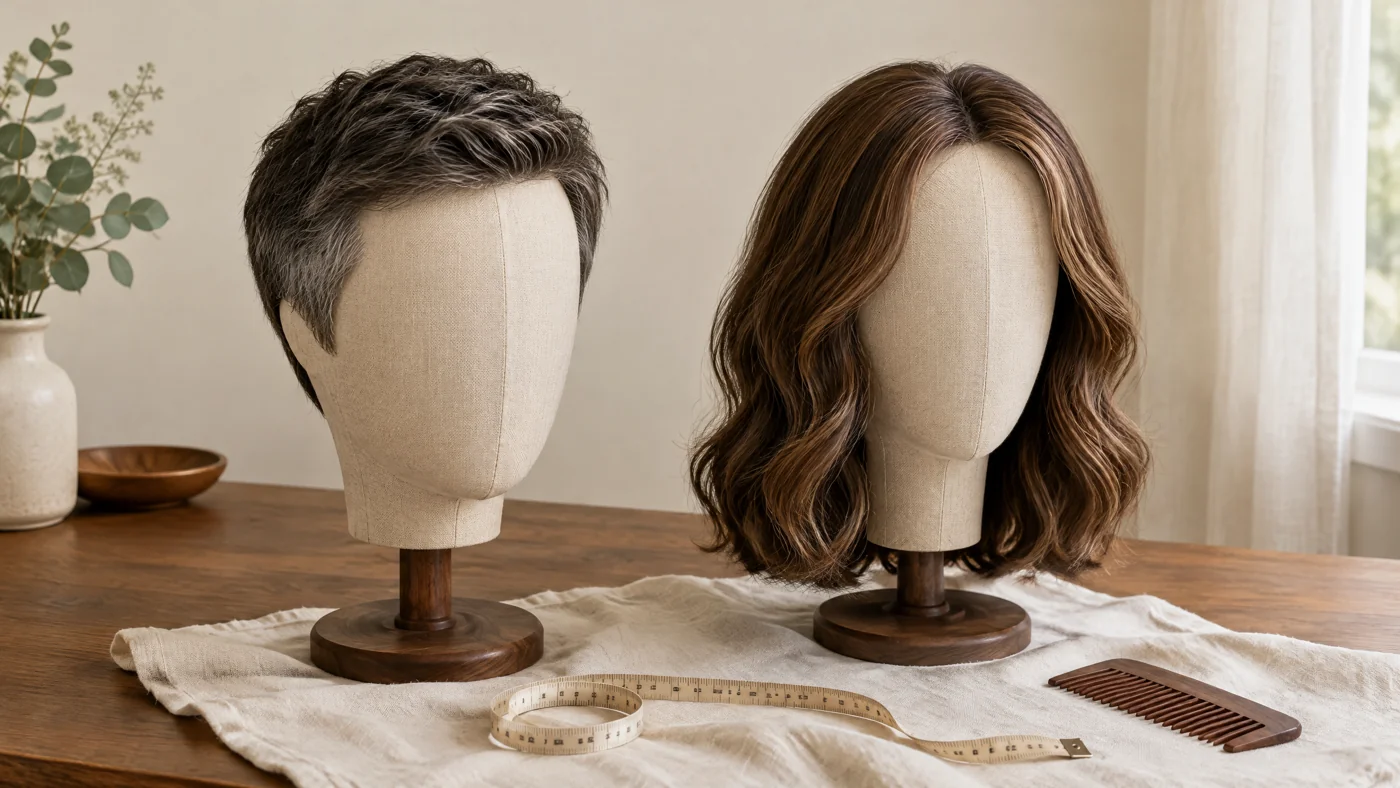
The related DT HUB wig hong kong page can help you identify topics to raise directly with the business. Read descriptions of materials and services as starting points for enquiries, not proof that a particular piece is available or suitable. Ask which statements apply to the proposed order and which describe the wider service. An image, including an illustrative image, cannot establish the cap's feel or its behaviour on your head. Keep your final decision tied to the sample, specification and terms you are actually offered.
Website information can differ in scope between an overview and a product discussion. Rather than choosing whichever wording sounds most reassuring, ask for a dated written summary of your order. It should distinguish an estimate from a commitment and identify any conditions attached to adjustments or aftercare. If an answer remains vague, record it as unresolved rather than filling the gap yourself. You can still attend an exploratory appointment, but you need not place an order until the important uncertainties have been explained clearly enough to compare.
Shared ownership is a relationship to disclose, not a reason to skip checking the terms.
02
2. Agree the fitting arrangements before sharing sensitive details
Use the related wig shop hong kong overview to frame an appointment enquiry, while confirming the actual location and arrangements directly. DT HUB's confirmed premises are in Kwun Tong; a district heading does not establish another branch. Ask whether your visit is exploratory, whether any part is chargeable and what happens if you decide not to order. Check who will attend and whether there is somewhere suitable to remove a head covering. Do not assume a private fitting arrangement solely from a general service description.
Privacy starts with the booking message, not just the room. You can initially describe practical needs without sending detailed scalp photographs or a full medical history. Explain whether you want a companion present, a discreet conversation or advance notice before anyone else joins. Ask how staff will address you in reception and whether appointment reminders can use neutral wording. These are preferences to discuss, not assurances about an existing policy. A shop that cannot meet a particular request should tell you before you decide whether to attend.
Illustrative scenario: a person who wears a head covering wants to compare caps without being visible from a shared corridor. Their key question is not simply whether the appointment is described as private. They ask about the room, sightlines, interruptions and the option to pause. If suitable arrangements cannot be confirmed, they can postpone or explore another setting. Another person may be comfortable with an open consultation but want no photographs. Both choices are legitimate; privacy should match the individual rather than a single assumed preference.
03
3. Compare fitting options by what you can inspect and change
A fitting should help you understand both appearance and the limits of the proposed purchase. Ask whether you are trying the exact item, a comparable sample or a demonstration cap. A sample may illustrate construction without representing the finished colour, density or dimensions. Record those differences before judging the result. With a custom proposal, establish which features you approve before production and what can be altered afterwards. Customisation is a process to clarify, not a guarantee that every concern can be corrected once the piece has been made.
Look beyond a front-facing mirror. If you feel comfortable, compare the parting, sides and rear under ordinary lighting. Notice how the cap sits when you turn your head or wear glasses. Ask permission before any adjustment, and request an explanation of what it changes. More density might satisfy a preference for coverage while creating a silhouette you dislike. A closer hairline match may involve different handling or maintenance. Neither option is automatically better; the purpose of comparison is to identify the compromise you are willing to live with.
Cancer Research UK notes that wig materials have different care requirements and that a higher price does not guarantee a more realistic appearance.[2] Use that principle to request the care instructions for the exact material being discussed. Do not infer heat suitability from appearance or a broad material label. For synthetic fibres, check the manufacturer's instructions before applying heat. Bringing an old photograph can help explain a preferred style, but it is a reference for discussion rather than a promise to reproduce past hair exactly.
| Route being discussed | What to inspect | What remains uncertain | Question before committing |
|---|---|---|---|
| Trying the exact proposed item | Cap position, appearance and immediate comfort | Comfort during longer use and later adjustments | Is this the item named in the written order? |
| Trying a comparable sample | Construction and a general styling direction | Differences in final size, density or colour | Which features differ from the piece I would receive? |
| Reviewing a custom specification | Measurements, design choices and approval stages | Finished feel and limits of later alteration | What happens if the delivered piece differs from the agreed specification? |
| Exploratory visit without ordering | Preferences, questions and possible next steps | Availability and suitability of a future proposal | Can I leave with written information and decide later? |
04
4. Treat comfort and scalp concerns as separate decisions
Appearance does not settle whether an attachment approach is appropriate for you. Ask how the piece is secured, what touches your scalp and whether any method uses your existing hair. Request a demonstration of putting it on and taking it off before agreeing to regular use. Explain any previous skin reactions or current discomfort that could affect fitting. Do not accept pain or persistent pressure as the price of a convincing appearance. If discomfort appears during a trial, pause and have the cause assessed rather than simply tightening the attachment.
The NHS advises people concerned about hair loss to see a GP to understand the cause before considering a commercial hair clinic.[1] In Hong Kong, seek an appropriate clinician for that evaluation. A fitter can discuss the physical features of a cap, but cannot establish why your hair is thinning merely by looking at it. New or worsening scalp symptoms also deserve medical assessment. Keep cosmetic coverage and clinical decisions on separate tracks, so that arranging a fitting does not postpone necessary care or become an informal diagnosis.
Illustrative scenario: someone undergoing medical treatment wants a familiar-looking style but expects their hair volume to change. They can ask their healthcare team about scalp considerations, then ask the fitter how later changes would affect attachment and adjustment. Cancer Research UK recognises that hair changes during chemotherapy can affect fit and that choosing not to wear a wig is valid.[2] A trial fit cannot predict every future change. The practical response is an agreed reassessment plan, not a promise that the same fit will remain suitable throughout.
- Ask which components touch the scalp and request the relevant product information.
- Check whether attachment depends on existing hair and how removal is demonstrated.
- Pause a trial if it causes pain, pulling or irritation; do not treat discomfort as proof of security.
- Discuss unexplained hair loss or concerning scalp symptoms with an appropriate clinician.
- Ask how changing hair volume would affect fitting, adjustment and future costs.
05
5. Make the quote describe the whole transaction
A useful quote names the proposed piece and separates its cost from fitting, cutting, accessories and later services. Even without comparing prices, you can compare what each offer includes. Ask whether styling happens before or after your approval and whether an irreversible alteration changes the available remedies. Identify which adjustments are included, which require another quotation and whether follow-up has conditions. A low initial figure is difficult to interpret if essential work remains unspecified. Equally, a longer list of services has little value if you do not need them.
Before paying a deposit, ask what it commits you and the shop to do. Record the agreed specification, payment stages and the point at which production or alteration begins. Request the cancellation and change terms rather than assuming an automatic cooling-off period or unconditional refund. If timing matters, distinguish an estimated completion date from an agreed deadline. Ask how delays or unavailable materials would be handled. Do not infer supplier stock or a delivery promise from a sample shown during the consultation; confirmation should relate to your particular order.
The appointment worksheet below serves a different purpose from comparing fitting routes: it records transaction details you may need later. Fill it in while the explanation is fresh and ask the business to confirm the important points in writing. Leave unanswered fields visibly open. That makes a follow-up enquiry specific instead of restarting the whole conversation. If a proposed substitute changes colour, construction or care requirements, request a revised specification before agreeing. A clear record helps both sides distinguish a changed preference from a mismatch with what was originally agreed.
| Item to record | Detail to request | Your note | What to obtain in writing |
|---|---|---|---|
| Product specification | Material, construction, size, colour and density | Record the chosen item or sample differences | The specification you approve |
| Included work | Fitting, cutting, instruction and adjustment scope | Separate included work from optional services | An itemised quotation |
| Payment and changes | Deposit, later payments and change conditions | Note the stage at which work begins | Payment, cancellation and alteration terms |
| Timing | Estimated delivery and any agreed deadline | Explain any event that affects your decision | How delays and substitutions are handled |
| Follow-up | Adjustment process, limits and additional charges | Record who to contact about a problem | The agreed aftercare and review arrangements |
06
6. Decide what happens to photographs and fitting records
Photographs may help communicate a hairline or colour preference, but taking them and publishing them are different activities. Ask why a photograph is needed before agreeing to it. Clarify whether it is for an order record, internal discussion or promotional use, and whether your face must appear. You can ask about a less identifying alternative or decline photography. Do not assume agreeing to measurements means agreeing to marketing. If you are happy with private fitting records but not public images, state that distinction explicitly and request that it be recorded.
Ask who can access your records, whether they are shared with a maker and how long they are kept. Where information must be shared to fulfil an order, ask what is necessary and whether identifying details can be limited. Discuss the process for correcting information or requesting deletion, including any records the business says it must retain. These are questions about actual practice, not claims that a particular policy exists. Avoid sending unnecessary medical documents through a booking conversation simply because a page uses reassuring language about sensitive clients.
Your companion can also affect privacy and decision-making. Bringing someone you trust may make it easier to compare styles or remember terms. However, you remain the person who decides what to disclose and whether to proceed. You can request part of the consultation alone or ask your companion not to take photographs. Before leaving, check that the written notes describe your preferences rather than another person's opinion. A discreet appointment is not only about keeping outsiders away; it also means preserving your control within the conversation.
Privacy means retaining control over the fitting, the records and the decision.
07
7. Judge the fit against your needs, then choose a next step
Treat the phrase best wig shop hong kong as a search intention, not a verified ranking. The linked guide is another DT HUB page within the shared-owner relationship disclosed above. Your decision should rest on your priorities and the answers obtained, rather than a superlative. Revisit the issues that matter most: privacy, the proposed fit, maintenance you can manage and understandable terms. If any essential requirement remains unresolved, a sensible outcome is another question or no purchase, not an attempt to justify committing immediately.
At handover, compare the piece with the approved specification before agreeing to further alterations. Ask to repeat the removal and care demonstration yourself, using the instructions for that material and construction. Record any concern promptly and identify the agreed contact for adjustments. A fitting cannot prove a universal lifespan, secure swimming performance or invisibility to other people. Avoid turning those expectations into acceptance criteria unless the business has explained exactly what it is committing to. More useful criteria describe observable features, agreed services and a process for addressing a mismatch.
Finally, keep the next step proportionate. You may gather information, arrange a further fitting, seek clinical advice or decide that no wig is right for now. If you instead want to explore how your existing hair could be cut or styled, that is a separate conversation. Canvas Texture can discuss men's own-hair styling without acting as a wig seller or medical provider. Contact DT HUB directly for its wig enquiries and terms. Shared website ownership should make the relationship transparent, not blur responsibility for bookings, products or care.
Sources and useful reading
Continue with hair and grooming
If your question concerns styling your own men’s hair, continue with: Perm for Thin Hair Men HK
Read a related decision guide: Human Hair Wig Hong Kong: Specify the Quote in Writing
Read our men’s styling background: Vit So and the Canvas Texture studio
Explore styling options for your own hair
If you want to discuss a cut or styling direction for your existing hair, contact Canvas Texture for a men's own-hair consultation at its Hollywood Road workshop. Explain your current routine and the look you would like to explore. This is not a wig sales service, medical appointment or booking route for DT HUB. Direct wig enquiries and fitting-term questions to DT HUB itself.
Canvas Texture · WhatsAppFrequently asked questions
Is this an independent ranking of Hong Kong wig shops?
No. Canvas Texture and DT HUB share a website owner. The linked DT HUB pages are related-business reading, not independently tested recommendations or a ranking. Use the fitting and transaction questions to evaluate the actual proposal.
What should I ask before booking a private fitting?
Confirm the location, room arrangements, who will attend, any charges and whether photography is optional. Explain any particular privacy needs in advance without sending more personal information than is necessary.
Does trying a sample show exactly how my finished wig will fit?
Not necessarily. Ask whether the sample matches the proposed size, construction, colour and density. For a custom order, obtain the agreed specification, approval stages and adjustment terms in writing.
Should a wig fitting replace an appointment about hair loss?
No. Unexplained or worrying hair loss should be evaluated by an appropriate clinician. A wig fitting addresses cosmetic coverage and practical fit; it does not diagnose the cause or demonstrate a treatment effect.
Can Canvas Texture sell me a wig or book a DT HUB fitting?
No. Canvas Texture provides men's own-hair styling. Contact DT HUB directly for wig enquiries, availability, fitting arrangements and order terms. Canvas Texture does not provide medical care or arrange DT HUB bookings.
Related journal articles
Men’s Hairpieces or a Perm? Compare Coverage and Shape
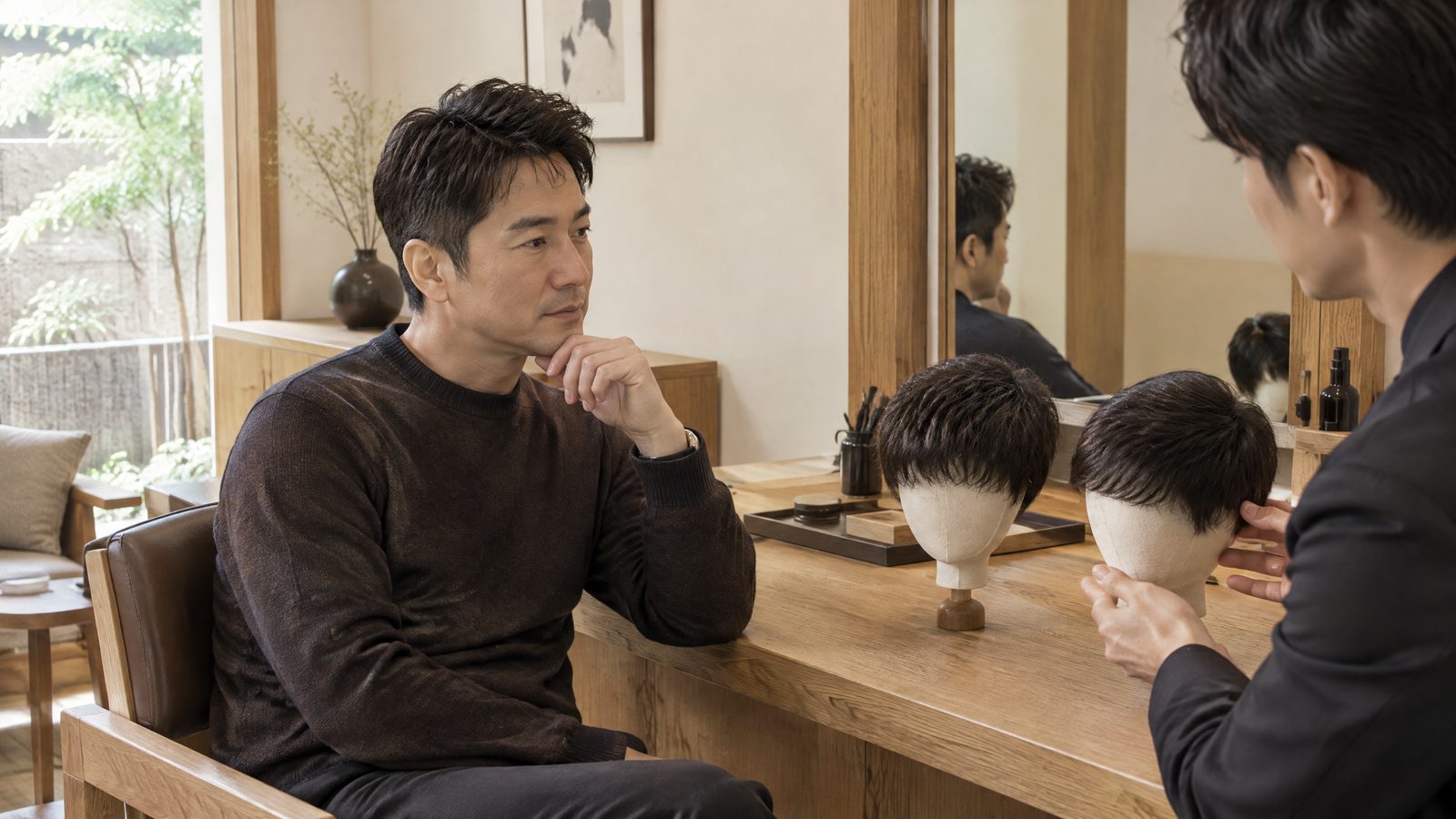
Choose a perm when enough existing hair remains and movement is the main goal. Choose a hairpiece when a defined area needs cosmetic coverage. Neither option decides the best outline by itself. First identify the visible area, surrounding density, preferred parting, and morning routine. Those observations prevent a product label from making the decision too early. Compare those details before making any booking.
Natural Hairline Wigs: A Guide to Fringe and Forehead
Natural hairline wigs look most convincing when the front edge, fit, colour, density, and haircut agree. For a hypothetical four-day workweek side part, inspect both temples under two ordinary light sources before choosing a construction. The aim is a coherent outline in movement. No single feature can decide that outcome. Check the whole frame, not only the centre. Check it while turning your head.
Human Hair or Synthetic Wigs? Texture and Care Choices
Choose human hair when approved styling flexibility matters. Choose synthetic fibre when a preset shape and simpler mornings matter more. Neither label settles the result alone. Texture, density, cap construction, attachment, and fit shape how a wig looks and feels. Start with the routine you can maintain, then check the exact model’s instructions. That order avoids paying for flexibility you will not use