
Hair Salon Tseung Kwan O: Look Beyond a Finished Photo
Choose a haircut by how well the plan fits your normal routine, not just how impressive the finished photograph looks. Ask what shape the cut creates, what styling produces the photographed finish, and which parts you can reproduce yourself. A polished image cannot show whether the fringe interferes with your glasses or the sides settle after washing. Comparing those practical details gives you a more useful basis for choosing than treating a gallery as a promise.
For someone starting in Tseung Kwan O, location is another decision variable rather than a quality score. DT HUB's premises are in Kwun Tong, not a Tseung Kwan O branch. Compare the full appointment commitment with a nearby alternative, including consultation, the agreed service and your own journey. A more convenient option can make sense for frequent maintenance. Travelling further may suit a particular consultation, but distance alone proves nothing about the suitability of the cut.
DT HUB and Canvas Texture share a website owner. The related pages discussed here are further reading, not the basis of an independent salon review. This article does not rank local businesses or claim personal experience of their services. Instead, it offers a way to compare styling advice, quotation clarity and retained shape. Start with your existing hair and the effort you can realistically give it, then ask each salon to explain how its proposed cut addresses those conditions.
01
1. Define what a wearable haircut means for you
Before opening another gallery, describe the problem you want a cut to solve. It might be bulk around the ears, a fringe that falls into your eyes, or a silhouette that looks uneven when you turn sideways. Pick one main priority and one acceptable compromise. This makes the discussion more precise than asking for something fashionable. It also lets a stylist explain whether preserving length, reducing weight or changing the outline is the most relevant starting point for your hair.
The related hair salon tseung kwan o page can help you frame an enquiry about DT HUB's Kwun Tong service location. Use it to identify questions, rather than assuming an area heading means a local branch. Explain your current length, usual parting and whether you normally air-dry or use a dryer. Ask what can be discussed remotely and what needs assessment in person. A photograph may support that conversation, but it cannot communicate every detail of density, movement or previous cutting.
Separate preferences from limits. You may like an exposed forehead but need a fringe option for days without styling. You may want close sides but dislike a sharp contrast as the hair grows. Neither combination is a mistake; each creates a trade-off to discuss. In an illustrative scenario, a glasses wearer might prioritise comfort around the temples over copying an exact outline. The useful question is how the proposed shape accommodates that priority, not whether the reference looks attractive on someone else.
02
2. Read a finished photograph as a partial description
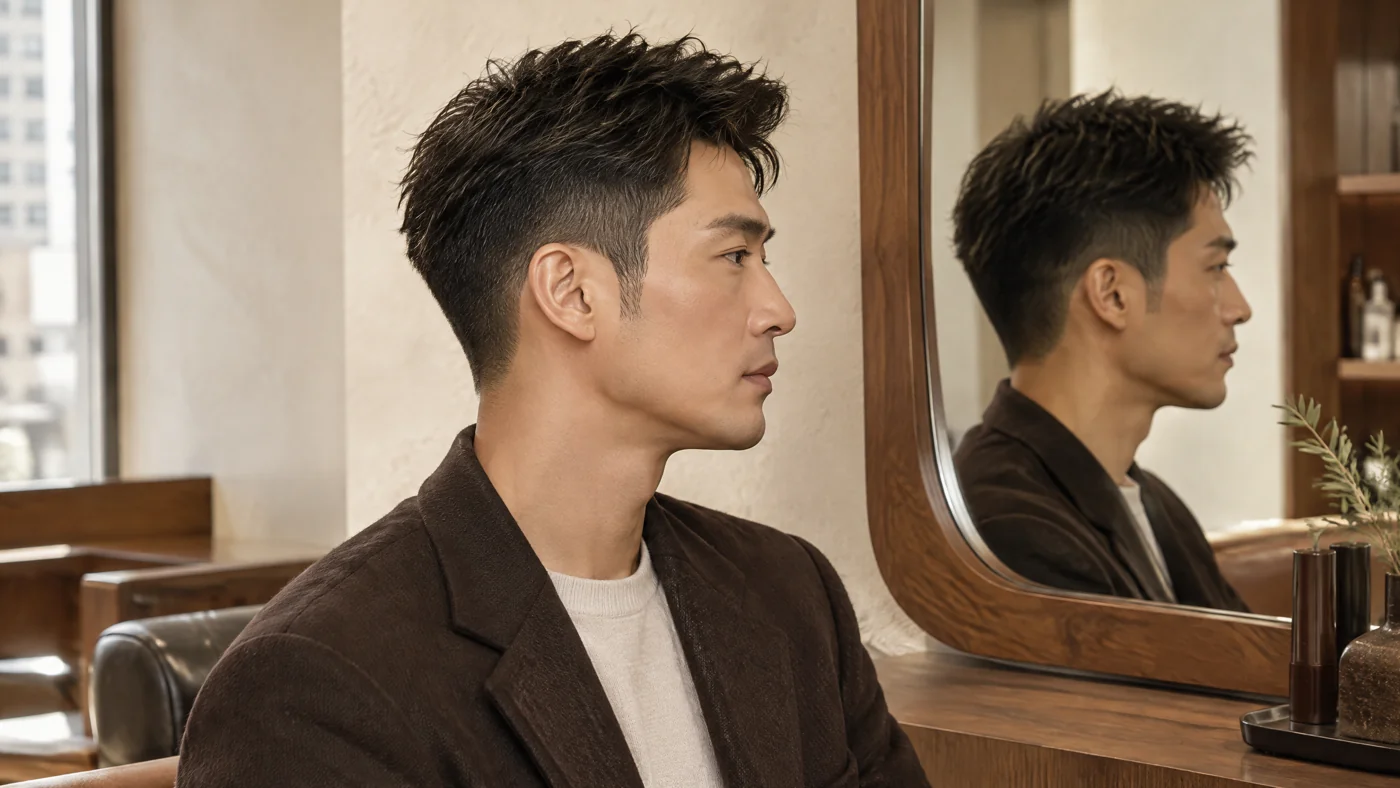
A finished photograph records one arrangement of the hair at one moment. Lighting, camera position and styling can influence how the silhouette appears. Look for front, side and back views before deciding that a shape will suit you. Notice where the fringe ends, how the sides join the top, and whether the neckline is visible. If a gallery provides only one angle, that is a limit to the information available, not evidence that the hidden angles are good or bad.
Compare like with like wherever possible. A reference with a different length, hair direction or amount of visible scalp may require changes rather than exact reproduction. Ask the stylist to identify which feature they would keep and which they would adapt. Labels matter too: an illustrative styling image is not a documented client result. Even an accurately labelled result cannot establish that your hair will behave identically. The image should support an explanation, not replace a conversation about your starting point.
Distinguish the haircut from its presentation by asking how the finish was created. Was the top dried away from the face, lifted at the roots or arranged with product? Which of those steps would be needed after your next wash? If you do not want that routine, request a reference closer to your preferred finish. This does not make a styled photograph misleading by itself. It simply prevents you from judging a cut against a finish you never intended to recreate.
A photograph shows a finish; a consultation should explain the work needed to reach it.
03
3. Compare the advice, not the confidence of the sales pitch
Good comparison questions invite reasons rather than reassurance. Ask why a proposed length fits your hair direction, what might happen if more weight is removed, and where the stylist expects you to need daily adjustment. Listen for a clear explanation of the trade-offs. A confident promise that anything will work is less useful than a specific account of what remains uncertain. You do not need to understand every cutting term; you do need to understand the effect on your routine.
Readers using the phrase best hair salon tseung kwan o can treat the related page as a prompt for comparison, not proof of a universal winner. Translate 'best' into your own criteria: understandable advice, an agreed scope, and a finish you can manage. Ask the same practical questions of each option. Avoid assuming that a salon in one district is more skilled than another, or that a broad service menu establishes the quality of an individual haircut consultation.
Test whether the proposed routine is teachable. Ask for the drying direction, the role of any product, and an alternative for days when you skip styling. Repeat the explanation back in your own words. In an illustrative scenario, someone who usually leaves their hair to dry naturally might decline a high-volume finish requiring careful dryer work. An adjusted shape may be less dramatic in the mirror but better aligned with that person's habits. That is a valid preference, not a failure to appreciate technique.
04
4. Compare quotations with the same service scope
A quotation is useful only when you know what it covers. Ask whether the proposed amount includes washing, the cut, drying and finishing, and whether a separate consultation charge applies. Also ask who performs the agreed service if that affects the quotation. Do not presume every salon packages these elements in the same way. Write the answers beside each option before comparing totals. A lower headline figure and a more inclusive quotation may describe different purchases rather than different value for the same haircut.
Hong Kong Consumer Council guidance supports clear descriptions of goods, services and transaction terms [1]. For a haircut enquiry, apply that principle to changes as well as the initial offer. Ask what happens if you request a different service during consultation, and how the revised amount will be approved before work starts. Confirm deposit, cancellation and rescheduling terms if relevant. Do not assume an automatic cooling-off period or an unconditional refund. Keep the written exchange so both sides can refer to the same understanding.
The table below compares quotation structures, not named salons or advertised prices. Its purpose is to reveal what is missing before you commit. Mark an unanswered question as unknown instead of guessing that it is included. If two proposals still differ, ask for a haircut-only version or another clearly matched scope where available. You may decide that a particular included service matters to you, or that it does not. Either way, the decision becomes explicit rather than driven by a headline amount.
| Quotation structure | What to clarify | Decision consequence |
|---|---|---|
| Cut listed on its own | Whether washing and finishing are included | Do not compare it with a package until scope is matched |
| Cut with a finishing service | What finish is provided and whether it is optional | Decide whether the extra service fits your needs |
| Amount depends on consultation | What determines the final amount and when you approve it | Avoid treating a provisional figure as a fixed quotation |
| Appointment requiring a deposit | How cancellation, rescheduling and deposit handling work | Consider the commitment alongside your schedule |
05
5. Discuss retained shape without asking for a guarantee
Retained shape means the outline remains acceptable to you as the hair grows and you style it at home. It does not mean the haircut stays unchanged. Ask which areas are most likely to alter your preferred look first: the fringe, the sides, the crown or the neckline. Your tolerance matters as much as the design. Someone who enjoys a softer outline may accept growth that bothers someone wanting a sharply defined edge. No single maintenance interval can stand in for that discussion.
Ask how the cut balances immediate neatness with flexibility later. A very close outline may make small changes more noticeable. Keeping more length can preserve styling options but may leave weight that you need to manage. Removing weight can change how strands fall, so ask what the stylist expects after ordinary washing and drying. These are points for individual assessment, not guarantees attached to a technique. Choose the compromise you understand rather than requesting the shortest possible maintenance cycle without considering its consequences.
Create a simple record after the appointment using your normal routine. Photograph the same views after an ordinary wash, then note when something starts to bother you. Keep lighting and positioning reasonably similar so the record is easier to discuss. Write observations such as 'fringe reaches glasses' rather than declaring the whole cut unsuccessful. This gives a future consultation concrete information. New or unexplained hair loss is a different issue: ask an appropriate clinician to assess it rather than expecting a haircut or cosmetic scalp observation to establish its cause.
Retained shape is not a promise that hair stops changing; it is a plan for which changes you can live with.
06
6. Confirm the Kwun Tong address before planning the visit
The related kwun tong salon page concerns DT HUB's actual premises at Room 03, 21/F, Lee Bo Times Centre, 50 Hoi Yuen Road, Kwun Tong, Kowloon. This is not a Tseung Kwan O branch. Confirm the address and appointment arrangements directly before travelling. Plan from your own starting point using current transport information, rather than treating a general journey estimate as a promise. Include the building arrival and any access needs when deciding whether the visit fits your day.
Compare convenience over the life of the cut, not only the first appointment. If maintaining your preferred outline means returning frequently, a journey you enjoy occasionally may become inconvenient. If you are comfortable with a softer grow-out, the balance may differ. Neither situation establishes that a nearby or more distant salon is better. Ask about the likely maintenance discussion, then judge the practical commitment yourself. Leave enough room in your schedule for consultation, without assuming that an advance photograph removes the need for assessment.
Use the appointment worksheet to gather confirmations rather than to score salons. Send a concise description of the service you want, your reference and the questions that affect your decision. Keep DT HUB's arrangements separate from Canvas Texture's: the latter is a different workshop and does not book appointments on DT HUB's behalf. If a detail remains unanswered, resolve it with the relevant business before setting off. This reduces the chance of arriving at the wrong address or expecting a service that was never agreed.
| Field | Your entry | Confirmation needed |
|---|---|---|
| Destination | Business name and full building address | Exact premises, floor and room |
| Service | Haircut and any requested finish | Agreed scope and quoted amount |
| Hair context | Current length, routine and reference | What needs assessment in person |
| Schedule | Preferred date and your available window | Appointment time and expected service duration |
| Access and terms | Any access needs or scheduling constraints | Arrival arrangements and applicable booking terms |
07
7. Make the final decision with a repeatable check
Before cutting starts, summarise the plan in plain language. Identify the length you want to preserve, the outline you want to change and the finish you expect to wear at home. Ask the stylist to explain any proposed departure from your reference before proceeding. This is particularly useful when 'tidy up' could mean different things to each person. Agreement need not eliminate every uncertainty, but it should make the important choices visible. If the explanation remains unclear, pause the decision rather than relying on confidence alone.
At the finish, check more than the front view. Look at the sides and back, put on your glasses if you wear them, and ask how to recreate the arrangement. In an illustrative scenario, a fringe may look ideal when lifted but feel inconvenient when allowed to fall. That is the moment to discuss the difference between the styled finish and your everyday preference. Ask what adjustments are feasible, recognising that removed length cannot simply be restored and further cutting may create a different compromise.
Afterwards, use your ordinary-wash observations to guide any follow-up discussion. Describe the specific issue, the routine you used and the change you hoped to see. Ask about the salon's adjustment policy rather than assuming a free correction or a refund. Some difficulties may involve styling; others may require waiting for length or choosing a different shape next time. Your eventual decision should rest on understandable advice, clear terms and manageable upkeep. A photograph remains helpful, but it is only one piece of that judgement.
- State one main haircut priority and one compromise you can accept.
- Ask which parts of the reference rely on styling rather than cutting alone.
- Compare quotations only after confirming the included services and change terms.
- Confirm the actual premises and appointment details with the relevant salon.
- Record specific everyday observations before requesting an adjustment.
Sources and useful reading
Continue with hair and grooming
If your question concerns styling your own men’s hair, continue with: Korean Men's Perm
Read a related decision guide: Hair Perm Kwun Tong: Separate Shape from Quotation
Read our men’s styling background: Vit So and the Canvas Texture studio
Plan a men's haircut around your everyday routine
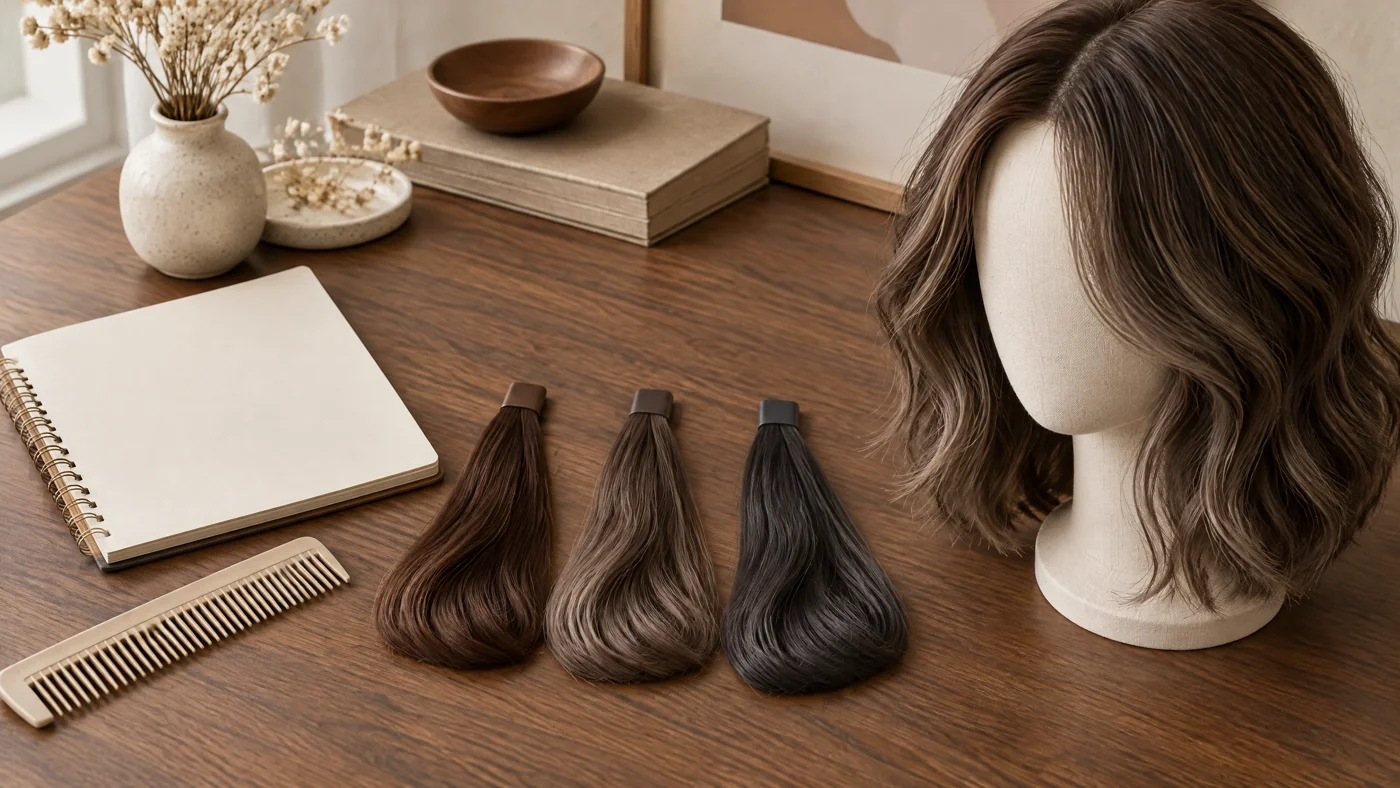
For men's styling using your own existing hair, contact Canvas Texture to discuss your current length, reference and normal styling routine. Its workshop is at 252 Hollywood Road in the Sheung Wan area, separate from DT HUB's Kwun Tong premises. This invitation is for a Canvas Texture styling consultation, not wig sales, medical care or a DT HUB booking.
Canvas Texture · WhatsAppFrequently asked questions
Does a Tseung Kwan O area page mean DT HUB has a branch there?
No. The relevant area pages describe enquiries from Tseung Kwan O for DT HUB's Kwun Tong premises. Confirm the full Kwun Tong address directly before travelling; do not infer a local branch from the page heading.
Can a salon photograph tell me how long the haircut will keep its shape?
No. A photograph shows a particular finish, not how your hair will behave after washing or growing. Ask which areas may change first, what styling the finish requires and how those changes fit your own tolerance for maintenance.
What should I ask when two haircut quotations look different?
Check whether both cover the same washing, cutting, drying and finishing services. Ask how any consultation-dependent changes are agreed, and confirm applicable deposit or cancellation terms. An unanswered inclusion should remain unknown until clarified.
Is this an independent review of DT HUB?
No. DT HUB and Canvas Texture share a website owner. This is related-site editorial guidance for comparing haircut decisions, not a ranking, a personal client account or independent verification of service results.
Can Canvas Texture arrange my DT HUB appointment?
No. Contact DT HUB directly about its own services and appointments. Canvas Texture's consultation invitation concerns men's styling using their existing hair at its separate workshop, not booking another business's services.
Related journal articles
Kwun Tong Hair Salon: Questions Before a First Visit
Choose the appointment you can understand and the hairstyle you can maintain, not just the photograph you admire.
Haircut Kwun Tong: A Separate Brief for Every Family Member
Share the booking request, but give every person a separate say in the haircut.
Women's Haircut Kwun Tong: Choose the Outline Before Colour
The most useful colour reference is one that still makes sense after the length you want removed has gone.

