
Choosing floristry classes: Hair for a Hands-On Workshop
Choose a floral workshop by what you want to learn and where the finished flowers will go. Prepare your hair so you can look down comfortably without repeatedly pushing it away. A bouquet for a dinner host needs different planning from a vase arrangement you will display at home.
For Hong Kong men, a workshop can sit between a morning haircut and an evening gathering. That combination works better when grooming is finished before the hands-on session. Your fringe, sleeves and luggage all affect how easily you can follow a demonstration and carry a delicate arrangement afterwards.
This Canvas Texture journal guide connects occasion grooming with thoughtful floral participation, rather than rating a florist. It uses three decisions: learning goal, working comfort and destination. These help you choose a useful class, prepare a manageable hairstyle and leave enough time to present your flowers without rushing.
01
Choose the project by its destination, not the promotional photograph
Start with the destination of the finished piece. A gift needs to be carried and received, while a home arrangement needs suitable display space. The prettiest promotional photograph may show neither concern. Write down whether you want a portable bouquet, a dining-table piece or practice that continues beyond one afternoon.
Y. Florist's floristry classes page offers a starting point for comparing learning formats, from an introductory session to longer study. Ask which format is currently available, what participants actually practise and what materials are included. A broad course description does not confirm the content of your particular booking.
For a hypothetical first visit with a friend, one clearly defined project may be easier to plan than several techniques. You can both follow the same sequence without needing identical results. Someone hoping to arrange flowers regularly may instead value repeated feedback. Decide whether the main benefit is shared time or a repeatable skill.
Connect this decision to grooming without turning flowers into a hairstyle theme. An intricate finish may suit a later dinner, but it should not demand constant attention during class. If your usual look depends on a forward fringe, plan a workable version before booking a schedule that leaves no time to reset it.
| Destination | Useful project direction | Question to ask |
|---|---|---|
| Dinner host's home | A manageable hand-tied bouquet | How will it travel, and what vase will it need? |
| Your dining table | A compact vase arrangement | Is the container included, and what is the finished size? |
| Shared afternoon with a friend | One guided project | Will both participants receive individual practice time? |
| Regular home arranging | A format with repeated practice | Which techniques are revisited across sessions? |
02
Use a bouquet session for a gift you can comfortably carry
A hand-tied bouquet makes sense when the recipient already has a vase or can choose one afterwards. It also leaves the design visible during presentation. That flexibility has a trade-off: the recipient still needs to unpack and place it. Avoid arriving when your host is busy serving dinner unless you have agreed a handover.
A bouquet making workshop is the relevant enquiry when your goal is learning to gather and present stems as a gift. Confirm the project's size, the teaching sequence and its transport packaging before committing. Do not assume that a photograph guarantees the same flowers, wrapping or finished dimensions on your date.
Think about the recipient's space before choosing an ambitious outline. In a hypothetical small-flat dinner, a compact bouquet may be easier to accommodate than a wide design. Ask whether the class allows any adjustment to scale. A thoughtful gift fits the home; it does not require the host to rearrange the whole table.
Your haircut should support the handover as well as the class. A clean side profile looks composed while you turn towards the recipient, but avoid a style you must fix one-handed. Once you are carrying flowers, keep your hands available for doors and the gift rather than repeated fringe adjustments or searching for styling products.
03
Choose beginner instruction for a table arrangement you will reuse
A vase project is useful when you want flowers to become part of your hosting routine. It makes you consider the container and viewing height alongside the stems. Measure your intended table beforehand. A finished piece that looks balanced on a workshop bench may still block conversation across a narrow dining table at home.
A beginner floral arrangement class can be a sensible starting point for learning flower preparation and basic composition before attempting a home centrepiece. Ask whether your session covers a vase project, safe tool use and care guidance. The word beginner alone does not establish the pace, teaching language or amount of individual support.
Look for a format where you can see a demonstration and then try the step yourself. If the instructor must move through several techniques quickly, a first-time participant may struggle to identify what needs correcting. Ask how practice and feedback are organised. Clear explanation matters more than leaving with a complicated piece you cannot recreate.
For a hypothetical dinner you are hosting after class, separate learning from last-minute decorating pressure. Have a simple alternative ready if the project differs from your table plan. A completed arrangement need not become the centrepiece immediately. You can display it elsewhere and still use the afternoon to learn something worthwhile.
04
Test your fringe while looking down, not only in the mirror
Stand in front of a mirror, then look down as though inspecting stems on a bench. Notice whether your fringe drops across your eyes or your side hair falls forward. This test reveals something a straight-on photograph cannot. The goal is comfortable visibility, not a rigid hairstyle that remains unchanged through every movement.
Men with longer hair can bring a suitable tie and ask the instructor about securing it. Keep the arrangement comfortable rather than pulling hard for a cleaner silhouette. The American Academy of Dermatology advises limiting excessive heat and continuous tension from tight styles [1]. That guidance supports gentle preparation, not a promise that any particular finish prevents damage.
Short textured hair may only need a familiar side direction, while a longer fringe may need a different parting. Keep natural curls in the plan rather than assuming they must be straightened. Trial the working version at home. If you cannot keep it clear without frequent correction, ask your hairstylist for a more manageable option.
Finish your usual drying routine before leaving, allowing enough time to avoid a rushed high-heat rescue. Do not repeatedly comb hardened styling product to recover a photographic shape; the same dermatology guidance cautions against that practice [1]. If considering a perm or colour change, consult your stylist about your hair condition and the outing's requirements.
Workshop-ready hair lets you follow the demonstration without repeatedly taking your hands away from the project.
05
Prepare sleeves, pockets and a small grooming kit for bench work
Choose clothes that let you reach forward without loose cuffs trailing over the work area. A neat overshirt can work better than a jacket you must constantly reposition. Ask about apron provision and clothing expectations before the day. Outfit planning should respond to the activity, rather than treating the workshop as a photo opportunity with flowers attached.
Keep your phone and wallet somewhere you can access without disturbing the arrangement. A small bag placed where the instructor permits is more practical than spreading possessions across the bench. Bring only a modest grooming kit. A mirror and your usual hair tie may be useful; a full collection of products adds unnecessary clutter.
Follow the instructor's directions for tools and working space. Do not experiment with cutting techniques to save time or imitate a demonstration you could not clearly see. Pause and ask for help. Hair kept away from your eyes makes that observation easier, but good grooming never replaces instruction or careful handling of unfamiliar equipment.
If you need to adjust your hair, step away from the shared working area and wash your hands before returning. Leave sprays out of the floral session rather than applying them beside other participants. For a later dinner, make any further adjustment in a separate grooming space, never over food or a food-preparation surface.
- Ask whether an apron is provided and whether sleeves should be secured.
- Pack a comfortable hair tie if your usual length falls forward when bending.
- Check where bags can be stored without obstructing the instructor or other participants.
- Keep a small mirror accessible, but leave sprays and lengthy restyling for a separate space.
06
Ask about the recipient's cats before the flower palette
A recipient's household matters more than your preferred colour scheme. Ask about pets before selecting the project or accepting substitutions. If the flowers will go into a home with cats, tell the instructor or organiser before class. This information needs to influence flower selection, not become an awkward question after the bouquet is wrapped.
The US Food and Drug Administration warns that true lilies and daylilies are highly dangerous to cats. Their stems, leaves, flowers, pollen and vase water can cause serious harm [2]. Do not take these flowers into a cat household. Removing pollen or placing the arrangement on a high shelf is not an adequate solution.
Request an identified alternative rather than assuming that anything labelled lily-free is safe for every animal. Flower names and individual materials still need checking. If substitutions are necessary, explain the household restriction again. A workshop's aesthetic theme should remain secondary to the recipient's practical needs and the suitability of the complete arrangement.
If you cannot verify the flowers before taking the project home, do not present it as a pet-safe gift. Choose another destination with the recipient's agreement or reconsider the project. If a cat may have contacted lilies or their vase water, seek veterinary advice immediately [2]. Waiting for symptoms is not a sensible precaution.
07
Build the Hong Kong journey around the finished arrangement
Plan the return journey before the outward one. A route that feels straightforward with an empty bag can become awkward with a wide bouquet or water-filled container. Think through station stairs, lift access and the final walk. Ask the organiser how the finished project should be supported, and whether suitable carrying materials are included.
Keep the class end time distinct from the time you can actually leave. You may still need care instructions, packing and a clear space to organise belongings. Do not schedule a haircut, workshop and dinner so tightly that one delay disrupts everything. A buffer also lets you tidy your appearance without holding flowers in a crowded washroom.
Hong Kong journeys can include wet streets and exposed stretches, so plan around the day's conditions. Keep your headwear choice compatible with your hairstyle if you expect to wear it. A cap may change the finish, and removing it does not guarantee instant recovery. Choose a look that you can comfortably wear after ordinary travel.
For a hypothetical workshop before an evening visit, travel directly to the agreed destination when practical. Adding shopping stops creates more occasions to put flowers down or juggle bags. If you need to go home first, ask for care instructions suited to the actual materials. Never assume one universal routine or holding time covers every flower.
| Journey detail | Potential difficulty | Planning action |
|---|---|---|
| Station and final walk | Stairs or narrow passages while carrying | Review access and the project's packed width. |
| Class-to-dinner gap | Packing takes longer than expected | Allow time beyond the advertised teaching session. |
| Rain or exposed walking | Flowers and hairstyle need attention together | Choose a manageable load and familiar hair finish. |
| Extra errands | Repeated handling and crowded bags | Reduce stops or arrange a separate shopping trip. |
08
Take the photograph, then make the handover easy
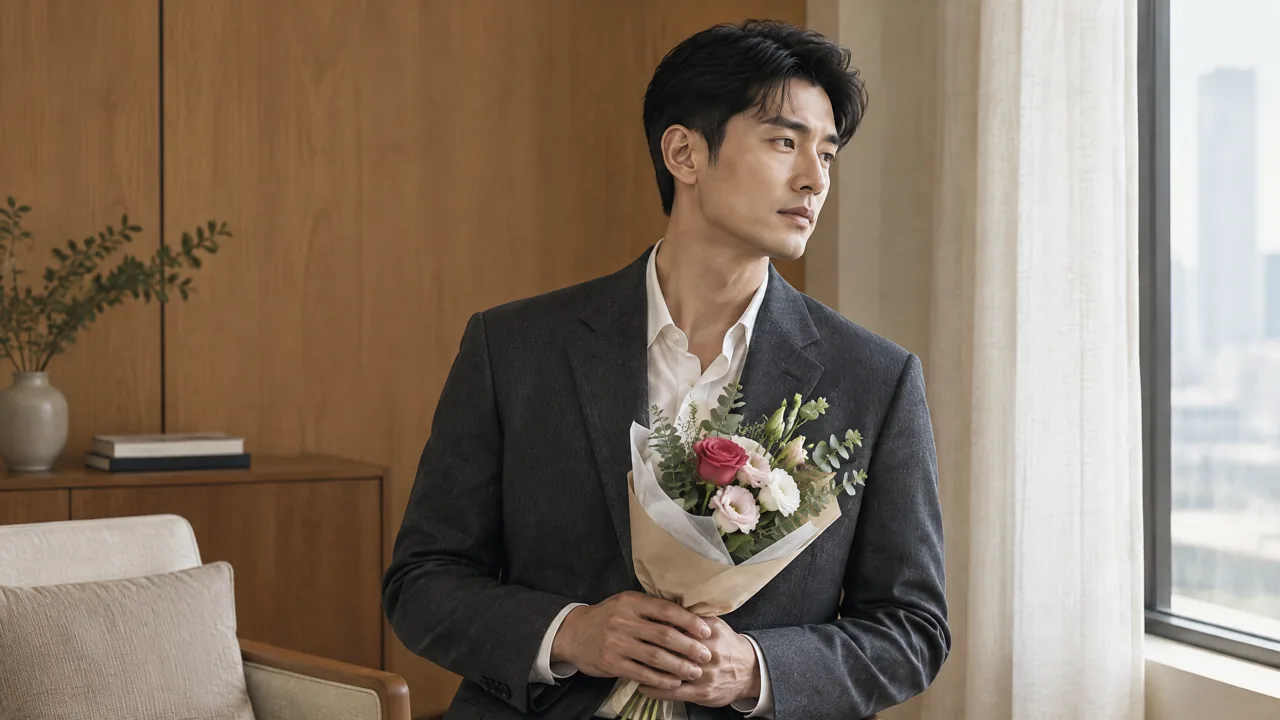
For a workshop photograph, look at your face from the front and the side before arranging the flowers for the frame. Check that your fringe does not cover your eyes. Keep the bouquet below your face rather than lifting it into your hair. Ask permission before including classmates or the instructor in any image you plan to share.
A relaxed portrait can show the work clearly without hiding every small imperfection. Turn slightly if the arrangement has a preferred viewing side, but do not reshape it solely for a photograph without guidance. Photographing the piece separately also records what you made. That can be more useful for future practice than repeated selfies from the same angle.
At the recipient's home, explain whether the arrangement needs a vase and pass on the care information you actually received. Offer to put it in the agreed place rather than leaving the host with an unexpected task. Keep any personal story modest: you made it in class, and the choice was guided by their home and preferences.
Afterwards, note which part of the session you want to practise again and which grooming choice needed too much attention. That record helps your next booking more than judging the day only by the photograph. Successful preparation means you could observe, participate and give the flowers thoughtfully while still feeling comfortable in your own appearance.
The best workshop-to-dinner plan leaves room for learning, carrying and receiving, not just a polished photograph.
Sources and useful reading
Continue with hair and grooming
For a separate men’s own-hair consultation: Korean Men's Perm
Continue with related occasion and grooming planning: Order flowers online: Recipient Contact before Grooming
Read our men’s hairstyling background: Vit So and the Canvas Texture studio
Plan the working hairstyle before the workshop day
Tell your hairstylist how your fringe behaves when you look down and whether the class leads into a dinner or gift handover. Separately confirm the floral project, materials and transport needs with the organiser, so both parts of the day are practical.
Canvas Texture · WhatsAppFrequently asked questions
Should I choose a bouquet or vase class for my first workshop?
Choose by your intended use. A bouquet suits a gift when the recipient can provide a vase. A vase project suits home display when its finished size fits your space. Ask which project is taught in the specific session and how much guided practice it includes.
Can I keep my usual textured fringe during a floral workshop?
Usually the practical question is whether it stays clear when you look down. Test that movement before the day. Use a familiar, comfortable adjustment and follow any instructor requirements for securing hair. You do not need to straighten natural texture simply to attend.
What should I ask if the flowers are for someone with cats?
State the restriction before booking and ask for the identity of the proposed flowers and substitutions. Do not bring true lilies or daylilies into a cat household. Do not assume that removing pollen, using a high shelf or the phrase lily-free establishes complete pet suitability.
Can I go straight from class to a dinner invitation?
It may work if you confirm the finish time, packing arrangements and recipient's availability. Leave a buffer for collecting belongings and a brief grooming check. Ask how to transport and care for the specific project. Avoid adding errands that make carrying it unnecessarily difficult.
Related journal articles
Hong Kong Catering Service: A Host’s Grooming Plan
A host’s hairstyle has done its job when it stops competing with the welcome.
Catering Packages: Compare Food and Grooming Budgets
Editorial principle: protect the meal and the host's preparation time before spending on extra variety or a more elaborate look.
Office Lunch Catering: Keep Hair Products off Food Tables
A prepared host gives hair products a home before giving lunch a place on the table.

