Wreck Photography Plans: A Men's Hair and Travel Checklist
For a trip inspired by wreck photography, prepare your hair for gentle washing and an easy return to its everyday shape, not for an immaculate underwater portrait. A manageable fringe, a modest travel kit and clear photo consent are useful goals. None makes you ready for wreck diving or replaces an instructor's assessment of the activity.
Start with the parts of the day you can actually organise: when you will wash, where you can dry your hair, and whether photographs will be taken before or after the water activity. Build your haircut and styling choices around those answers. Your own hair should not need constant pulling, repeated restyling or a complicated bathroom setup to look presentable afterwards.
Canvas Texture and DiveHarbour are websites under the same ownership, with different roles. This Canvas Texture editorial guide, prepared with AI assistance and public sources, covers men's own-hair grooming and travel choices. DiveHarbour handles questions about its activities and courses. That relationship is disclosed here; it is not an independent course review or a claim of personal diving experience.
01
1. Choose a haircut that can survive an interrupted routine
A useful trip haircut keeps its outline when the styling product is gone. Ask your stylist how your fringe falls naturally, where the crown separates and which areas need the most daily work. A short cut is not automatically the answer. Some men find a little extra length easier to arrange, while others prefer a less elaborate front. The decision should follow your own growth pattern and normal routine, rather than a photograph of somebody else's wet hair.
For longer hair, discuss a low-tension way of keeping it organised on land. It should not require a hard pull at the hairline to look tidy. If you will wear diving equipment, tell the instructor about fringe length, loose strands or previous snagging concerns before the activity. Let them confirm equipment suitability and fit. A stylist can discuss the hair itself, but cannot promise a mask seal or decide that an accessory is appropriate for diving.
Think about the photographs you actually want to keep. A recognisable silhouette in a dry portrait may matter more than a perfect quiff throughout the outing. Ask for a simple styling alternative that works without a brush and dryer, alongside your usual finished look. This gives you a realistic choice after washing instead of treating flattened roots or a changed parting as a failure that must be corrected immediately.
A travel-friendly haircut gives you an easier reset; it does not turn grooming into equipment advice.
02
2. Plan chemical services around the wash you will need
A new colour or perm can complicate a trip if its aftercare does not fit the facilities available. The American Academy of Dermatology notes that pool chemicals and sun exposure can damage hair, making swimming plans relevant to grooming choices.[1] Tell your stylist whether your itinerary includes a pool, the sea or both. Also describe your access to fresh water and your usual washing routine, rather than asking only whether the new style will photograph well.
There is no universal number of hours after a chemical service that makes every head of hair ready for every water activity. Product instructions, previous processing and the condition of your hair matter. Ask the stylist to assess your own hair and explain the aftercare for the service being considered. If that advice clashes with the practical need to wash after swimming, changing the salon appointment can be a more sensible option than trying to preserve the result by avoiding necessary cleaning.
Keep cosmetic choices separate from activity approval. A conditioner or styling product should be used according to its directions and the venue's rules; a biodegradable label does not establish that it is harmless in the sea or permitted in a pool. Plan any suitable grooming application for land, and ask about restrictions where you will wash. If swimming caps or other headwear come into the discussion, their suitability for the planned activity belongs with the instructor or venue, not a haircut recommendation.
03
3. Decide whether you want wreck training or a coastal portrait day
A dramatic wreck image can inspire a trip without defining the activity you should book. In a hypothetical plan, a man might want a coastal holiday, photographs with friends and an easy hairstyle for dinner afterwards, while having little interest in specialist training. Those are legitimate priorities. A land-based photo session can leave more time for washing and changing, without turning the wish for an attractive image into pressure to take part in a water activity.
If wreck training is genuinely the objective, the Wreck Diver specialty course Hong Kong page is a useful next read for questions about course scope and prerequisites. Discuss your certification and recent experience with DiveHarbour, and have the instructor confirm eligibility. A course name or wreck photograph is not permission to enter a wreck. This article offers no wreck procedures, and a neatly controlled fringe does not change the training you need.
Once the activity discussion is clearer, build the grooming timetable around the actual arrangements. Ask whether you should expect somewhere suitable to rinse and change, without assuming a shower or private dressing area is included. Keep the first polished portrait separate from the later casual pictures if that helps. Your haircut can support both, but neither a particular hairstyle nor a camera plan should make an unconfirmed site, schedule or photographic outcome feel like a promise.
04
4. Pack a small wash kit, not an entire salon shelf
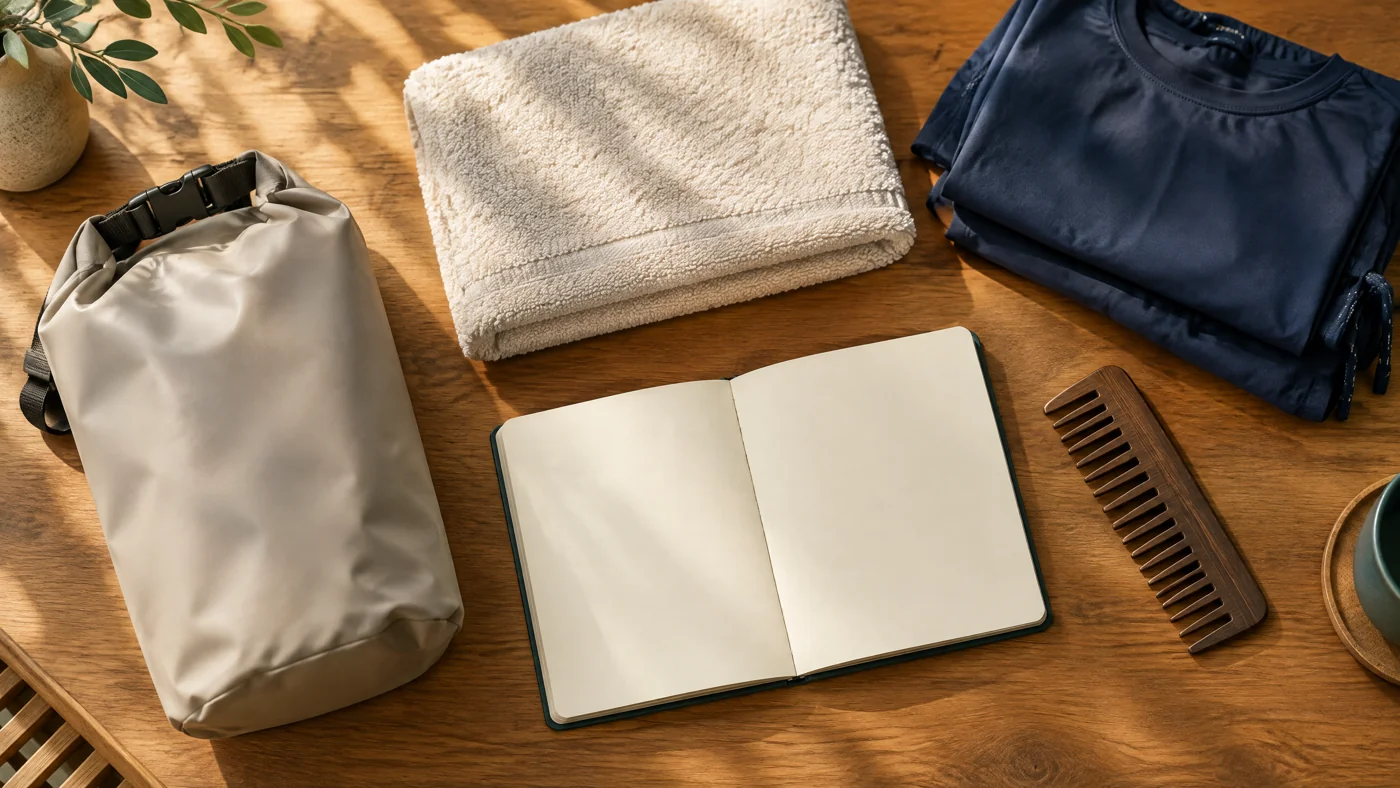
Pack around confirmed facilities rather than an imagined bathroom. A clean towel, a familiar hair-cleaning product and a suitable comb can be more useful than several styling jars. Check whether you need to bring fresh water for a permitted rinse on land, or whether facilities are available. Keep the plan practical for your transport and accommodation. Do not assume a boat, beach or meeting place provides running water simply because the activity involves water.
After swimming, plan a fresh-water rinse when suitable facilities are available, followed by hair care appropriate to your needs. The AAD recommends gentle handling rather than rubbing with a towel, and adapting brushing and combing to hair type.[2] Press water out gently instead of scrubbing the fringe to make it dry faster. Choose a combing approach your stylist has shown you for your own texture, particularly if curls or previous chemical processing make an aggressive quick brush unhelpful.
Separate the wash kit from the things you need to keep dry. A small pouch prevents a leaking bottle from reaching clean clothes, while a separate bag keeps damp items away from your later styling tools. Confirm permission before using any accommodation hairdryer or shared facility. If you normally use a mains-powered tool, check the accommodation's socket arrangements before packing it. A familiar comb-only finish is a useful fallback when space, power or bathroom time is limited. A minimal kit also makes it easier to notice what is missing: there is little benefit in packing a finishing paste if you have no workable place to clean and dry your hair first.
| Item | Practical purpose | Check before packing |
|---|---|---|
| Clean, soft towel | Gentle pressing after a rinse or wash | Size, drying space and somewhere separate for damp items |
| Familiar shampoo and suitable conditioner | Hair care on land after the activity | Product directions, venue rules and leak-resistant containers |
| Comb suited to your texture | A gentle return to your usual parting or curl arrangement | Your stylist's advice on when and how to comb |
| Small amount of everyday styling product | Optional finishing once hair is clean and appropriately dry | Whether it is actually useful for the evening plan |
| Separate dry and damp pouches | Protecting clean clothes and grooming tools | Enough room without overpacking |
- Confirm washing and changing facilities rather than assuming they are included.
- Pack a hair tool that suits your texture, not just the smallest brush available.
- Keep damp towels away from the clothes you want for later photographs.
- Use grooming products according to their instructions and the venue's rules.
05
5. Agree photo consent before worrying about the fringe
A man's comfort in a photograph is not only about whether his hair looks tidy. Ask separately about being photographed, having the image shared and being named or tagged. Someone may welcome a private holiday picture but dislike a public close-up taken immediately after removing headwear. Agree those preferences on land before the day becomes busy. A friendly group photograph does not have to become a public record of everyone's appearance.
If you are considering camera-focused training, the underwater photography diving course Hong Kong page can help you frame questions about prerequisites, camera support and the proposed setting. Ask DiveHarbour how photographs are handled and what sharing arrangements apply, rather than assuming an image package or private review is included. The instructor should confirm the activity and equipment. Your preference for a flattering hairstyle must not become a request for a different diving plan or an improvised pose.
For portraits after the activity, allow time to wash and decide how much styling you actually want. Hair flattened by headwear can simply be part of the day's appearance; it need not be photographed or edited without agreement. Ask before retouching a hairline, covering grey or changing curl texture. Those edits concern personal presentation, not just image quality. Choosing one relaxed, approved portrait can be more satisfying than posting a sequence that makes someone uncomfortable.
| Decision | Question to agree | A respectful option |
|---|---|---|
| Taking the photograph | Are you happy to be pictured now? | Wait until after washing or leave the person out |
| Public sharing | Is this for the private group or a public account? | Keep an agreed image private |
| Names and tags | Do you want your account or location identified? | Share without identifying details when agreed |
| Hair retouching | Are changes to your hairline, colour or texture welcome? | Keep the original appearance or approve edits first |
| Final selection | Which portrait are you comfortable keeping? | Let the subject review the chosen picture |
Consent to a photograph is not automatically consent to a tag, a public post or a redesigned hairline.
06
6. Do not let a specialty label dictate the whole trip
Wreck photography and deeper-diving interests are not interchangeable. If deeper subjects are a genuine interest, the Deep Diver specialty course Hong Kong page is a separate next read for an instructor-led discussion of suitability and scope. Do not add training simply because a photograph looks dramatic. From a grooming perspective, the more useful question is whether the proposed trip leaves a realistic opportunity to wash, dry and change before your other commitments.
Get the activity arrangements and booking terms in writing before organising a salon service around them. DiveHarbour currently states that all paid fees are non-refundable; make-up sessions are only subject to written conditions. A replacement date is not something to assume. Check what is included and how changed arrangements are handled. Keep your grooming plan flexible enough for the confirmed itinerary, rather than relying on an informal expectation that the whole day can be moved to protect a fresh hairstyle.
Choose priorities that do not compete with each other. If a formal event needs a carefully finished style, a separate grooming appointment may make more sense than expecting a quick post-activity reset. If the trip is mainly about relaxing with friends, a simple cut and unhurried wash may be enough. Neither approach proves readiness for diving. Be honest about health concerns with the appropriate clinician; questions about eligibility and equipment remain for the instructor.
07
7. Return to your everyday style without punishing your hair
Back at your accommodation, use a wash routine suited to your hair and the products you have brought. Work gently rather than repeating vigorous shampooing until the hair feels stripped. Apply conditioner as directed where appropriate, then handle the towel and comb with care. Swimming aftercare is about cleaning and managing your hair; it is not a treatment for hair loss, and a single return to your usual appearance does not tell you anything reliable about scalp health.
When a dryer is available, use a lower-heat approach and avoid pulling hard to rebuild height at the front. The AAD advises reducing heat and avoiding damaging hair-handling habits.[2] You may prefer a softer finish for the evening, particularly when a precise style would require repeated brushing and reheating. Let your normal texture do some of the work. There is no need to compensate for a casual day by making the roots rigid with several layers of product.
Use the trip to identify one practical question for your next haircut: perhaps the fringe needed too much work, the crown was difficult to reset, or your curls needed a simpler wash routine. Bring that question to your stylist rather than asking for a universal diving hairstyle. Persistent scalp irritation, pain or unexpected shedding belongs with a clinician. Canvas Texture can help with men's own-hair styling and everyday handling; DiveHarbour-related activity questions belong directly with DiveHarbour.
Sources and useful reading
Continue with hair and grooming
For a separate men’s own-hair discussion: Deep Hair Treatment HK
Continue with a related hair-and-water planning guide: Sai Kung Dive Days: A Light Routine for Curly Hair
Read our hair styling background: Vit So and the Canvas Texture studio
Ask about a simpler own-hair travel routine
Bring Canvas Texture your men's own-hair styling questions, including your fringe, curl pattern and everyday wash routine. For DiveHarbour activities, course eligibility or equipment questions, contact DiveHarbour directly; Canvas Texture does not arrange diving bookings or provide medical advice.
Canvas Texture · WhatsAppFrequently asked questions
Should I cut my hair very short before a wreck-photography trip?
Not automatically. Ask your stylist what length works with your growth pattern and how easily it resets after washing. Equipment suitability and any hair-related fit concerns should be discussed separately with the instructor.
Can I rely on a fixed waiting period after a perm or colour?
No single waiting period suits every service and every head of hair. Ask your stylist about the actual products, your hair condition and the planned wash routine. That advice is separate from approval to take part in a water activity.
Does a biodegradable conditioner mean I can use it in the sea?
No. That label does not establish marine safety or permission to use it at a venue. Follow product instructions and local rules, and plan suitable hair care on land.
Can I ask not to have my wet-hair photograph posted?
Yes. State your preferences about photography, public sharing, tagging and retouching before the outing. Ask the organiser how images are handled, and do not assume taking part means you have agreed to every use.
Can Canvas Texture recommend which diving specialty I should take?
Canvas Texture handles men's own-hair styling questions, not diving eligibility or course selection. Discuss DiveHarbour activities directly with DiveHarbour and let the instructor confirm the appropriate route and equipment. A clinician handles health assessment.
Related journal articles
First Scuba Lessons: Keep Your Hair, Plan the Pool-Day Wash
Keep the haircut you want to live with; prepare for the wet-hair version of it.
Trying Scuba in Hong Kong: Prepare Your Fringe Before a Mask Fitting
Prepare the fringe you actually have, not the hairstyle you hope will stay unchanged in water.
Choosing a Hong Kong Diving School: A Men's Hair Planning Guide
Choose the learning environment with the instructor; choose an achievable hair routine with your stylist.