Custom human hair wig Hong Kong: build a clear budget
Build a custom wig budget around a written specification, not a headline price. Decide what the finished piece must do, then separate the initial purchase from fitting, care and possible later changes. For someone used to a recognisable men's haircut, the priority may be preserving a side profile or fringe rather than buying every available feature. A useful budget protects those essentials while leaving room for costs that the quotation does not include.
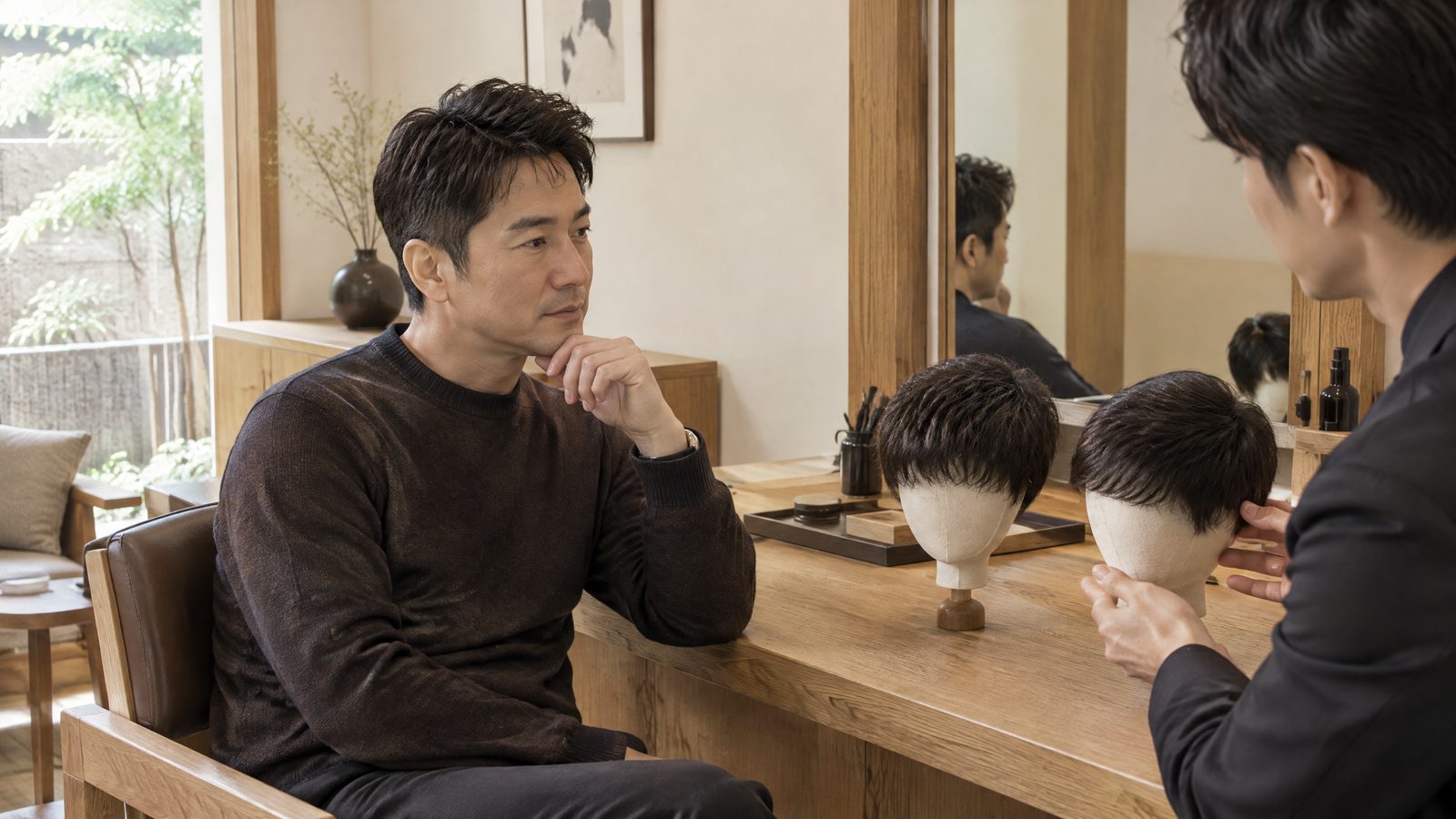
Start with coverage, material, measurements and the intended haircut. These are concrete questions you can take to a supplier, rather than guesses based on photographs. OwnStrand's confirmed hand-made human-hair custom process involves viewing samples, choosing a style, head-shape measurement, production and a return visit for fitting and wash, cut and blow-dry. Ask how those stages appear in the quotation: a described process alone does not establish what every individual order includes.
Keep your spending ceiling separate from your wish list. This makes it easier to decide whether a particular feature solves a daily problem or simply sounds attractive. The method below starts with your usual hair outline, translates it into an order brief and tests a quotation against the same brief. It also allows you to pause: changing your existing haircut, choosing a different coverage option or deferring a purchase can each be a considered decision.

01
1. Define the job before setting the spending ceiling
Write a short wearing brief before comparing figures. State where you want coverage, how often you expect to wear the piece and which views matter most: front, side, crown or an exposed parting. Add practical requirements such as wearing glasses or keeping a fringe off your face. Avoid starting with a construction name. A feature has value only if it supports the way you plan to wear your hair, so the brief should explain the problem before proposing the solution.
Next, divide your requirements into essential, negotiable and unconfirmed. An essential might be a manageable outline for ordinary workdays; a negotiable preference might be extra length for occasional styling. An unconfirmed feature needs an answer before you can price it fairly. Keep these categories visible when speaking to a supplier. Otherwise, a persuasive sample can quietly change the brief, making a higher quotation look necessary even though it addresses a different set of preferences from the one you started with.
The wig prices in Hong Kong page is a starting point for understanding quote-based choices, not a substitute for matching the scope. OwnStrand and Canvas Texture share the same owner; this is a related-brand resource, not an independent endorsement. Record your maximum initial spend and a separate allowance for ongoing care. If an order exceeds the first limit, ask which specification changed before increasing it. That keeps the discussion about an identifiable benefit rather than the pressure to buy a more elaborate option.
| Requirement | Evidence to bring or request | Budget decision |
|---|---|---|
| Familiar front and side outline | Two older photographs and a current side view | Prioritise proportion before extra length |
| Frequent everyday wear | A realistic weekly routine and a care demonstration | Reserve money and time for upkeep |
| A visible parting or lifted fringe | View the proposed sample from those angles | Pay for the relevant detail, not an unrelated label |
| An uncertain future haircut | Discuss what can be changed after cutting | Delay irreversible styling decisions |
02
2. Translate a familiar haircut into a usable specification
Photographs are useful when they show proportions rather than a celebrity finish you cannot describe. Bring a front view and a side view of a hairstyle you recognise as your own, then identify the features that matter. Perhaps the temple area sits close, the crown carries modest height or the fringe breaks the forehead line. Explain those relationships in plain language. A supplier can then discuss whether the proposed coverage and construction can support them, rather than treating one photograph as a promise of an identical result.
Distinguish the areas supplied by the piece from the hair you intend to keep. A full wig, a partial topper and a men's hairpiece are not interchangeable products, even when each is described as custom. Where a piece meets existing hair, ask how colour, length and outline will be assessed together. Do not assume that ordering more coverage automatically creates a better blend. It may change the fitting task and care routine, so compare the actual proposed configuration instead of the category name alone.
Specify the finished cut, not just the length before cutting. Ask which styling decisions must be agreed at the order stage and which can wait until the fitting appointment. Shortening hair is an irreversible change, so leave uncertain fringe or temple decisions for discussion before scissors are used. If a grey blend matters, request confirmation of the available colour mixture and how it will be assessed. A catalogue image does not verify a particular grey percentage, distribution or match under different lighting conditions.
Protect the proportions you recognise before paying for details you rarely see.
03
3. Compare materials without turning labels into promises
Choose human hair because its confirmed characteristics fit your needs, not because it sounds like the highest tier. Cancer Research UK distinguishes human-hair, synthetic and blended options, and explains that a higher price need not produce a more natural-looking wig.[1] For budget planning, compare the proposed look with the work needed to maintain it. A sample that suits your outline with a simpler routine deserves consideration, even if you initially assumed that the most expensive material would always be the right starting point.
Ask the supplier to identify the material and construction separately. Terms such as human hair, hand-tied and lace front describe different aspects of a product; none establishes every detail of comfort, appearance or upkeep. A Swiss-net label should not be treated as proof of lace-front or monofilament construction. Request a description of the actual sample and the piece being quoted. If a term remains unclear, leave it marked as unconfirmed instead of attaching an assumed benefit to it in your comparison.
Keep product-specific claims out of the budget until they are checked. Heat tolerance, Remy status, a silk top or suitability for wearing during a particular activity cannot be inferred from human hair alone. If styling flexibility is your reason for choosing the material, ask what tools and methods the exact piece permits. A theoretical range of styling options is not useful if your preferred routine falls outside the care instructions. This verification can prevent spending on an advantage you would not actually be able to use.
04
4. Map the custom process and its decision points
The custom human hair wig Hong Kong page provides a route into discussing style, measurements, pricing and availability. For OwnStrand's confirmed hand-made human-hair process, sample viewing and selection precede head-shape measurement and production. The stated production period is approximately three to five working days, subject to the order being confirmed. It is a production estimate for that process, not a delivery promise or a timetable for every wig, online item or hair system. Establish the schedule for your own order before arranging around it.
Treat each stage as a checkpoint with a different purpose. Sample viewing helps clarify appearance and construction; measurement addresses fit; the return appointment assesses the finished piece and includes the described wash, cut and blow-dry stage. Ask when changes can still be requested and what happens if your preference changes after production begins. Do not assume that custom means unlimited revisions. A clear order record should explain the agreed specification and the route for raising a fit or styling concern without inventing a guarantee.
Plan visits as part of the practical cost, even if you do not assign them a cash figure. OwnStrand's sole showroom is in Kwun Tong, at Room 2103, 利寶時中心, 50 Hoi Yuen Road. Anyone travelling from another district is travelling to that showroom, not to a local branch. Check appointment arrangements and the expected number of visits directly. If work or family commitments make a return visit difficult, resolve that before ordering rather than expecting production to remove the need for fitting.
05
5. Turn the quotation into a comparable scope
Ask for a written quotation that names the product and separates included work from optional charges. Your comparison should cover the piece, the agreed cut, fitting stages and any care products or later services being proposed. An apparently lower total may simply leave more tasks outside the offer. Compare quotations against your original wearing brief, marking each requirement as included, excluded or still unanswered. Do not add an estimated charge for an unknown item; ask for clarification so that the total reflects evidence rather than guesswork.
Confirm transaction terms before paying, including payment stages, alteration procedures and what applies if the delivered specification differs from the agreed order. Hong Kong's Consumer Council identifies rules addressing false, misleading or incomplete descriptions of goods and services.[2] The practical lesson is to keep a clear record of material, model, scope and terms. This is not a promise of unconditional returns or a legal conclusion about any purchase. Written clarification is useful because it exposes missing details while you still have the opportunity to make a decision.
Separate a defect concern from a change of preference when discussing adjustments. A piece that differs from its recorded specification raises a different question from deciding later that you prefer a shorter fringe. Ask the supplier to explain how each situation is handled and which adjustments, if any, carry an additional charge. Keep the answer with the quotation rather than relying on an informal recollection. This distinction also helps you identify choices worth settling early, particularly a cut or colour request that may be difficult to reverse.
| Quotation line | Question to resolve | What to record |
|---|---|---|
| Product specification | Which material, construction and coverage are quoted? | The agreed description or identified sample |
| Fitting and finishing | Which appointments and cutting steps are included? | Included stages and any separate charges |
| Changes and concerns | How are preference changes and specification concerns handled? | The procedure and applicable terms |
| Timing and payment | What must be confirmed before production starts? | Order conditions and payment stages |
| Ongoing services | Which later care or adjustment services are optional? | A separate ownership-cost list |
06
6. Budget for the routine you will actually maintain
Ownership costs include more than a bottle of cleanser. Ask which products, drying method, storage arrangements and professional upkeep the proposed piece requires. Then compare those instructions with your actual week. Someone who prefers a quick morning routine should not budget as though frequent restyling is effortless. Cancer Research UK notes that synthetic wigs often retain a preset style and that heating must follow manufacturer guidance.[1] Use this contrast to ask practical questions, not to assume that every synthetic or human-hair product behaves identically.
Request a care demonstration or explanation for the exact product before deciding how much ongoing support you need. Identify what you can reasonably do yourself and what the supplier recommends leaving to a professional. Do not assume that a product listing establishes local availability of a particular cleanser, accessory or service. Record the essentials separately from optional additions, and verify any related charges. This creates an ownership allowance tied to a workable routine rather than a bundle of purchases recommended without explaining their purpose.
Keep replacement planning conditional instead of dividing the price by a promised lifespan. Wear frequency, handling and the individual product can affect the useful outcome, so an unsupported durability figure makes a budget look more precise than it is. Ask what visible changes should prompt a care check or reassessment. If your remaining hair or preferred outline changes, a fresh fit discussion may be needed as well. Budgeting for reassessment leaves room for changing needs without treating a new purchase as the automatic answer.
- Write down the approved washing and drying method for the exact piece.
- Separate essential care items from optional styling accessories.
- Confirm which tasks you can perform and which require professional help.
- Keep product instructions and quotation terms together for later review.
The affordable choice is the one whose routine still fits your week after the fitting appointment.

07
7. Use a final decision gate rather than a rushed total
Before committing, read the brief and quotation side by side without looking at the headline figure first. Check whether the essential outline, coverage, material and finishing stages are accounted for. Next, inspect the unresolved points: a missing care instruction or unclear alteration term is a reason to ask another question, not proof that the offer is unsuitable. Only then compare the total with your spending ceiling. This order reduces the chance of accepting a vague specification simply because the figure looks manageable.
For an illustrative scenario, imagine choosing between a confirmed modest-length option and a longer option with unclear finishing costs. The longer piece is not automatically better value because it offers more hair. If your normal style is short, ask what useful flexibility the extra length provides and whether cutting is included. If the shorter option already supports your desired outline, the remaining allowance could stay available for care. The decision is about the defined result and responsibilities, not a universal rule that simpler orders are always cheaper.
Use the custom human hair wig price Hong Kong information to prepare a focused quote discussion, with your specification and unanswered questions ready. Proceed when the scope, terms and care routine fit your budget; revise the brief when a feature has no clear daily value. Pause when an essential remains unverified or the required upkeep is unrealistic. You do not need to solve every hair-outline concern through a purchase, and a considered decision should leave you clear about what you are choosing and why.
Sources and useful reading
Continue with hair and grooming
If your question concerns styling your own men’s hair, continue with: Korean Men's Perm
Compare a related selection decision: Chemotherapy wigs: plan a fitting at your own pace
Read our male-hair styling background: Vit So and the Canvas Texture studio
Clarify the outline of your existing haircut
For a men's hair or own-hair styling consultation at Canvas Texture, bring a front and side photograph and explain which proportions you want to preserve. Discuss a manageable cut and styling routine for your existing hair before deciding what other appearance choices you need.
Canvas Texture · WhatsAppFrequently asked questions
Should I set a budget before viewing samples?
Set a spending ceiling and a short requirements list first, but leave the specification open to informed discussion. Samples can reveal what matters for your outline. If a new feature increases the scope, identify its practical benefit before changing your limit.
Does a custom order mean every later adjustment is included?
No. Custom describes an agreed process or specification, not unlimited alterations. Ask which fitting and finishing stages are included, when changes can be made and how later preference changes are handled. Keep the answers in the order record.
Can I use a catalogue photograph to confirm a grey blend?
A photograph can communicate a preference, but it does not confirm the available grey proportion, distribution or final colour match. Ask the supplier to verify the proposed mixture for the actual order and explain how it will be assessed.
How should I compare a full wig with a smaller hairpiece?
Start with the coverage needed and the hair you intend to retain. These are different product configurations, with different fitting and blending questions. Compare their ability to meet your wearing brief, together with the confirmed care requirements, rather than treating coverage area as a value score.
Related journal articles
Men’s Hairpieces or a Perm? Compare Coverage and Shape
Choose a perm when enough existing hair remains and movement is the main goal. Choose a hairpiece when a defined area needs cosmetic coverage. Neither option decides the best outline by itself. First identify the visible area, surrounding density, preferred parting, and morning routine. Those observations prevent a product label from making the decision too early. Compare those details before making any booking.
Natural Hairline Wigs: A Guide to Fringe and Forehead
Natural hairline wigs look most convincing when the front edge, fit, colour, density, and haircut agree. For a hypothetical four-day workweek side part, inspect both temples under two ordinary light sources before choosing a construction. The aim is a coherent outline in movement. No single feature can decide that outcome. Check the whole frame, not only the centre. Check it while turning your head.
Human Hair or Synthetic Wigs? Texture and Care Choices
Choose human hair when approved styling flexibility matters. Choose synthetic fibre when a preset shape and simpler mornings matter more. Neither label settles the result alone. Texture, density, cap construction, attachment, and fit shape how a wig looks and feels. Start with the routine you can maintain, then check the exact model’s instructions. That order avoids paying for flexibility you will not use