Ash brown hair colour: designing highlights around a short cut
For a short haircut, choose the brown depth, the cool reflection and the highlight pattern separately. Ash describes a colour direction, not how light the hair must become. Short length also makes proportion important: a bright fringe section can dominate the front even when most of the head stays dark. Start with the cut you intend to keep, rather than copying the palest part of a photograph.
The useful question is not simply whether cool brown suits short hair. It is where you want the colour to show during an ordinary day. A fringe worn down, a swept-back top and a close-cut side reveal different surfaces. Decide whether you want a predominantly brunette appearance with occasional light strands, or a visibly brighter top above darker sides. Those choices lead to different placement discussions.
This guide focuses on men's short cuts, from a textured crop to a longer side-parted top. It separates design preferences from the processing needed to approach them. The examples are hypothetical planning situations, not client accounts or promised results. You will find ways to describe contrast, consider your next trim and prepare a colour enquiry without treating a shade name as a complete service plan.

01
Choose the brown depth before chasing the ash reflection
A deep cool brown and a pale smoky brown can share the same label while looking very different. First decide how dark you want the hair to appear indoors. Then describe the reflection you prefer in daylight. You might want less red-looking warmth while retaining a clear brunette appearance. That is a different request from wanting pale grey-brown strands that remain obvious in shade.
Compare references at similar brightness before deciding which tone you prefer. An image taken beside a bright window may make the hair look cooler and lighter than a dim indoor photograph. Look at the roots and shaded sections, not only the reflective edges. If the reference is silver-looking at the tips but dark underneath, separate those two features rather than asking for its overall colour.
Vit So's discussion of ash brown hair colour separates brunette depth from smoky reflection. It is useful when your saved images range from dark brown to pale beige-grey. Identify which image best represents the darkness you want to retain, then use another to explain the reflection if necessary. Neither the shade name nor the photograph establishes whether your starting hair needs lightening.
As a hypothetical example, someone with a dark side-parted cut might like a smoky photograph but dislike its pale front section. Their request could be: 'Keep the top recognisably brown indoors, with less warm reflection in daylight; I do not want a silver fringe.' This gives the colourist a preference and a boundary. It does not assume that the exact target is achievable on previously coloured hair.
02
Treat strand width, spacing and contrast as separate choices
Fine strands do not automatically create a quiet result. Many closely spaced pale strands can make the whole top look brighter. A broader brown ribbon with generous dark space around it might be less conspicuous. Describe the width of the lines, the gaps between them and their difference from the base. Asking only for 'subtle highlights' leaves all three decisions open to interpretation.
On a compact crop, one light section can occupy a considerable part of the visible fringe. The same section may look like a small accent on a longer top. Judge proportion against the haircut, not against a close-up of an individual strand. Also distinguish a few readable lines from an overall lighter surface. Both can contain fine sections, but they are not the same visual goal.
The darker hair is part of the design rather than an unfinished area. Keeping depth between brighter pieces can preserve the separate lines you like in a reference. Increasing density may reduce those gaps and change the overall impression. Ask the colourist to indicate which areas are intended to remain dark. This helps you discuss what to preserve, not simply how much colour to add.
Choose a deliberate trade-off. If clear contrast matters most, accept that the strands may be more noticeable when the top is smooth. If a softer overall brown matters more, ask about less contrast rather than only finer sections. The table below compares visual priorities; it is not a menu of confirmed services, a formula or a prediction of how your hair will respond.
| Visual priority | Features to identify | Trade-off to discuss |
|---|---|---|
| Predominantly dark crop | Sparse lighter lines with clear dark gaps | The accents may be less visible when covered by the fringe |
| Distinct top ribbons | Readable line width and contrast against the base | Smooth styling can make the separation more conspicuous |
| Generally brighter top | Greater density across the visible upper surface | Less dark space may remain between individual strands |
| A front focal point | Brightness concentrated in retained fringe sections | A small area can dominate the front of a short cut |
A finer section changes the size of a line; it does not decide how much darkness remains.
03
Map the colour onto the haircut you will actually keep
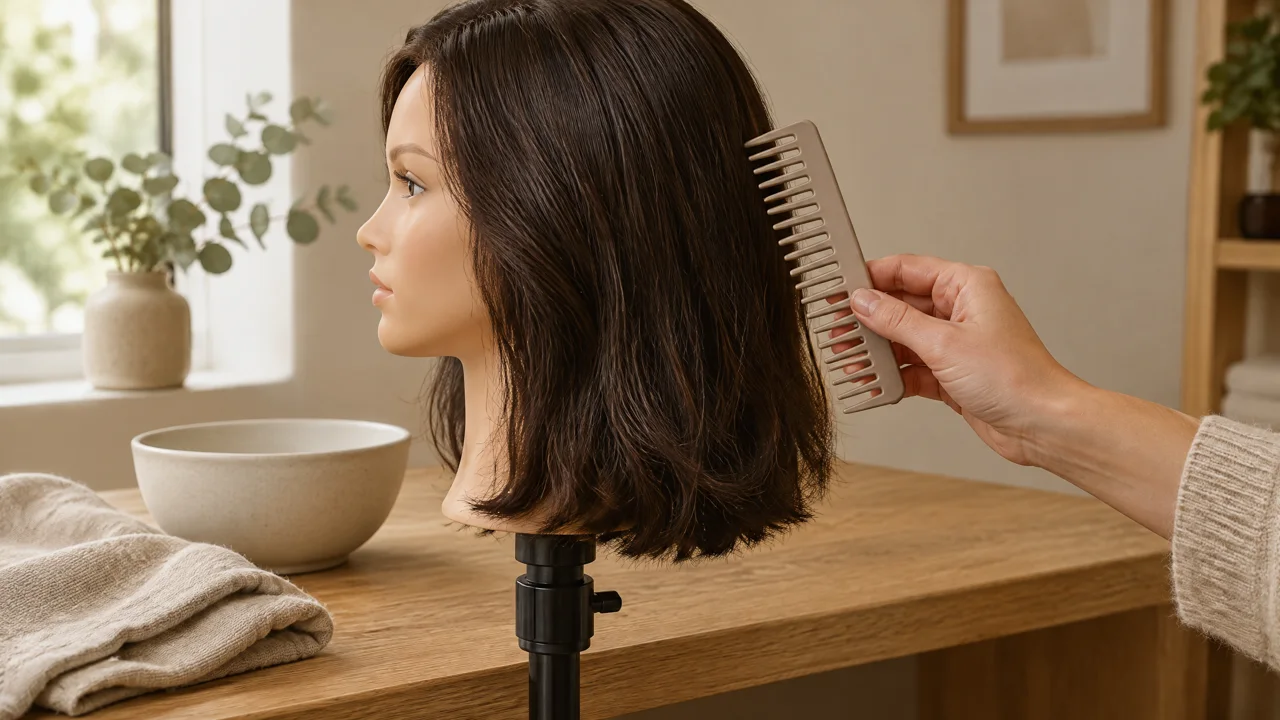
Start with the intended top length, fringe edge and side boundary. A longer top over close sides provides a different visible surface from an evenly short cut. If the sides will be shortened substantially, explain that before discussing colour there. There is little value in planning a bright detail around hair you already intend to remove. Agree the cutting and colouring sequence for the actual work.
Fringe direction deserves its own conversation. A forward fringe displays the outer surface near its edge, while a swept-back style exposes different strands. If you alternate between both, demonstrate them with dry hair. Ask where brightness would sit in each position. Equal placement across the head does not necessarily produce an equally visible effect when the hair falls to one side.
Layers can conceal or reveal colour as the shape changes. Cutting a darker covering layer may expose a lighter section underneath. Shortening that lighter section can reduce the accent instead. Before a major change, ask which planned light areas would remain after the cut. This is more useful than assuming short hair needs either very fine lines or a uniform colour throughout.
Consider a hypothetical textured crop with a fringe scheduled to become shorter. An ends-only bright accent might lose much of its visible area at that trim. A different placement on retained hair could be discussed, or the colour decision could wait until the shape is settled. Neither option is automatically better. The point is to align the design with your haircut plans rather than today's extra length.
04
Check the lines in your normal styling, not only a polished reference
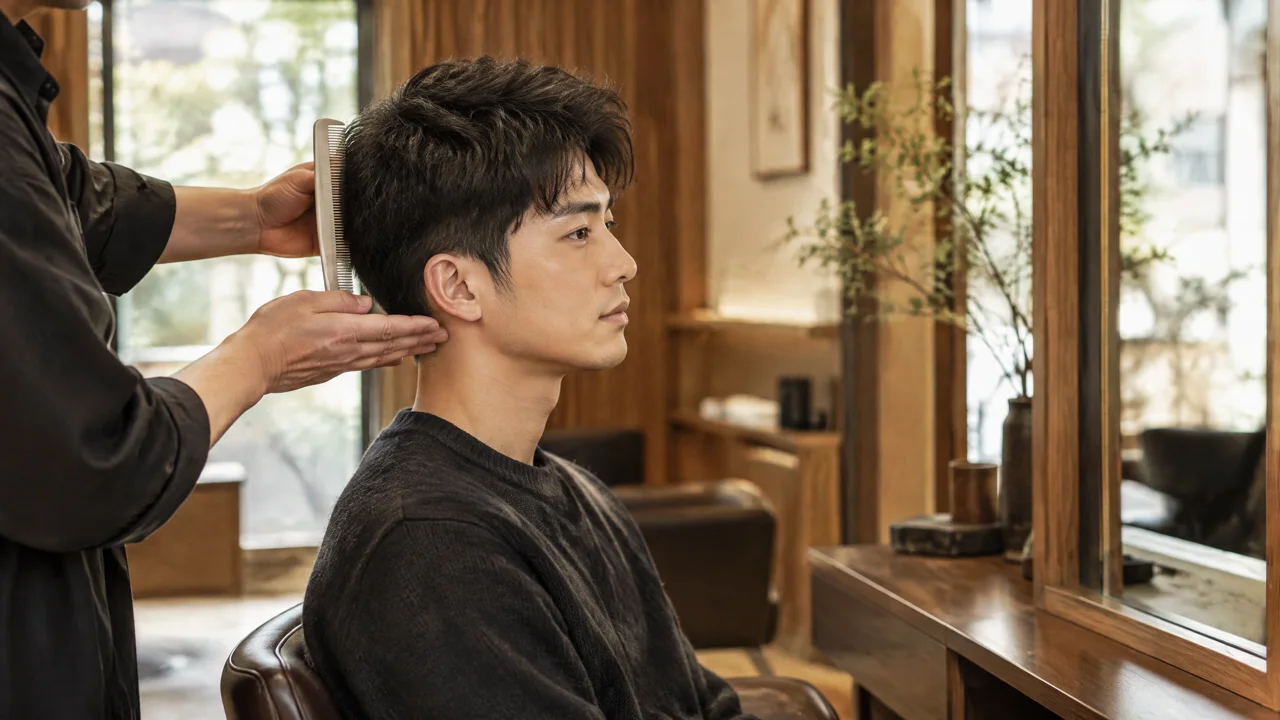
A reference styled into separated pieces may show more individual colour lines than your hair does when left to settle. If you usually wear a smooth side part, compare smooth references as well. If you use a textured finish, show how much separation you actually create. Styling changes which surfaces face the viewer; it cannot be assumed to reproduce the arrangement in a carefully posed photograph.
Vit So's guide to hair highlights explains line width, spacing and contrast, including why finer strands can still produce considerable brightness when densely arranged. Use those distinctions to name what appeals in your reference. You may like the visible ribbons but not the overall lightness, or the softened blend but not the pale tone. Saying so avoids bundling several preferences into one technique name.
Show the small movements that are part of your routine. Push the fringe back, move the parting and let the top return to its usual position. If glasses affect how the front or side hair sits, wear them during the discussion. A detail hidden beneath the top can become visible when you sweep it away. Decide whether that changing reveal is welcome or whether you want colour visible without restyling.
Take current photographs with dry hair, without an added colour filter, in consistent light. Include the front, both sides and the back rather than only a flattering top view. One photograph can explain the tone; another can explain placement. Add an example you find too bright or too striped. A clear dislike often defines your limit more precisely than several attractive images with different colour patterns.
05
Assess the starting hair before choosing how pale to go
Short hair is not automatically untouched hair. The top may retain old bleach, permanent brown colour or a previous perm while the close sides have newer growth. Describe those areas separately. Repeated dark home colour is relevant even when its original shade is no longer obvious. Share approximate dates and product details where possible, rather than treating the whole head as one uniform starting brown.
If avoiding bleach is a firm preference, state it before selecting a pale reference. Ask whether a deeper cool-looking direction is worth considering, without expecting it to reproduce every silver detail. The American Academy of Dermatology notes that substantial lightening can cause more damage than staying closer to the natural shade.[1] This supports discussing brightness and condition together; it does not establish an individual formula or a universal limit.
Mention breakage, unusual roughness and any previous product reaction separately from your desired colour. The FDA advises following the product's skin-test instructions and avoiding dye on an irritated or damaged scalp. Previous trouble-free use does not guarantee another application will be reaction-free, and a negative test does not rule out a reaction.[2] Ask what preparation applies to the proposed products rather than assuming familiarity removes the need.
Colour and texture plans should also be discussed together. If you are considering a perm, straightening or frequent heated styling, explain that before agreeing to lightening. The retained top matters even if the sides will soon be cut away. An assessment may lead to a revised target, different timing or postponement. Keeping those possibilities open is more useful than treating the desired photograph as an obligation to proceed.
06
Separate tone changes, new roots and haircut changes
A cool reflection need not remain unchanged as colour fades. Decide how much later warmth would bother you, and ask about care for the actual process. Also consider whether you like a darker root beside the lighter top. Root contrast and tone change are different issues. Neither a smoky shade name nor short length provides a reliable wash count or fixed return interval.
Keep the haircut schedule separate from the colour schedule. A trim can maintain the outline without requiring fresh lightening. Conversely, a colour concern can arise while the shape still feels right. Repeatedly asking for more brightness may not address a warmer reflection or a disappearing fringe accent. Describe what changed first, then discuss whether to preserve the current placement, review tone or reconsider a selected area.
The AAD advises protecting coloured hair from the sun, including with a wide-brimmed hat outdoors.[1] Ask for washing and styling instructions suited to the products used. Do not assume a strong colour-depositing shampoo is needed merely because the target was ash. Share frequent washing, swimming, outdoor activity and heated styling so the care discussion reflects your routine rather than an idealised one.
When you notice a change, photograph the same area in similar lighting and record the products you have used. A warm restaurant lamp is not a reliable comparison with window light. Also note whether the hair feels different, not just whether it looks warmer. The table below organises observations for a follow-up discussion. It does not diagnose damage or tell you to correct colour at home.
| What you notice | What to show or explain | Question for the consultation |
|---|---|---|
| The light strands look warmer | Comparable photographs and recent product use | Is the concern mainly reflection rather than placement? |
| A darker area has appeared at the roots | The new growth beside the retained colour | Do I want to keep this contrast or discuss a softer boundary? |
| The fringe accent is less visible after cutting | The current edge and the previous colour position | Did the trim remove brightness or change what is exposed? |
| The retained top feels rough or catches when combed | The affected area and processing history | Should condition be assessed before any further colour work? |
A colour follow-up starts with identifying what changed, not automatically adding more lightness.
07
Turn your references into a clear, bounded enquiry
A useful enquiry combines the current cut, desired colour and a limit. For example: 'I wear the fringe forward, want dark brown gaps between cool strands, and plan to shorten the fringe at my next cut.' This is an illustrative preference statement, not a client result. Add whether staying brunette indoors, avoiding bleach or limiting upkeep matters most. Ranking those priorities makes possible compromises easier to discuss.
The article on highlights for short hair considers colour against retained length, everyday movement and future trims. Its bob and crop examples offer a way to assess proportion, rather than a pattern to copy onto every men's cut. Use it to ask which bright areas would remain on your proposed shape and where a shorter length leaves less room for a gradual transition.
Confirm the scope before deciding to proceed. Ask whether the proposed work includes cutting, lightening, tonal work and any additional care being suggested. A small visible accent does not establish how much preparation is required. Request an assessed quotation and the time to allow, rather than borrowing assumptions from another colour design. Product preparation, suitability and appointment arrangements still need confirmation after the initial enquiry.
Your final aim is a shared description, not perfect colour terminology. State where the lightness should show, which dark areas matter and what you would accept if the original reference is unsuitable. Keep the current photographs and agreed priorities together for later discussion. This gives you a useful record when the top grows, the fringe changes or the cool reflection shifts, without turning the initial plan into a permanent promise.
- Send dry front, side and back photographs showing your usual fringe and parting.
- Mark the length you intend to retain and describe the next trim or change of shape.
- Separate desired brown depth, cool reflection and strand contrast; identify one feature you do not want.
- Include colour and texture history, past reactions, your main limit and questions about scope and care.
Sources and useful reading
Continue with hair and grooming
Continue with Canvas Texture’s male hair needs: Korean Men's Perm
Explore another related decision: Grey coverage or grey blending: choose the finish
Read the lead stylist’s background: Vit So and the Canvas Texture studio
Discuss your short-hair priorities with Canvas Texture
For a consultation about your male hair needs, tell Canvas Texture how you wear your short cut, the colour direction you are considering and any trim plans. Bring current photographs and your processing history so your priorities and questions can be discussed.
Canvas Texture · WhatsAppFrequently asked questions
Does ash brown mean my short hair must look grey?
No. Ash describes a cooler reflection within a colour direction. A deeper brunette target can be quite different from a pale grey-brown reference. Explain how dark you want the hair to look indoors as well as how cool you want its reflection.
Are very fine highlights always the most subtle option?
No. Density and contrast matter alongside strand width. Many fine pale strands can create a generally brighter top. More widely spaced strands with less contrast may better describe a restrained preference, subject to assessment of your hair.
Should I settle the haircut before discussing colour?
You should at least explain the intended shape and retained length before placement is agreed. A shorter fringe or changed covering layer can remove or reveal colour. The actual cutting and colouring sequence should be agreed for the proposed work, not taken from a universal rule.
Does every short-hair trim require new highlights?
No. A trim changes length and shape, while new growth and a changing reflection raise separate colour questions. Show what remains after cutting and explain what bothers you. Do not assume that maintaining the haircut requires repeating the lightening process.
Related journal articles
Hair salon or hair stylist: what should you compare?
Choose the appointment around the change you need, not the most impressive title on the booking page.
Haircut, wash cut and blow dry: choosing the right family appointment
A family can share a journey to the salon without sharing the same haircut brief.

A layered haircut for busy days: choose what to keep
The most useful length is not always the longest strand; it is the shortest piece your routine still needs.