Human Hair Wigs: Keeping a Familiar Mature Outline
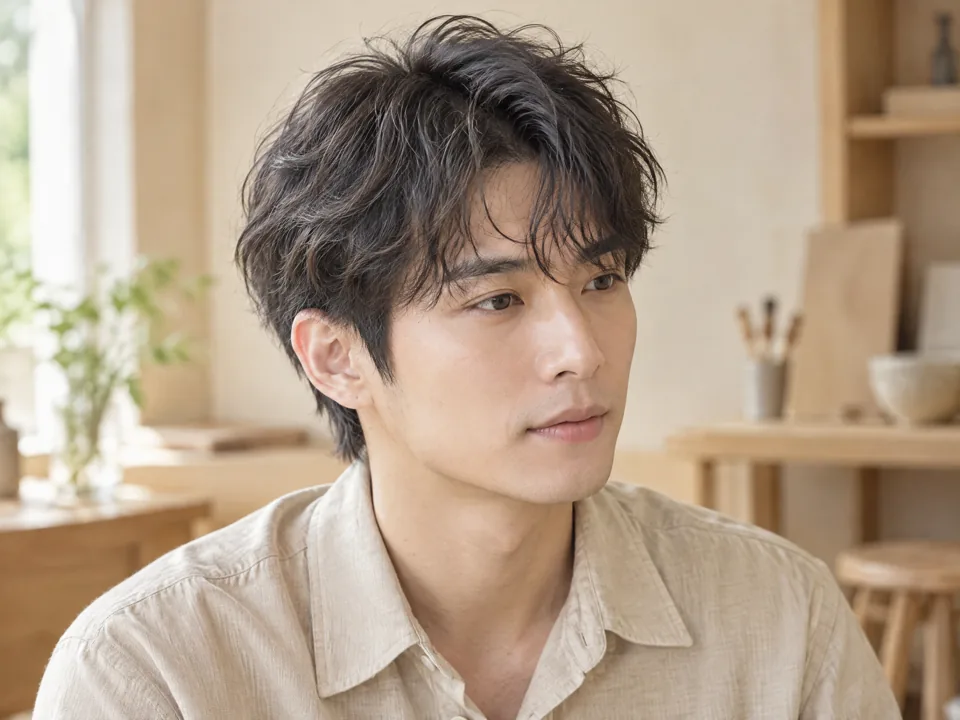
Preserve a familiar mature outline by matching its proportions before choosing extra fullness or a younger-looking colour. Start with the hairline, temple shape and side profile, rather than assuming thicker hair will look more convincing. A good brief identifies the features you want to keep and the changes you can comfortably accept. This makes shopping more focused: you are comparing a recognisable shape, not searching for an abstract idea of perfect hair.
Compare material, measurements, density, colour distribution and the care instructions for the actual piece being discussed. These details answer different questions: hair material does not establish cap fit, and an overall grey percentage does not describe where pale strands appear. Bring a recent photograph alongside an older favourite, then explain what each shows. The older image can establish your preferred direction; the recent one helps avoid an unintended jump in darkness, fullness or apparent hairline position.
Treat the first comparison as a design exercise, not a commitment to wearing a wig. You may decide that adjusting your own haircut is enough, that a coverage option deserves further discussion, or that you need more time. For a mature style, continuity often matters more than transformation. Set a small number of priorities, check them from several angles, and leave room to reject a technically impressive piece that simply does not feel like your outline.
01
1. Define the silhouette before choosing the material
Start by writing a one-sentence outline brief: for example, a soft side part with restrained height and visible temples. This describes shape without prescribing a product. Looking through human hair wigs can help you frame material and care questions, but the category alone cannot establish realism or suitability. Ask which hair type, construction and care label apply to the particular option. Compare those answers with your outline brief, rather than treating the material name as the deciding feature.
A photograph is useful when you explain its purpose. Point out the parting direction, the amount of forehead shown and how the sides sit above the ears. Cancer Research UK suggests bringing an old photograph when looking for a familiar style, and distinguishes human-hair, synthetic and mixed-material options.[1] Use that advice as a comparison method, not a requirement to recreate an earlier age. A reference can preserve a longstanding shape while allowing your present colour and preferences to remain visible.
Separate styling flexibility from styling effort. Ask the supplier to explain how the proposed piece should be washed, dried and reset, using its own instructions. If your preferred outline needs regular blow-drying, consider whether you want that routine on ordinary mornings. Do not assume that every piece tolerates the same heat or colour treatment. A modest shape that you can maintain may be a better match than a versatile option whose everyday upkeep you would rather avoid.
02
2. Preserve mature features instead of rebuilding a teenage hairline
A familiar outline can include open temples, a higher forehead and some variation in coverage. Decide which of these are part of your identity rather than automatically treating them as defects. During comparison, ask to see the proposed front position without a heavy fringe hiding it. A lower edge may change facial proportions even when the hair itself looks appealing. The useful question is not whether the front appears fuller, but whether it still belongs with your present face.
Judge volume in three zones: above the forehead, across the crown and beside the ears. Improving one zone need not mean increasing all three. Too much side volume can make a previously narrow silhouette appear rounded; pronounced front height can introduce a style you never wore. Describe the imbalance before suggesting a solution. Where alterations are possible, confirm their limits. Removing bulk is not necessarily reversible, so establish the preferred shape before authorising a significant cut.
Use the comparison table to distinguish continuity from change. There is no correct mature hairstyle, and a deliberate reinvention can be entirely reasonable. The point is to make that choice consciously. Mark two features as essential and one as flexible before viewing more options. If your essentials are an exposed forehead and compact sides, a fashionable fringe should not quietly displace them. This short priority list also helps a companion offer relevant feedback instead of choosing their favourite style.
| Feature | Continuity-first direction | Trade-off to check |
|---|---|---|
| Front hairline | Keep the familiar forehead exposure | A lower edge may feel fuller but alter facial proportions |
| Temple shape | Retain recognisable openings or softness | More coverage may remove a feature you associate with yourself |
| Side volume | Match the usual width above the ears | Extra bulk can change the whole silhouette |
| Crown height | Begin with restrained lift | More height may require a different styling routine |
A mature outline is a set of proportions, not a problem to erase.
03
3. Describe grey by location as well as proportion
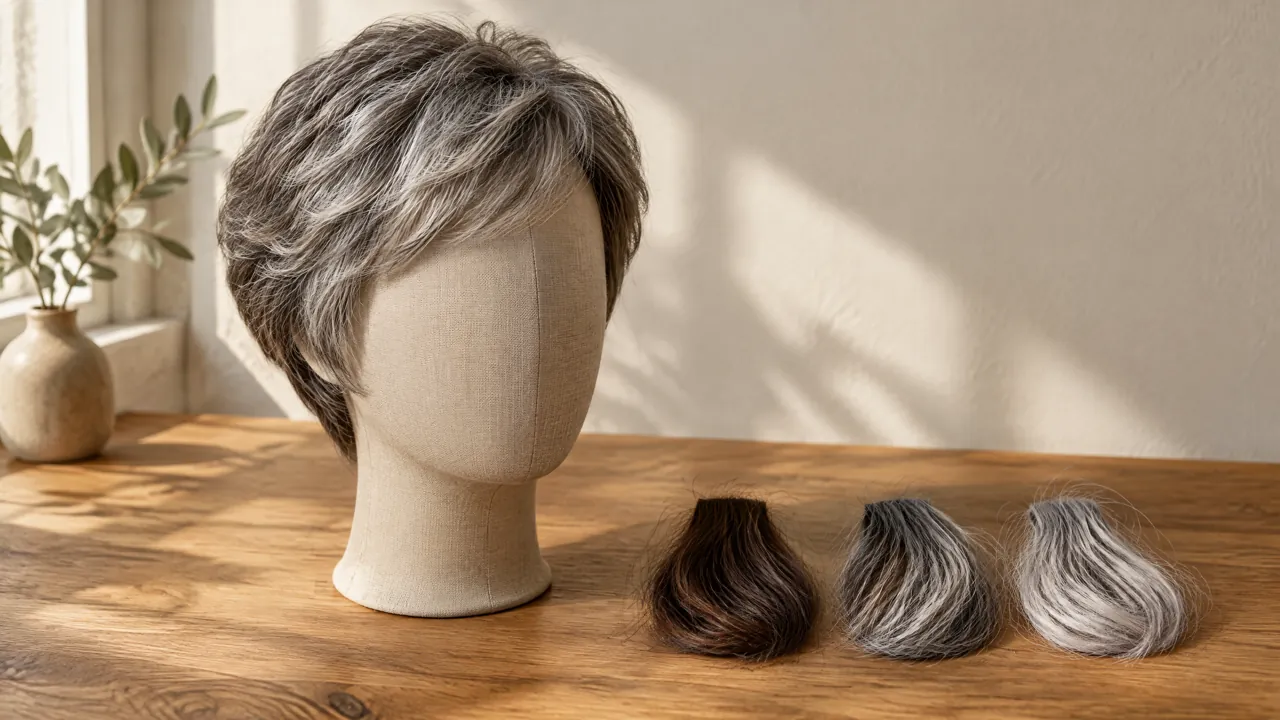
Grey placement can matter as much as the overall amount. Your temples might be pale while the crown remains darker, or a lighter front might frame an otherwise mixed outline. Record those differences in plain language before asking about custom colour. A single percentage cannot convey the pattern, strand contrast or underlying shade. Two samples described with the same proportion could therefore give different impressions. Ask how the supplier defines the figure and whether regional variation can actually be specified.
Compare colour beside the hair you intend to keep visible, especially sideburns or a beard. A piece viewed alone may look suitable yet create a sharp boundary when worn with your existing hair. Check it in more than one lighting condition where possible, and avoid relying solely on a phone image with automatic exposure. Do not expect an exact match across every light. Aim first to identify obvious clashes in darkness, warmth or distribution, then ask what adjustment is feasible.
Ask what the grey-looking strands are made from and whether their care differs from the darker hair. A description such as a grey blend does not, by itself, establish that every strand is human hair or that later colouring is appropriate. Obtain the material breakdown for the proposed piece, if available. When the answer is uncertain, record that uncertainty rather than filling it with an assumption. The preparation checklist below keeps your colour enquiry tied to visible evidence and practical questions.
- Bring a recent front photograph and a side view with no colour filter.
- Describe where grey is concentrated, not just whether you want more or less.
- Identify the sideburn, beard or remaining-hair boundary that needs comparison.
- Ask for the proposed strand materials and their specific care instructions.
04
4. Decide which problems genuinely need customisation
Customisation is worth investigating when a defined mismatch remains after comparison: the front position is wrong, the available size sits poorly, or the colour pattern differs noticeably from your brief. The custom human hair wig Hong Kong enquiry page provides a route to discuss style, measurements, pricing and availability. Ask which features can be specified and which remain limited by the proposed construction. A bespoke enquiry should turn your preferences into an agreed scope, not imply that every requested detail is achievable.
OwnStrand is a related brand under the same ownership as Canvas Texture, so this is not an independent endorsement. Its sole showroom is in Kwun Tong; an in-person visit means travelling there, not attending a separate district branch. Before making that journey, confirm the appointment arrangements and whether relevant samples can be viewed. Keep the purpose specific: comparing the outline and clarifying the proposed specification. Do not assume that a page describing an option guarantees that an example is currently available.
A custom brief creates additional decisions, so ask how they will be recorded. Clarify the agreed front shape, density, colour distribution, measurements and finishing work, along with what happens if the result needs adjustment. Confirm the relevant production timetable for your order rather than treating it as a delivery guarantee. If a simpler option already meets your essential priorities, compare its care and alteration limits before choosing a more involved process. Customisation should solve identified problems, not merely sound more personal.
05
5. Test the outline in movement, not just in a mirror pose
If a fitting is arranged, look at the outline while facing forward, turning slightly and viewing your profile. A front-only mirror check can miss bulky sides or an abrupt change behind the ears. Wear the glasses you use regularly, and check whether the hair competes with their arms or obscures familiar features. Ask permission before taking comparison photographs. Keep the angle and distance similar so that camera position does not make one option appear fuller or more flattering than another.
Move as you normally would while reading, looking down or turning towards someone. Notice any shifting, pressure or distracting contact, then ask about it instead of compensating with a rigid posture. This is a comfort check, not a stress test or proof of secure wear during every activity. Avoid inventing your own fastening method to make a sample behave differently. Clarify which fit adjustments are possible and whether they change the appearance, care requirements or contact with your existing hair.
Invite a companion to answer a narrow question: does this resemble my usual side profile, or has the crown become much higher? That is more useful than asking whether it looks good. Their preference may favour a dramatic change that you do not want. Keep your own comfort and recognition central. Compare photographs after a pause if possible, especially before irreversible finishing. A convincing outline should not depend on one carefully arranged fringe position or a single flattering mirror angle.
The useful comparison is the shape you can live in, not the pose you can hold.
06
6. Check fit, maintenance and the scope of the quotation
Comfort and preservation of existing hair belong in the same discussion as appearance. Ask where the proposed piece will contact or secure against your own hair, and describe any discomfort during fitting. The American Academy of Dermatology warns that repeated tension from tight hairstyles can damage hair and that pain or irritation should not be ignored.[2] This does not establish that a particular wig attachment is safe or unsafe. Do not accept persistent pulling as the price of achieving a tidy outline.
Request a care demonstration or clear written instructions for the actual piece. Ask how to maintain the part, smooth the sides and store it without disturbing the intended shape. Include realistic constraints: perhaps you dislike lengthy drying, or cannot easily manage detailed styling at the back. These are selection criteria, not shortcomings. If the supplier suggests a routine you cannot sustain, reconsider the outline or material before ordering. Do not substitute a generic heat setting for product-specific guidance.
Use the verification table before payment or permanent alterations. A useful quotation distinguishes the piece from fitting, cutting, adjustment and any care items, rather than leaving you to assume everything is included. Ask about order changes and the applicable return or adjustment terms without expecting an automatic right to return a customised item. Keep the agreed specification with the quotation. That record gives later conversations a clear reference if the delivered outline or colour differs from what was discussed.
| Check | Evidence or explanation to request | Pause when |
|---|---|---|
| Material and grey blend | Specification for the proposed strands and their care | The description is too vague to establish the materials |
| Fit and contact | Explanation of sizing, adjustment and contact points | Comfort depends on tolerating persistent pulling |
| Finishing | Agreed cut, parting and limits of later adjustment | A major cut is proposed before the outline is agreed |
| Quotation and terms | Included work, timetable and change or adjustment terms | Important promises remain unclear or undocumented |
07
7. Review the grey blend alongside your own-hair routine
For questions about a custom wig with a percentage of grey hair, describe the outline and visible colour boundaries as well as the desired proportion. Ask which blends are available, how the percentage is interpreted and whether a representative sample can be compared. The enquiry page supports discussing options; it does not establish that every percentage, placement or material combination can be supplied. Treat an unconfirmed specification as a question still to resolve, not a promised product feature.
Think ahead to the hair you will continue trimming. Sideburn length, beard shape and the volume of remaining sides may affect how the whole outline reads between appointments. Agree what belongs to the piece and what belongs to your own haircut, without assuming that either provider handles both. Avoid cutting your remaining hair solely to rescue an uncertain purchase. First establish whether the proposed piece suits the proportions you want to preserve; then discuss any separate styling changes on their own merits.
Finish the decision with three answers: which familiar features remain, what daily work the outline needs, and which details still require confirmation. If one essential answer is missing, pause rather than settling because you have already spent time comparing. You can keep your existing style, revisit a simpler shape or seek further clarification. The aim is a considered appearance choice with manageable upkeep. Preserving a mature outline means retaining recognisable priorities, not promising that a purchase will make every uncertainty disappear.
Sources and useful reading
Continue with hair and grooming
If your question concerns styling your own men’s hair, continue with: Men's Perm for Fine Soft Hair
Compare a related selection decision: Grey wigs: compare mixed colour and custom percentages
Read our male-hair styling background: Vit So and the Canvas Texture studio
Clarify the outline of your own hair
Discuss your existing men's hairstyle with Canvas Texture. Bring front and side photographs to a male-hair styling consultation, and explain the forehead exposure, side volume and everyday routine you want to preserve.
Canvas Texture · WhatsAppFrequently asked questions
Must a mature outline retain a receding front?
No. You can deliberately change the front position. Compare its effect on forehead exposure and side profile first, so the decision is yours rather than an automatic pursuit of maximum coverage.
Will one grey percentage recreate my current colour?
Not necessarily. The figure does not describe placement, underlying shade or contrast. Ask how it is defined and compare the proposed blend beside any sideburns, beard or remaining hair you plan to show.
Is a custom option always the better choice?
No. It is most useful when it addresses a specific fit, shape or colour mismatch. Compare what can actually be specified, the care routine and the agreed adjustment terms before deciding.
Should I endure tightness to keep the shape neat?
No. Report pulling, pain or irritation and stop the arrangement causing it. Seek appropriate assessment for ongoing concerns; a styling or shopping conversation cannot diagnose scalp symptoms.
Related journal articles
Men’s Hairpieces or a Perm? Compare Coverage and Shape
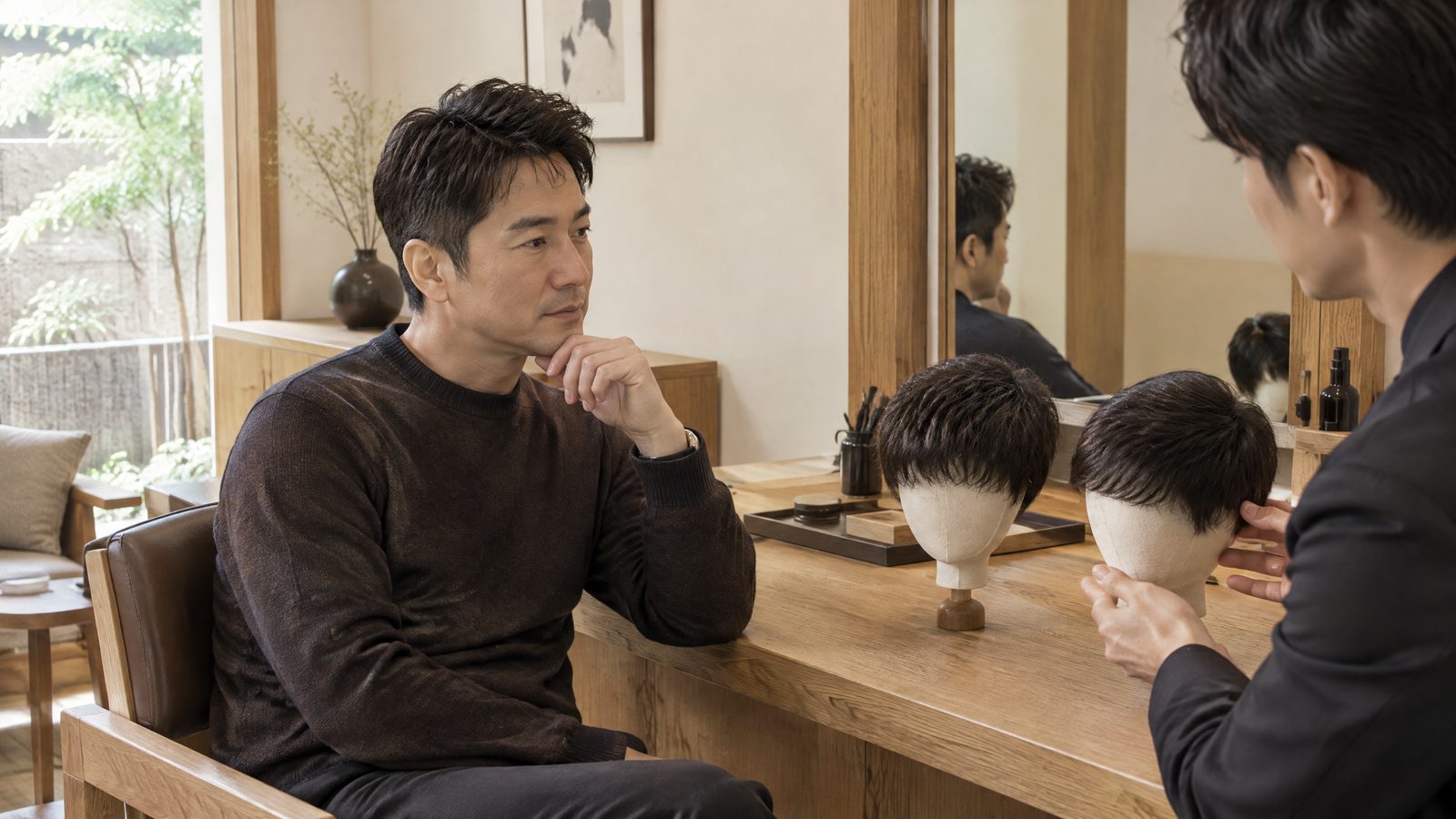
Choose a perm when enough existing hair remains and movement is the main goal. Choose a hairpiece when a defined area needs cosmetic coverage. Neither option decides the best outline by itself. First identify the visible area, surrounding density, preferred parting, and morning routine. Those observations prevent a product label from making the decision too early. Compare those details before making any booking.
Natural Hairline Wigs: A Guide to Fringe and Forehead
Natural hairline wigs look most convincing when the front edge, fit, colour, density, and haircut agree. For a hypothetical four-day workweek side part, inspect both temples under two ordinary light sources before choosing a construction. The aim is a coherent outline in movement. No single feature can decide that outcome. Check the whole frame, not only the centre. Check it while turning your head.
Human Hair or Synthetic Wigs? Texture and Care Choices
Choose human hair when approved styling flexibility matters. Choose synthetic fibre when a preset shape and simpler mornings matter more. Neither label settles the result alone. Texture, density, cap construction, attachment, and fit shape how a wig looks and feels. Start with the routine you can maintain, then check the exact model’s instructions. That order avoids paying for flexibility you will not use