
A New Perm and Scuba Plans: What to Ask Before Pool Day
A new perm does not come with a universal countdown to swimming or scuba. Before committing to a pool day, ask your stylist about the particular chemical service, products used and present condition of your hair and scalp. Separately, ask the instructor about activity eligibility and equipment. If there is a health concern, a clinician handles that question. A salon's aftercare advice cannot clear you for diving.
The useful decision is whether your new style and the proposed day work together. Think about how much washing is involved, whether your fringe needs constant restyling, and whether you will have somewhere to rinse and dry your hair gently afterwards. You do not need perfect curls throughout a water activity. You do need an achievable routine that does not depend on tight handling, hurried drying or ignoring discomfort.
This guide is prepared by the Canvas Texture editorial team with AI assistance and public sources. Canvas Texture and DiveHarbour share website ownership; the related activity pages are enquiry resources, not independent recommendations. The focus here is men's own-hair care and planning. Use the salon conversation to understand your perm, and the DiveHarbour conversation to establish what a proposed activity actually requires before the two dates are put together.
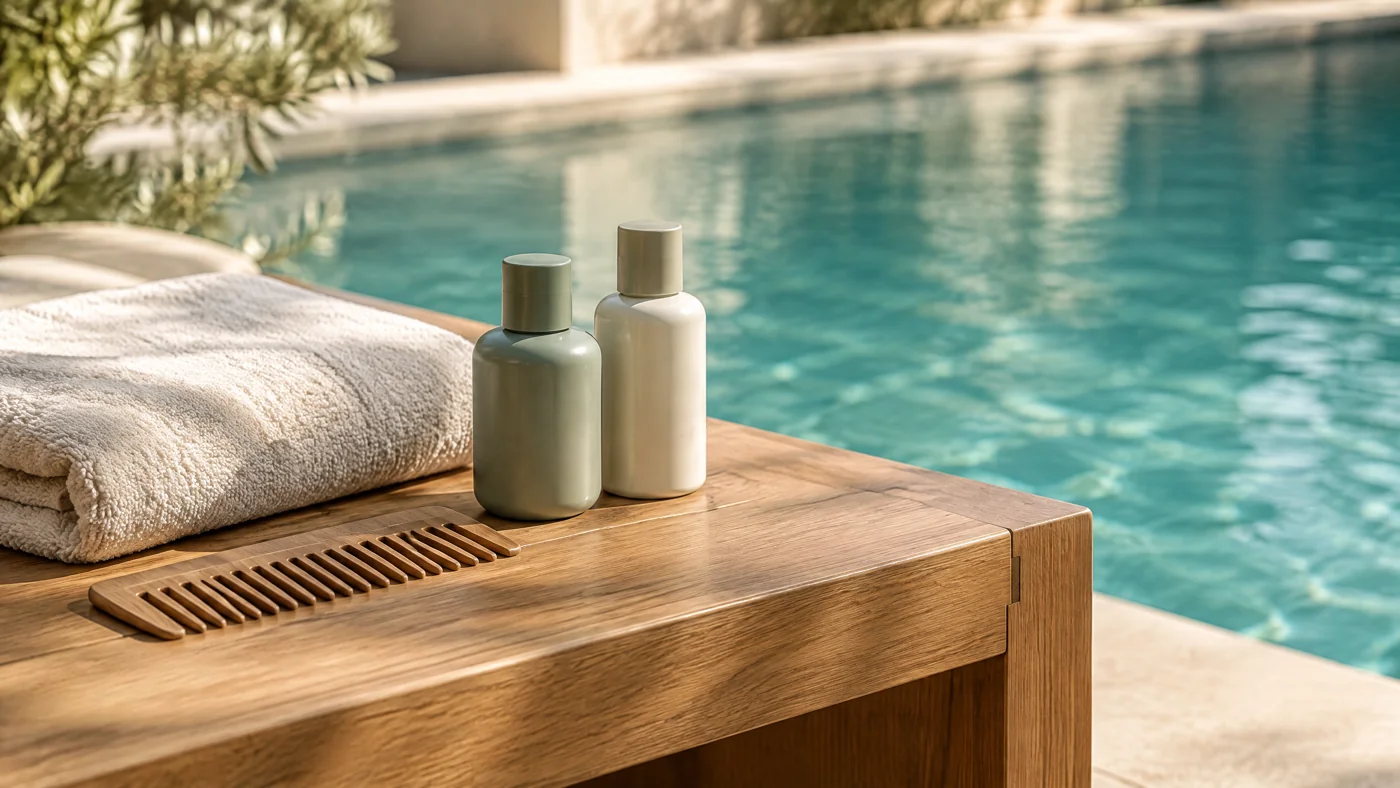
01
1. Ask about your perm, not somebody else's waiting time
Start with information your stylist can use: when the perm was performed, whether your hair was also coloured or lightened, and what feels different now. Mention rough ends, unusual tangling or scalp discomfort rather than simply asking whether swimming is allowed. The answer should reflect the products used and your individual hair condition. A number copied from a friend's appointment cannot establish that the same plan is suitable for yours.
Ask for clear aftercare instructions covering washing, conditioning and styling, then explain the proposed water activity. Would the stylist prefer you to reconsider the chemical appointment or the outing? Does your usual cleanser still suit your hair? Avoid replacing their product-specific guidance with a blanket rule about waiting a fixed number of hours. If two sets of instructions seem to conflict, ask for clarification before the day, rather than improvising a compromise in the changing room.
Persistent irritation or a worrying change in your scalp is not just a styling inconvenience. Seek an appropriate clinician rather than asking a haircut consultation to diagnose it. The instructor also needs relevant information about your ability to participate, but cannot provide medical clearance. Keeping these roles separate prevents a common misunderstanding: comfortable-looking curls do not establish readiness for an activity, and an activity booking does not mean your chemical aftercare questions have been resolved.
| Question | Right contact | Useful information to provide |
|---|---|---|
| How should I care for this particular perm? | Your stylist | Service date, products used, colour history and present hair condition |
| Is this activity appropriate for my experience? | The activity instructor | Swimming confidence, previous experience and the proposed programme |
| What does persistent scalp discomfort mean? | An appropriate clinician | Symptoms and relevant recent treatments |
| What equipment and facilities will be provided? | The activity provider | Your hair length, comfort concerns and practical wash needs |
The best aftercare answer starts with the hair on your head, not a countdown on somebody else's screen.
02
2. Choose a fringe you can leave alone for the day
A perm designed around a carefully arranged fringe may look good at your desk but demand more attention after water exposure. Before the appointment, tell your stylist if you regularly swim or are considering scuba. Discuss a shape that still looks intentional without constant combing or a strong product hold. This is a haircut and styling choice, not a promise that hair will stay in place or that any particular equipment will fit.
Longer sections should not be pulled tightly simply to preserve the salon finish. Ask your stylist about gentle handling appropriate to your length and curl pattern, and take any equipment-related concern to the instructor on land. Explain if contact around the fringe, temples or back of the head feels uncomfortable. The instructor should confirm suitable equipment and how hair concerns are addressed; do not change straps or experiment with a workaround in the water.
There is also a difference between a simple finish and coating your hair for the outing. Do not assume a leave-in product is welcome in a pool or suitable for release into the sea. Follow the product directions and venue rules, including rules for shore-side use. A marine-sounding label is not a blanket environmental assurance. Keep the day's styling modest, and save any elaborate reshape for somewhere you can wash and dry properly afterwards.
- Tell your stylist how often water activities feature in your ordinary week.
- Ask for a workable low-product finish, not a guarantee of unchanged curls.
- Raise hair catching or pressure concerns with the instructor before the session.
- Check product and venue rules before packing leave-in styling products.
03
3. Match the learning plan to your grooming calendar
If you are weighing up whether to learn to scuba dive in Hong Kong, the beginner guide is a useful next read for comparing an introductory experience with a certification pathway. Ask DiveHarbour about the actual programme, prerequisites and expected commitments. From a grooming perspective, the important difference is whether you are planning one potential water day or a sequence of sessions that will repeatedly interrupt your usual washing and styling routine.
Give both professionals a realistic calendar rather than demanding the shortest possible gap between appointments. Your stylist needs to understand the planned exposure and your hair condition. The provider needs your availability and experience. Neither conversation should assume an exact venue or a guaranteed date. Once the arrangements are clearer, decide which appointment has genuine flexibility. It may be easier to defer a cosmetic change than to build a complicated routine around an unconfirmed training schedule.
In a hypothetical example, a man wants a new perm for office wear and is also enquiring about several training sessions. His useful question is not whether curls can survive scuba. It is whether the chosen style remains manageable when his normal wash days change. He can ask the stylist about a simpler everyday finish while asking the instructor to confirm the programme. The resulting plan should leave time for aftercare without treating salon advice as an eligibility decision.
04
4. Understand what a first experience would actually involve
The try scuba diving Hong Kong guide can help a curious beginner frame an enquiry without committing immediately to certification. An introductory experience is not an Open Water qualification. Ask which setting is proposed, what equipment is supplied and which facilities are available afterwards. A description such as pool or confined water does not tell you whether there is a convenient shower, a suitable changing space or somewhere to finish your hair without rushing.
A smaller initial commitment may help you discover whether the overall outing suits your lifestyle, but it is not automatically gentler on a fresh perm. The relevant hair questions remain the same: what aftercare has your stylist advised, what washing is possible afterwards, and how much restyling are you expecting? Do not book an experience as a way to test whether irritated skin or fragile-feeling hair will tolerate water. Resolve those concerns with the appropriate professional first.
Make room for an ordinary-looking finish after the session. In a hypothetical first-try plan, lunch with friends follows the pool appointment. Allowing time to rinse, condition where permitted and dry gently is more sensible than promising a perfectly reconstructed fringe immediately afterwards. If facilities are unsuitable, change the social plan or discuss another activity arrangement. The goal is not to keep a salon photograph intact; it is to make the day practical without taking shortcuts with hair or participation requirements.
05
5. Build the wash plan before you pack the styling kit
Pool chemicals and sun exposure can damage hair, according to the American Academy of Dermatology, which also recommends rinsing after swimming and appropriate shampoo and conditioning care.[1] Use that as general context, not evidence that a particular perm is ready for water. Ask your stylist which wash products suit your treated hair, and confirm access to fresh water. For a sea outing, the same practical planning question applies: where can you rinse afterwards without relying on uncertain facilities?
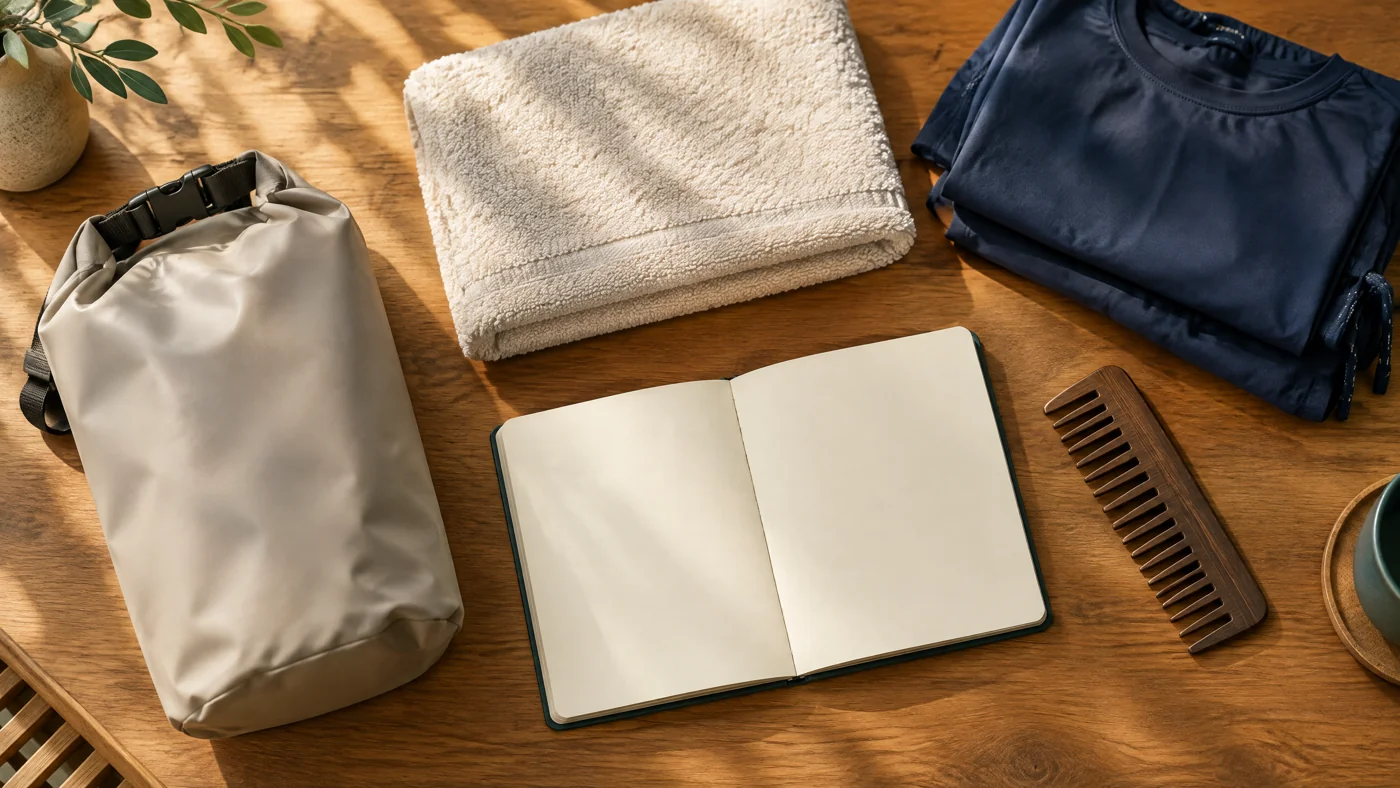
Keep the kit focused: a towel, the wash products your stylist recommends, and an appropriate comb if it belongs in your routine. The AAD advises gentle handling, avoiding towel rubbing and limiting heat; its detangling advice differs for straight and textured hair.[2] Do not assume that advice for somebody else's hair translates directly to your new perm. Ask how to approach your curl pattern, use gentle towel pressing rather than vigorous rubbing, and avoid forcing a comb through resistant tangles.
The plan also needs enough time to work. Follow your agreed cleansing and conditioning routine at permitted facilities, then dry gently with low heat if appropriate rather than turning up the temperature to meet a reservation. Do not layer extra styling products over hair simply because it feels different after the outing. Note what you observe and ask for advice if needed. Ordinary post-swim care supports manageable hair; it is not a treatment for hair loss or a guarantee against damage.
| Stage | Arrange in advance | Avoid relying on |
|---|---|---|
| Before leaving home | Your stylist's product-specific aftercare and the venue's product rules | A universal post-perm waiting rule |
| After water exposure | Confirmed access to a fresh-water rinse and permitted washing facilities | An assumed shower at an unspecified location |
| Towel and detangling time | Gentle pressing and a hair-appropriate approach to tangles | Vigorous rubbing or forcing a comb through knots |
| Before the next appointment | Enough time for gentle drying and a simple finish | High heat and repeated pulling to recreate the salon look |
06
6. Include aftercare logistics in the booking decision
When a full programme interests you, the Open Water diving course Hong Kong cost page is a starting point for asking about current scope and written inclusions. Confirm the selected course, equipment, materials and venue arrangements directly. Then consider the practical expenses around your grooming routine, such as transport to washing facilities and the time needed afterwards. A headline course fee cannot tell you whether a rushed return to work will leave your hair-care plan workable.
DiveHarbour currently states that all paid fees are non-refundable, with make-up sessions only subject to written conditions. Read those conditions before payment and ask how your particular arrangements would be handled. Do not assume a later concern about your perm creates a refund entitlement or a free change of date. Clarifying hair aftercare and participation questions before committing is more useful than discovering afterwards that your preferred salon timing conflicts with the booking you have made.
Compare plans by what you can actually follow through. A day requiring a hurried journey, uncertain rinse facilities and an immediate polished appearance may be a poor fit even if the activity interests you. Request the practical details in writing, then choose whether to proceed, move the cosmetic appointment or wait. No option requires judging your enthusiasm by how much inconvenience you accept. A manageable hair routine is a legitimate lifestyle consideration, separate from the instructor's assessment of the activity.
07
7. Use the outing to improve your next hair consultation
Afterwards, separate observations from conclusions. You might notice that your fringe takes longer to settle, the ends tangle more easily or your usual finish feels too elaborate for a water day. Describe those changes to your stylist without declaring that one outing ruined the perm. Useful details include the products you used, the washing facilities available and whether you rushed the drying. That gives the consultation a practical starting point rather than a demand for a stronger treatment.
If water activities become regular, discuss a haircut and perm plan that suits repetition. Perhaps your preferred fringe shape needs less daily rearranging, or your existing texture can support a simpler finish without another chemical service. These are individual styling possibilities, not prescriptions. Bring an ordinary-day photo if helpful and explain how much time you genuinely spend on your hair. The aim is an own-hair style you can maintain, not a routine designed for an occasional perfect picture.
Keep any unresolved equipment, eligibility or session questions with DiveHarbour, and take continuing scalp or health concerns to a clinician. Canvas Texture's role is men's own-hair styling and everyday handling. That boundary leaves you with a clearer next step: a hair consultation can simplify the grooming side, while the activity provider confirms its own requirements. A new perm and a water-based hobby can be considered together without pretending that one professional can answer every question.
A useful water-day hairstyle is one you can care for calmly afterwards, not one you must fight to preserve.
Sources and useful reading
Continue with hair and grooming
For a separate men’s own-hair discussion: Pre-Perm Treatment HK
Continue with a related hair-and-water planning guide: Family Scuba Days: Separate Wash Bags for Different Needs
Read our hair styling background: Vit So and the Canvas Texture studio
Make your own-hair routine easier to manage
Ask Canvas Texture about men's own-hair styling, fringe shape and everyday handling around your water-day routine. DiveHarbour-related activity questions belong with DiveHarbour; Canvas Texture does not handle diving bookings or medical advice.
Canvas Texture · WhatsAppFrequently asked questions
How many hours after a perm can I swim?
There is no universal countdown for every perm and head of hair. Ask your stylist about the specific products, service and present hair condition. Activity eligibility is a separate question for the instructor, with health concerns handled by a clinician.
Is a pool-based introductory scuba session automatically better for a fresh perm?
No. A pool setting does not establish that your chemical aftercare requirements are met. Confirm the proposed activity, facilities and equipment with the provider, then discuss the hair-care implications with your stylist.
Should I put extra leave-in conditioner on before entering the water?
Do not assume a product is permitted or environmentally suitable for that use. Follow product directions and venue rules, and ask your stylist about your own hair's needs. A marine-sounding label does not provide a blanket assurance.
Can Canvas Texture advise which scuba equipment will suit my fringe?
Canvas Texture can discuss haircut shape and gentle hair handling. The instructor must confirm suitable activity equipment and address comfort concerns on land. Do not modify equipment or use a hairstyle as a substitute for proper equipment guidance.
Can I assume a free reschedule if my stylist advises changing the plan?
No. DiveHarbour currently states that all paid fees are non-refundable. Make-up sessions are subject to written conditions, so clarify those conditions and resolve hair-care questions before paying.
Related journal articles
First Scuba Lessons: Keep Your Hair, Plan the Pool-Day Wash
Keep the haircut you want to live with; prepare for the wet-hair version of it.

Trying Scuba in Hong Kong: Prepare Your Fringe Before a Mask Fitting
Prepare the fringe you actually have, not the hairstyle you hope will stay unchanged in water.
Choosing a Hong Kong Diving School: A Men's Hair Planning Guide
Choose the learning environment with the instructor; choose an achievable hair routine with your stylist.

