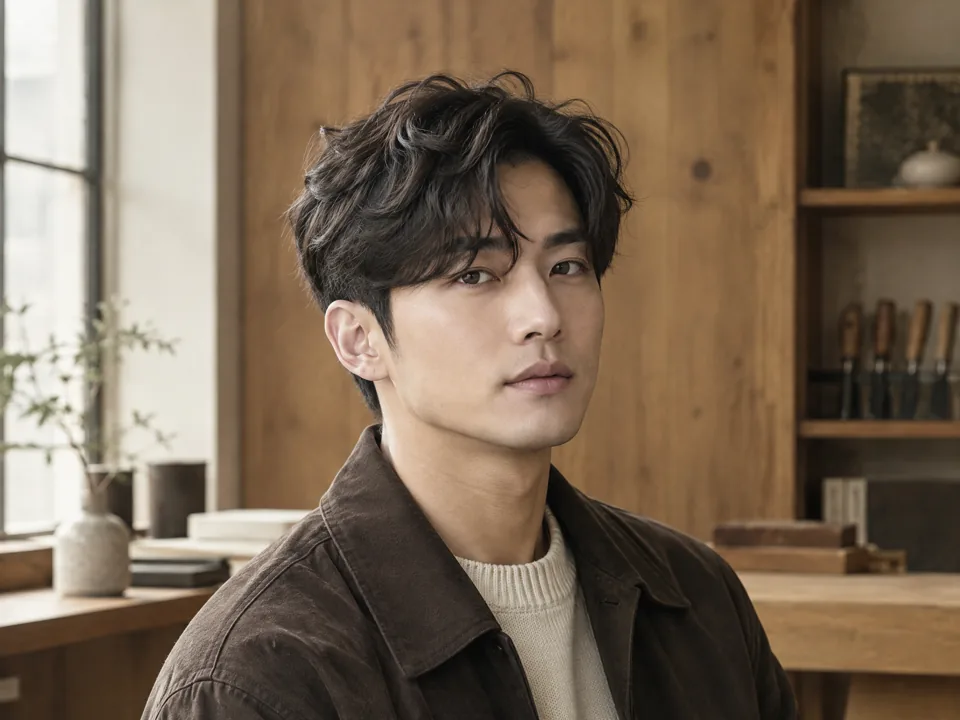
Planning balayage on dark hair: contrast and ombre
Start a dark-hair colour plan by choosing what should remain dark, not simply how blonde the ends should become. Balayage describes a painted highlighting approach; ombre describes a dark-to-light distribution. They can overlap in one design. Neither word decides the strength of contrast, the height of the transition or whether your existing hair can support the requested lightness. Those decisions need their own conversation.
A near-black background makes a lighter strand conspicuous, even when only a small area changes. Conversely, many moderately lighter strands can shift the overall impression towards brown without producing obvious pale lines. The useful question is whether you want a dark hairstyle with visible accents or a visibly lighter lower section. That distinction matters more than choosing a fashionable shade name.
This guide turns that choice into a practical discussion about placement, length, previous colour and upkeep. It also considers shorter men's cuts, where a small bright area can occupy a large part of the visible shape. The scenarios are illustrations, not client accounts. Use them to describe your priorities, then ask for an assessment rather than treating any photograph as a guaranteed result.

01
Separate the technique from the colour pattern
A technique describes how colour is placed; a pattern describes what you see afterwards. Painted lightness may form separated ribbons, a diffuse change through the lengths or an end-focused effect. An ombre direction gives the lower lengths a lighter role, but does not require a perfectly level boundary across every strand. Explain the visible arrangement before asking the stylist to choose a method.
Read an inspiration image in three zones: the darkest upper area, the changing middle and the brightest ends. Notice how much length each occupies. A generous middle zone may show several brown tones before reaching pale tips. A shorter transition gives those tips more visual weight. A smooth blend can still be dramatic when the lightest colour sits far from the base.
Vit So's explanation of balayage connects painted placement with the starting height of lightness. It is useful when your references share a technique label but show very different results. Compare where the bright sections begin, then say whether you also want to alter the dark base. Keeping roots dark is not the same request as recolouring them.
Try describing the design without its label: 'Keep the crown dark, bring a few lighter pieces towards the face and make the ends more visible.' That sentence leaves room for professional assessment while making your priorities understandable. If a reference contradicts it, identify which feature wins. Otherwise, a request for a subtle result and a photograph of pale ends can pull the discussion in different directions.
A blended transition can hide a boundary; it cannot make strong dark-to-light contrast disappear.
02
Keep enough dark space to control contrast
There are two separate measures of lightness: how bright an individual section becomes and how much of the hairstyle looks lighter. Narrow pale ribbons against black hair can be striking despite occupying little area. Broader brown sections may look less sharply outlined, yet change more of the overall colour. Decide which kind of visibility you prefer before requesting finer or fuller placement.
Dark spaces give the lighter areas a background. Retaining depth around the parting can preserve a dark first impression from above. Keeping depth underneath may have less effect when hair hangs loose, but more when it is tied up. Neither choice automatically means less work or a particular price. It describes the distribution that the assessment and quotation need to address.
Consider an illustrative office scenario: someone wants mostly dark hair in indoor meetings, with brown movement outdoors. A photograph of thin platinum lines may be a poor guide, even if it is labelled subtle. A closer reference would show restrained brightness and substantial dark space. The lesson is not that one shade suits office life; it is that visibility needs a setting.
Ask to discuss front, side and back coverage separately. A brighter face frame can dominate your mirror view while the back remains dark. If you judge the whole design from that front view, you may request more lightness than intended elsewhere. Bring a back-view reference and identify any areas that should remain quiet, rather than using 'natural' as a complete instruction.
| Design direction | Likely visual emphasis | Trade-off to discuss |
|---|---|---|
| Sparse, distinctly lighter ribbons | Clear lines against a retained dark background | Small coverage can still create strong contrast |
| More closely spaced brown lightness | A broader change in the overall dark impression | Less obvious striping does not necessarily mean less visible colour |
| Long dark upper area with bright ends | Lightness concentrated around the lower outline | Dark roots can coexist with dramatic ends |
| Brighter front with darker back and underside | More change around the face than across the whole head | Front photographs may overstate overall coverage |
03
Fit the transition to the haircut you will keep
A long hairstyle provides more visible length for a dark area, an intermediate blend and lighter ends. Shorter hair compresses those zones. On a short top, moving brightness slightly higher can change much of the visible shape. A reference with shoulder-length hair therefore needs translating, not merely shrinking. Discuss the finished cut before choosing where the colour change should begin.
For a men's cut with short sides and a longer top, decide whether the colour should register in the fringe, the crown or both. Light ends on a forward fringe sit differently when brushed back. Freshly shortened sides may also make the top's colour look more prominent. Show how you actually arrange your hair rather than relying on a styled photograph with a different direction.
Trimming changes the colour balance as well as the silhouette. If most of the pale area sits at the tips, removing those tips may leave a much darker design. Keeping more coloured length can preserve contrast, but should not dictate retaining ends you otherwise want removed. Agree the length you want first, then discuss a placement that makes sense within that choice.
Here is another illustrative scenario, not a service outcome: a person plans a shorter fringe soon after colouring but likes a reference with light concentrated at the fringe tips. The consultation should address what survives the next cut. A colour plan that depends on unwanted length is fragile, even if the initial photograph looks appealing. Share the intended haircut and usual trimming pattern early.

04
Choose brightness before arguing over warm or cool
Warmth and brightness are related in appearance, but they are not interchangeable preferences. You might enjoy the contrast of a blonde reference while preferring a warmer brown finish. Equally, you might like muted beige but not want that much lightness. Say which feature attracts you first. Terms such as caramel, ash and beige cannot communicate the proportion of dark hair you want to retain.
The published discussion of ombre hair is helpful for separating the transition from the finish at the ends. Read the photograph from top to bottom, then identify whether your concern is a short blend, overly pale tips or unwanted warmth near the face. These are different adjustments, even when you dislike them in the same reference image.
Lighting makes shade comparisons slippery. A warm reflection in sunlight may look much less visible under office lighting. A curled reference also exposes surfaces that straight hair may conceal. Bring your own ordinary-light photographs and references with similar starting depth. Describe the desired indoor impression in words, because even an unfiltered photograph cannot establish an exact colour match across different screens.
Choose an alternative you would genuinely accept if the palest target is unsuitable. That might preserve the same placement with deeper light areas, or keep the ends darker while emphasising the front. It need not be a less thoughtful design. Agree which priority can move and which cannot before processing begins, rather than accepting an unwanted compromise merely because it shares the requested colour name.
05
Treat colour history as part of the design
Natural black hair, repeatedly dyed-black lengths and hair lightened before being coloured dark are different starting points. Their present appearance can be similar while their histories are not. Describe roots, middle lengths and ends separately. Include home colour, henna, earlier bleach, straightening and perms wherever they remain in the hair. If dates or product details are uncertain, say so instead of guessing.
The American Academy of Dermatology notes that colouring and perming can leave hair dry and brittle, and that greater lightening can involve more damage.[1] A soft-looking colour pattern is therefore not evidence of mild processing. Report current roughness, tangling or breakage before discussing additional brightness. A restrained target still needs assessment; it is not automatically suitable because the final contrast would be low.
For hair dyes, the FDA advises following labelled skin-test instructions and avoiding use on an irritated or injured scalp. Previous trouble-free use does not guarantee another application will be reaction-free, and a negative test does not rule out a reaction.[2] Share any previous product reaction and ask what preparation applies to the proposed products. Do not use an inspiration image to decide safety.
Ask whether a strand assessment is appropriate and what it could clarify about lightness and condition. It is a consultation question, not a promise that a test will approve your reference. If earlier dark colour requires separate attention, the request may involve correction as well as placement. Establish what happens if the preferred target is unsuitable, including the option not to proceed with that plan.
A colour history is not paperwork around the design; it helps define which design is worth discussing.
06
Agree the work before comparing the quotation
A technique name does not describe every task in an appointment. Retaining a dark base, changing that base, lightening selected areas, adjusting tone and cutting the hair are separate concerns. List the work you are asking about before comparing totals. Otherwise, two quotations can look different simply because one addresses more of your request, rather than because the same work costs more.
Vit So's published standalone Balayage/Ombré entry includes one bleaching session. That inclusion does not establish that every desired shade can be reached within it. Nor should you infer cutting, toner or other items from a differently scoped package. Ask for the proposed service list, the applicable total and how any extra lightening or unlisted work would be quoted before agreeing to proceed.
A budget limit is useful information, not something to reveal only after a plan has been assembled. State it alongside the priority you most want to preserve. You can then discuss whether a narrower scope or different target is worth considering. Avoid assuming that less visible brightness always costs less: earlier artificial colour may complicate the starting point even when the desired change looks restrained.
An event deadline adds another constraint, but does not establish feasibility. Explain the date and ask what assessment and appointment plan are needed. If a staged approach is proposed, clarify what the first stage is intended to achieve and whether you would be comfortable with it. A possible later stage should not be treated as a guaranteed route to the palest photograph.
| What you want | What needs clarifying | A useful question |
|---|---|---|
| Keep the base dark | Whether existing base colour stays untouched | Are we retaining the current base or changing its colour? |
| Lighter ends | Feasible brightness and assessed lightening scope | What target are we agreeing for the proposed work? |
| A cooler or warmer finish | Whether tone adjustment is proposed and included | How will the requested tone be addressed? |
| A new cut alongside colour | Finished length and which coloured areas remain | Should the placement be planned around the intended cut? |
| Work around earlier black dye | Whether separate correction needs consideration | Does the old colour change the scope or quotation? |
07
Plan for changing tone, growth and future cuts
A dark-root design can make new growth less central to the look, but it does not remove maintenance decisions. As hair grows, the light areas sit farther from the scalp. Their toned finish may also look warmer or less muted over time. Those changes are different from wanting additional brightness. Identify the problem before asking to repeat the original lightening work.
Vit So's guide to balayage on dark hair considers retained depth, old artificial colour and changing contrast together. Use that distinction when reviewing your own design: do you still like the dark spaces but dislike the tone, or has the placement become too low? This gives a follow-up enquiry a clearer purpose than simply asking for a refresh.
Take comparison photographs with a similar parting, hairstyle and lighting. Note the root area, the beginning of lightness and the ends separately. If a haircut has removed much of the bright section, say that too. These observations help explain what changed without assuming that more bleach is the answer. Ask for care instructions suited to the actual process and your handling routine.
The Academy's colouring guidance recommends sun protection for dyed or bleached hair because sunlight can contribute to dryness and fading.[1] Discuss practical care alongside regular heat styling, washing and any swimming you do. A maintenance plan should fit the lengths you intend to keep and the effort you can realistically sustain. Dark roots alone cannot make fragile ends or an unwanted tone irrelevant.
- Photograph your current front, sides and back with the parting and finish you normally wear.
- Mark where lightness should start, which areas should stay dark and how noticeable the ends should be indoors.
- Record previous dyes and chemical treatments by roots, middle lengths and ends; flag uncertain details and past reactions.
- Share your intended cut, budget and deadline, then confirm the proposed work, quotation and an acceptable alternative.
Sources and useful reading
Continue with hair and grooming
Continue with Canvas Texture’s male hair needs: Korean Men's Perm
Explore another related decision: Hair perm and women's perm: define a full head plan
Read the lead stylist’s background: Vit So and the Canvas Texture studio
Discuss your men's hair needs with Canvas Texture
For a Canvas Texture consultation about your men's hair needs, share your current cut, everyday styling routine and the changes you are considering. Include any colour history and reference images so you can discuss how those ideas relate to the hairstyle you want to keep.
Canvas Texture · WhatsAppFrequently asked questions
Can balayage on black hair still look understated?
An understated appearance can be a design goal. Keeping substantial depth and limiting the brightness or coverage can reduce visible contrast. However, fine pale strands can still stand out strongly against black hair. The process and feasible lightness need assessment, particularly if the lengths contain old dye.
Is ombre always more dramatic than balayage?
No. Ombre describes a dark-to-light distribution, while balayage describes painted placement. Either can look restrained or conspicuous. Compare the difference between the darkest and lightest areas, the amount of lighter hair and the length of the transition instead of ranking the labels.
Does a softer brown target mean no bleach is needed?
Not necessarily. Low visible contrast does not establish a bleach-free process. Natural depth, existing artificial colour and previous treatment affect the assessment. Describe the brown effect you want, then ask what process is proposed rather than selecting it from a photograph or shade name.
What should someone with a short men's haircut bring to a colour discussion?
Bring photographs showing the top, fringe and sides in your everyday styling direction. Explain the next intended cut and how much coloured length you want to retain. A longer-hair reference can communicate contrast, but its transition needs reconsidering for the actual length and shape.
Related journal articles
Hair salon or hair stylist: what should you compare?
Choose the appointment around the change you need, not the most impressive title on the booking page.
Haircut, wash cut and blow dry: choosing the right family appointment
A family can share a journey to the salon without sharing the same haircut brief.

A layered haircut for busy days: choose what to keep
The most useful length is not always the longest strand; it is the shortest piece your routine still needs.