Korean bouquet class: Hair and Tools for Seasonal Workshops
Choose a seasonal flower workshop by the gift's destination, then prepare hair and clothing for the actual work. A clear fringe and manageable sleeves matter more at the craft table than a complicated hairstyle. Your finished arrangement also needs a realistic route from the lesson to its recipient.
For a Hong Kong man planning a festive outing, grooming and gifting can belong to the same thoughtful preparation. Perhaps the afternoon ends with a family photograph, a dinner invitation or a gift handed to a partner. Each ending changes what you should carry, what you can comfortably make and when you need to be ready.
This Canvas Texture journal guide connects those decisions without treating flowers as a hair-care accessory. Start with the recipient and journey, choose a project that fits your available attention, then organise personal grooming separately from the workshop bench. The result should be a worthwhile shared activity, not an afternoon spent protecting an impractical outfit or oversized gift.
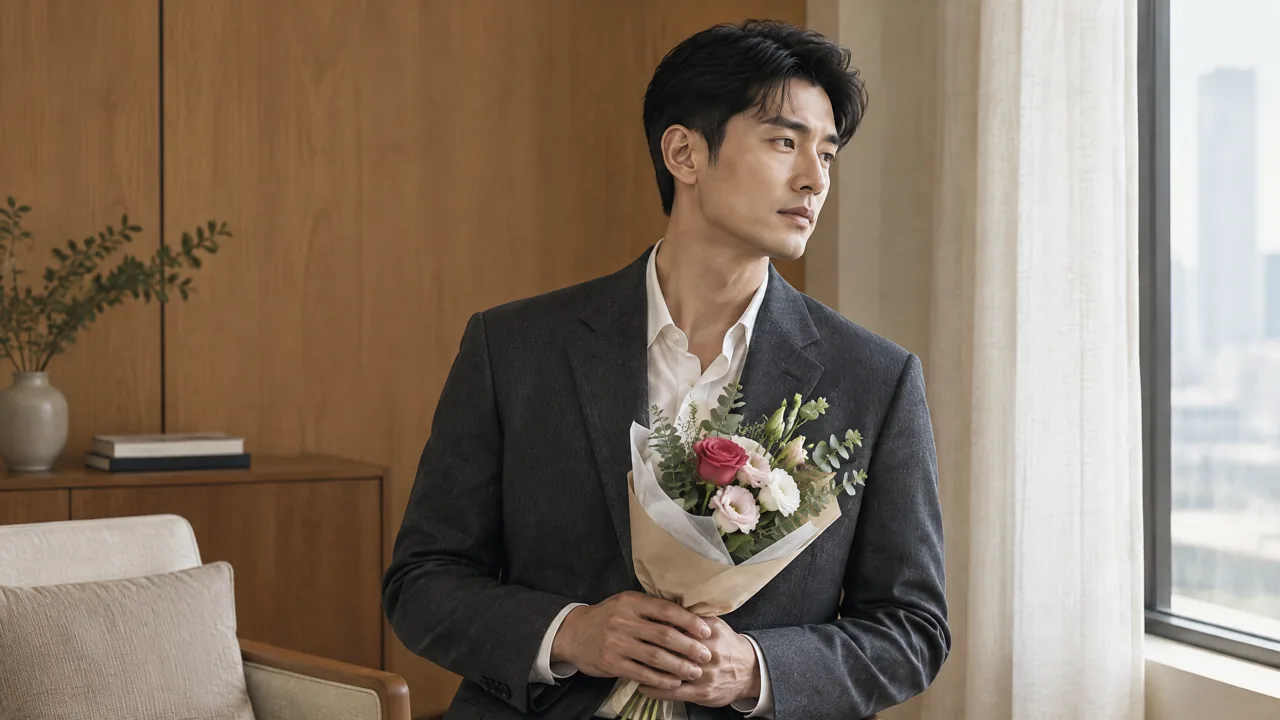
01
Start with where the finished gift will go
Before comparing attractive workshop photographs, decide whether your piece will be carried home, handed over immediately or displayed elsewhere. These are different briefs. A bouquet given after dinner needs a recipient who can manage it afterwards. A wreath intended for a doorway needs permission and a suitable hanging arrangement, not simply an appealing colour palette.
Picture a hypothetical Saturday outing: you attend a lesson, travel by MTR and meet a friend at a restaurant. There may be nowhere appropriate to keep a large floral piece during the meal. In that situation, direct handover before dinner or a separate gifting day could be more considerate than making the most elaborate project available.
Work backwards from the last commitment rather than scheduling every minute around the class start. Allow space for the instructor's finishing process, packing and any collection instructions. Ask whether the published duration includes those stages. An activity that fits on paper can still conflict with your evening if everyone must queue for help wrapping their work.
Your grooming plan belongs in that backward calculation. Finish drying and shaping your hair before leaving, rather than expecting a workshop washroom to support a full restyle. If a salon visit is part of the day, discuss your existing hair condition and the planned activity with your stylist. Avoid assuming every service fits the same timetable.
| Destination | Useful decision | Question to confirm |
|---|---|---|
| Gift before dinner | Keep the recipient's onward journey manageable | What is the fully packed size? |
| Home display | Choose a piece for an agreed space | What support or container is needed? |
| Doorway decoration | Check permission and hanging arrangements first | What are the finished weight and dimensions? |
| Shared family keepsake | Leave room for everyone's contribution | Is one shared project supported? |
02
Keep your fringe clear without overworking your hair
Flower work involves looking down, watching demonstrations and turning to check your arrangement. Test your fringe in those positions before you leave home. If it repeatedly drops across your eyes, choose a practical adjustment with your stylist rather than relying on constant touching. The aim is clear sight and comfort, not a rigid hairstyle that cannot move.
The American Academy of Dermatology advises limiting excessive heat and brushing, and warns about ongoing tension from tightly pulled styles [1]. That supports a restrained preparation routine rather than repeated heat-based repairs. It does not endorse a particular product or workshop hairstyle. For longer hair, follow the instructor's containment requirements without pulling it painfully tight.
Check your planned outfit with your hair rather than considering each separately. A high collar may disturb the back shape whenever you look down. A jacket you must keep adjusting can interrupt your grip on a project. Choose clothing that lets you lean forward comfortably, then check the front and side outline in a mirror.
Pack only the personal grooming items you genuinely expect to use. Keep them in a separate pouch, away from floral materials and shared equipment. Make any necessary adjustment during a break in an appropriate area, then clean your hands before returning. Do not spray styling products over a craft bench or anywhere food is being prepared.
Prepare for the work first and the photograph second; a thoughtful gift should not require an uncomfortable afternoon.
03
Choose bouquet learning by handling time, not a label
A bouquet lesson may appeal because you want to give something you helped make. Decide what you actually want to practise: choosing a balanced palette, understanding the arrangement's outline or finishing a presentation. A style label alone cannot tell you how much individual practice the lesson provides. Ask which parts you will complete yourself and which are prepared beforehand.
YumYum's Korean bouquet class page can help frame an enquiry about bouquet-making and presentation. Confirm the current teaching scope, materials, dates and venue directly before booking. Treat the page as a merchant's starting point, not evidence that every pictured technique or arrangement will be available in your session.
For a hypothetical beginner attending with an experienced partner, the key question is whether both people can work meaningfully at their own level. One person might value basic composition while the other wants feedback on finishing. Ask how the instructor supports different learning goals. Sharing a table does not necessarily mean sharing a kit or receiving equal practice time.
Think about the physical experience too. Ask whether you will hold the developing bouquet for extended periods or have somewhere to set it down. A substantial arrangement can occupy both hands when finished. That affects your choice of bag, the usefulness of a coat check and whether an additional gift makes the journey unnecessarily awkward.
04
Check a wreath's display space before choosing decorations
A wreath is not simply a bouquet with a different outline. Its destination may involve a door, wall or shared entrance, so the receiving household needs to agree on placement. Check the available space and any restrictions before choosing a large design. A seasonal gift becomes less useful when its owner must solve an unexpected display problem.
A Christmas wreath workshop enquiry can focus on the intended display, decorative direction and take-home format. Confirm the actual materials, finished dimensions, lesson arrangements and packing separately. Do not assume the seasonal name establishes a fixed timetable, a particular foliage selection or suitability for every doorway.
Ask how much freedom participants have over decoration rather than requesting a copy of a reference photograph. If the recipient prefers a quiet home, a restrained finish may be more welcome than numerous ornaments. For a shared office entrance, agree on the design with the organiser first. Personal enthusiasm should not replace consent from those using the space.
Plan your own clothing around reaching across the work area. Loose cuffs, dangling accessories and a fringe that needs frequent correction can compete for attention. Follow the instructor's rules for tools and materials instead of improvising from an online tutorial. If a particular handling step feels uncomfortable, ask what assistance or alternative participation is available.
The best seasonal detail is one the recipient can actually live with, not the one that fills the largest photograph.
05
Give children real choices while adults manage difficult steps
A family flower activity works best when a child has a meaningful creative role rather than merely watching an adult finish. Discuss the tasks in advance. Choosing colours, comparing placements and writing a message can all shape the gift. Handling unfamiliar tools or completing a difficult finish may need a different level of support, assessed by the instructor.
A Parent-child flower class enquiry should explain the child's experience and the adult's intended role. Confirm participation requirements, supervision, equipment and whether the pair makes one piece or separate projects. A family-oriented label does not establish that every task suits every child or that an accompanying adult has a separate kit.
In a hypothetical father-and-child session, the child might choose two colours and decide where the message card belongs. The father could ask for assistance with steps outside their comfort level while leaving those choices intact. This avoids turning the lesson into a competition for a flawless result. The finished piece can show a shared decision without looking identical to the demonstration.
The adult's grooming should also support supervision. Keep your view unobstructed when looking between the instructor and child, and avoid a hairstyle that demands frequent attention. Agree on a break plan before either person becomes frustrated. If the child loses interest, ask how to pause or simplify the activity rather than quietly taking over every remaining decision.
- Tell the provider who is attending and who will actively make each piece.
- Ask which choices the child can make without adult completion.
- Confirm how the instructor assigns tool handling and supervision.
- Agree who packs the finished work while the other adult supervises the child.
06
Separate refreshments from flower work and grooming supplies
If you organise refreshments around the activity, give them their own place and time. A flower bench accumulates materials, packaging and shared equipment. It should not double as an improvised serving surface. Keep personal combs and styling products elsewhere too, so nobody has to move a grooming pouch to reach cups or food.
Hong Kong's Centre for Food Safety lists keeping hands and utensils clean among its Five Keys to Food Safety [2]. The other keys address safe ingredients, separating raw and cooked food, thorough cooking and safe temperatures. For a floral gathering, apply that guidance to any food handling. It does not turn a tidy-looking craft table into a suitable preparation area.
Make the transition visible. Pause the craft activity, put materials aside and follow the venue's arrangements for hand cleaning before refreshments. Assign a host to manage serving rather than asking someone holding a half-finished bouquet to help. If the venue cannot provide an appropriate food area, consider refreshments elsewhere instead of squeezing every element into one room.
Keep drinks away from the finished pieces and the packing queue. Guests need somewhere to set down a cup without leaning over another person's work. Ask who will clear refreshments before photography or gift handover. A separate hosting plan lets participants enjoy the social occasion without repeatedly switching between personal grooming, floral handling and serving responsibilities.
| Activity | Keep separate | Practical arrangement |
|---|---|---|
| Personal grooming | Food and shared craft equipment | Use a separate pouch and appropriate break area |
| Flower making | Refreshment serving | Keep the work surface dedicated to materials |
| Refreshment break | Active craft handling | Pause work and arrange hand cleaning |
| Packing and handover | Cups and used serving items | Clear the collection area before packing |
07
Judge packing by the whole Hong Kong journey
Ask to understand the complete packed shape, not just the visible flowers. Wrapping, handles or a support container may change the width and orientation you must carry. Tell the provider whether your journey includes walking, public transport or a car. These details help you ask sensible questions without assuming one packaging format suits every route.
Consider a hypothetical attendee carrying a wreath through a busy station with a shoulder bag. The issue is not simply weight; the package may extend beyond their normal walking space. Reducing other luggage or choosing a different project could make the outing easier. Keep a hand available where your route requires it, rather than planning to carry several separate parcels.
Confirm who packs the work, what is included and whether the finished piece needs a particular carrying position. Obtain the provider's instructions instead of improvising repairs or care on the way home. If rain is forecast, ask about protection and adapt the journey. Do not treat an attractive paper wrap as a promise of weather resistance.
Build the recipient's circumstances into the same check. Someone receiving a gift at work may still face a long trip home. Explain any supplied handling instructions at handover, and ask whether the timing is convenient. A smaller piece delivered personally at an agreed moment can express more care than a large surprise that creates immediate transport difficulties.
08
Take the photograph after the work is safely finished
The best point for a group photograph is when equipment has been set aside and the instructor has confirmed the project is ready. Otherwise, posing can interrupt the last useful feedback. Ask permission before photographing other participants, especially children. A shared activity does not automatically make everyone comfortable with their image appearing in a public post.
For your own hairstyle, check the front and side shape during a break rather than rearranging it while holding the gift. A wreath can obscure the torso; a bouquet can hide a message card. Choose a comfortable position that shows the person and the work without requiring an awkward grip. Keep wrapping support in place if the provider says it is needed.
A short note can carry the meaning that a photograph cannot. Mention the occasion and one decision you made for the recipient, such as a colour they like. If a child contributed, describe that contribution honestly. Avoid presenting a guided workshop project as entirely unaided craftsmanship; learning together is already a worthwhile part of the gift.
Finally, distinguish what you enjoyed from what you can recommend to someone else. Your preferred project size, hairstyle and travel plan may not fit another person. Keep useful notes on the confirmed format and questions you would ask next time. That creates a practical basis for another outing without turning a personal activity into an unsupported review or promotional claim.
Sources and useful reading
Continue with hair and grooming
For a separate men’s own-hair consultation: Korean Men's Perm
Continue with related occasion and grooming planning: Baby gift basket: Hair, Family Visits and Full Moon Plans
Read our men’s hairstyling background: Vit So and the Canvas Texture studio
Plan a workshop day that feels comfortable
Write down the recipient, display space and journey first. Then confirm the workshop format and discuss a manageable hairstyle with your stylist. Keep the creative activity, refreshments and personal grooming organised as separate parts of one thoughtful outing.
Canvas Texture · WhatsAppFrequently asked questions
Should I book a haircut or perm immediately before the flower workshop?
Do not assume one schedule suits all services. Discuss your hair condition and planned activity with your stylist, especially for a perm or colour change. Leave room for the service and normal grooming without relying on workshop facilities for finishing. There is no universal waiting period offered here.
What should I ask if two people want to share a bouquet project?
Confirm whether sharing is permitted, how participation is charged, what materials are included and how individual practice is organised. Ask whether both people receive guidance. Two attendees do not automatically mean two kits, and one kit does not automatically establish a shared-booking arrangement.
Can I bring snacks to a parent-and-child flower session?
Ask the venue first about food rules, the refreshment area and hand-cleaning arrangements. Keep food away from active floral work and personal grooming supplies. Confirm any dietary requirements directly with whoever provides the food; do not infer suitability from a snack's appearance or name.
How can I decide between a bouquet and a wreath for an MTR journey?
Compare the fully packed dimensions, carrying position and support supplied for each actual project. Include your other luggage and the recipient's onward trip. Ask for a representative packed example if available. Neither format is automatically easier; the final size and your route determine the practical choice.
Related journal articles
Hong Kong Catering Service: A Host’s Grooming Plan
A host’s hairstyle has done its job when it stops competing with the welcome.
Catering Packages: Compare Food and Grooming Budgets
Editorial principle: protect the meal and the host's preparation time before spending on extra variety or a more elaborate look.
Office Lunch Catering: Keep Hair Products off Food Tables
A prepared host gives hair products a home before giving lunch a place on the table.