
A hair perm plan: define the shape before the full-head scope
A full-head plan should begin with the shape you want, not the largest service on the menu. Decide where movement should start, which areas should remain quieter and how much length you need when dry. Then discuss whether the proposed coverage suits your hair history. Treating more hair is not automatically a better way to achieve a particular outline.
Coverage, method and finish answer different questions. Coverage identifies the areas being treated. Method describes the procedure proposed after assessment. Finish describes the movement you hope to wear. A service name can tell you one of these without explaining the others. Keeping them separate makes it easier to compare options without mistaking a menu label for a complete design.
This guide looks at those choices together, from a short outline around the ears to longer waves below the shoulders. It explains how to describe priorities, compare published entries and recognise when a smaller scope or no chemical treatment deserves consideration. The aim is a useful consultation, not a promise that one procedure will reproduce a photograph or remove every styling step.
01
Separate the shape you want from the service name
Start with a plain description of the problem. Perhaps the ends look flat while the top already has enough height. Perhaps you like the front but want movement visible from behind. These observations are more useful than asking for a fashionable label alone. They reveal whether the goal concerns one area, the overall silhouette or the way the haircut connects.
Vit So's hair perm page connects the service discussion with length, previous treatments and daily routine. Use that framework to prepare questions rather than treating the page title as a method recommendation. Write down the movement you want and what you do not want changed. A clearly stated limit can be as informative as a reference photograph.
Choose photographs for specific reasons. One might show the width you like at cheek level; another might show a softer direction at the ends. Explain those reasons separately, especially if the photographs show different lengths. A polished finish can include cutting and temporary styling as well as chemical work. The visible curl alone does not reveal how the entire image was created.
For an illustrative example, imagine someone who wants loose movement below the ears but dislikes fullness beside their glasses. Simply asking for curls everywhere misses that distinction. The consultation needs to explore the front sections, side width and connection to the back. This is a planning scenario, not a client result, and it does not establish which procedure would be suitable.
More coverage is a larger treatment boundary, not a higher grade of design.
02
Describe coverage through areas, boundaries and connections
Full-head and partial descriptions concern coverage, but they do not explain every detail of placement. Ask which sections would be treated and where the intended movement would begin. A full-head entry should not be interpreted as a promise of identical curls from scalp to tip. The proposed arrangement still needs to account for the cut, desired outline and condition of individual areas.
A partial plan needs equal precision. Point out the section you mean instead of assuming that every localised request uses the same technique. Changing the ends, adjusting a front section and seeking height at the crown are different goals. The published presence of a partial entry does not confirm every such option. Ask what work is proposed and whether it is available.
The boundary between treated and untreated hair is a design question. Ask how the two areas would sit together when dry and whether the cut needs adjusting. A restrained scope may preserve a front shape you already like, but the surrounding lengths still matter. An apparently small request can involve careful decisions about connection rather than simply using fewer rods.
Use a coverage discussion to test the logic of the plan. If the concern is limited to one area, ask why wider treatment is proposed. If movement throughout the outline is important, ask what a narrower scope would leave unchanged. There is no universal winning option. The useful answer explains the relationship between the chosen areas and the shape you want to wear.
| Decision | What it describes | Question to ask |
|---|---|---|
| Coverage | The areas included in the proposed treatment | Which sections are treated, and which remain outside the plan? |
| Method | The procedure proposed for assessed hair | What procedure is intended, and why is it appropriate here? |
| Finish | The desired visible shape and movement | Where should the curl begin, and how much width should it create? |
| Included work | Cutting, washing, drying or protection within the quote | Which steps are included, and which need separate agreement? |
03
Assess hair history by area, not by its current colour
Prepare a simple history of roots, mid-lengths and ends. Record previous colour, bleach, straightening and perming, including home products and approximate dates. Say which sections were involved and which may have grown out. Hair that now looks uniformly dark can retain earlier lightening history. Describing only the latest colour leaves important information out of the assessment.
Mention persistent tangling, unusual breakage or scalp discomfort before discussing a new chemical service. Photographs help communicate the outline, but cannot establish suitability on their own. The American Academy of Dermatology notes that colouring and perming can leave hair dry and brittle.[1] That safety context supports careful assessment; it does not classify every coloured head of hair as suitable or unsuitable.
Consider a second illustrative scenario: someone has untreated roots, coloured lengths and old highlighted ends. They want one continuous wave. A continuous visual goal does not mean every section should receive identical treatment. Discuss whether the available hair can support the proposed design, whether cutting changes the options and whether postponement is more sensible. This example describes questions, not an assessed treatment recommendation.
Be open about what you are willing to change if the original idea is unsuitable. You might keep the length and reconsider chemical work, or discuss a revised cut first. Smaller coverage is not automatically safe merely because it involves less hair. The particular sections still need assessment. Any proposed hair-protection step should be explained without presenting it as a guarantee against damage.
04
Build the plan around dry length and an ordinary morning
Describe length in the form you actually wear. The distance hair reaches when pulled straight is not the same as its apparent length with movement. Point to where you want the dry ends to sit and explain any minimum needed for tying it back. Discuss the shortest layers too. A plan centred only on the longest section can miss the shape around the face.
When exploring a women's perm, Vit So's page usefully asks about drying, tying-back habits and the amount of width you welcome. Those are practical design questions rather than promises attached to a gendered label. Explain whether you want soft movement or visibly separated curls, then describe the daily handling you are willing to learn and repeat.
Broad movement may appeal if you prefer a quieter outline, while more defined curls make texture a stronger feature. Neither direction guarantees an effortless morning. Ask which drying steps reveal the intended shape and which finishing steps are optional. Tell the stylist if you usually brush the lengths straight, leave soon after washing or rely on a tight ponytail during work.
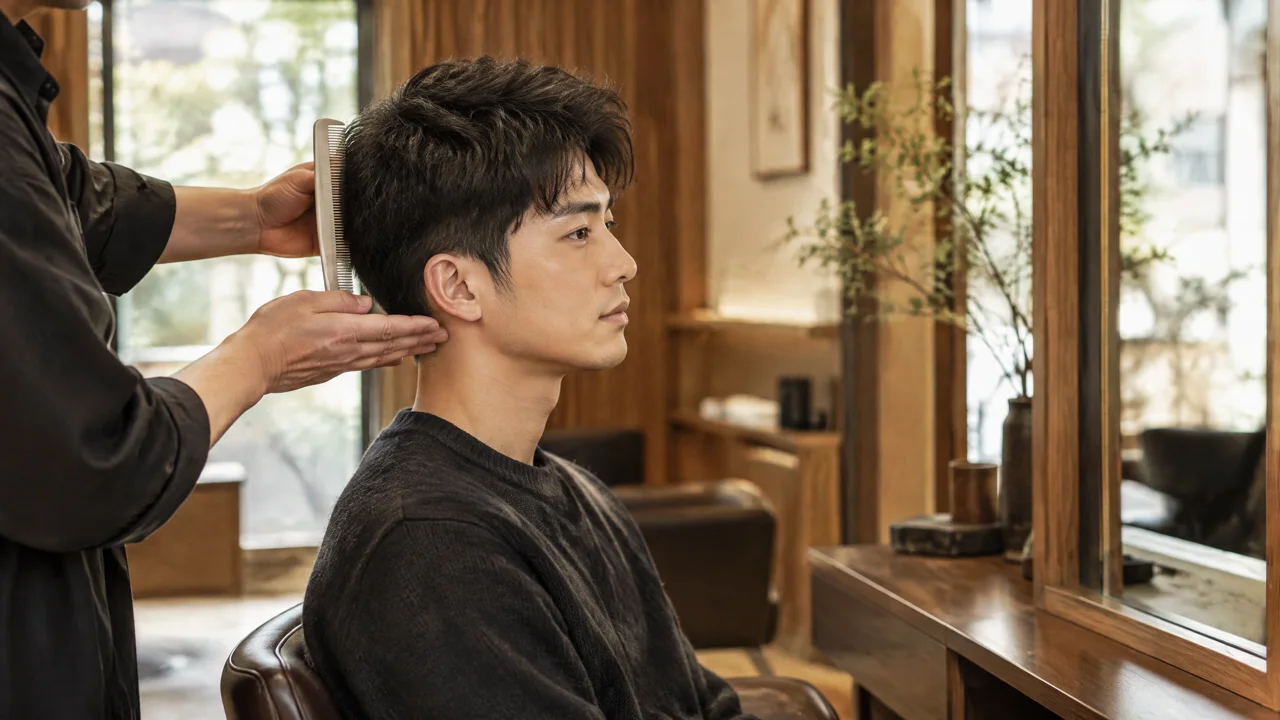
For a short haircut, discuss the ears, temples and neckline as separate landmarks. For longer hair, consider the sides and back as well as face-framing movement. These details make a consultation useful across different lengths without claiming that everyone needs the same routine. A sensible design must account for the shape you prefer and the practical habits you are prepared to change.
05
Compare the published work, not just the headline price
Vit So lists full-head, partial and Technical Perm entries, plus a named women's package. They are not simply levels from basic to advanced. Full-head and partial identify coverage, while Technical Perm is a menu name requiring explanation. That name alone does not establish a digital, hot or cold procedure. Ask about the intended method independently of the price label.
The listed full-head entry is HK$1,600 and the partial entry HK$900. Technical Perm is listed at HK$1,400. The women's wash, cut, blow-dry, full-head perm and hair-protection package is HK$1,880. These published figures describe different entries, not an individual quotation. Confirm the assessed work and included items before deciding which figure relates to your proposed visit.
The page also notes a HK$200 surcharge for hair extending below the chest. Ask which items it applies to rather than adding it to every service by assumption. If cutting is necessary to achieve the agreed shape, establish whether it sits within the chosen package or outside it. A lower headline figure is not a complete comparison when the included work differs.
Keep future colour plans in the conversation. Do not casually add another chemical service because you are already attending an appointment. It needs its own suitability discussion and an agreed scope. Likewise, ask what any protection step is intended to do and whether it is included. The clearest comparison is a written account of the work, exclusions and confirmed charge.
| Published entry | Listed price | Important clarification |
|---|---|---|
| Full-head perm | HK$1,600 | Agree on areas, placement and included work; do not assume cutting is included. |
| Partial perm | HK$900 | Identify the sections and confirm the proposed localised work is available. |
| Technical Perm | HK$1,400 | Ask what the name means for the procedure; it does not identify a hot, cold or digital method. |
| Women's wash, cut, blow-dry, full-head perm and hair-protection package | HK$1,880 | Confirm package contents, assessed charge and any applicable length surcharge. |
Compare the work you have agreed to, not the price of a service you have only imagined.
06
Turn your preferences into a consultation message
An effective first message has three parts: your present hair, the change you want and the limits that matter. Send clear current photographs from the front, sides and back, showing the ends and layers. Add your treatment history in plain language. Reference pictures are helpful alongside these details, but should not replace a view of the hair being considered.
Give a concrete description such as movement below the ears, less width beside the face or retaining enough dry length for tying back. State whether cutting is part of your request. If you have a fixed commitment afterwards, ask about the expected duration for the assessed work. Avoid building your day around a generic estimate for another method or another person's hair.
Vit So's published location is 252 Hollywood Road, Sheung Wan. An enquiry starts a discussion; it does not confirm an appointment or treatment suitability. Wait for confirmation of the date, arrival time, proposed scope and charge before travelling. If spoken English matters for the consultation, ask about communication arrangements in advance. An English webpage is not confirmation of English-speaking reception.
Before agreeing, summarise what you understand in your own words. Name the areas to be treated, the dry outline you want and any length you wish to preserve. Ask what might need revising after assessment. This gives both sides something specific to discuss if expectations differ. It is more useful than agreeing to a familiar style name while imagining different shapes.
- Photograph current dry hair from the front, sides and back, with the shortest layers and ends visible.
- List previous chemical work by area and approximate date, including older lightening beneath a darker colour.
- Describe the movement you want, the areas you want quieter and the dry length you need to retain.
- Ask for the proposed areas, procedure, included work, charge and communication arrangements before confirming.
07
Agree on care and separate styling concerns from symptoms
Before proceeding with a full head perm, include aftercare questions in the scope discussion rather than leaving them until you are rushing out. Vit So's page advises asking for first-wash instructions matched to the treatment used. Request guidance on your parting, front sections and drying routine. Do not substitute a universal waiting period taken from social media.
Gentle handling belongs in that routine. The American Academy of Dermatology's styling guidance supports limiting excessive heat and taking care with wet hair.[2] Detangling advice can differ for naturally strongly curled hair, so avoid a blanket rule that all wet hair must never be combed. Ask how to handle your texture and use the products and tools already available to you.
Excessive stinging or burning during perming is not something to endure for a better result. Tell the stylist immediately. The Academy advises immediate rinsing and dermatological advice if perm solution causes excessive stinging or burning.[1] Persistent scalp symptoms deserve medical advice, not another chemical appointment booked as a quick correction. These precautions do not predict how a particular curl will look or last.
If the issue is shape rather than symptoms, document it after your normal washing and drying routine. Explain whether the concern is extra width, the height where movement starts or a section that feels difficult to style. That description distinguishes an everyday handling question from a treatment concern. The useful endpoint is an understood plan, including its limits, rather than an assumed guarantee of perfect curls.
Sources and useful reading
Continue with hair and grooming
Continue with Canvas Texture’s male hair needs: Korean Men's Perm
Explore another related decision: Partial perm, short hair or long hair: place the curl
Read the lead stylist’s background: Vit So and the Canvas Texture studio
Discuss your men's hair priorities with Canvas Texture
For your own male hair needs, enquire about a Canvas Texture consultation. Bring current photographs, your treatment history and the shape you want to discuss, including the areas you prefer to keep straighter.
Canvas Texture · WhatsAppFrequently asked questions
Does full-head coverage mean curls must begin at the roots?
The coverage label alone does not establish where visible movement starts. Ask which areas are treated, how the proposed movement is placed and what the dry outline should look like. Do not infer identical root-to-tip curls from the name.
Is a partial perm automatically safer for previously coloured hair?
No. Fewer treated sections do not establish that those particular sections are suitable. Disclose colour, bleach, straightening and earlier perming by area. Assessment may lead to a revised scope, cutting discussion or postponement.
Does Technical Perm confirm a digital procedure?
No. It is a published menu name, not confirmation of a digital, hot or cold method. Ask what procedure is proposed, whether it is available and why it is appropriate for the assessed hair.
What should I confirm if I need spoken English?
Ask about consultation communication arrangements when enquiring, before confirming or travelling. An English service page does not establish English-speaking reception. Clear photographs and plain descriptions help, but should not replace arrangements you need to understand the proposed chemical work.
Related journal articles
Hair salon or hair stylist: what should you compare?
Choose the appointment around the change you need, not the most impressive title on the booking page.
Haircut, wash cut and blow dry: choosing the right family appointment
A family can share a journey to the salon without sharing the same haircut brief.

A layered haircut for busy days: choose what to keep
The most useful length is not always the longest strand; it is the shortest piece your routine still needs.

