Men's Hair System Hong Kong: Plan the Join to Your Own Hair
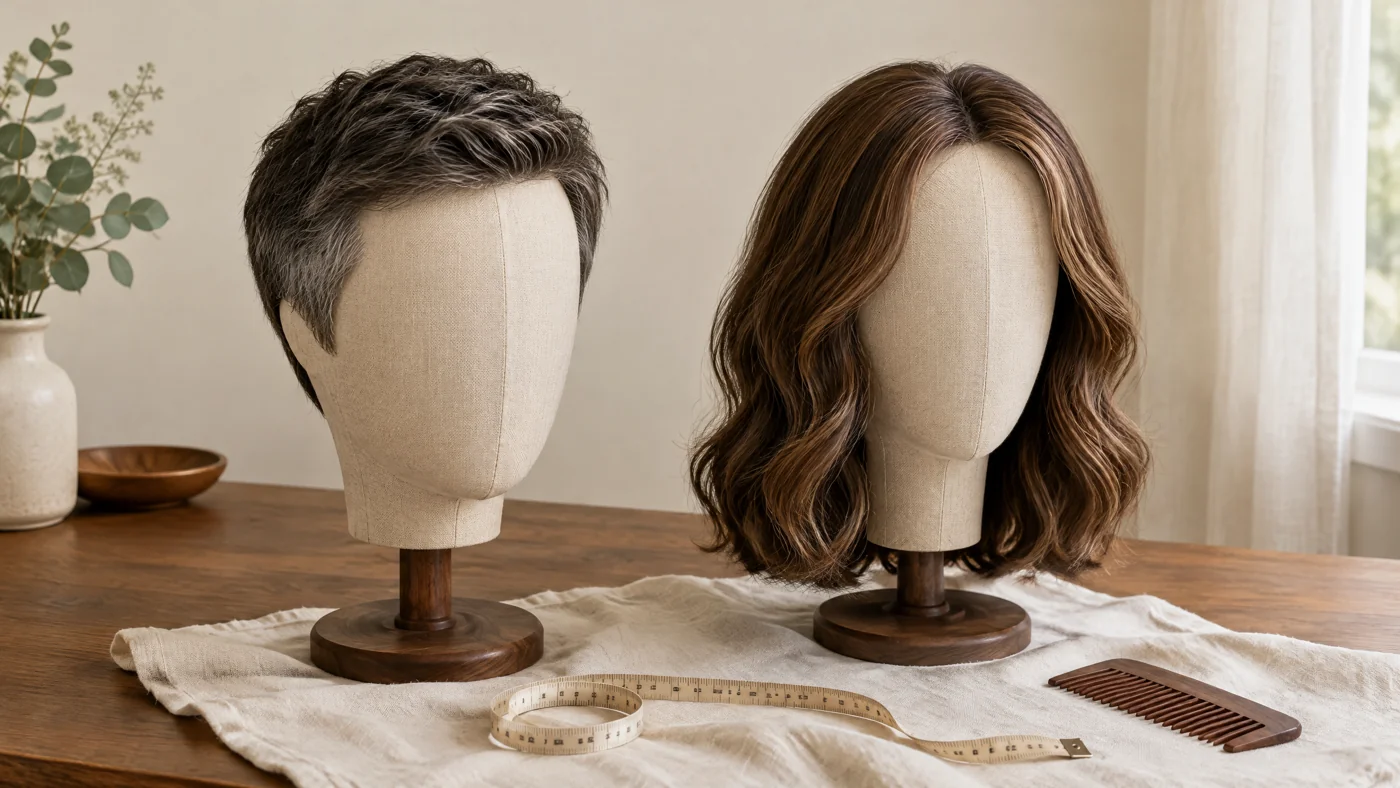
Plan a men's hair system around the hair you intend to keep, not just the coverage you want to add. The join is where the piece meets your own sides, temples or back. Length, colour, density and direction all affect that transition. A photograph of an attractive top cannot tell you whether its edges will work with your haircut. Start by identifying what must remain visible, what may be covered and what you are comfortable changing.
Treat coverage and medical assessment as separate decisions. A toupee or integration arrangement changes appearance; it does not establish why hair is thinning or promise regrowth. If hair loss concerns you, arrange an appropriate clinician's evaluation rather than relying on a fitting consultation. You can discuss cosmetic preferences alongside that process, but scalp discomfort or changing hair loss deserves its own attention. Retained hair is part of the design, not evidence that every attachment method will suit you.
Prepare for a consultation with ordinary photographs, your normal haircut routine and a realistic account of care time. The useful outcome is a written plan for both the added hair and your own hair. Ask where the join will sit, which areas a barber may cut and who handles removal or adjustment. Do not commit simply because the top looks convincing in one mirror. A workable choice must also make sense when you wash, move, visit your barber and change your style.
01
Define the coverage before choosing the label
Start with a simple sketch showing the area you want covered and the hair you wish to retain. Mark the temples, sideburns, crown and nape separately. A top piece meeting retained sides raises different questions from broader coverage extending towards the ears. Labels such as toupee and system can overlap between providers. Ask for an explanation of the actual construction and boundary, rather than assuming the service name specifies how much hair stays underneath or around it.
Keep a second note for health questions. The NHS advises speaking to a doctor about concerning hair loss before approaching a commercial hair clinic [1]. A stylist can discuss the appearance of the join, but cannot diagnose its cause from photographs or a cosmetic scalp observation. If your retained hair is changing, that may affect a future fitting as well as warrant medical assessment. Do not regard coverage as a reason to delay investigating new or worrying symptoms.
For connected-brand reading, DT HUB's toupee hong kong page introduces the men's hairpiece category. DT HUB and Canvas Texture share a website owner, so this is not an independent product review. Use the page to frame questions about coverage, then confirm the proposed piece and service directly with the provider. A category description cannot establish personal suitability, current availability or the quality of your particular join. Those details need an individual discussion rather than an assumption drawn from marketing photographs.
02
Read the transition from several angles
Assess the transition in ordinary lighting from the front, profile and back. Ask whether photographs are permitted, and keep any images private according to your preference. A strong top shape may still create an abrupt change above a thin temple. Conversely, a softer density can look less dramatic in a promotional image yet sit more comfortably beside retained hair. Compare the whole outline, not just the hairline. Look at where the added volume starts and whether your own hair can support that silhouette.
Colour matching involves more than choosing a dark or light shade. Note any grey at the temples, differences between the crown and sides, and whether your own hair has recently been coloured. Ask how the proposed match looks beside those areas without concealing them. Texture also matters: a straight top over wavy sides may require a deliberate haircut, not simply more styling product. Decide whether you want to preserve your existing variation or maintain a new, more uniform appearance over time.
Judge length and direction together. A longer top may overlap the boundary, but that creates a different styling commitment from an exposed short transition. Very short sides leave less hair available to soften a density change. Bring a picture of your current haircut as well as an aspirational one, and identify the differences. The table below is a discussion tool, not a verdict on which design is best. Its purpose is to show what each visual choice asks of the retained hair.
| Design priority | What to inspect | Trade-off to discuss |
|---|---|---|
| Exposed short sides | Density change above temples and ears | Less surrounding length to soften the boundary |
| Longer overlapping top | Hair direction and coverage when moved | More dependence on the agreed styling shape |
| Visible temple grey | Shade variation beside the added hair | Ongoing matching if either colour changes |
| Wavy retained sides | Texture transition without heavy styling | Possible compromise between reference style and everyday cut |
03
Understand what attachment asks of retained hair
An integration proposal needs a clear explanation of how your own hair participates. DT HUB's hair integration hong kong page is a starting point for that enquiry, not proof that a particular arrangement is appropriate. Ask which retained areas would support or pass through the proposed construction, and which would remain purely for blending. The presence of some hair does not settle that question. You need to understand the attachment, access for cleaning and the consequences of later changes in density.
Discuss removable and longer-wear arrangements in terms of responsibilities, not superiority. Ask who removes the piece, what training is needed and how you would obtain help if an edge lifts. If tape or adhesive is proposed, request product information, application instructions and advice about previous skin reactions. Do not assume a reassuring product label guarantees your skin will tolerate it. Any proposed preparation involving your own hair should be explained before you consent, including whether cutting or shaving changes your uncovered appearance.
Protect comfort rather than treating tightness as evidence of security. The American Academy of Dermatology warns that repeated pulling can cause hair loss, and pain or irritation from tight styles should not be ignored [2]. That principle matters when retained hair carries attachment or tension. Ask how a concern would be assessed and relieved without attempting improvised removal. Seek medical advice for persistent irritation or scalp symptoms. A cosmetic appointment cannot rule out an underlying condition or make an uncomfortable arrangement acceptable.
- Request a diagram of attachment areas and the visible blending boundary.
- Ask whether any retained hair must be cut, shaved or used for support.
- Identify who provides safe removal guidance and adjustment support.
- Request written cleaning instructions for the specific construction and products.
- Agree what to do if pulling, discomfort or a skin reaction develops.
Before asking how well a piece stays attached, ask what that attachment requires from the hair and skin beneath it.
04
Give your barber a map, not a guess
Your own sides continue to grow even when the added hair has been cut into a finished style. That can change the balance around the join between appointments. Agree a starting length and ask what visible changes should prompt a haircut or fitting review. Avoid accepting a universal schedule without discussing your normal growth and styling routine. The aim is not to preserve one photograph indefinitely, but to know which features need attention as the surrounding haircut evolves.
Create a barber note with areas that may be trimmed and areas needing the fitting provider's input. Include the intended sideburn shape, temple length and transition above the ears. Ask whether the system should be removed before an ordinary haircut and who can handle that safely. Do not let uncertainty turn into cutting through unfamiliar material or attachment points. Where two professionals are involved, request compatible written guidance and share it with your consent. Neither should have to infer the other's plan from appearance alone.
When reading the men's hair system hong kong service information, make retained-hair coordination a specific consultation question. Ask whether a proposed fitting includes a blending cut, whether later side trims are separate and who can alter the piece itself. Confirm those inclusions directly rather than treating a service heading as a package promise. Canvas Texture's role is men's own-hair styling; any discussion there should stay within that remit and respect instructions from the provider responsible for the system.
A successful haircut plan tells each professional what may change and what must be left alone.
05
Separate daily care from fitting maintenance
Divide upkeep into three tasks: caring for your own hair, caring for the piece and maintaining its attachment. They may involve different products and different people. Ask for a demonstration using the proposed construction, then explain the routine back in your own words. Clarify which steps you can perform and which require professional support. Material-specific instructions matter, especially for heat and cleaning. Do not transfer the habits used on your natural sides to unfamiliar fibres, a base or an attachment without checking compatibility.
Build the routine around actual activities. Discuss exercise, perspiration, showers, headwear and any swimming you intend to do. Ask what restrictions or additional checks apply to the proposed arrangement. A convincing dry fitting does not guarantee stability during every activity, and a stronger attachment is not automatically the right answer. If a provider cannot explain care for an important part of your week, keep that issue unresolved rather than filling the gap with an assumption about durability or water resistance.
Keep cosmetic maintenance distinct from treatment. Cleaning, trimming and reattachment do not establish scalp health or stimulate growth. Record discomfort, unusual shedding or skin changes for discussion with an appropriate clinician, rather than diagnosing them from the join. Do not respond to irritation by adding more product or tightening the arrangement yourself. Ask the fitting provider for prompt support with attachment problems and seek healthcare advice when symptoms warrant it. Neither a neat finish nor a maintenance visit replaces medical assessment.
06
Put the continuing commitment in writing
Compare the continuing commitment, not simply the initial purchase. Request an itemised quotation separating the piece, fitting, retained-hair blending, care products, adjustment and any later removal service. Ask which items are optional and which the proposed arrangement requires. Avoid guessing future costs from another person's needs or a general website range. Even without a fixed replacement date, you can ask what signs lead to repair or replacement, how that decision is discussed and whether those services would be quoted separately.
The appointment worksheet below serves a different purpose from the visual comparison table. It turns unresolved questions into written decisions before you authorise work. Fill it in with the provider rather than treating it as a product specification you must choose alone. Pay particular attention to any preparation that changes your uncovered haircut. Ask about amendments, cancellation and what happens if a fitting does not meet the agreed description. Do not assume custom work carries an unconditional return right or automatic refund.
Consider time as well as money. Who can provide care when your usual professional is unavailable? What happens if you need an earlier adjustment or cannot attend a planned appointment? Request a practical contact route and instructions for foreseeable problems, without assuming emergency cover is offered. Also ask how a change in your own hair would affect the existing piece. Written responsibilities are more useful than a promised lifespan because they help you navigate the ordinary changes that wearing and grooming may bring.
| Question to resolve | Record before agreeing | Why it matters |
|---|---|---|
| Where does the join sit? | Annotated coverage and retained-hair diagram | Keeps the fitting and haircut aligned |
| What happens to my own hair? | Any planned cutting, shaving or support areas | Makes preparation an informed choice |
| Who handles each care task? | Home steps and professional-only tasks | Avoids unsafe improvisation or duplicated work |
| What does the quotation include? | Separate fitting, care and adjustment items | Distinguishes purchase from continuing expenditure |
| What if the plan changes? | Amendment, cancellation and problem-reporting terms | Sets expectations without assuming refund rights |
07
Test the plan against an ordinary week
Illustrative scenario: a man keeps a close fade and wants a fuller textured top. His first decision is whether to retain that exposed transition or allow more length around it. During discussion, he compares the outline from the side and asks which boundary areas his barber can trim. He does not assume that greater top density will improve the blend. If the preferred reference image depends on fuller temples than he currently has, he explores a different silhouette instead of accepting an unexplained mismatch.
Illustrative scenario: another man has wavy sides, visible grey and a routine involving regular exercise. His priorities differ even if the coverage area looks similar. He asks to compare texture and colour beside his actual retained hair, then requests care guidance for his activities. He may prefer a less ambitious style if its upkeep is clearer. This is a hypothetical decision process, not a client outcome. Neither example establishes that a specific product, attachment or provider will deliver the intended appearance.
Finish with an exit and review plan. Ask what your own haircut would look like without the piece and what support removal would require. Decide how you will judge the arrangement: comfort, a manageable routine and a transition you accept from several angles. If the answers remain unclear, postpone commitment or keep an own-hair style while you gather information. Added coverage is optional. It is not a transplant, a promise of permanent hair or a substitute for investigating the cause of hair loss.
Sources and useful reading
Continue with hair and grooming
If your question concerns styling your own men’s hair, continue with: Perm for Thin Hair Men HK
Read a related decision guide: Hair Topper Hong Kong: Compare Parting and Visible Hairline
Read our men’s styling background: Vit So and the Canvas Texture studio
Discuss the haircut for your own retained hair
Contact Canvas Texture for a men's own-hair styling consultation. Bring your current haircut photographs and any written instructions from your hair system provider to discuss the retained sides, temples and back within an own-hair styling plan. Canvas Texture does not offer wig sales, medical assessment or booking on behalf of DT HUB through this consultation.
Canvas Texture · WhatsAppFrequently asked questions
Do I have to shave my retained side hair for a men's hair system?
Do not assume so either way. Preparation depends on the proposed construction and attachment. Request a diagram showing any cutting or shaving before consenting, including how those changes would look without the piece.
Can I keep a very short fade beside a toupee?
Discuss the actual transition at the temples, ears and back. Short sides leave less length for blending, so density and boundary placement become important. Ask to evaluate the whole silhouette rather than expecting a reference photograph to transfer unchanged.
Does hair integration treat the reason my hair is thinning?
No. Integration is a cosmetic coverage arrangement, not a diagnosis or a growth guarantee. Seek an appropriate clinician's assessment for concerning hair loss, and discuss suitability separately from appearance and fitting.
How often will I need maintenance or a side trim?
There is no universal interval to adopt here. Ask for guidance based on the proposed attachment, care routine and retained-hair growth. Clarify which changes need a barber, which need the fitting provider and how additional visits are charged.
Can Canvas Texture supply or book my DT HUB hair system?
This article does not offer that service. Canvas Texture provides men's own-hair styling. Enquire directly with the relevant system provider about fitting or supply; the shared website ownership does not make Canvas Texture a booking agent or medical provider.
Related journal articles
Men’s Hairpieces or a Perm? Compare Coverage and Shape
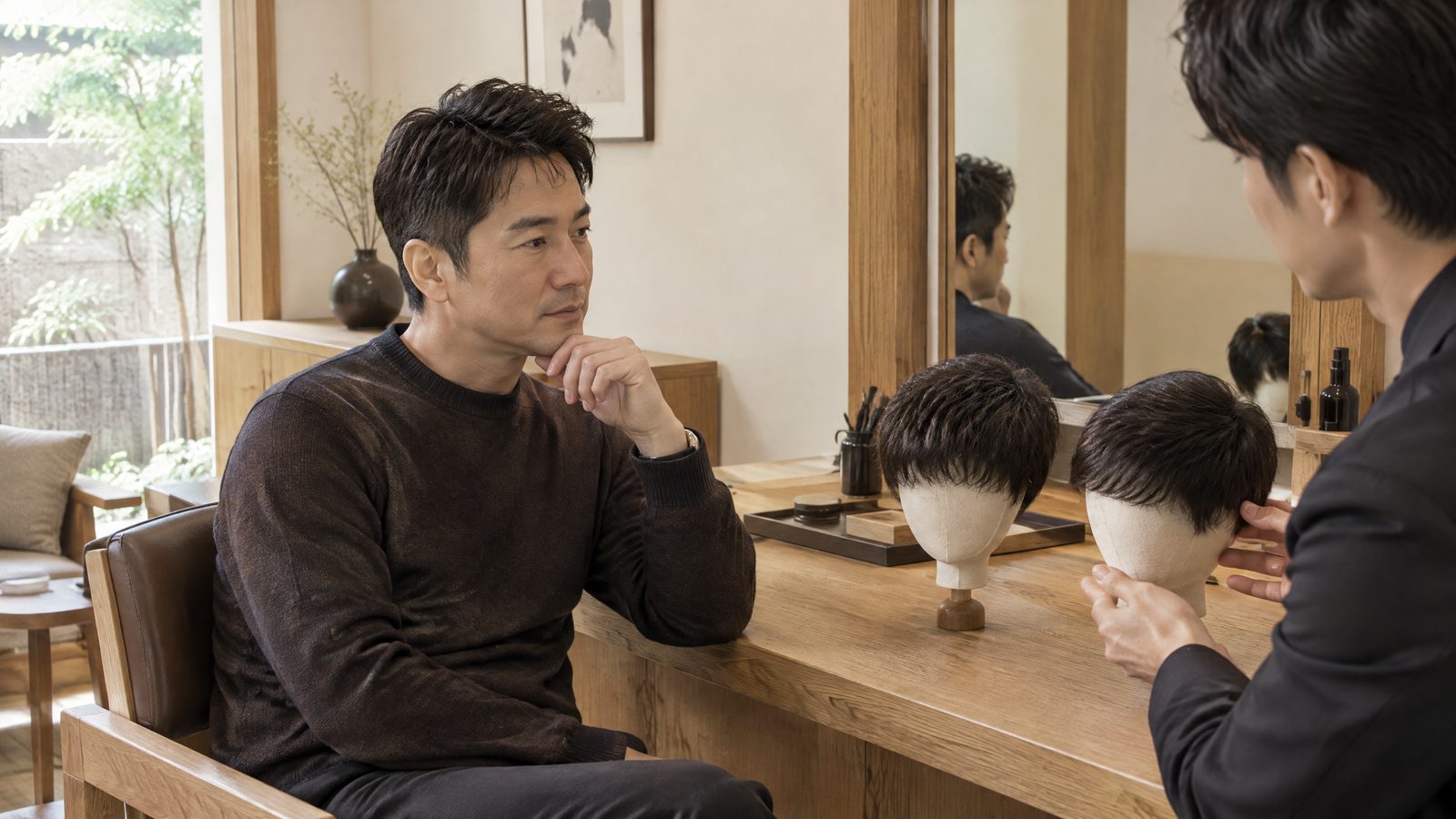
Choose a perm when enough existing hair remains and movement is the main goal. Choose a hairpiece when a defined area needs cosmetic coverage. Neither option decides the best outline by itself. First identify the visible area, surrounding density, preferred parting, and morning routine. Those observations prevent a product label from making the decision too early. Compare those details before making any booking.
Natural Hairline Wigs: A Guide to Fringe and Forehead
Natural hairline wigs look most convincing when the front edge, fit, colour, density, and haircut agree. For a hypothetical four-day workweek side part, inspect both temples under two ordinary light sources before choosing a construction. The aim is a coherent outline in movement. No single feature can decide that outcome. Check the whole frame, not only the centre. Check it while turning your head.
Human Hair or Synthetic Wigs? Texture and Care Choices
Choose human hair when approved styling flexibility matters. Choose synthetic fibre when a preset shape and simpler mornings matter more. Neither label settles the result alone. Texture, density, cap construction, attachment, and fit shape how a wig looks and feels. Start with the routine you can maintain, then check the exact model’s instructions. That order avoids paying for flexibility you will not use