Bob Wigs or a Pixie: Compare Fringe and Proportions
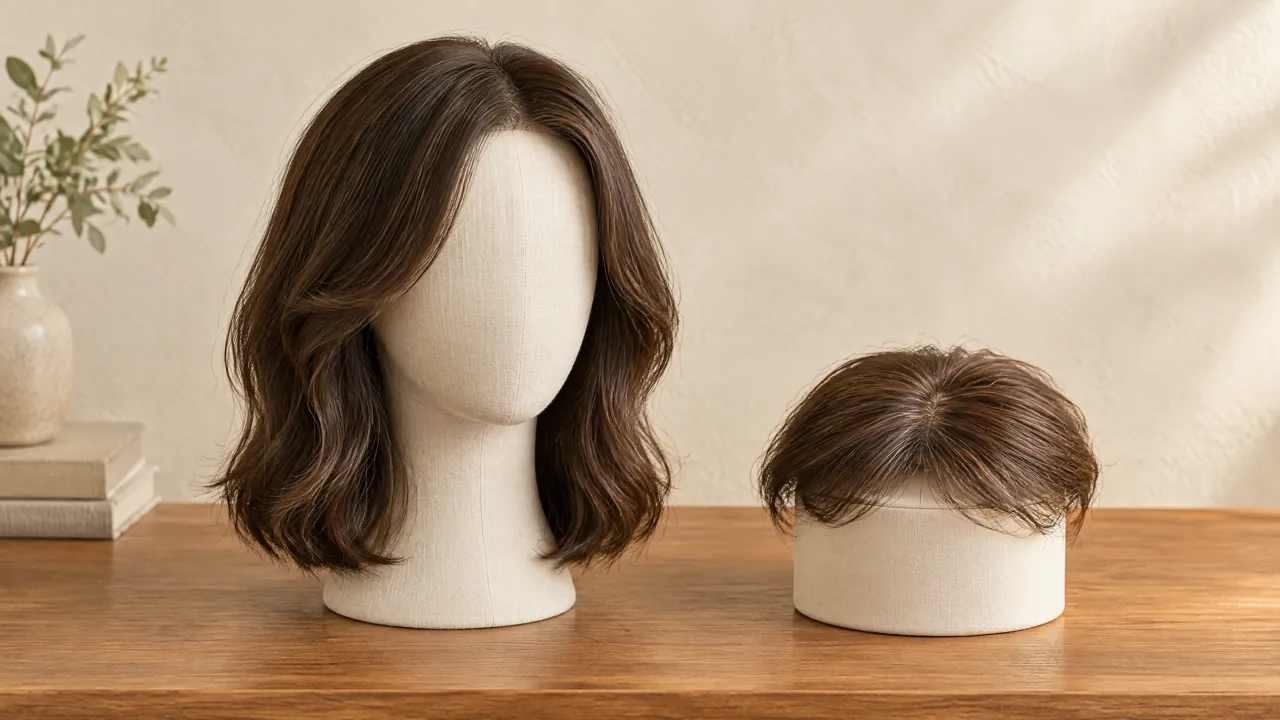
Choose a bob when you want a more continuous outline around the cheeks and jaw; choose a pixie when you prefer shorter sides and a more exposed neckline. A fringe is a separate decision, not a guarantee that either cut will suit you. Compare where the hair ends, how much forehead remains visible and how the whole shape behaves before choosing from a front-facing photograph.
The relevant style pages distinguish bob length and texture, short layered pixie shapes, and full-wig fringe options. Those categories help organise a shortlist, but they do not establish the construction or capabilities of every individual piece. Check the actual material, cap details, side length and fringe position. A similar-looking photograph can represent a different cut, while the same cut can appear quite different on another wearer.
Start with one familiar photograph and one practical requirement, such as wearing glasses comfortably or keeping the ears visible. This works whether you are choosing for yourself or helping a relative, and it connects naturally with the hair-outline decisions familiar to Canvas Texture readers. OwnStrand is a related brand under the same ownership as Canvas Texture; the linked reading below is not an independent endorsement or a substitute for checking individual products.
01
1. Set the outline before choosing the fringe
Begin by separating three visible boundaries: the forehead opening, the side perimeter and the neckline. Mark these on your reference photograph rather than describing the whole style as simply short. You might like a low fringe but dislike hair touching your cheeks. Alternatively, you may want your forehead open while keeping length around your jaw. Naming those preferences prevents a fringe from distracting you from the rest of the cut.
The category guide to bob wigs offers a starting point for comparing length, cut and texture. Use it to identify the outline you mean, rather than treating every bob as one interchangeable style. Ask where a particular option finishes at the front and back. A jaw-skimming front and a shorter nape create a different practical choice from a more level perimeter.
For visual comparison, keep the camera height and your head position consistent. Take front, three-quarter and side views, with your usual glasses if relevant. Avoid judging one option from a close selfie and another from a distant catalogue image: perspective changes the apparent forehead and cheek proportions. Include the shoulders in at least one photograph so you can see whether the hair looks balanced beyond the face.
Set one non-negotiable boundary and one flexible preference before comparing styles. Your boundary might be keeping the fringe clear of your lenses; your flexible preference might be a little more or less crown volume. The table below separates outline priorities from style labels. It is a decision aid, not a promise that any named cut will provide those features without an individual check.
| Your priority | A direction to compare | What to inspect | Main trade-off |
|---|---|---|---|
| Keep some framing beside the jaw | A longer bob perimeter | Front endpoints in a side view | More contact with cheeks or collars |
| Show the ears and neckline | Short sides and a pixie outline | Temple coverage and nape position | Less surrounding length to disguise an unwanted edge |
| Reduce forehead exposure | A forward or side-swept fringe | Coverage at rest and during movement | Potential contact with glasses or brows |
| Keep the face relatively open | A lighter or swept-away front | How the front settles without repeated adjustment | More visible forehead and front construction |
02
2. Judge a fringe by position, density and movement
Describe fringe length against a visible landmark, such as above the brows or sweeping towards the cheekbone. Ask to see the hair resting naturally rather than held in position for a photograph. A fringe that looks manageable when arranged carefully may need frequent attention during ordinary movement. Your useful question is not whether the fringe is fashionable, but whether its resting position suits how you use your face.
A straight fringe makes a clearer horizontal boundary; a side sweep creates a more diagonal opening. Neither automatically makes a face smaller or younger. Compare the amount of forehead you want visible and whether you mind hair moving across one eye. A lighter fringe can leave more gaps, while a denser one can feel visually heavier. Judge the actual piece rather than relying on those descriptions alone.
If you wear spectacles, bring the pair you use most often. Put them on and take them off without rearranging the fringe first, then look down as though reading a message. Check whether strands catch on the frame or repeatedly fall into your sightline. Do not assume a fringe will always conceal the front edge: movement and the construction of the individual wig still matter.
Treat fringe trimming as a separate decision from selecting the original shape. Before any cutting, confirm who can assess the particular material and what alteration would affect the transaction terms. Shortening removes options, and the cut fibres will not grow back. If you are uncertain between two lengths, compare an unaltered longer option first rather than expecting a very short fringe to be easily reversed.
A useful fringe is one that settles into your day, not just into a photograph.
03
3. Compare cheek, jaw and neckline proportions together
Face-shape charts can supply vocabulary, but they should not decide the purchase. Look instead at where the perimeter intersects your own features. Hair ending near the fullest part of a cheek gives a different impression from hair continuing below it. Compare both without assuming either is wrong. Your preferred outline may emphasise a feature rather than conceal it, especially if it matches a familiar hairstyle.
Inspect crown volume in profile, not just from the front. A fuller top can balance very short sides, but it can also create more height than you want. Ask whether the photographed volume belongs to the cut, to styling or to a display arrangement. If the daily result needs styling, establish whether that routine is suitable for the specific material before treating the photograph as your likely everyday appearance.
A static mirror check cannot show every perimeter problem. Turn your head slowly, look down and return upright. Notice whether the sides return to a position you like or need repeated smoothing. With a bob, watch the ends around the chin and collar. With a very short shape, watch the temples and nape. Movement is a comparison test, not a reason to expect every strand to stay fixed.
Include clothing in the decision if your usual collar affects the outline. A high neckline can meet a bob differently from an open-neck shirt, while short nape hair leaves the neckline more exposed. Bring or wear a representative garment where practical. This is also useful when discussing an own-hair cut: a hairstyle belongs to the whole daily presentation, not to a cropped headshot alone.

04
4. Choose a pixie for its exposed details, not just its length
The guide to pixie wigs describes short, layered and textured directions for everyday styling. Those are useful distinctions because a softly layered top and a strongly textured outline need not give the same impression. Compare the relationship between crown height, temple coverage and nape length. Do not choose solely because the overall label sounds shorter or easier than a bob.
Short sides make the areas around the ears more visible. During any permitted fitting, inspect how the side sections sit with your ears and spectacle arms rather than forcing them into a preferred position. Check the nape from behind as well. If you dislike one exposed area, ask about a different cut or fit; extra crown texture will not necessarily resolve a perimeter issue lower down.
Decide how much deliberate texture you actually want. A softly settled top may fit a restrained wardrobe, while more separation can make the outline look livelier. Neither requires a particular age or personality. Ask what the example photograph involved and whether the suggested products are approved for the actual fibres. A textured image is not evidence that an unfamiliar styling wax will be appropriate for every wig.
Material changes the routine behind a similar-looking cut. Cancer Research UK explains that synthetic hair commonly has a preset style and that heat use must follow manufacturer guidance; human hair is a different option.[1] Ask whether the specific piece permits your intended styling method. Shortness alone does not establish heat resistance, washing instructions or how easily the pictured volume can be recreated at home.
05
5. Test the daily routine separately from the silhouette
An attractive outline does not establish a comfortable fit. Ask about the individual cap, adjustment method and compatibility with any remaining hair. A tighter setting is not automatically a better answer to movement. During an agreed fitting, distinguish visual dissatisfaction from pressure or rubbing. Record where a problem occurs, so the discussion can focus on fit rather than repeatedly changing the fringe to distract from discomfort.
Avoid tightly pulling your own hair back merely to make a short outline appear smoother. The American Academy of Dermatology warns that sustained traction can damage hair, and that pain or irritation should not be ignored.[2] This does not identify any particular wig attachment as unsafe. It means that painful tension is a reason to stop and seek appropriate assessment, not proof that you need to tolerate a settling-in period.
Ask for the care instructions that belong to the exact piece you are considering. Establish the recommended washing approach, drying method and suitable products, rather than borrowing a routine from an unrelated style online. Separate time spent arranging the fringe from time spent maintaining the whole wig. An option that looks simple in the morning may still carry a care routine you would prefer not to manage.
Use the second table to test practical constraints after the visual shortlist is complete. Its purpose is different from the outline table: it identifies unresolved routine questions that could change your decision. If a necessary instruction is unavailable, leave that comparison open. Guessing about heat, care or attachment to keep a favourite style in contention is less useful than asking for a clear product-specific answer.
| Daily situation | Check to make | Detail to confirm | Decision if unresolved |
|---|---|---|---|
| Frequent glasses use | Look down and remove the frames | Fringe position and side interaction | Compare a clearer front or different side length |
| Limited styling time | Inspect the naturally settled shape | Steps needed to recreate the shown finish | Prefer a finish with a manageable confirmed routine |
| Planned heat styling | Read the instructions for the exact piece | Whether the intended tool and method are permitted | Do not use heat without confirmation |
| Remaining hair beneath the cap | Discuss preparation without painful tension | Suitable fit and adjustment | Pause if pressure or traction cannot be resolved |
06
6. Make the comparison specific before discussing a purchase
Build a comparison around identifiable options rather than screenshots without details. Keep the model reference beside the photographs and note what is still unknown. Category descriptions do not verify current availability, grey blending, custom alterations or cap specifications. If any of those features matters to your choice, ask about it explicitly. The aim is to compare two understood options, not two appealing images with different missing information.
Ask what a written quotation includes, such as the identified piece, any agreed cutting and the care items you are considering. Confirm alteration and return terms before authorising changes, without assuming that every purchase permits an unconditional return. If a custom option is proposed, ask which measurements and design decisions will be confirmed. Do not transfer the timetable or characteristics of one custom process to another product.
Compare one major difference at a time wherever possible. If both the colour and fringe change, it becomes harder to tell why you prefer the second option. Start with similar colours and compare the perimeter, then reconsider the fringe or shade. If matching options are unavailable, name the limitation in your notes. You can still make a thoughtful decision without pretending that the comparison is perfectly controlled.
When helping a relative, ask what they want to recognise in the mirror before suggesting a fashionable alternative. An older photograph may reveal a familiar side sweep or open neckline that matters more than the broad style category. Let them reject a technically tidy option if it does not feel like their preferred presentation. Practical support means organising questions and observations, not treating your own favourite silhouette as the correct answer.
- Save an identifiable reference for each shortlisted option, alongside its front and side views.
- Write one required outline feature and one preference you are willing to compromise on.
- Ask for product-specific material, care and alteration information before making assumptions.
- Record a reason to decline each option as well as a reason to choose it.
A good shortlist explains what you would give up, not only what you hope to gain.
07
7. Turn the shortlist into a clear, usable style brief
The full-wig guide to wigs with bangs brings fringe choices across bob, pixie and side-swept looks into one comparison. Use that perspective once the perimeter is clearer: the fringe is a feature within the whole style, not a separate promise of suitability. Confirm the details and current availability of the particular option rather than reading the category page as a stock list.
If an in-person comparison is needed, confirm the arrangements before travelling to OwnStrand's sole showroom in Kwun Tong. The visit should answer unresolved questions about the actual options, not simply repeat online browsing. Bring the reference photograph, your routine notes and the relevant glasses or clothing. Ask which comparisons can be made during the appointment and avoid assuming that every listed style will be there to try.
In an illustrative scenario, a shopper likes both a jaw-length outline and a short textured cut but needs an unobstructed view through glasses. The first decision is whether either fringe clears the frames naturally. Next comes tolerance for cheek or nape exposure, followed by the confirmed care routine. This order can rule out an appealing photograph without invoking rigid face-shape rules or claims that one style suits everybody.
Finish with a short brief: your preferred side and nape length, fringe landmark, acceptable volume and daily constraint. Add any outstanding question that must be answered before purchasing. Readers considering changes to their own hair can use the same outline vocabulary in a styling discussion, while keeping wig construction and fitting questions with the relevant provider. The result should be a reasoned choice, not a search for a universally flattering label.
Sources and useful reading
Continue with hair and grooming
If your question concerns styling your own men’s hair, continue with: Korean Men's Perm
Compare a related selection decision: Hair topper vs wig: decide where coverage should stop
Read our male-hair styling background: Vit So and the Canvas Texture studio
Discuss your own-hair outline with Canvas Texture
For a men's haircut or styling discussion using your own hair, bring your reference photograph to a Canvas Texture consultation. Describe the fringe position, side coverage and neckline you prefer, so the conversation can focus on a practical everyday outline.
Canvas Texture · WhatsAppFrequently asked questions
Does a round face rule out a short pixie shape?
No. A face-shape label cannot account for your preferred forehead opening, crown height, temple coverage or neckline. Compare front and side views of the actual option. Decide which features you want to show rather than assuming a short cut must conceal them.
Can a fringe always hide the front edge of a full wig?
No. Coverage depends on the particular fringe, front construction and how the hair moves. Check the resting position and ordinary head movement during any agreed fitting. A catalogue image with the fringe carefully arranged does not establish how the edge will appear throughout the day.
Is a shorter wig necessarily easier to maintain?
Not necessarily. Length is only one factor; the material, intended finish and individual care instructions also matter. Ask how the shown shape is recreated and what washing, drying and product use the manufacturer permits. Do not infer heat resistance from a short or textured appearance.
What should I prepare when helping a family member choose?
Bring a photograph they like, their usual glasses and a short list of everyday constraints. Ask which features make the style feel familiar to them. Help record product details and unresolved questions, while leaving the final preference with the person who will wear it.
Related journal articles
Men’s Hairpieces or a Perm? Compare Coverage and Shape
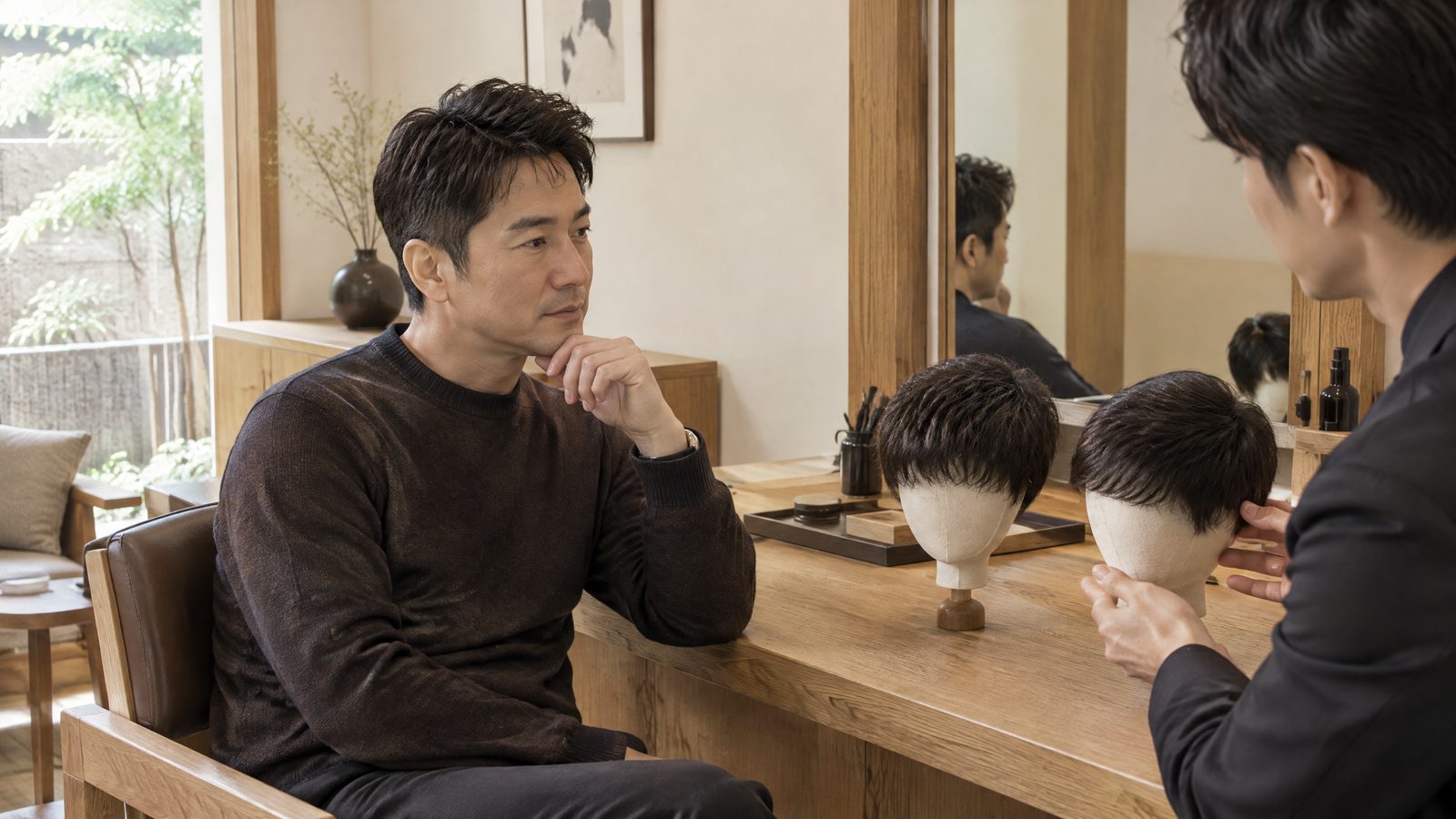
Choose a perm when enough existing hair remains and movement is the main goal. Choose a hairpiece when a defined area needs cosmetic coverage. Neither option decides the best outline by itself. First identify the visible area, surrounding density, preferred parting, and morning routine. Those observations prevent a product label from making the decision too early. Compare those details before making any booking.
Natural Hairline Wigs: A Guide to Fringe and Forehead
Natural hairline wigs look most convincing when the front edge, fit, colour, density, and haircut agree. For a hypothetical four-day workweek side part, inspect both temples under two ordinary light sources before choosing a construction. The aim is a coherent outline in movement. No single feature can decide that outcome. Check the whole frame, not only the centre. Check it while turning your head.
Human Hair or Synthetic Wigs? Texture and Care Choices
Choose human hair when approved styling flexibility matters. Choose synthetic fibre when a preset shape and simpler mornings matter more. Neither label settles the result alone. Texture, density, cap construction, attachment, and fit shape how a wig looks and feels. Start with the routine you can maintain, then check the exact model’s instructions. That order avoids paying for flexibility you will not use