Silk Top Wig Choices: Compare Parting and Glueless Fit
A silk-top construction concerns the appearance of the top and parting; an adhesive-free design concerns how the cap stays in place. Neither label alone tells you whether the front hairline or overall haircut will suit you. Start by separating these questions, then assess how the features work together on the particular model. A convincing part cannot compensate for a shifting cap, and a secure fit does not automatically create the outline you want.
The useful shopping factors are the position and extent of the parting area, the front-edge construction, the adjustment system and the shape after styling. OwnStrand's construction guides describe categories rather than confirming identical specifications across every style. Ask to see the relevant areas of the actual model, including its underside. If the model cannot be examined, request clear photographs and written details instead of treating a category name as a complete specification.
For readers interested in men's hair styling, the practical bridge is silhouette: crown height, temple width, fringe direction and the relationship between the hair and face. These familiar details can guide a wig comparison without turning it into a choice between perming and coverage. You might be researching for yourself or helping a relative. Either way, agree whose preferences matter before comparing materials, and leave room for the person wearing it to reject an otherwise tidy-looking option.
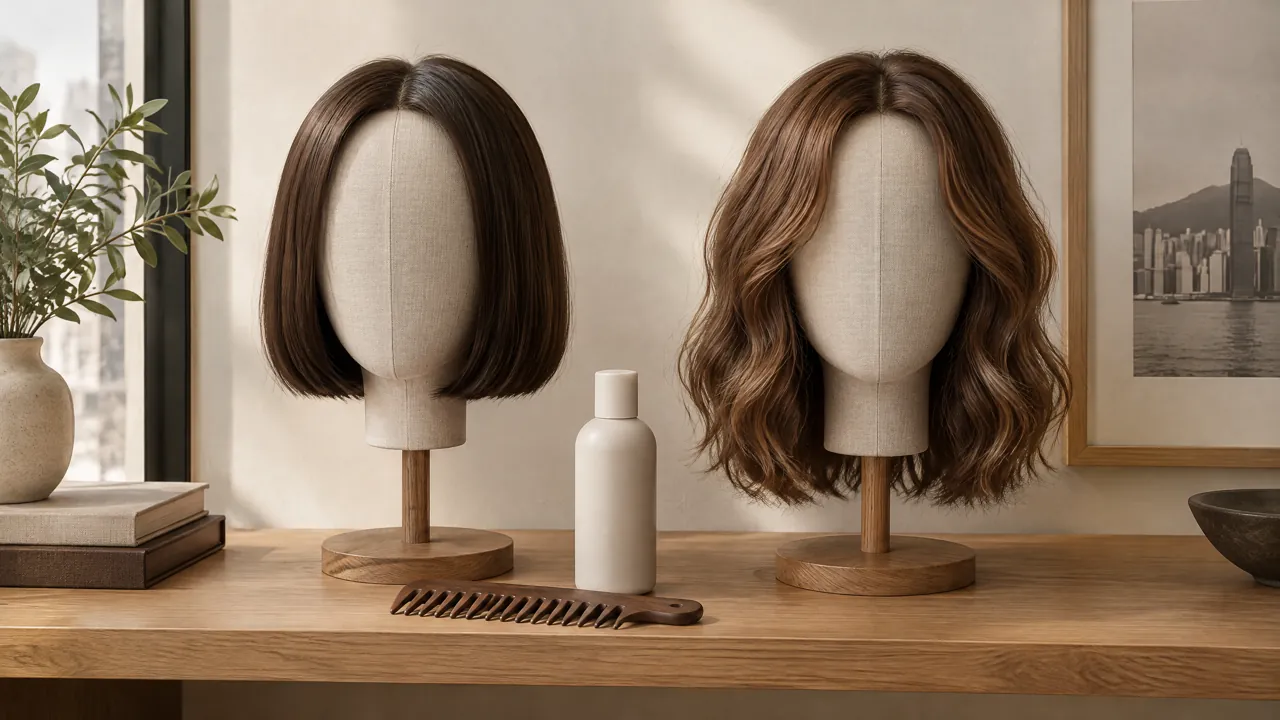
01
1. Separate the top, front edge and attachment system
Think of a cap description as three separate answers rather than one quality grade. The top influences what you see around the part. The front edge influences how the hairline appears when the fringe moves away. The attachment system influences placement and security. A model may combine features from several categories, so finding one attractive detail should lead to questions about the other two, not assumptions that the whole cap offers the same benefit.
Start with OwnStrand's silk top wig guide when your main concern is the parting. Ask which area uses that construction and whether the advertised style allows your preferred part position. OwnStrand is a related brand under the same ownership as Canvas Texture, not an independent recommendation. Its guide is a starting point for questions; the category page does not establish every model's construction, availability or suitability for your head shape.
Request an underside view alongside the finished hairstyle. Identify where the described top area stops, what surrounds it and where adjustable components sit. Then ask which details belong to the specific model rather than to an example photograph. If you intend to change the part regularly, explain that before ordering. A style photographed with one part does not prove that another position will expose an equally convincing surface or that the hair can be redirected easily.
02
2. Compare the part under conditions you will actually use
Choose one part position as the starting point and keep it consistent between comparisons. Look at the visible line, the transition into surrounding hair and the height immediately beside it. An unusually flat part with a bulky crown can feel unfamiliar even when the scalp effect looks neat. Compare the outline from a normal conversational distance as well as close up; these views answer different questions, and neither should replace the other.
Lighting changes what you notice, so avoid judging from one polished photograph alone. Where possible, examine the same style near a window and under ordinary indoor lighting, without relying on a smoothing filter. Check whether the visible top appears markedly different from nearby exposed skin. There is no universal shade that suits everyone. Ask what colour options or adjustments, if any, are available for that model rather than assuming a pictured base can be altered.
Use the table to record observations, not to declare one construction universally superior. If you need a pronounced side part, note the usable area and the position you tested. If you usually wear a loose fringe, some parting detail may be less visible, making movement and crown balance more important. The right compromise depends on what people will actually see in your chosen hairstyle, not on how many technical features appear in the description.
| View or action | What to compare | What it cannot establish |
|---|---|---|
| Preferred part, viewed close up | Visible line, colour relationship and transition into hair | Whole-cap comfort or security |
| Front and side views at conversational distance | Crown height, temple width and face framing | Construction hidden beneath the hair |
| Same style in window and indoor light | Whether the part remains visually acceptable | Performance in every lighting condition |
| Move the part only within the stated usable area | Whether the alternative position works | Unlimited parting freedom |
03
3. Decide how much of the front hairline needs to show
The front deserves its own test because a good-looking part and a good-looking hairline are different achievements. Consider what happens when you turn your head, tuck hair behind an ear or brush the fringe back. A forward fringe may conceal much of the edge while a swept-back style exposes it. Begin with your intended everyday movement, not a display hairstyle that you would rarely maintain outside an appointment or photograph.
Read the lace front wig guide to understand the front-hairline category, then ask where that construction begins and ends on the model being discussed. Do not infer the attachment method from the front material alone. Also confirm whether any trimming or preparation is required and who should perform it. An attractive frontal photograph cannot show the entire edge, the underside or the consequences of making an irreversible cut.
Try your preferred fringe direction before deciding that maximum exposure is necessary. A slightly softer front outline may fit your usual style better than a sharply defined, fully exposed edge. On the other hand, hiding a feature you specifically wanted to show is not a satisfactory solution. Compare two realistic versions of the haircut and ask which can be maintained within the model's stated styling limits, rather than choosing solely from the most elaborate demonstration.
A hairline should be judged in the movements you make, not only in the pose a photograph holds.

04
4. Test adhesive-free security without chasing tightness
Adhesive-free wear still needs a reliable fit, but security is not the same as maximum pressure. Ask which components the actual cap uses and how each is meant to be adjusted. Straps, grips or clips should be discussed only where present, not assumed from the category label. Find out whether the proposed setup depends on retained hair, an additional accessory or a particular placement. These details matter more than a broad promise that fitting is simple.
The glueless wig guide is useful for framing questions about wearing without glue. Ask the supplier to demonstrate the recommended setup for the selected model and explain what to do if it shifts. Do not tighten everything at once: change one permitted adjustment, then reassess placement and comfort. Otherwise you may conceal a sizing mismatch with pressure, or lose track of which component improved stability and which introduced discomfort.
During an agreed fitting, turn your head, look down and speak normally while checking whether the cap moves. Keep this separate from strenuous activity, swimming or sleeping, which require model-specific guidance and cannot be approved by a brief movement check. The American Academy of Dermatology warns that continuing tension on hair can cause damage and that pain or stinging should not be ignored.[1] Do not accept pulling on retained hair as proof of a secure installation.
05
5. Preserve the familiar outline without overworking retained hair
Bring photographs that show the shape you actually liked, preferably from the front, side and a slightly raised angle. Cancer Research UK suggests using photographs of a familiar hairstyle when considering wigs.[2] Its guidance is written in a cancer-support context, but the visual comparison is useful without implying a medical need. Pick out two or three details to preserve, such as a narrow temple outline or a modest crown, rather than trying to reproduce every strand.
If you have retained hair, tell the fitter how you normally arrange it beneath or around the proposed coverage. A full wig and a partial topper are different products, and neither should be treated as interchangeable without checking the coverage area. Avoid compressing or tightly pulling your own hair merely to make the outer shape look smaller. A tidier photograph is not a sufficient trade-off if the underlying arrangement feels uncomfortable or cannot be repeated gently.
Material and construction need separate decisions here too. Cancer Research UK distinguishes synthetic, human-hair and blended options, noting that synthetic styles may have a preset shape and that heat use depends on manufacturer guidance.[2] Ask how the chosen model's outline is restored after ordinary wear and cleaning. Do not assume that a silk-style top identifies the hair fibre, or that human hair removes maintenance demands. Choose a routine you can sustain, not just an appealing first-day finish.
A familiar silhouette is useful only when the routine beneath it is repeatable and comfortable.
06
6. Use a repeatable comparison rather than a rushed mirror verdict
Set up a small comparison sheet before an appointment or remote enquiry. Record the model identifier, your desired part, preferred fringe direction and the supplied fitting instructions. Compare one variable at a time: first the top appearance, then the front edge, then the wearing system. If every model has a different haircut and colour, you may mistake styling differences for construction advantages. Ask whether comparable examples or clearer photographs can help separate those effects.
The second table gives each stage a different stopping rule. It is a decision process, not a ranking of products. A style that looks right can remain undecided until you understand the fit; a comfortable cap can still be rejected if it cannot support the outline you want. Keep an unresolved question visible rather than converting it into a guessed answer. If no sample is available, state which checks remain untested and ask about relevant ordering and alteration terms.
For an illustrative scenario, someone seeking a restrained side part might first favour a detailed top photograph. During a comparison, the crown could appear too full or the front require a styling routine they do not want. That would justify considering another model, not declaring the entire construction category unsuitable. Conversely, a simpler-looking part might be acceptable with a forward fringe. The aim is to identify a workable combination, with limitations understood before committing to an order.
| Stage | Proceed when | Pause or reconsider when |
|---|---|---|
| Define the desired outline | You can name the part and fringe direction | Preferences are based only on a display image |
| Check the specific construction | The model's top, front and fitting features are explained | Category terms substitute for model details |
| Evaluate fit and movement | Placement is stable without pulling or discomfort | Stability depends on excessive tightening |
| Confirm the upkeep and order | Care limits and transaction terms are clear | Essential styling or alteration questions remain unanswered |
07
7. Leave with model-specific answers and a realistic next step
Before ordering, ask for a written summary of the model, hair fibre, construction areas, available size or adjustments and care instructions. If grey blending or a custom variation matters, ask whether it is offered for that particular option and how the result will be agreed. Neither a guide page nor an example image verifies those characteristics. Clarify which changes are possible before manufacture, which require later alteration and what happens if the delivered specifications differ from those agreed.
Separate the appearance decision from the practical commitment. Confirm what the quotation covers, whether the style is available to view, any production or delivery estimate and the applicable cancellation or alteration terms. Do not treat a general enquiry page as evidence of stock. If you plan an in-person comparison, OwnStrand's sole showroom is in Kwun Tong; travel should be planned to that location, not to an assumed neighbourhood branch. Check appointment arrangements directly before making the journey.
Keep a short record of the chosen compromise: perhaps a fixed part is acceptable because the front outline is right, or a different fitting method is needed because retained hair must not be pulled. A clear reason is more useful than an unsupported claim that one cap type is best. If essential information remains missing, postpone the order rather than filling gaps with optimism. Review your notes after a short break to distinguish a considered preference from the demonstration's immediate appeal. Your final choice should join appearance, comfort and a manageable routine, with each checked on its own merits.
- Save the model identifier alongside the exact part position you compared.
- Record which top and front areas were examined, and which remain unverified.
- Note the recommended adjustments and any pulling, pressure or movement observed.
- Keep the written care guidance and ordering terms with your comparison notes.
Sources and useful reading
Continue with hair and grooming
If your question concerns styling your own men’s hair, continue with: Deep Hair Treatment HK
Compare a related selection decision: Remy human hair wigs: read fibre and heat labels carefully
Read our male-hair styling background: Vit So and the Canvas Texture studio
Clarify your own-hair outline with Canvas Texture
For advice on your existing men's haircut, speak to Canvas Texture about crown height, fringe direction and face framing. Bring a reference photograph to discuss an own-hair styling outline that fits your routine.
Canvas Texture · WhatsAppFrequently asked questions
Does a silk-style top automatically mean adhesive-free wear?
No. The top description concerns construction around the parting, while wearing without adhesive concerns the fitting system. Ask about both on the specific model; one label does not establish the other.
Can I move the part anywhere I like?
Do not assume unlimited flexibility. Confirm the usable parting area and whether the hair can be redirected as intended. A photograph of one part position does not verify every alternative.
What should I do if a cap feels secure only when very tight?
Stop and reassess the fit and recommended setup rather than accepting discomfort. Pulling on retained hair is not a suitable test of security. Pain, stinging or irritation warrants stopping the arrangement and seeking appropriate advice.
Is the most detailed parting always the best choice?
Not necessarily. A forward fringe may make the part less prominent, while crown shape, front movement and a repeatable care routine matter more. Compare the feature in the hairstyle you intend to wear, alongside comfort and model-specific limits.
Related journal articles
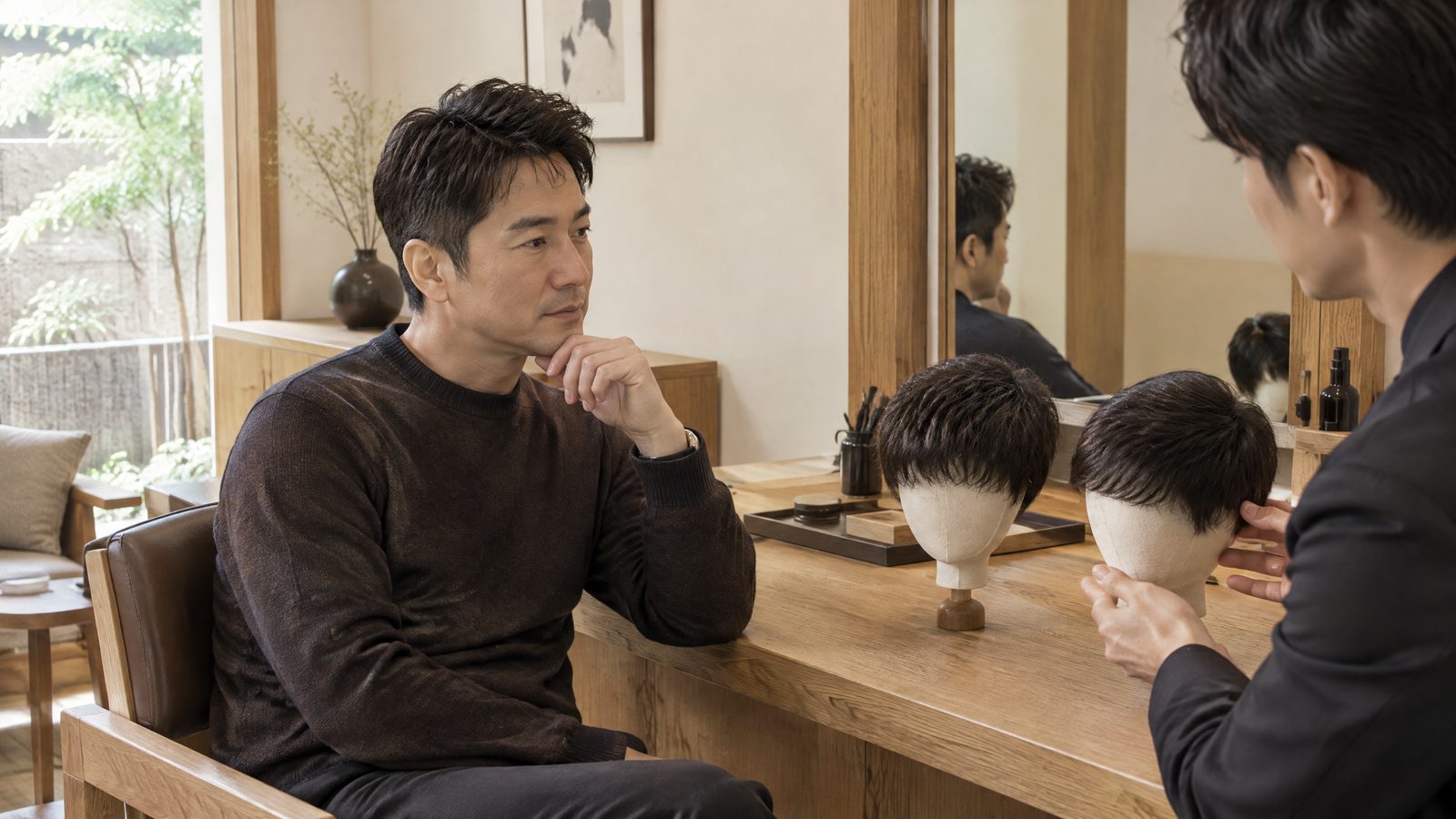
Men’s Hairpieces or a Perm? Compare Coverage and Shape
Choose a perm when enough existing hair remains and movement is the main goal. Choose a hairpiece when a defined area needs cosmetic coverage. Neither option decides the best outline by itself. First identify the visible area, surrounding density, preferred parting, and morning routine. Those observations prevent a product label from making the decision too early. Compare those details before making any booking.
Natural Hairline Wigs: A Guide to Fringe and Forehead
Natural hairline wigs look most convincing when the front edge, fit, colour, density, and haircut agree. For a hypothetical four-day workweek side part, inspect both temples under two ordinary light sources before choosing a construction. The aim is a coherent outline in movement. No single feature can decide that outcome. Check the whole frame, not only the centre. Check it while turning your head.
Human Hair or Synthetic Wigs? Texture and Care Choices
Choose human hair when approved styling flexibility matters. Choose synthetic fibre when a preset shape and simpler mornings matter more. Neither label settles the result alone. Texture, density, cap construction, attachment, and fit shape how a wig looks and feels. Start with the routine you can maintain, then check the exact model’s instructions. That order avoids paying for flexibility you will not use