
Custom Letter Cake: Grooming and Dietary Design Questions
Choose the cake’s message and guests’ dietary requirements before settling its decoration. Prepare your hair separately, so receiving the cake does not interrupt styling or food handling. A clear initial can make a personal celebration distinctive, but its shape says nothing about ingredients, portions or preparation conditions.
For a hypothetical birthday dinner in a Hong Kong flat, imagine arriving home with damp hair and guests already messaging. The cake box needs somewhere to go. A fringe needs finishing. One guest has an allergy, while another avoids animal ingredients. Those are separate decisions, not one general request for a special cake.
This Canvas Texture guide connects occasion grooming with practical cake planning. Start with the recipient’s message, then check shape, dietary requirements and serving arrangements. Finally, organise your styling and receiving tasks around the space available. The aim is a host who feels prepared without leaving important food questions unanswered.
01
Start with the recipient, the guest list and your hosting role
Write the reason for the cake in one sentence before collecting reference photographs. An initial might celebrate one person, while two initials might represent a couple. Decide whether the cake marks a private gift or a shared dessert. That distinction affects the wording, the portions requested and who needs dietary questions answered.
Ask guests about restrictions privately rather than discussing someone’s allergy in a group chat. Record their wording accurately and clarify ambiguous terms with them. Someone choosing vegan food may have different concerns from someone avoiding milk because of an allergy. Neither person should have to infer suitability from the colour or decoration.
Give your own preparation a practical brief too. Will you mainly greet guests, receive a box or serve dessert? A fringe that looks good in a seated portrait may fall forward when you check packaging. Test your normal style while looking down and turning sideways, not only while standing still before a mirror.
In a hypothetical celebration shared by two friends, one wants a dramatic letter and the other dislikes being photographed. The right compromise may be a restrained cake and an optional portrait. Hair and cake choices can support the occasion without making everyone perform the same version of celebration. Ask before committing to either spectacle.
02
Keep a letter recognisable from the guest’s side of the table
Choose the viewing direction before deciding where every topping belongs. A letter that reads clearly from above may look less obvious across a dining table. Ask for the proposed layout and overall dimensions. Leave room around defining curves and gaps, instead of filling every visible surface with decoration simply because the reference does.
A Custom Letter Cake enquiry can focus on a chosen initial, colour palette and topping arrangement. Ask which shapes, finishes and edible components are actually available for your date. A reference image communicates a visual preference; it does not confirm the ingredients, structural possibilities or suitability of the final order.
Consider how the initial sits beside the recipient rather than matching it mechanically to a hairstyle. A swept fringe and a busy cake can both look good, but the portrait needs visual space. Keep the backdrop simple and avoid placing a tall decoration directly in front of someone’s face when choosing the table position.
Put longer wishes on a card if they compete with the letter’s outline. For a hypothetical initials cake, a short name tag beside the base may read better than lettering across every topping. Ask the bakery to confirm placement and spelling. The recipient should recognise the intended message before studying its smallest decorative details.
| Design choice | What it changes | Question to confirm |
|---|---|---|
| One initial | A single recognisable outline | Which dimensions preserve this letter’s shape? |
| Two initials | A wider table footprint | What is the full board and box size? |
| Dense toppings | Less visible letter detail | Can defining gaps remain clear? |
| Long dedication | Competes with the outline | Can the message move to a separate card? |
03
Check milestone digits against portions and the recipient’s wishes
A milestone number can communicate the occasion immediately, but first ask whether the recipient wants it displayed. An age that feels celebratory to the organiser may feel private to someone else. An anniversary year or a short dedication could be more welcome. Get consent before building the whole visual plan around a personal number.
A Number Cake can make a birthday age or anniversary milestone central to the design. Confirm the intended digits, dimensions and estimated servings with the bakery. A larger-looking silhouette does not automatically provide more useful portions, and two digits should not be treated as a confirmed serving quantity.
Ask how portions would be distributed across the proposed shape. Narrow strokes and curved sections can produce pieces that look different on plates. That may be acceptable at a relaxed family dinner. If equal-looking portions matter, explain this before ordering and discuss an alternative format rather than expecting symmetry from a shaped cake.
For a hypothetical parent’s birthday, photograph the digits from the angle that makes them readable before anyone starts serving. Keep this moment brief and agreed. The host can check their front and side hair outline earlier, leaving attention available for the recipient. Nobody needs repeated grooming adjustments while the rest of the table waits.
04
Treat vegan ingredients and allergy requirements as separate questions
Use separate lines in the order brief for vegan requirements and any allergies. Vegan, vegetarian and gluten-free are not interchangeable descriptions. Ask the guest what they need excluded, then pass that information on without broadening or softening it. A vague request for something healthy gives the bakery no reliable basis for a dietary answer.
YumYum’s Vegan Cake page provides a starting point for discussing a plant-based celebration cake. Request confirmation of every edible component and the relevant preparation arrangements. The category name alone does not establish allergy suitability or exclude shared-equipment risks, so keep those questions attached to the specific proposed cake.
FARE explains that cross-contact can transfer tiny, invisible amounts of allergenic food protein. Cooking does not remove the risk of an allergic reaction from that transfer [2]. This matters when a bakery discusses a recipe without discussing preparation. Ask about utensils, work areas and handling, not simply whether an ingredient appears in the sponge.
Suppose, hypothetically, that one guest needs both vegan food and an option suitable for their wheat allergy. A vegan cake beside a different wheat-free cake does not resolve that combined requirement. Seek a clear answer about one proposed option meeting both needs. If the answer remains uncertain, agree an alternative with the guest before ordering.
Canvas Texture editorial note: A personalised shape carries the message; a written ingredient and preparation discussion carries the dietary detail.
05
Audit decorative extras before approving the final design
Work through the proposed cake by component: base, filling, coating and decorations. A fruit-heavy photograph may still include chocolate, biscuits or a glaze whose ingredients are unknown. Do not infer a topping’s composition from its appearance. Ask the bakery to identify the actual components it intends to use, including small finishing details.
Treat substitutions as decisions needing another check, not harmless finishing touches. If a particular decoration is unavailable, a replacement can change the ingredient discussion as well as the colour balance. Ask how substitutions will be proposed and confirmed. Keep the agreed version together with the dietary answers, rather than scattered through separate messages.
Serving is part of the discussion too. FARE’s guidance shows why simply wiping visible residue from a utensil is insufficient [2]. Ask about handling and labelling arrangements, then discuss the home serving plan with the guest. Separate plates and utensils need appropriate cleaning and handling; their colour or appearance cannot establish suitability.
Keep dietary notes identifiable without putting a guest’s medical information on display. A discreet box label can connect a cake to its written information. Do not replace that information with a homemade claim such as allergy-safe. If guests can choose between desserts, make their differences clear without presenting an unverified option as suitable for everyone.
| Brief field | Detail to request | Decision it supports |
|---|---|---|
| Edible components | Ingredients for each layer and topping | Whether the proposed recipe meets the requirement |
| Preparation | Shared tools and handling procedures | Whether cross-contact questions are answered |
| Substitutions | How changes will be confirmed | Whether the approved information remains current |
| Packaging and serving | Identification and handling instructions | Which information belongs to which cake |
06
Finish hair preparation away from the cake receiving area
Reserve a grooming area that will not become the cake unpacking surface. Style before handling the box, and put brushes and products away afterwards. Do not spray hairspray in a food preparation area. This is a practical separation of tasks, not a claim that one hairstyle makes a meal safer or more nutritious.
The American Academy of Dermatology recommends limiting excessive heat and brushing, and avoiding ongoing tension from tight styles [1]. Build enough preparation time for a gentle routine rather than repeated hurried restyling. If using a dryer, follow an approach suited to your hair and reduce unnecessary heat instead of treating maximum heat as a shortcut.
For longer hair, choose comfortable control that keeps it away from your face when receiving or serving. If the occasion includes a baking workshop, follow the instructor’s hair-covering or securing requirements. A photograph-friendly loose style may need adjusting for that activity. Do not assume a fashionable finish replaces the workshop’s own hygiene instructions.
If you are considering a new perm or colour for the celebration, consult a hairstylist about your hair’s condition and the proposed change. There is no universal waiting period that guarantees an ideal event result. For the hosting plan, prioritise a style you can manage without leaving the receiving task unattended or repeatedly touching your hair.
Canvas Texture editorial note: Finish the grooming task before opening the cake box; the celebration should not require both jobs at once.
07
Plan the portrait around storage, not storage around the portrait
Check the full box dimensions against the storage space you actually have, including the shelf opening. A broad shaped cake can be awkward even when its height seems manageable. Clear the receiving surface in advance. Ask the bakery for product-specific storage and transport instructions before selecting a convenient but unsuitable display position.
Hong Kong’s Centre for Food Safety identifies clean hands and utensils, separation of raw and cooked food, and safe temperatures as key practices [3]. Apply those principles when receiving and serving dessert. Keep the cake away from raw-food preparation, and follow its confirmed storage instructions. A pretty table is not a substitute for appropriate handling.
Choose the portrait position before bringing out the cake. Check the background, the recipient’s preferred side and whether your fringe obscures your eyes. Use the actual seating arrangement rather than repeatedly rotating the cake for a better photograph. A short planned photo moment respects both the recipient and the dessert’s handling requirements.
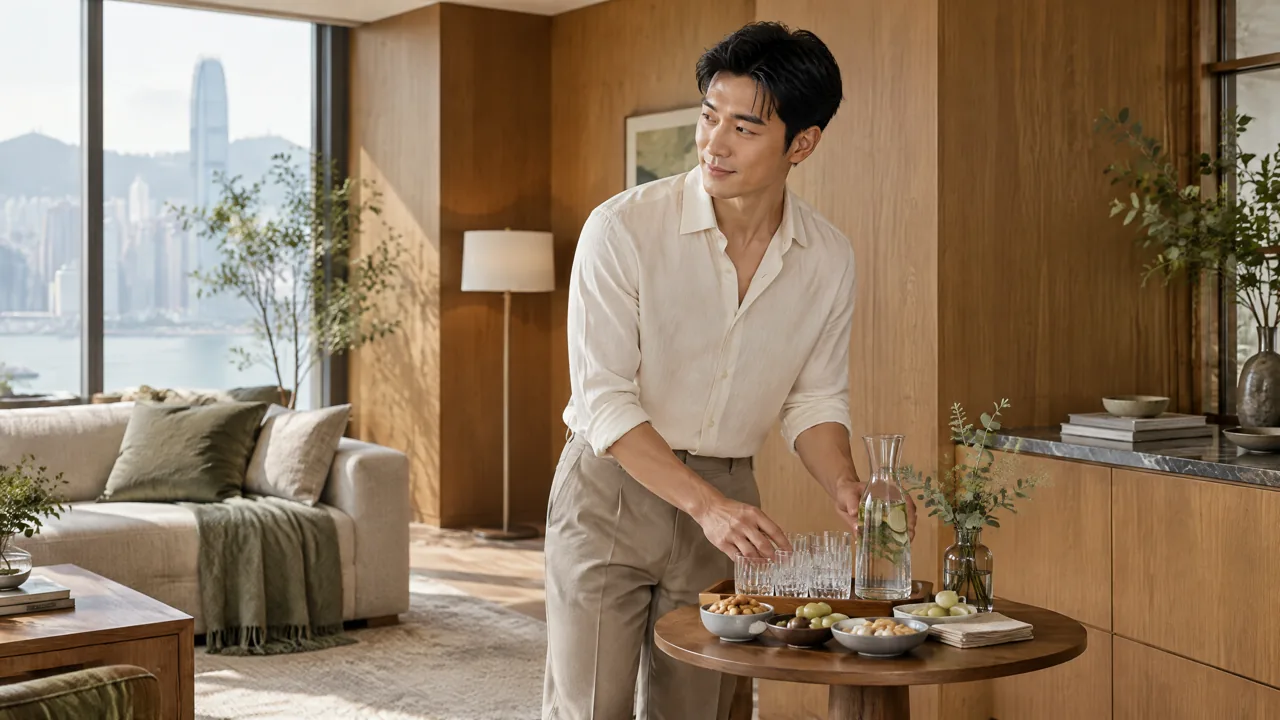
In a hypothetical small-flat dinner, the dining table also holds coats and shopping bags until guests arrive. Assign another place for those belongings before the cake comes out. Ask one helper to take the photograph and another to clear plates. The host then avoids switching between hair adjustments, packaging and serving while guests gather nearby.
08
Close the order with a written handover and a workable fallback
Collect the final design, spelling, portions, dietary responses and receiving arrangements into one message. Ask the bakery to confirm that version. Include the full board and box dimensions if space is tight. Check the total quotation and any logistics charges directly; a design page is not a substitute for the terms of the actual order.
Nominate who will receive the cake and what information they need. If a friend collects it while you finish grooming, give them the order identification and confirmed handling instructions. They should know whom to contact about a discrepancy. Delegation works when the information travels with the task, not when someone is told to improvise.
Agree a fallback before uncertainty becomes a last-minute embarrassment. If dietary questions cannot be answered, discuss another dessert arrangement with the guest rather than encouraging them to try a small piece. If a proposed shape will not fit the storage space, revise the format. Retaining the personal message matters more than preserving every decorative choice.
Leave the host’s final check for the moment before guests arrive: hair settled, grooming products stored and receiving space clear. Then move attention to the people in the room. The best connection between presentation and hosting is practical readiness. Your hairstyle can feel deliberate while the cake remains a separate, carefully confirmed part of the occasion.
- Send the exact initial or digits, spelling and preferred viewing direction in one final design message.
- Record each guest’s dietary requirement separately and attach the bakery’s answers to the correct cake.
- Check board and box dimensions against storage space, then confirm handling instructions and logistics charges.
- Assign a receiver and a photographer so the host is not styling hair, unpacking and serving simultaneously.
Sources and useful reading
Continue with hair and grooming
For a separate men’s own-hair consultation: Korean Men's Perm
Continue with related occasion and grooming planning: Graduation Cake: Hair for Farewell and Family Photographs
Read our men’s hairstyling background: Vit So and the Canvas Texture studio
Prepare one clear celebration brief
Confirm the message, design, dietary questions and receiving plan before committing to the cake. Keep grooming preparation separate, so you can welcome guests with your attention on the occasion.
Canvas Texture · WhatsAppFrequently asked questions
Can I use the same reference photo for a letter cake and a vegan request?
Yes, as a visual reference only. Identify the shape and colours you like, then request separate confirmation of the actual recipe, decorations and preparation arrangements. The pictured ingredients may not match the proposed cake.
Does a two-digit cake automatically serve more guests than one letter?
No. Ask for confirmed dimensions and estimated servings for the particular design. Shape alone does not tell you how much cake is available or how evenly portions can be divided.
Should I restyle my fringe beside the dessert table before photographs?
Use a separate grooming area and finish before handling food. Do not spray styling products near food preparation or serving areas. If you touch your hair during hosting, clean your hands before returning to food handling.
What if the bakery cannot answer an allergy preparation question?
Keep that uncertainty explicit and discuss another arrangement with the guest. Do not interpret an unanswered question as confirmation, or assume a vegan label resolves allergy concerns. Avoid promising suitability on the bakery’s behalf.
Related journal articles
Hong Kong Catering Service: A Host’s Grooming Plan
A host’s hairstyle has done its job when it stops competing with the welcome.
Catering Packages: Compare Food and Grooming Budgets
Editorial principle: protect the meal and the host's preparation time before spending on extra variety or a more elaborate look.
Office Lunch Catering: Keep Hair Products off Food Tables
A prepared host gives hair products a home before giving lunch a place on the table.

