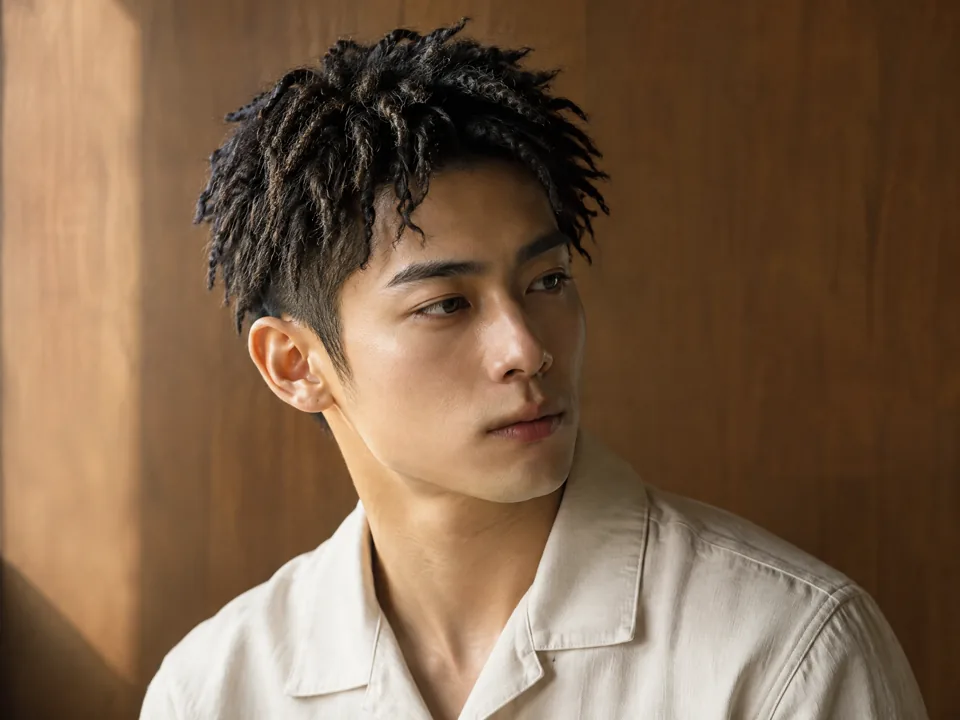
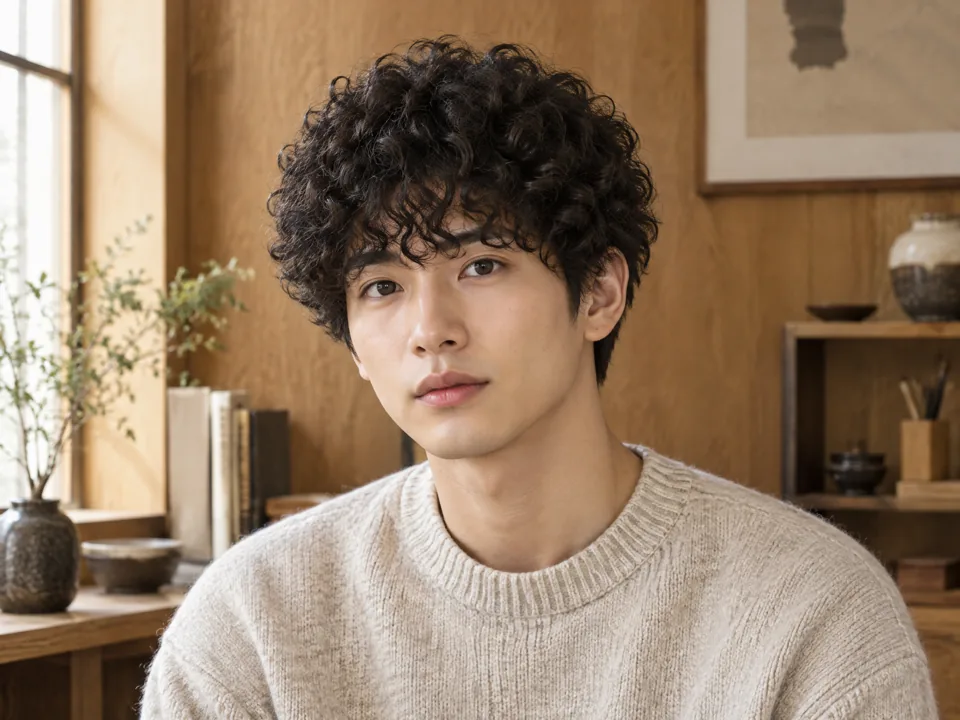
Pixie cut, curtain bangs or wolf cut: choose your shape
Choose a pixie, curtain fringe or wolf-inspired shape by deciding which part of your hair you want to change. A pixie primarily changes the short outline, curtain shapes organise the front, and a wolf shape changes the relationship between upper layers and a longer back. They are not three equivalent lengths. Start with the coverage you need, then consider movement and everyday effort.
The most useful reference is not necessarily the photograph with the most recognisable label. It is one that shows the ear area, forehead opening or back length you actually like. A curtain front can accompany a layered back, while a cropped outline can retain a longer fringe. Separating those decisions lets you borrow one feature without committing to every detail in the picture.
This guide compares the trade-offs rather than prescribing a look for a particular face or gender. For men reconsidering a familiar cut, these references can help describe retained length, softer sides or a different front. Look at your hair after ordinary drying, consider glasses and work habits, and decide which compromises feel acceptable. The aim is a clear conversation, not a promise that a photograph will reproduce itself.

01
Compare three different design decisions
A short outline, an open fringe and contrasting layers answer different questions. The first concerns how close the sides and back sit. The second concerns where the front separates and lands. The third concerns how shorter upper pieces relate to a longer edge. Treating all three as complete, competing packages can obscure the one change that would matter most to you.
Read a reference from the outside in. First trace the visible boundary around the ears, nape and longest ends. Next find the shortest pieces at the front and crown. Finally notice how the hair has been arranged: lifted roots, curled ends or careful separation may be styling choices. These steps help distinguish an appealing haircut structure from an appealing photograph of that structure.
Decide what would disappoint you even if the result looked attractive. Perhaps you dislike an exposed ear, need the front away from your eyes, or want a substantial lower edge. Those are useful boundaries, not signs that you are choosing the wrong trend. A consultation becomes more precise when the feature you want is accompanied by the feature you are unwilling to lose.
The comparison below is a starting point, not a set of universal measurements. Two references with the same name can retain different amounts of hair. Ask whether you are mainly changing the perimeter, the front or the internal layers. If your priority lies in only one area, explain that the other areas should remain recognisable rather than assuming a whole-head transformation is necessary.
| Reference | Main design question | Trade-off to discuss |
|---|---|---|
| Pixie-style outline | How much ear and nape coverage should remain? | Less overall length can make root direction and edge growth more noticeable. |
| Curtain-style front | Where should the centre open and the sides land? | An open forehead does not mean every front piece stays away from the eyes. |
| Wolf-style layers | How much shorter should the upper hair be than the back? | A retained long back may still look less full or leave loose pieces when tied. |
A good reference tells you what to preserve as clearly as it tells you what to cut.
02
Choose the coverage before committing to a crop
If the main attraction is a compact outline, the pixie cut guide explores ear coverage, crown weight and the neckline separately. That distinction matters when a photograph appears close-cropped only because its longer sides are tucked away. Compare the untucked side view before deciding how much hair you want removed; the short impression and the actual side length are not always identical.
An exposed ear can sit beneath a fuller top, and a close nape can sit beneath retained crown length. Neither choice requires every zone to be equally short. Point to the outline you want around the ear, then discuss the piece in front of it. A narrow retained strand and a side section that covers part of the ear create different daily arrangements.
Consider this illustrative scenario, not a client account: someone wants shorter hair for busy mornings but wears glasses throughout the day. They like the front of a cropped reference yet dislike hair catching on the frame arms. Their useful request is not simply 'make it easy'. It is to compare a clear ear area with longer, genuinely tuckable sides while keeping the preferred front.
A softer, fuller short shape may suit someone who wants movement without a sharply exposed edge. It can also retain pieces that need arranging. Ask to see the top resting as well as lifted, and the neckline from behind. If you might grow the cut longer soon, identify which top and side lengths could support that next outline before they are shortened.
03
Let dry behaviour guide the shortest pieces
Hair direction becomes easier to notice when less surrounding length conceals it. A crown split, a front section that lifts, or nape hair that turns outward should be part of the discussion. Photograph those details after your usual drying rather than smoothing them out for the consultation. The image should show the behaviour you live with, not only the most controlled version of your hair.
Density and direction need separate questions. Removing weight may change how full an area looks, but it does not reliably change where its roots point. If the front separates into an unwanted gap, ask whether the cause is section width, available hair or natural direction. Requesting lighter pieces without that distinction could reduce coverage while leaving the original parting issue unresolved.
With waves or curls, compare the dry landing point of the front and sides rather than judging stretched length alone. Different areas may bend differently. You might welcome a curved fringe but prefer more length beside the ears. Explain which dry boundary matters, such as the eyebrow or cheek, without assuming one fixed measurement will create the same outline throughout the head.
For fine-looking ends, distinguish a wish for movement from a wish for less hair. For dense sides, identify the specific area that feels bulky. These are more useful requests than asking for texture everywhere. The intended result might need a fuller lower edge and selective upper movement, or a closer side outline with retained top length. Available hair determines the feasible balance.

04
Design the front opening independently
If you like your overall length but want a different front, the curtain bangs guide separates the centre opening, section width and side connection. These are distinct decisions. You can want a small opening above the brows without wanting short pieces throughout the temples. Equally, you can want longer face-framing sides without wanting a short central fringe at all.
Agree on where the shortest front pieces should land when naturally dry, not only when curved with a brush. Then choose where the longer sides should finish. A centre opening that begins near the brows differs from one whose shortest pieces already sit beside the eyes. Your normal parting matters too; perfect symmetry in a reference does not make it an everyday requirement.
Check the front while wearing your usual glasses, looking down and turning your head. Hair that frames the face neatly at rest may brush the lenses or fall towards the eyes during work. Longer-looking sides are not automatically long enough to tuck. Demonstrate your ear tuck with your current hair and identify the sections that must still reach if keeping them away matters.
For another illustrative situation, imagine someone who enjoys a centre-opening front but normally ties the back during exercise. They need to decide whether loose cheek pieces are welcome or distracting. That choice can favour retained side length, a different front boundary or a looser interpretation of the reference. There is no need to add crown layers simply because the photograph includes them.
| Preference | Detail to show | Everyday check |
|---|---|---|
| A small centre opening | The shortest dry point and the width of the gap | Does the front return to a different parting after movement? |
| Longer curved sides | Where they should land beside the cheek | Do they reach behind the ear when you need them to? |
| More forehead coverage | How much brow should remain visible | Do the ends touch your frames or enter your eye line? |
| A lighter-looking front | Whether you want gaps across the front or only at the centre | Do you still like the separation after the hair shifts? |
05
Choose a finish you are willing to repeat
A haircut can establish lengths and connections without producing the waves or root lift in a reference. A smooth outward fringe curve may come from deliberate drying; separated upper pieces may involve product or hot tools. Ask which visible features belong to the cut and which belong to the finish. Then decide whether you enjoy the underlying shape without its most polished styling.
Describe your morning routine in actions, not a vague claim that you are low-maintenance. Say whether you air-dry, guide the front with your fingers, use a brush or regularly add waves. Ask for a demonstration that uses the tools you actually own. Being willing to arrange the fringe does not necessarily mean being willing to style the whole back every time you wash.
Keep hair care separate from the question of which shape looks best. The American Academy of Dermatology recommends allowing partial air-drying before styling and reducing blow-drying frequency. It advises using flat irons only on dry hair, at low or medium heat.[1] A reluctant front is a reason to reconsider the finish, not automatically to keep increasing heat until it resembles the reference.
Before judging the finished shape, move your head, put your glasses back on and let any arranged pieces settle. Ask which single step matters most: directing the opening, guiding the crown or keeping the sides clear. A simpler everyday finish may look less sculpted while still retaining the feature you wanted. Choose that version deliberately rather than treating it as a failed photograph.
06
Balance upper layers against a longer back
When the attraction is shorter upper hair above a longer back, the wolf cut guide focuses on layer contrast and retained end weight. Read the side view carefully. A front photograph may hide how far the back extends below the sides. Decide whether you want a pronounced difference or a softer connection; the label does not require maximum contrast.
Keeping the longest strands is not the same as keeping a full lower outline. When more hair above that edge becomes shorter, fewer strands may contribute to the bottom. If you like a substantial back, say so explicitly. Ask how much upper movement can coexist with the fullness available in your current hair, rather than requesting strong layering and an unchanged lower edge as separate guarantees.
For men moving from a close-sided cut towards a longer layered shape, the starting lengths may not yet support the desired side connection. Discuss what can change now and what needs to grow. Shortening the top to make everything look intentionally layered might work against a later goal of fuller sides. A temporary outline can be a considered stage, not a reason to remove useful length.
A longer back also does not guarantee a secure ponytail. Gather your hair where you normally tie it and identify the pieces already escaping. If you accept loose front strands but dislike loose sections behind the ears, name that difference. A fringe is optional, and its length can remain a separate choice even when you decide to make the upper-to-back contrast stronger.
A long back is a length decision. A full back is a weight decision. Ask for both only after discussing how they fit together.
07
Agree on boundaries and the next stage
Bring front, side and back references, but attach a short explanation to each. One might show your preferred ear coverage, another the centre opening, and another the lower edge. Tell the stylist which image controls which area. Otherwise, several attractive references can contain conflicting instructions, such as very short sides in one and tuckable face pieces in another, without revealing your actual priority.
Rank your requests before cutting. Keeping hair off the lenses may matter more than exact fringe symmetry; retaining a substantial back may matter more than dramatic crown separation. Make that order explicit and ask what the trade-off would look like. If a preferred feature needs more length or styling than you expected, you can reconsider it without abandoning the entire idea.
Discuss maintenance through observable changes rather than borrowing someone else's appointment interval. Your trigger might be hair catching on frames, a nape becoming heavier or the front becoming difficult to place. During grow-out, the bothersome area may not be the area that needs length preserved. Explain the next outline you want so a later adjustment does not automatically restart every section.
Finally, confirm what the proposed cut and finish involve before arranging the visit. These style names describe design possibilities, not guaranteed packages or appointment availability. Leave the conversation knowing the shortest agreed areas, the length being protected and the routine expected at home. That is a more useful outcome than agreeing on a name while imagining two different shapes.
- Mark the shortest acceptable dry point at the front and show how much ear coverage must remain.
- Bring an ordinary-drying photograph that shows your crown direction, parting and nape behaviour.
- Demonstrate your glasses, ear tuck or tie-up routine and identify pieces that must stay secure.
- Choose one main change, one protected feature and the styling steps you are willing to repeat.
Sources and useful reading
Continue with hair and grooming
Continue with Canvas Texture’s male hair needs: Korean Men's Perm
Explore another related decision: Short hairstyles for men with natural waves and curls
Read the lead stylist’s background: Vit So and the Canvas Texture studio
Discuss your next men's haircut with Canvas Texture
Contact Canvas Texture to enquire about a consultation for your male hair needs. Share your current dry hair, the feature you want to change and the coverage or length you want to keep. Explain your daily styling routine so the proposed shape and consultation arrangements can be discussed.
Canvas Texture · WhatsAppFrequently asked questions
Are these three shapes mutually exclusive?
No. They describe different aspects of a haircut. A curtain-style front can accompany a layered back, while a short outline can retain a longer front. Discuss the perimeter, fringe and layers separately rather than assuming every feature in one reference must be copied.
Is the shortest option always the easiest to maintain?
Not necessarily. Less overall hair can make the ear edge, nape and root direction more noticeable. A longer option may offer tucking or tying choices, but it can need more styling. Compare the actual dry behaviour and the upkeep you accept, not length alone.
Will layers create the waves shown in a photograph?
Not automatically. Layers change relative lengths and the outline. The photographed movement may come from natural texture, drying, products or hot tools. Ask to distinguish the cutting structure from the finish and choose an everyday version you would still enjoy.
Can I choose one of these shapes without changing everything?
You can discuss a focused change, such as a different front opening or closer ear area. Whether it connects well with the existing cut depends on current length, density and direction. Identify the feature you want changed and the areas you want protected, then confirm the proposed scope.
Related journal articles
Hair salon or hair stylist: what should you compare?
Choose the appointment around the change you need, not the most impressive title on the booking page.
Haircut, wash cut and blow dry: choosing the right family appointment
A family can share a journey to the salon without sharing the same haircut brief.
A layered haircut for busy days: choose what to keep
The most useful length is not always the longest strand; it is the shortest piece your routine still needs.