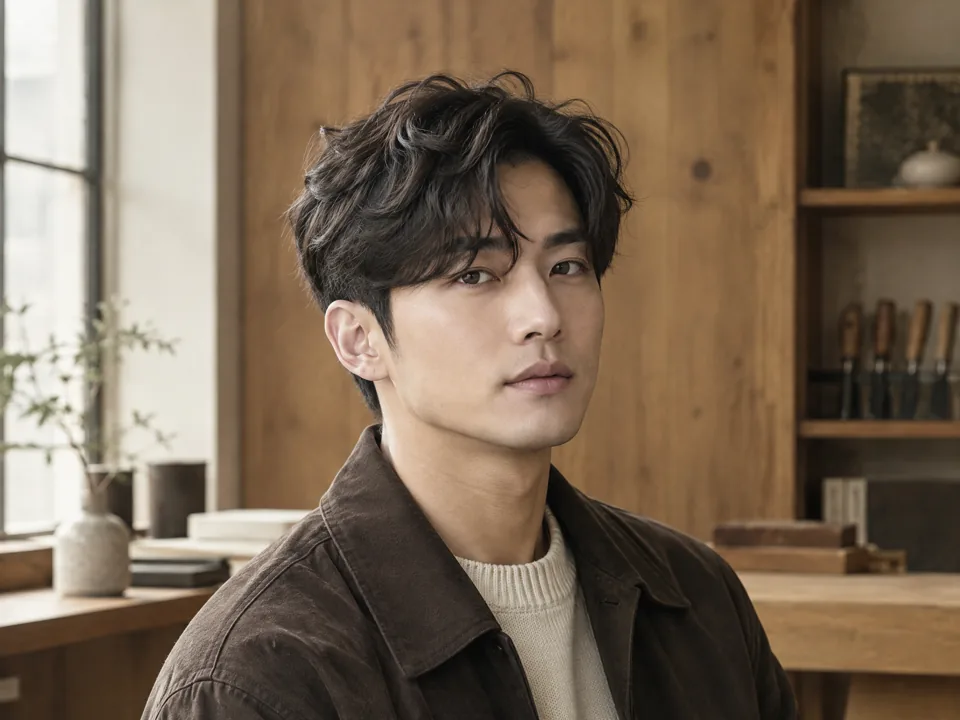
Boutonnieres for Weddings: Grooming and Decoration Roles
A wedding boutonniere should complement your haircut and suit without obstructing movement or taking over the photograph. Plan personal flowers separately from venue decoration, then connect both through colour and a clear handover schedule. The groom needs a wearable detail; the venue needs arrangements suited to its space and access rules.
A Hong Kong wedding may move from a family tea ceremony to a car journey, formal portraits and an evening banquet. Each transition changes what matters. A flower that looks balanced while standing can press against a seat belt. A fringe that works in the mirror may obscure your eyes when you bow.
For Canvas Texture’s men’s hairstyle journal, this is a practical extension of occasion grooming, not a flower review. Start with the wearer, then assign the work around him. The following plan connects a hair trial, lapel measurements and family roles with flower handling, transport and the moments when somebody can actually check your appearance.
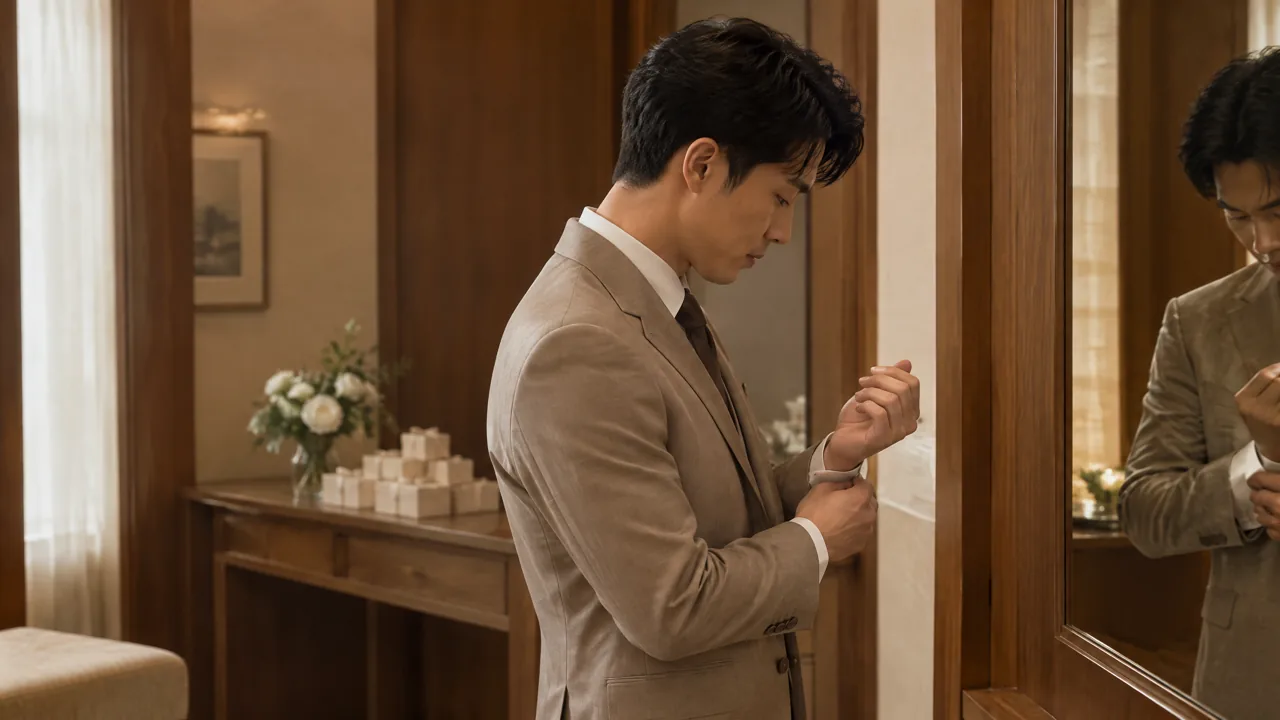
01
Test your haircut with the actual wedding collar
Take the shirt and jacket, or clear photographs of them, to your hairstyle consultation. A high collar can change how the back of a haircut looks. Broad lapels may make very tall hair look more prominent. Assess the combination from the side, not only through a front-facing phone camera, before choosing the final shape.
Practise looking down as well as straight ahead. During a tea ceremony, a forward fringe may fall across your eyes when you bow. Ask your stylist about a manageable direction that keeps your face visible. The aim is comfortable movement, not a rigid finish that requires somebody to rebuild it after every embrace.
Avoid solving every rehearsal problem with more heat or repeated brushing. The American Academy of Dermatology recommends limiting brushing and reducing excessive heat exposure [1]. That supports a restrained preparation routine, not a promise about any particular hairstyle. If considering a perm or colour change, ask your stylist to assess your hair’s condition and scheduling needs.
Record the successful routine in plain language: where the part sits, which way the fringe moves and what product you used. Keep a reference photograph beside those notes. On the wedding morning, finish drying and styling before putting on the jacket. This keeps the collar clear of damp hair and reduces unnecessary handling around the flowers.
02
Choose a lapel flower that stays comfortable when you move
Measure the usable lapel area rather than ordering from an isolated flower photograph. Note the lapel width, fabric and buttonhole position. A compact arrangement may suit a narrow lapel better than a broad cluster. Include the pocket square in the trial, since two elaborate details on the same side can compete for attention.
For enquiries about boutonnieres for weddings, the Y. Florist page can help frame questions about proportion, construction and handling. Confirm the available flowers, attachment method and collection or delivery arrangements before ordering. Send a jacket photograph so the enquiry concerns the actual garment, rather than a floral style without context.
Ask the florist or a suitable helper to demonstrate attachment with the jacket wearer present. Do not assume a delicate fabric will tolerate the same fixing as a heavier suit. Explain if you prefer not to pierce the cloth. Any proposed alternative still needs assessment for the garment and wearer, rather than an improvised wedding-morning solution.
During a fitting, sit down, turn your shoulders and give a gentle practice embrace. Check whether the flower rubs your chin or shifts the lapel. These movements reveal problems that a standing photograph misses. If it repeatedly tilts, revisit its size or attachment with the supplier instead of expecting the groom to hold himself unnaturally.
| Observed issue | Useful adjustment to discuss | Detail to confirm |
|---|---|---|
| Flower dominates a narrow lapel | A smaller focal bloom or less foliage | Finished dimensions |
| Pocket square and flower look crowded | Simplify one of the two details | A photograph of the complete jacket |
| Flower tilts when the wearer sits | Reassess construction and fixing | An attachment demonstration |
| Delicate cloth raises concerns | Discuss garment-compatible options | Approval from the wearer or tailor |
03
Carry one colour cue from the groom into the venue
Choose one connection between personal flowers and the room, rather than trying to repeat every element. A small ivory bloom might echo a ceremony arrangement while the reception uses more greenery. The groom’s jacket remains the immediate backdrop for his flower. Venue décor must work against walls, table linen and the lighting in that particular space.
A wedding floral decoration package is useful when discussing several ceremony and reception areas together. Confirm exactly which arrangements and services the written scope includes, especially installation and removal. Personal flowers should appear as a separate line if requested; a coordinated visual theme does not establish that they are included in a venue quotation.
In a hypothetical hotel wedding, the couple might prioritise a ceremony backdrop and modest table flowers. Their groom could wear one restrained bloom from the same palette. This gives the photographer a visual connection without making his lapel resemble a miniature centrepiece. Discuss acceptable colour substitutions before treating any particular flower variety as essential.
Share a small selection of reference images rather than a folder of conflicting styles. Explain what matters in each: colour, scale or overall shape. Also identify what can change. If the venue restricts attachments or offers only a short setup period, adapt the arrangement plan early instead of leaving the groom to negotiate access while getting dressed.
A coordinated wedding look needs one visual direction, but it does not need the groom to manage every floral detail.
04
Build a wearer list around family roles, not assumptions
Write down who will wear a flower, when they need it and who will help them attach it. The groom, attendants and fathers may have different clothing and arrival times. Ask each person rather than treating the wedding party photograph as an order list. Some relatives may prefer no flower, or a different wearable arrangement.
For a tea ceremony, distinguish recognition from hierarchy. A flower can identify somebody helping with the proceedings, but it should not create an unwanted statement about family importance. Discuss choices with the couple and relevant relatives privately. Keep the explanation simple, especially where several families have different expectations about ceremonial clothing and accessories.
Label boxes with the wearer’s name and role, then add the intended use if there are changes later. A helper can match the name to the roster without opening every box. Confirm whether the supplier can provide labels or whether your team must prepare them. Keep the list accessible to the appointed helper, not buried in the groom’s messages.
Decide who receives any spare pieces and who can authorise a replacement. A spare helps only if somebody knows where it is. A parent arriving directly at the venue should have an identified contact there. This is more reliable than sending all personal flowers to the preparation room and assuming every wearer will pass through it.
- Record each wearer’s name, jacket colour and preferred type of wearable flower.
- Add their arrival location and the first ceremony or photograph requiring the flower.
- Name one attachment helper and one substitute who has seen the instructions.
- Mark where labelled boxes and any agreed spare pieces will be kept.
05
Separate grooming, flower storage and tea service in the room
In a small preparation room, give hair products and floral boxes separate surfaces. Keep a clear place for the jacket so it does not sit underneath tools or bottles. Appoint another person to receive flowers while the groom finishes styling. This prevents a delivery conversation from interrupting the routine at the moment his hair is still unfinished.
If relatives are preparing tea or refreshments, keep that activity away from the grooming area. Hong Kong’s Centre for Food Safety advises clean hands and utensils, safe temperatures and separation of raw and cooked food [2]. Using a separate space for hair products is a practical precaution, not evidence that a particular room or food service is compliant.
Do not spray styling products beside cups, food or open floral packaging. Wash your hands before switching from handling grooming items to helping with refreshments. If somebody must manage food, let another helper handle the flowers. Neither wedding flowers nor their packaging should become improvised decorations inside serving trays or against exposed food.
Ask the florist for storage instructions for the actual pieces supplied. Keep boxes away from direct sun, crushing and unnecessary handling while following that advice. Do not invent a universal refrigeration rule or place flowers in a shared food fridge without checking suitability. Tell the receiving helper when the flowers will be worn, including any long interval before portraits.
06
Plan the car journey before choosing exterior flowers
The car creates two separate tasks: protecting the wearer’s appearance inside and managing decoration outside. A seat belt may press against a lapel flower. Its required position must not be altered for photographs or styling. Ask your helper whether attaching the flower after arrival would be more practical for that part of the schedule.
When considering wedding flower car decoration, provide the vehicle model, route and expected exposure to weather. Confirm permission, the proposed fixing method and whether installation is available at your location. Treat driver visibility and vehicle rules as constraints; an attractive reference image does not establish suitability for a particular moving car.
Coordinate installation with the driver and whoever controls access to the parking area. A hypothetical ceremony at one venue and banquet at another could involve several loading stops. Name the person who checks the decoration before departure and contacts the supplier if necessary. The groom should not be checking exterior fixings while photographs and family greetings are underway.
Before entering the car, check your hair from the side and let the helper inspect the lapel. Avoid repeatedly pressing the bloom flat to accommodate the journey. If it must be removed, follow the demonstrated handling instructions and store it as advised. On arrival, allow a brief check before joining the receiving line or greeting guests.
07
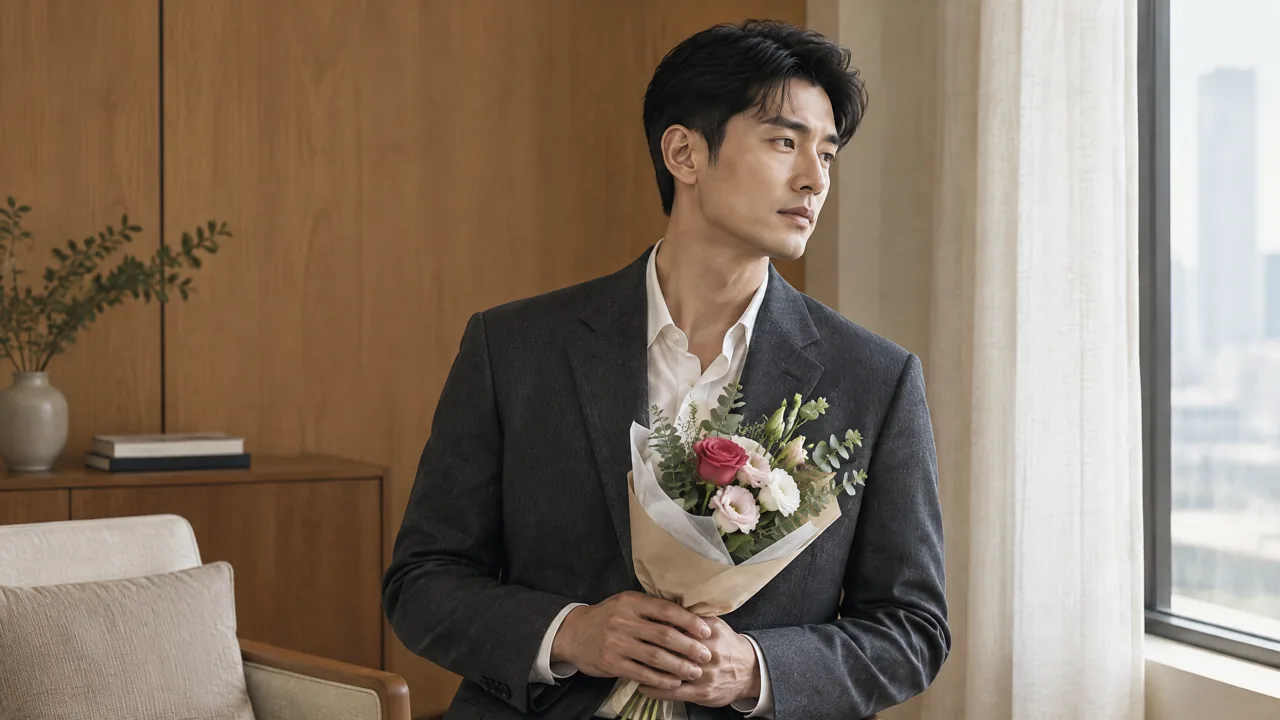
Use the first portraits to check the whole silhouette
Ask for one early photograph that includes the head, collar and lapels. A close crop of the flower alone cannot show whether the arrangement competes with your hair or tie. Review one front view and one natural turned position. The point is to catch an obvious imbalance before family portraits, not to inspect every frame throughout the day.
If your fringe covers an eye when you turn, adjust its direction gently using the rehearsed routine. Avoid assuming stronger hold is automatically the answer. Similarly, a crooked flower may need its attachment reviewed rather than extra foliage tucked behind it. Let each problem reach the appropriate helper instead of mixing hair repairs with floral adjustments.
Embraces can compress petals or move a jacket. Ask the attachment helper to check after a busy greeting period rather than interrupting every hug. Where possible, keep the flower clear when carrying bags or lifting objects. These are handling choices, not a guarantee that fresh flowers will maintain an unchanged appearance through every part of the celebration.
For group photographs, agree whether attendants should wear jackets and flowers consistently in that particular set. Guests may otherwise arrive with flowers attached to different layers of clothing. Give the photographer or coordinator a simple request before assembling the group. Avoid making relatives wait while somebody searches for accessories that were never assigned to that location.
The useful wedding portrait check is not whether each detail is perfect alone, but whether the wearer looks comfortable with them together.
08
Give the banquet reset a named helper and a clear stopping point
After the journey and afternoon photographs, check what genuinely needs attention before the banquet. Hair may need a gentle adjustment, while the jacket may need straightening. Inspect the flower for damage without constantly touching the petals. If a replacement was agreed in advance, let the designated helper arrange it rather than starting a new ordering task.
An outfit change needs its own decision about personal flowers. Do not assume a flower fitted to a morning jacket will suit a different lapel. Share both garments during planning and ask about reattachment or a separate piece. Make the change before guests gather for the entrance so the groom is not simultaneously greeting people and sorting accessories.
Keep the reset kit modest and based on the successful rehearsal. Store the hair reference, necessary grooming items and floral instructions in separate compartments. The helper needs to know where each belongs, but should not improvise unfamiliar products. If the existing style remains comfortable and photographs well, leave it alone rather than creating a second elaborate styling session.
Finally, assign collection and removal tasks to somebody other than the couple. Confirm what the supplier and venue each expect at the end. Personal flowers, decorative structures and hired items may have different destinations. A complete handover allows the groom to stop managing details and return to hosting, with his appearance settled and the remaining practical work clearly allocated.
| Transition | Named role | What to check |
|---|---|---|
| Flowers arrive during preparation | Receiving helper | Labels, condition and supplied storage instructions |
| Before the first ceremony | Attachment helper | Wearer list, garment fit and comfortable movement |
| After the car journey | Appearance helper | Hair direction, lapel position and visible flower damage |
| Before the banquet entrance | Evening coordinator | Outfit changes and the agreed replacement plan |
Sources and useful reading
Continue with hair and grooming
For a separate men’s own-hair consultation: Groom Hairstyle Perm HK
Continue with related occasion and grooming planning: Hong Kong florist: Groomed Hair and Bouquet Proportions
Read our men’s hairstyling background: Vit So and the Canvas Texture studio
Prepare one shared wedding appearance brief
Bring your jacket photographs, hair reference and wearer list to the relevant consultations. Confirm floral scope and handling instructions in writing, then assign the handovers so you can focus on the people celebrating with you.
Canvas Texture · WhatsAppFrequently asked questions
Should I put on my boutonniere before styling my hair?
Finish your hair first, then put on the jacket and attach the flower with help. This avoids unnecessary contact with styling products and tools. If travel follows immediately, discuss whether attachment after arrival would work better.
Does a venue floral package automatically include flowers for the groom and parents?
Do not assume it does. Ask for a written wearer list alongside the venue arrangement list. Confirm quantities, finished designs, handover locations and any separate charges before approving the order.
Can I move the seat belt to protect my lapel flower?
No. Wear the seat belt correctly and keep vehicle safety ahead of appearance. Ask the florist how to handle the flower, or arrange attachment after the journey if that fits the ceremony schedule.
What should my helper do if a flower looks damaged before the banquet?
Check the agreed replacement plan and contact the designated supplier or coordinator. Do not improvise repairs with grooming products. If no replacement is available, decide with the wearer whether to remove the damaged piece for that part of the celebration.
Related journal articles
Hong Kong Catering Service: A Host’s Grooming Plan
A host’s hairstyle has done its job when it stops competing with the welcome.
Catering Packages: Compare Food and Grooming Budgets
Editorial principle: protect the meal and the host's preparation time before spending on extra variety or a more elaborate look.
Office Lunch Catering: Keep Hair Products off Food Tables
A prepared host gives hair products a home before giving lunch a place on the table.