Men's perm: choosing waves, a middle part, or both
A wavy finish and a middle part are not opposite choices. Waves describe movement along the hair; a middle part describes where the front opens and how it travels around your face. You can combine them, keep the opening with quieter bends, or wear visible waves without a central opening. Decide which feature matters most before choosing a reference photograph.
Start with your ordinary dry hair, not its best moment under a brush. Notice where the fringe separates, which side falls forwards and how much width sits above your ears. Then compare your preferred image with the length you intend to keep. The same wave can look quite different when it hangs over the forehead rather than moving towards the temples.
This guide separates those decisions so you can explain your priorities clearly. It also considers mornings with limited styling time, glasses, headwear and future trims. A style name does not establish a chemical method or guarantee suitability. The useful goal is a wearable outline whose relaxed version you like, supported by an assessment of your current hair and treatment history.
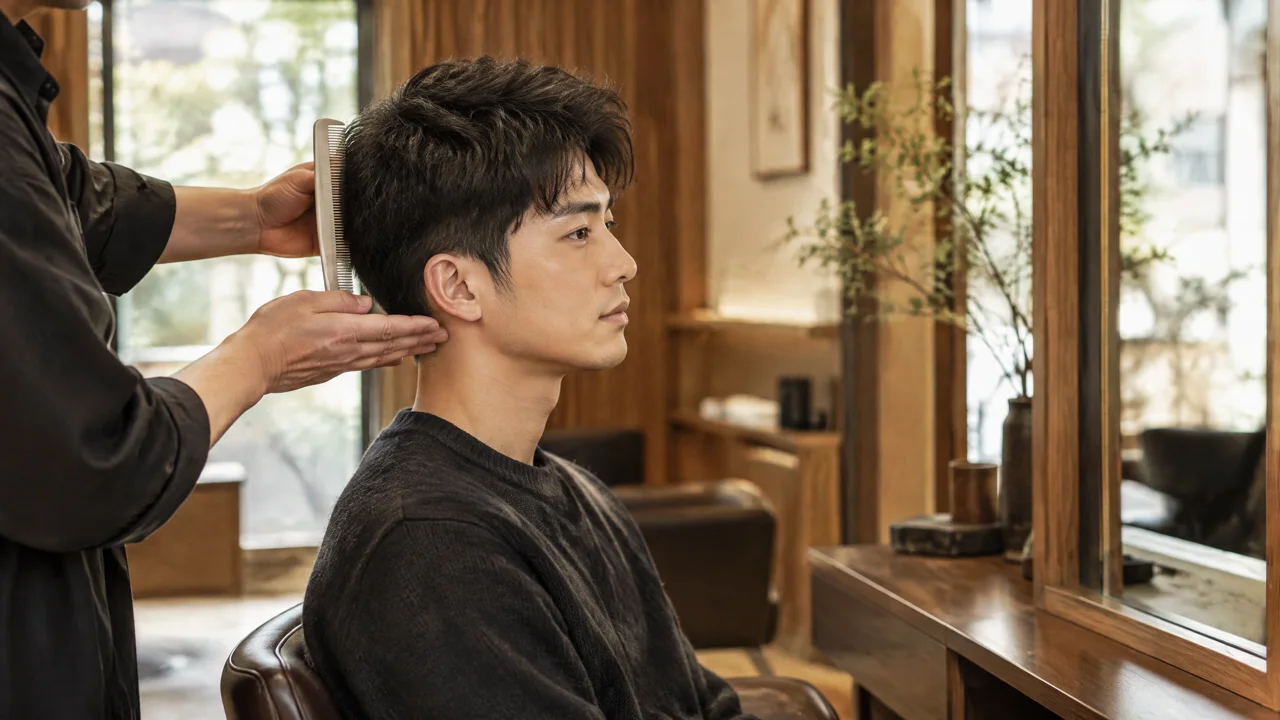
01
Separate the wave from the parting
Imagine covering the forehead area in a reference photograph. Do you still like the movement across the top? Now cover the top and look only at the fringe. Does the central opening remain the main attraction? This simple comparison helps separate a preference for texture from a preference for direction. You might discover that the photograph's parting matters more than its waves.
A visible wave changes direction along a strand. A middle part divides the front into sections that move away from an opening. Neither detail tells you how high the crown should sit or how close the sides should remain. Treat height and width as separate choices, otherwise a request for more movement can become an unintended request for a fuller outline.
Once those priorities are clear, Vit So's men's perm guide explains the difference between movement, root support and treatment coverage. It is useful when you need to describe which areas should change. A local area and a broader treatment are not interchangeable, and the style you like does not by itself establish the appropriate service scope.
Name one essential feature and one acceptable compromise. You might prioritise a clear opening while accepting less obvious waves near the fringe. Alternatively, you might value visible movement and accept a softer, less exact parting. This gives the consultation a practical starting point. It also makes a cut-first or grow-first alternative easier to evaluate if the complete reference is unsuitable.
A hairstyle can borrow its opening from one reference and its movement from another. Explain the connection, not just the two names.
02
Judge the opening by what happens without force
Look at the front after your usual wash and dry, once your aftercare instructions allow that routine. Avoid pushing everything backwards before taking the photograph. Observe whether the hair already separates near the centre, settles slightly to one side or crosses the opening. These behaviours are more informative than a ruler-straight line created while you hold both sides in place.
A middle part need not divide the hairstyle into identical halves. One side may curve closer to the brow while the other exposes more forehead. Decide whether that difference looks comfortable to you. Forcing exact symmetry may add work without improving the feature you actually value: an opening that stays clear enough for reading, working or wearing glasses.
Describe the opening in terms of coverage. Say whether you want a narrow gap above the nose, more space towards the temples or front pieces that stay beside the brows. Bring your glasses if you wear them. A strand that looks attractive in a portrait may become annoying when its tip sits against a frame as you look down.
Compare the front and profile together. A high opening can reveal more forehead while also adding height; a lower opening may leave longer pieces near the eyes. Neither is universally better. Ask to see a temporary styled version before discussing chemical work. It can help you distinguish a direction you enjoy from one you admire only in someone else's photograph.
| Direction | Feature to prioritise | Trade-off to discuss |
|---|---|---|
| Visible waves with no central opening | Movement through the top or fringe | Where the front should fall without hiding more forehead than you want |
| Middle part with quiet bends | A usable opening and outward fringe direction | Whether understated movement will satisfy your expectations |
| Middle part with visible waves | An opening connected to a clear wave pattern | How much side width and forehead coverage you accept |
| Slightly shifted parting | A position that respects the front's usual fall | Whether the asymmetry feels intentional rather than distracting |
03
Protect the length needed for the dry shape
Length matters where you want the movement, not just at the longest point of the haircut. A long fringe can coexist with a much shorter crown. That does not establish that both areas can show the same wave. Compare the fringe, upper top and side sections separately, then discuss which lengths need to remain after the cut rather than before it.
Ask where the front pieces will finish in the intended dry shape. A strand pulled straight towards the brow gives a different impression from one bending away from the centre. If the finished fringe sits higher, the opening may expose more skin than expected. If it remains too long, its curved ends may return towards the eyes despite a clear parting at the roots.
Weight also affects what you see. A substantial front section can read as one broad panel, while separated strands reveal more gaps. Neither appearance requires indiscriminate thinning. Explain whether you want a continuous edge around the forehead or smaller, visible pieces. Then ask how the proposed cut will preserve that feature while connecting the fringe to the rest of the top.
There is no useful universal length to promise for this combination. If your reference requires more retained hair, discuss what can be tidied while selected areas grow. For example, keeping the fringe intact while refining an unrelated outline may protect the eventual plan. Ask exactly which sections should be left alone, so a routine trim does not remove the length you are deliberately building.

04
Choose how visible the waves should be
Follow one strand through your reference rather than judging the overall mood. A single shallow turn can soften a straight-looking fringe without creating an obvious wave pattern. A sequence of turns makes movement a stronger feature. Decide where that sequence should be visible: across the top, beside the temples or through the front. More movement everywhere is not automatically a better match.
If you are uncertain how much movement you want, the wavy perm for men comparison distinguishes gentle bends from clearer waves. Use it to identify what should remain noticeable in an ordinary dry finish. The important difference is visual emphasis, not an assumption that a quieter-looking result involves a gentler chemical process or less demanding assessment.
Here is a hypothetical example, not a client account. Someone likes the wave beside the temple in a reference but dislikes its broad sides. Their request could be a visible front wave with a quieter ear-level outline. Asking simply for the whole wavy hairstyle would hide that distinction. The consultation should establish how the retained sections connect without importing unwanted fullness from the reference.
Look for the same finish in more than one view if possible. Strong lighting, deliberate strand separation and a posed fringe can make movement look clearer than it does casually. Ask what the proposed shape might look like with your normal level of product and drying. If subtle bends would disappoint you, say so; if you dislike obvious waves, explain that equally clearly.
05
Choose a routine you will actually repeat
Describe your morning in actions rather than calling yourself low maintenance. Do you leave the hair to dry, use a dryer for a short time or shape each front section carefully? Do you use product every day or only for evenings? These details help separate the essential steps needed for the outline from optional finishing. A relaxed-looking photograph can still depend on deliberate styling.
For an open fringe, ask for a demonstration of how to establish the parting and guide the front without stretching the bends straight. Watch the hand movement as well as the tool. Then explain which tools you own and which steps feel manageable. An instruction you can repeat matters more than memorising the product names used to create a polished reference.
The American Academy of Dermatology recommends reducing excessive heat and handling wet hair gently in its styling guidance.[2] Those habits support a sensible routine; they do not predict whether your chosen opening will stay in place. Avoid repeatedly pulling a stubborn side into position. Ask whether a softer opening or a different drying direction would make the everyday finish more manageable.
Consider another hypothetical situation. A commuter wears a helmet and wants a centre opening after arriving at work. The decision is how much reshaping they are willing to do, not whether a perm can make the fringe resistant to pressure. Keep safety equipment correctly fitted. Compare a relaxed opening that needs a modest reset with a precise finish that may demand more attention.
The best reference is not only the finish you admire. It is also the less-styled version you would be comfortable wearing on a rushed morning.
06
Keep hair history separate from visual softness
A soft wave is an appearance, not a safety category. The American Academy of Dermatology notes that colouring and perming can leave hair dry and brittle.[1] Previous processing still matters when the intended change looks restrained. Prepare the history of the hair that will remain after cutting, rather than describing only the new growth that appears untreated at the roots.
List bleaching, colouring, straightening and previous perms, including home products. Approximate dates are useful when exact dates are unavailable. Identify the areas involved and any roughness, tangling or snapping you have noticed. Do not decide suitability from shine alone or assume that trimming a small amount removes every processed section. Let the assessment determine whether the proposed work should change or wait.
If excessive stinging or burning occurs while perm solution is on the scalp, tell the stylist immediately. The AAD advises immediate rinsing and consultation with a dermatologist in that situation.[1] Discomfort is not something to endure for a particular fringe shape. This safety advice supports a response to a warning sign; it does not endorse any style or promise that processing will be suitable.
Ask for the first-wash and subsequent styling instructions for the actual process used. Do not borrow a universal waiting time from a different treatment. If you also want colour or another chemical change, mention it before agreeing to the plan. Postponing the wave, adapting the cut or trying the opening through styling can remain worthwhile choices rather than failed versions of the original idea.
07
Make the consultation specific and plan the next trim
Bring current front, side and crown views alongside your reference. Keep the current photographs close to your normal finish, without lifting the fringe to imitate the picture. Mark the feature you want from each reference and the feature you would leave behind. This gives the discussion more substance than a collection of unrelated hairstyles with no explanation of what connects them.
For the direction itself, the middle part perm guide compares a central opening with a curved comma fringe. It helps clarify whether you like the space between two sides or a particular inward-turning tip. Those features can coexist, but choosing the main emphasis makes it easier to discuss forehead coverage and the drying steps you are prepared to repeat.
Use a short spoken description: 'I want a soft opening near the centre, visible movement at the temples and no extra width above the ears.' Then add an acceptable compromise, such as a slightly shifted parting. Ask which hair would be treated, what length would remain and how unchanged areas would meet it. Confirm inclusions and the full appointment allowance separately from the style description.
Plan future cuts around the feature you want to preserve. Shortening the front can change the opening, while removing length elsewhere can interrupt visible movement. Ask which areas may need a lighter tidy and which should retain length. If the shape becomes difficult after normal washing resumes, record whether the roots cross the parting or the ends fall forwards before assuming more chemical work is needed.
| What you notice | What to show | Question to ask |
|---|---|---|
| One side crosses the opening | A dry front view before forceful styling | Would a slightly shifted opening or drying adjustment suit this direction? |
| The reference looks wider at the temples | Its front and side views beside your current outline | Which movement can we keep without copying that width? |
| The wave disappears after a short trim | The area and length removed, if known | Which sections need retained length to show the movement I like? |
| Processed ends feel unusually rough | Treatment dates, areas and the affected lengths | Should the proposed chemical work be revised or postponed? |
- Photograph the ordinary dry opening and both side profiles; include your glasses if they affect fringe placement.
- Identify one essential feature and one acceptable compromise, such as a shifted parting or quieter crown movement.
- Prepare treatment dates, processed areas and the washing, drying and headwear habits that shape your mornings.
- Confirm retained length, treatment boundaries, inclusions and individual aftercare before agreeing to any chemical work.
Sources and useful reading
Continue with hair and grooming
Continue with Canvas Texture’s male hair needs: Korean Men's Perm
Explore another related decision: Down perm, haircut and down perm, or a fade cut?
Read the lead stylist’s background: Vit So and the Canvas Texture studio
Discuss the movement and opening you want to wear
Ask Canvas Texture about a consultation focused on your male hair needs. Bring current dry-hair photographs, a reference and your treatment history, then explain the fringe direction, wave visibility and daily routine you want to discuss.
Canvas Texture · WhatsAppFrequently asked questions
Can visible waves and a middle part belong to the same hairstyle?
Yes. Waves describe movement along the lengths, while a middle part describes the front opening. Discuss where each feature should appear and how much width you accept. Combining them is a design preference, not a guarantee that every haircut or treatment history can support it.
Does a middle part need to sit exactly in the centre?
Not necessarily. Compare an exact centre with a slightly shifted opening in your normal dry hair. One side may naturally fall differently. The useful test is whether you like the coverage and can manage the direction, rather than whether the two halves look identical.
Will a perm remove the need to style the fringe?
Do not assume so. The opening may still need gentle direction after washing or headwear. Explain the tools and time you are willing to use, and ask for a demonstration of the everyday finish. Choose a relaxed version you also like rather than relying only on a polished photograph.
Should I try a cut and styling before choosing chemical work?
It is worth discussing, especially if your main uncertainty is the opening rather than the amount of movement. A temporary styled comparison can help you judge coverage and direction. If more length is needed or the retained hair is unsuitable for processing, a cut-first or grow-first plan may be more useful.
Related journal articles
Hair salon or hair stylist: what should you compare?
Choose the appointment around the change you need, not the most impressive title on the booking page.
Haircut, wash cut and blow dry: choosing the right family appointment
A family can share a journey to the salon without sharing the same haircut brief.

A layered haircut for busy days: choose what to keep
The most useful length is not always the longest strand; it is the shortest piece your routine still needs.