Low-Maintenance Men’s Haircuts for a Working Week Around Water
A low-maintenance haircut can make a working week around water easier, but it cannot remove the need for washing and gentle handling. Choose a shape that looks intentional without a full restyle, then leave room for rinsing, drying and returning to your usual routine. The best cut is not automatically the shortest one.
Start with the week you actually have: work clothes, commuting, access to showers and how often your hair gets wet. A hypothetical office worker with occasional group activities needs a different routine from someone considering repeated professional training. Both benefit from a haircut that respects their natural texture rather than depending on a rigid fringe or heavy daily product.
Canvas Texture and DiveHarbour are websites under the same ownership. This article connects men’s own-hair styling with practical questions about a water-focused lifestyle; it is not an independent review or diving instruction. Canvas Texture handles hair advice. DiveHarbour’s instructor confirms activity eligibility and equipment, while health concerns belong with an appropriate clinician.
01
1. Choose a shape that still makes sense without styling
A useful low-maintenance cut has a recognisable outline even when the top is not carefully arranged. Ask your stylist to consider how your own hair falls, where it separates and what happens around the crown. A short textured top may work for one man; another may need enough length for a wave to settle. Removing length without considering growth patterns can leave you correcting the same patch every morning.
Think about your working appearance as well as your weekend plans. If your usual style relies on a high, sharply directed quiff, ask what its quieter version looks like after an ordinary wash. You may prefer a softer front and less contrast between the top and sides. That is a styling choice, not a requirement for water activities, and it should still feel like your haircut on a dry office day.
A shorter cut can reduce the amount of hair to detangle, but very close sides are not automatically the easiest long-term option. A precise outline may show growth sooner than a softer taper. Discuss the upkeep you are willing to maintain, including appointments and daily effort. Look at the finished cut with minimal styling before leaving the salon, so you understand its ordinary shape rather than only its most polished presentation.
Bring a photograph of your hair on an ordinary morning, not just an inspiration image. It can help explain a fringe that splits or sides that stand out without suggesting your hair should copy someone else’s texture. Ask your stylist to demonstrate the simplest finish you can repeat, including what you can leave alone rather than constantly correcting.
| Feature | Possible everyday benefit | Question for your stylist |
|---|---|---|
| Soft taper | A less sharply defined outline as hair grows | Will this suit my natural growth around the ears and neckline? |
| Textured short top | A casual shape without a fixed parting | How will the crown sit with little or no styling product? |
| Length retained through curls | Room for the natural curl pattern | Which areas need shape rather than extra thinning? |
| Softer fringe | An alternative to a rigid, sculpted front | What does it look like after a simple wash and dry? |
02
2. Build a repeatable wash-and-dry reset
Separate the time spent on the activity from the time needed to leave with comfortable, manageable hair. The American Academy of Dermatology notes that swimming-pool chemicals and sun exposure can damage hair, and recommends measures including rinsing after swimming and suitable hair care.[1] Do not treat a neat crop as protection against either exposure. Find out whether fresh water and a changing area will be available before planning a direct return to work.
After sea or pool exposure, rinse with fresh water when facilities allow, then use a washing and conditioning routine appropriate to your hair and the product instructions. Conditioning does not have to mean carrying several treatments or coating your hair before entering the water. Use products where the venue permits them. A label such as biodegradable is not a guarantee of marine safety, and ordinary grooming preferences do not override pool or site rules.
Drying deserves as much attention as shampoo. Press gently with a towel rather than rubbing hard, and avoid pulling a comb through resistant knots. Detangling needs differ between straight and curly hair, so ask your stylist which approach suits yours. The Academy also advises gentle handling and limiting heat.[2] If you use a dryer, favour a lower setting and leave enough time to avoid a rushed, forceful brush-and-heat session before your commute.
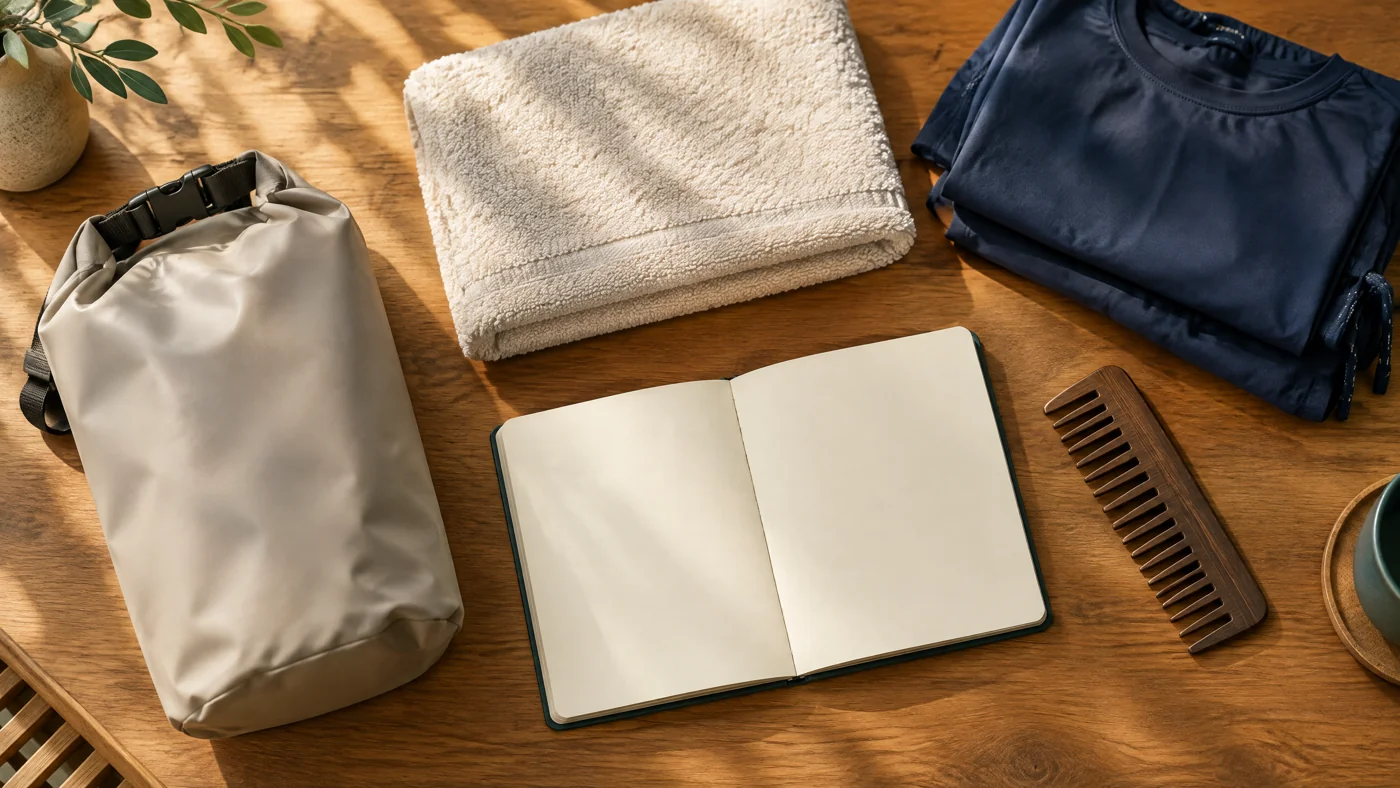
Keep a dry towel available for your hair rather than relying on one already soaked from the day. Pack wet items separately from your work clothes and give reusable towels a proper wash and dry afterwards. These mundane details make the next outing easier to prepare for without adding an elaborate treatment routine or another bottle to your bag.
A short haircut saves styling effort; it does not cancel the need for a gentle post-water reset.
03
3. Test the weekly commitment before a professional route
Repeated training changes the haircut question from holiday convenience to weekly maintenance. In a hypothetical plan combining employment with water sessions, there may be days when you cannot rely on your home shower or usual dryer. Choose a shape you can manage with the facilities actually confirmed, not those you hope will be there. Ask about changing arrangements before deciding that a course can fit neatly between work and an evening appointment.
If professional development is genuinely your goal, the Divemaster course Hong Kong page is a relevant next read for comparing a formal training route with an internship-style arrangement. Use it to prepare questions about eligibility, supervision, learning objectives and realistic availability. An internship does not automatically mean employment or payment. Knowing the proposed commitment helps you discuss a sustainable haircut and wash routine without mistaking a manageable hairstyle for readiness to train.
Before changing your look dramatically, describe your current routine to the stylist: how long you spend drying, what you do when the fringe will not settle and which products you use most. Ask for a reduced-effort version of that routine. If regular wet days prove difficult to accommodate, reconsider the calendar before repeatedly compensating with tighter hair restraint, hotter drying or extra styling. The haircut should support the decision, not conceal a timetable that does not work.
04
4. Keep teaching ambitions separate from looking polished
A professional-looking haircut can support your ordinary work identity without becoming a performance costume. You do not need to copy an imagined instructor look or remove all your length to appear committed. Consider whether you prefer a soft side shape, visible curls or a simple cropped top, then discuss a practical version of it. Your hairstyle remains a personal choice; it says nothing about your certification, judgement or permission to teach anyone.
For a genuine teaching goal, the scuba instructor course Hong Kong page offers a starting point for asking about the agency route, current prerequisites, trainer, assessment and itemised costs. Ask what the proposed training calendar includes before booking salon services around it. Reading a guide grants no professional qualification. Course attendance, assessment and any later employment are separate questions, none of which can be settled by looking confident or having an easy haircut.
Longer preparation days also make personal grooming logistics worth discussing. Ask whether the proposed arrangements leave you somewhere to wash and change before an office commitment, rather than assuming water sessions and classroom time share one facility. Keep a simple post-wash styling option for days when the full routine is impractical. If that option never feels acceptable for your workplace, adjust the cut or your availability instead of relying on repeated last-minute restyling.
05
5. Give a colleague outing room for individual needs
A group organiser can make the day easier by including personal preparation time, not by telling everyone to arrive with the same haircut. Men with curls, longer tops or chemically treated hair may want different washing and drying arrangements. Ask about facilities and pass on confirmed information without turning grooming into a group judgement. A fresh towel and a suitable comb can be useful; neither substitutes for the instructor’s activity packing list.
If the plan is learning together rather than professional progression, private group scuba lessons Hong Kong is the more relevant next read. Share the group’s actual experience, communication needs and intended outcome with DiveHarbour. Ask whether the format is appropriate for each participant and how arrangements will be confirmed. A private booking does not guarantee that everyone follows an identical programme, and a tidy, enthusiastic group photograph is not evidence that everyone is ready.
For a hypothetical outing followed by dinner, leave a separate changing and hair-care window rather than treating the scheduled activity finish as the departure time. Do not invent a fixed duration: hair texture, facilities and travel all affect what is realistic. Let participants raise grooming or health concerns privately, with medical questions directed to a clinician. A considerate plan allows someone to decline the activity or skip the later social event without having to justify their appearance.
| Checkpoint | What to confirm | Why it matters for grooming |
|---|---|---|
| Before agreeing dates | Activity format and each participant’s availability | Avoid scheduling a salon service around an unconfirmed plan |
| Before packing | Fresh-water access, changing facilities and venue product rules | Bring useful personal care rather than assuming facilities |
| Before arranging onward travel | Room for washing, drying and changing | Do not confuse activity finish with being ready to leave |
| Before an office or dinner commitment | Whether your simple styling option is suitable | Choose a realistic transition instead of rushing |
- Ask about fresh-water and changing facilities before promising a direct return to work.
- Bring personal hair-care items suited to your own texture and venue rules.
- Keep individual comfort questions separate from the group chat.
- Use the instructor’s confirmed packing information for activity equipment.
06
6. Plan colour, perms and hair restraint separately
If your low-effort style depends on a perm, colour or lightening, include that service in the planning conversation. Tell your stylist how often you expect sea or pool exposure and whether previous washing has left your hair difficult to manage. The Academy highlights the potential conflict between lightened hair and a sunny swimming holiday.[1] That is a reason to discuss timing and alternatives, not a claim that every treated head needs the same restriction.
There is no universal number of hours after a chemical service that guarantees you can enter the water. The service products, your hair’s condition and the result you want all matter to salon advice. Activity suitability remains a separate question for the instructor, with health concerns for a clinician. You might choose, as a hypothetical alternative, to postpone a major colour change and keep the shape familiar while confirming the likely rhythm of your training.
For a longer top, discuss low-tension everyday handling rather than assuming a tight tie is the only practical answer. Avoid repeatedly pulling the same area hard just to keep your style tidy. If hair placement is relevant to a mask or hood, raise the question with the instructor on land; do not modify equipment or improvise a solution during the activity. A haircut or arrangement of hair cannot guarantee a mask seal or replace suitable equipment.
Keep the salon calendar, the activity calendar and questions of health separate, then make them work together.

07
7. Maintain the routine you can actually repeat
Review how the haircut behaves through ordinary washes and growth, rather than judging it only on appointment day. Note whether the front needs constant correction, whether detangling feels difficult and whether your drying routine fits your schedule. Bring those observations to the next salon conversation. A softer outline or a different balance of length may help more than buying another styling product. Maintenance appointments should reflect your cut, growth and preferences, not a fabricated universal interval.
Keep the financial decision equally practical. Alongside any confirmed training quote, consider your ordinary transport and personal grooming needs without assuming equipment or venue access is included. DiveHarbour currently states that all paid fees are non-refundable; make-up sessions depend on written conditions. Confirm those conditions before committing leave or salon appointments around an activity. Do not build your week on an expectation of a refund, a free change or a guaranteed replacement date.
The goal is a workable relationship between your own hair, your job and the water activities you choose. Gentle care is grooming, not treatment for hair loss; persistent scalp discomfort belongs with an appropriate clinician. This article was prepared by the Canvas Texture editorial team with AI assistance and public sources. Canvas Texture is led by Vit So for men’s own-hair styling, not diving safety endorsement. Take styling questions to the salon and activity questions directly to DiveHarbour.
Sources and useful reading
Continue with hair and grooming
For a separate men’s own-hair discussion: Deep Hair Treatment HK
Continue with a related hair-and-water planning guide: Scuba Instructor Training: Separate Career and Styling Choices
Read our hair styling background: Vit So and the Canvas Texture studio
Find a men’s haircut that fits your working week
Ask Canvas Texture about your own hair’s natural texture, a lower-effort cut and everyday styling after washing. Bring your current routine and the appearance you want for work. DiveHarbour-related activity and training questions belong directly with DiveHarbour, not the salon.
Canvas Texture · WhatsAppFrequently asked questions
Is a buzz cut always the easiest option for regular water activities?
No. It reduces the hair available to tangle, but you still need gentle washing and drying. A very precise short outline can also require upkeep. Ask your stylist which shape works with your growth patterns and preferred appointment routine.
Can I go straight from a session to the office?
Only plan that transition after confirming activity arrangements, fresh-water access and changing facilities. Allow room for your own washing, drying and travel rather than assuming the scheduled finish means you are ready to leave.
Should I use conditioner before entering the sea or pool?
Do not assume a cosmetic is appropriate in the water or inherently marine safe. Follow venue rules and product instructions. Ask your stylist about suitable care at permitted washing facilities rather than treating a coating of product as essential preparation.
Does an easy haircut make me ready for professional training?
No. Hair maintenance is a lifestyle consideration only. Current eligibility, agency requirements, supervision, equipment and assessment must be confirmed with the relevant instructor or trainer. Health questions need an appropriate clinician.
Can Canvas Texture advise when to swim after a perm or colour?
The salon can discuss the service products, your hair’s condition and care needs. There is no universal waiting period that guarantees suitability. Ask the instructor separately about the activity, and seek clinical advice where a health concern is involved.
Related journal articles
First Scuba Lessons: Keep Your Hair, Plan the Pool-Day Wash
Keep the haircut you want to live with; prepare for the wet-hair version of it.
Trying Scuba in Hong Kong: Prepare Your Fringe Before a Mask Fitting
Prepare the fringe you actually have, not the hairstyle you hope will stay unchanged in water.
Choosing a Hong Kong Diving School: A Men's Hair Planning Guide
Choose the learning environment with the instructor; choose an achievable hair routine with your stylist.