
Hair Salon Lam Tin: A Cut That Fits Your Daily Routine
A low-effort haircut starts with an honest account of your morning, not a promise that any style will maintain itself. If you are considering a Kwun Tong appointment from Lam Tin, Yau Tong or Tiu Keng Leng, decide what you want your hair to do before choosing extra services. Set out the outline you prefer, the tools you actually use and the finish you can repeat. Those details make a consultation more useful than a collection of fashionable photographs.
Plan the visit as a complete appointment rather than a station-to-station journey. Confirm the service, location, estimated appointment window and quote before arranging your day around it. DT HUB's relevant area pages concern its Kwun Tong premises; they are not evidence of separate neighbourhood branches. This article is published by Canvas Texture, which shares a website owner with DT HUB. The related reading is therefore a disclosed connection, not an independent salon review or a comparison of local businesses.
For daily styling, the practical question is which compromises you can live with. A close outline may need more frequent tidying. Longer hair can offer different styling options but may take more drying and control. A perm or colour service introduces further upkeep rather than automatically removing work. Prepare a small, specific brief and ask the stylist to explain the likely home routine. You can then judge whether travelling for that consultation serves a clear need rather than simply following a trend.
01
1. Define what the Kwun Tong visit is meant to solve
Begin with the feature that bothers you most when the hair is unstyled. Perhaps the sides spread out, the fringe falls into your eyes or the crown looks untidy after sleeping. Describe the behaviour without trying to diagnose the cause. 'The sides stick out when dry' gives a stylist something concrete to examine. 'I need a completely different hairstyle' is harder to act on. Choose one main improvement and one feature you want to keep, so the appointment has a clear purpose.
The hair salon lam tin page is related reading for asking about a visit to DT HUB in Kwun Tong. Its neighbourhood label should not replace checking the actual destination and appointment details. Decide whether you are seeking a haircut consultation, a colour discussion or another clearly named service. Ask the business directly what can be assessed before arrival and what needs an in-person conversation. Treat any preliminary styling suggestion as a starting point, not a guaranteed result.
Separate the styling decision from assumptions about where a salon sits. Being outside your neighbourhood does not establish better skill, better value or a more suitable haircut. A useful reason to make the journey is that the proposed consultation addresses your specific problem and fits your schedule. If the explanation remains vague, clarify it before committing. There is no need to criticise nearby businesses to justify a visit elsewhere, and convenience alone cannot tell you how a haircut will behave at home.
02
2. Compare outlines by the work they leave you at home
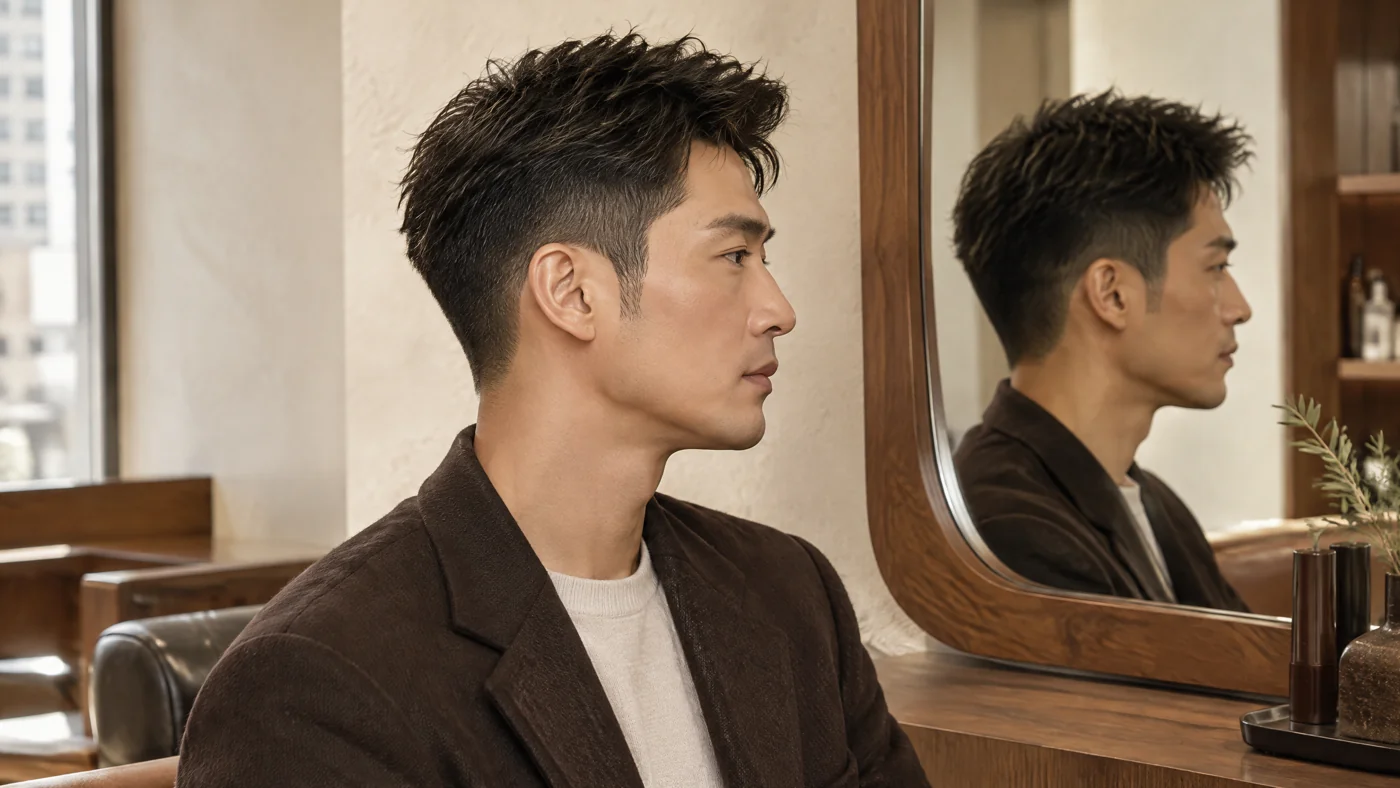
Describe your preferred outline from the front, side and back. For example, you might want less width above the ears while retaining enough fringe to move sideways. That is more informative than asking for 'something neat'. Discuss the balance between shorter edges and retained length, particularly where the hair changes direction. A photograph may show a smooth outline created through careful drying. Ask which part comes from the cut and which part depends on styling, so the distinction remains clear.
Low effort has several meanings. Someone who dislikes using product may accept a softer, less controlled finish. Someone who enjoys a quick brush and dryer routine may value keeping more length. A very short edge can reduce some daily handling while making changes in the outline more noticeable as it grows. The table offers discussion prompts, not rules for every hair type. Have the stylist examine your natural fall before deciding which trade-off is relevant to you and which is not.
An illustrative scenario: a Lam Tin commuter wants a tidy side profile but does not use a hairdryer before work. A reasonable consultation would compare a shorter outline with a softer version that tolerates some movement. It would not promise a perfectly flat finish every morning. Ask to see the proposed shape without an elaborate finishing routine where practical. This makes the decision about an everyday appearance, rather than choosing a result that only feels achievable while sitting in the salon.
| Possible direction | Potential practical benefit | Trade-off to discuss | Question for the consultation |
|---|---|---|---|
| Shorter sides with retained top length | Less bulk around the ears | Sharper edges may need earlier tidying | How will the top settle without a dryer? |
| Softer, connected shape | A less sharply defined everyday outline | Some natural movement remains visible | Where can weight stay without widening the sides? |
| Longer fringe with a flexible parting | More options for moving the front | May need drying or product for control | Can I reproduce the parting with my tools? |
| Minimal change to an existing cut | Preserves a familiar home routine | May not resolve every shape concern | Which single adjustment would make the biggest difference? |
A useful outline is one you understand well enough to recreate, including its compromises.
03
3. Bring evidence of your routine, not a perfect reference image
Take clear photographs of your own dry hair before applying your usual finishing product. Include the front, both sides and back if you can do so comfortably. Use ordinary lighting and avoid filters that obscure texture or the hairline. Then select a small number of reference images and identify the detail you like in each. One might illustrate fringe direction while another shows the width around the ears. Different details can guide discussion without implying that several entire hairstyles can be combined unchanged.
Tell the stylist what your current routine genuinely involves. Explain whether you towel-dry, use a dryer, brush while drying or leave the hair to settle naturally. Include any headwear you regularly use and whether you need to restyle after removing it. Mention products by name or bring photographs of the packaging rather than relying on broad labels such as 'wax'. These details help reveal whether your existing tools can support the proposed finish or whether a new routine would be needed.
Give a straightforward hair-service history, including previous colour, bleaching, perming or straightening where relevant. You do not need to identify the chemicals yourself. If you cannot remember the product or date, say so rather than guessing. Explain any earlier discomfort or damage without turning it into a diagnosis. Ask whether uncertainty changes what should be attempted at this appointment. A haircut discussion can still be useful even when a more complex change needs further assessment or a separate appointment.
- Bring current-hair photographs and mark the exact detail you like in each reference image.
- State which tools you already own and which ones you are willing to use.
- Describe what happens after sleep, drying and any usual headwear.
- List previous chemical services and disclose uncertainty about products or dates.
- Name one feature to improve and one feature you would prefer to retain.
04
4. Treat colour and perming as separate decisions
Do not add a chemical service simply because you have made time to travel. Colour changes appearance, while perming changes texture; neither automatically resolves an unsuitable outline. Ask what the service would contribute to your stated goal and what daily care it introduces. The American Academy of Dermatology notes that colouring and perming can leave hair dry and brittle [1]. That is a reason to discuss the condition of your existing hair, not a prediction that every service will cause the same outcome.
Ask about product instructions, relevant precautions and whether previous processing limits the proposal. A shorter haircut does not erase the history of hair that remains. Tell the stylist about past reactions and any current scalp discomfort before work begins. If a product causes stinging or burning, it should be rinsed out and medical advice sought; do not endure symptoms to complete the look [1]. A styling goal is never a reason to continue through a skin reaction or conceal discomfort during an appointment.
An illustrative scenario: someone travelling from Yau Tong hopes a perm will eliminate all morning styling. The useful next step is to ask for a realistic drying and finishing explanation, then compare it with a cut-only option. They may decide the added routine is worthwhile, or prefer a smaller change. Both are valid outcomes. If the concern is new hair loss rather than styling, seek an appropriate clinician's assessment. A salon observation or attractive finish cannot establish the cause of hair loss.
05
5. Turn the booking conversation into a usable written record
Ask for a quote that describes the intended service rather than treating a headline figure as the whole agreement. Clarify what is included, what depends on the consultation and what would require your approval. If several services are discussed, request separate descriptions so you can choose without confusion. Hong Kong's Consumer Council emphasises clear information about goods, services and transaction terms [2]. In practice, keeping the agreed scope visible helps you distinguish a deliberate change from an assumption made during the booking conversation.
Use the hair salon yau tong page as a route into a direct enquiry about DT HUB's Kwun Tong appointment arrangements. Do not assume the area label means a Yau Tong branch, a fixed availability window or an included package. Send your preferred date, the main styling concern and relevant service history. Ask how consultation time is handled within the appointment. Keep any response you rely on, particularly if you have limited flexibility after work or another commitment later that day.
The worksheet below serves a different purpose from comparing haircut shapes: it records what needs confirming before departure. Complete it in your own words, including a latest comfortable departure time if your day has a hard limit. Ask about changing or cancelling the appointment and about declining proposed extras. Do not assume a universal cooling-off period or unconditional refund. If the proposed work changes after assessment, pause and review the revised scope and quote before agreeing, rather than treating arrival as consent to everything discussed.
A written record also helps when an appointment cannot accommodate the full idea. You might prioritise the haircut and postpone an optional colour discussion, or choose another date with a less restricted finish time. Ask the business whether either arrangement is possible instead of assuming services can be split without consequences. Keep the decision tied to your own priorities. The aim is not to negotiate every detail into certainty, but to identify which uncertainties could affect your schedule, spending or willingness to proceed.
| Item to record | What to send or ask | What the answer helps you decide |
|---|---|---|
| Primary service | Describe the haircut goal and any optional services separately | Whether the proposed appointment matches the main need |
| Quote scope | Ask what is included and how changes are approved | Whether the spending decision is sufficiently clear |
| Appointment window | State availability and ask how consultation fits within it | Whether the visit fits the rest of your day |
| Destination and access | Confirm the full address and any relevant access needs | Which route and arrival arrangements to check |
| Changes and cancellation | Request the terms before confirming | What happens if your plans or service choice change |
06
6. Plan the whole journey without relying on a time promise
For readers checking the hair salon tiu keng leng page, the destination to confirm is DT HUB at Room 03, 21/F, Lee Bo Times Centre, 50 Hoi Yuen Road, Kwun Tong, Kowloon. Save the complete address rather than only the district name. Use a current transport planner for your starting point and intended departure time. Check the station direction and street route yourself; a neighbourhood page title is not a reliable substitute for live journey information or your building-to-building circumstances.
Include the less visible parts of travel: reaching your departure stop, leaving the destination station, finding the building and reaching the correct floor. Weather, mobility requirements and the belongings you carry may change which route feels manageable. If step-free access matters, verify the relevant transport and building arrangements before confirming. Ask the business about arrival instructions rather than presuming them. No single door-to-door estimate can account for every reader from Lam Tin, Yau Tong or Tiu Keng Leng, so leave a margin that suits your circumstances.
An illustrative scenario: a Tiu Keng Leng resident wants a haircut before meeting friends elsewhere. They check the outward route, request an appointment window and plan the onward journey separately. If the available slot leaves no room for consultation or a later finish, they choose a less pressured day. This approach does not require an invented travel-time saving. It makes the visit workable by acknowledging uncertainty. If delayed, contact the business and ask what remains possible rather than assuming the original service can be compressed.
07
7. Leave with a repeatable method and a sensible review point
Before leaving, ask the stylist to explain the finishing sequence using the tools you intend to use. Focus on where to direct the hair, when to apply product and which areas need attention. Ask what a less styled version of the cut should look like, too. A demonstration is most useful when you can describe the steps back in ordinary language. You do not need a long product list; you need to understand which actions matter and which parts of the salon finish are optional.
Review the haircut after your normal wash and drying routine rather than judging only the appointment-day photograph. Note whether the fringe, sides and crown behave as discussed. Keep observations specific: 'the left side turns out after drying' is more useful than 'it looks wrong'. If you want to raise a concern, contact the salon and ask about its review process without assuming a free adjustment or guaranteed outcome. A clear description supports a practical conversation about styling, the cut or the limits of the original plan.
Plan the next visit around what changes in the outline, not an arbitrary universal haircut interval. Sharper edges, retained length and your own tolerance for growth can lead to different preferences. Keep a photograph and a brief note about what worked so the next consultation starts with evidence. For your next decision, consider the whole routine: travel, appointment time, home styling and upkeep. A low-effort haircut is a balance you can maintain, not simply a short style or a service with an appealing name.
The best test of a daily haircut happens after your own wash, with your own tools and your ordinary routine.
Sources and useful reading
Continue with hair and grooming
If your question concerns styling your own men’s hair, continue with: Korean Men's Perm
Read a related decision guide: Haircut Kwun Tong: A Separate Brief for Every Family Member
Read our men’s styling background: Vit So and the Canvas Texture studio
Discuss a daily own-hair routine with Canvas Texture
For men's styling using your own existing hair, bring your current-hair photographs and routine notes to a Canvas Texture consultation enquiry. The workshop is at 252 Hollywood Road, in the Sheung Wan/Central area; WhatsApp 94976438 to ask about an appointment. Canvas Texture shares a website owner with DT HUB, but this invitation is not for wigs, medical care or booking a DT HUB visit.
Canvas Texture · WhatsAppFrequently asked questions
Do the Lam Tin, Yau Tong and Tiu Keng Leng pages mean DT HUB has branches in those districts?
No. These area pages concern enquiries about visiting DT HUB's Kwun Tong premises. Confirm the full destination and appointment details directly before travelling.
Can I ask for a low-effort style without knowing a haircut name?
Yes. Describe the feature you want to change, what you want to retain and the tools you use. Current-hair photographs and clearly annotated reference details can be more useful than a haircut label.
Should I book a perm because I dislike morning styling?
Not automatically. Ask what drying, finishing and care the proposed texture would require, then compare it with a cut-only option. Discuss previous processing and relevant precautions before choosing a chemical service.
What if I only have a narrow appointment window?
State your availability before confirming and ask how consultation fits within the estimated appointment window. Check both outward and onward travel. If there is insufficient room for uncertainty, consider another date rather than assuming a faster service.
Can Canvas Texture arrange my DT HUB visit?
This article does not offer booking on DT HUB's behalf. Ask DT HUB directly about its appointments. Canvas Texture's invitation here is specifically for men's styling consultations using their own existing hair.
Related journal articles
Kwun Tong Hair Salon: Questions Before a First Visit
Choose the appointment you can understand and the hairstyle you can maintain, not just the photograph you admire.
Haircut Kwun Tong: A Separate Brief for Every Family Member
Share the booking request, but give every person a separate say in the haircut.
Women's Haircut Kwun Tong: Choose the Outline Before Colour
The most useful colour reference is one that still makes sense after the length you want removed has gone.

