
Boat-Dive Packing: Dry Storage for a Calm Hair Reset
For a boat-diving day, pack your hair-care essentials around one simple distinction: what must stay clean and dry, and what will come home wet. Keep your change of clothes, clean towel and grooming pouch separate from used swimwear. Then plan your proper hair rinse and reset for confirmed shoreside facilities or home, rather than assuming the boat has a shower or somewhere to style your hair.
The useful goal is not to preserve a perfect morning hairstyle through the whole outing. It is to avoid turning damp hair, a tangled fringe and a soaked shirt into a frustrating journey home. Men with curls, longer tops or chemically treated hair can benefit from a manageable starting shape, gentle handling afterwards and enough time to dry their hair without rushing into an elaborate finish.
This is a Canvas Texture editorial guide, prepared with AI assistance and public hair-care sources. Canvas Texture and DiveHarbour share the same website owner; the links below are related planning resources, not independent recommendations. The salon can discuss your own hair and everyday styling. DiveHarbour must confirm activity eligibility and equipment, while individual health questions belong with a clinician.
01
1. Divide your bag into clean, wet and later
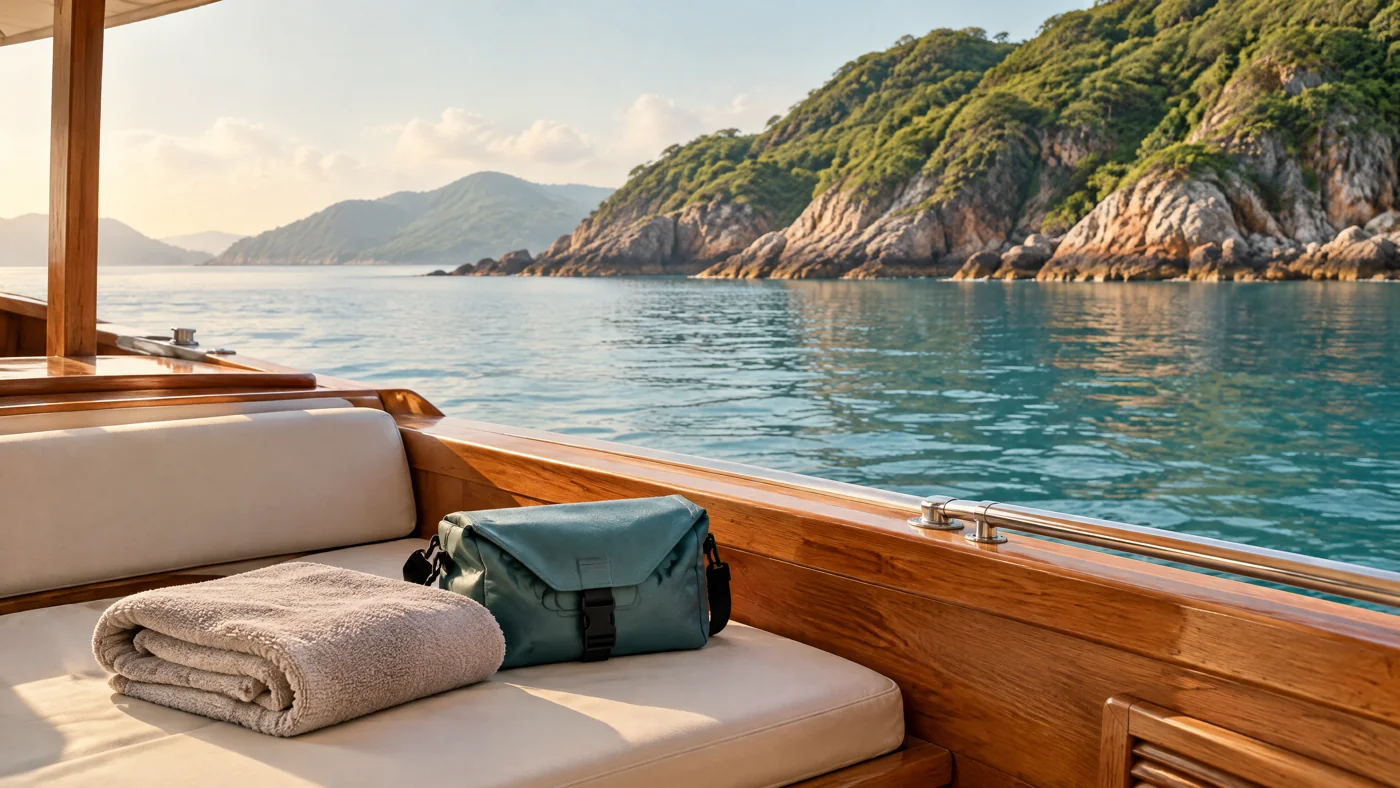
Start with the contents rather than the bag’s appearance. Your clean shirt and hair towel should not share an unprotected compartment with used swimwear. Give wet belongings their own suitable container, and keep toiletries in a closed pouch within the dry group. Follow each container’s instructions and check its condition before packing. A bag described as water-resistant is not a guarantee that everything inside will remain dry under every exposure.
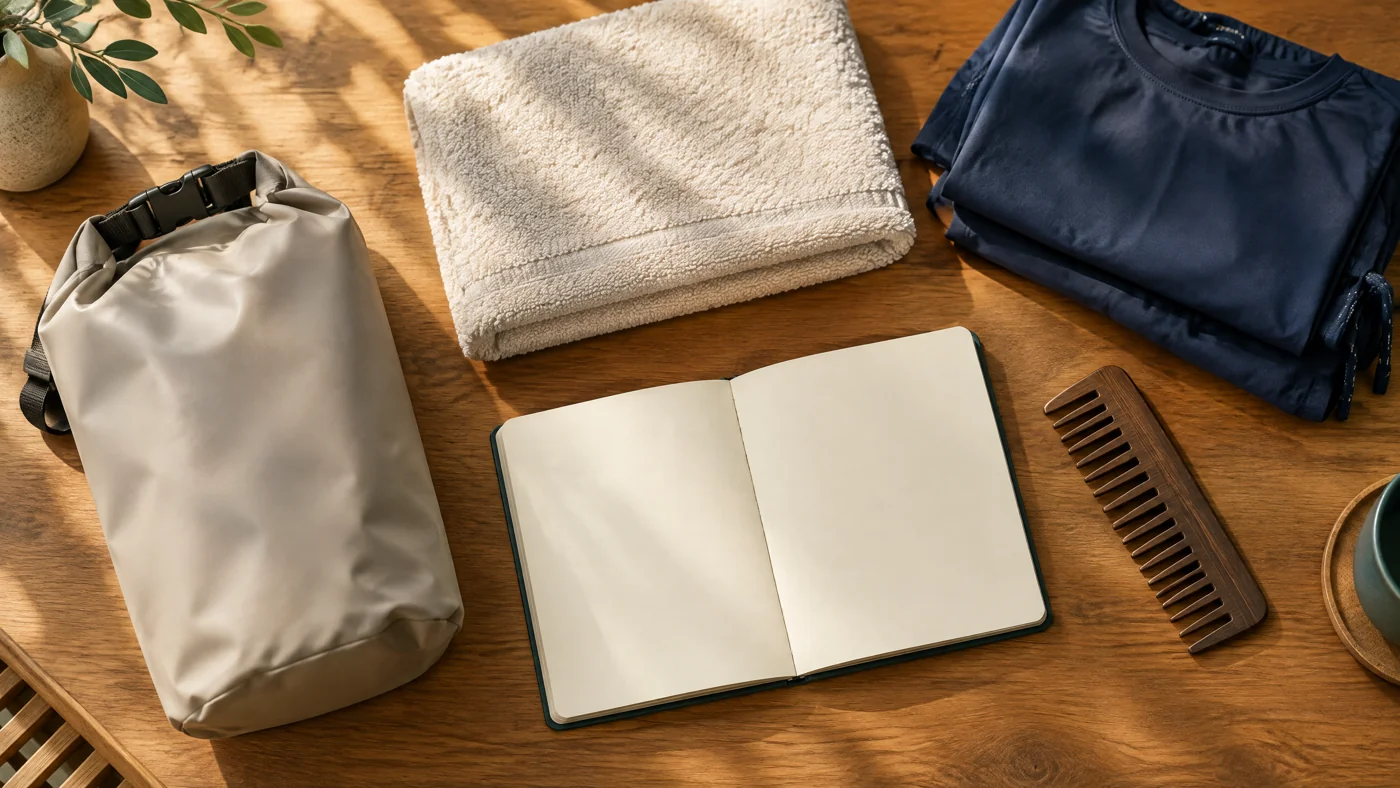
A small, distinct grooming pouch is easier to find than several loose bottles. Pack only what your actual routine needs: perhaps your usual shampoo for use at an appropriate wash facility, a suitable conditioner and a familiar comb. Leave the full styling collection at home. The point is to have clean essentials available later, not to create a portable salon that takes up space the operator has not agreed to provide.
Treat your clean hair towel as a separate item from the towel used for your body or a wet seat. That makes the later reset more straightforward and avoids immediately pressing a damp, salt-exposed towel against freshly rinsed hair. Use clearly different pouches or labels so you can identify them without unpacking everything. Ask the operator about personal-bag limits and permitted storage before choosing a bulky container. Put the comb in a washable sleeve or its own compartment rather than loose beside shoes. Pack the clean shirt where you can find it without opening the wet-items container; separation should remain useful during the return journey.
| Group | Examples | Packing purpose |
|---|---|---|
| Clean and dry | Change of shirt, clean hair towel | Keep separate from used swimwear |
| Closed grooming pouch | Suitable comb, usual wash products | Keep toiletries together and contain leaks |
| Wet return items | Used swimwear, damp body towel | Isolate from clean clothing until unpacked |
| Personal essentials | Phone and required documents | Use suitable protection and minimise valuables |
| At home | Hairdryer and finishing products | Avoid carrying tools with no confirmed place to use them |
02
2. Start with hair you can handle gently
Before leaving, choose a shape that can tolerate losing its finish. A short textured cut may need less product than a sharply sculpted style. A longer fringe might be easier to manage with a softer starting arrangement rather than a heavily set sweep. Keep this as a grooming decision, not an equipment solution. If hair falls around the area where equipment sits, raise that concern with the instructor before the activity. For a hypothetical man growing out a cropped top, the awkward middle length may need a different everyday parting rather than a last-minute dramatic cut. Discuss that transition at a normal salon consultation, with attention to how the hair settles without strong hold.
Longer hair does not need to be pulled tight simply to look organised. Ask your stylist about a low-tension arrangement that suits your length, while leaving any equipment compatibility to the instructor. Bring spare soft hair ties if you normally use them, but do not assume decorative clips or any particular hairstyle are suitable during the activity. A tidy appearance cannot establish equipment fit, and discomfort is not something to disguise with stronger styling.
The American Academy of Dermatology advises gentle handling, discourages rubbing hair with a towel and distinguishes between appropriate combing approaches for straight and curly hair. [2] That matters when packing: choose a tool you already use comfortably, rather than buying an aggressive detangling brush for the occasion. Men with curls should not assume that the dry-brushing routine of a straight-haired friend will suit them. Let your usual hair texture guide the kit.
Pack for the hair you actually have, not the hairstyle you hope will survive unchanged.
03
3. Ask about storage before choosing a private boat
Privacy and usable storage are different questions. A private arrangement does not automatically provide a dry locker, roomy changing area or convenient access to your personal bag throughout the day. If you are considering that format, the Hong Kong private speedboat dive charter guide is a useful next read. Include your group’s luggage needs in the enquiry, alongside the activity information DiveHarbour requests, instead of assuming a vessel will accommodate a large grooming bag.
Ask what size of personal bag is acceptable, where it may be stored and when you can access it. Those answers determine whether your clean towel should be in a small separate pouch or inside your main bag. Do not plan to open and spread toiletries around the boat. Hair care can wait for a suitable place ashore; the packing system should make your belongings easier to contain, not create another task during the outing.
Discuss the return arrangements too. If there is no confirmed wash facility, a dry shirt and an intact clean pouch may be more valuable than extra styling products. Keep your hair-reset expectations modest until you know what is available. A private charter enquiry is a chance to clarify practical limits, not a way to purchase guaranteed conditions, a fixed route or unlimited time for personal grooming. The operator confirms what can actually be arranged.
04
4. Make a Hoi Ha Wan enquiry around your whole day
For a destination-specific conversation, read the Hoi Ha Wan boat dive page and ask DiveHarbour about the proposed meeting and return arrangements. Mention whether you hope to wash and change before travelling onwards. The page is an enquiry resource, not evidence of a salon-style changing room, guaranteed weather or a particular wildlife encounter. Your grooming plan should work even if the site or timing changes after professional assessment.
Suppose, as a hypothetical example, you are meeting friends after the outing. The practical question is whether you can return home first, not whether your morning styling product has enough hold. Build in a real opportunity to rinse, dry and change before deciding how formal that later plan can be. If no wash facility is confirmed, choose an onward arrangement that does not depend on having a freshly blow-dried fringe at an exact time.
A coastal outing also calls for restraint with products. Do not assume that a cosmetic labelled biodegradable is suitable for release into seawater, or that applying it immediately before water activity is necessary. Follow product instructions and current venue rules, and reserve your normal wash and conditioning routine for an appropriate shoreside facility or home. Keeping the pouch closed until then gives you a simpler routine without making an unsupported claim about marine safety.
05
5. Plan a gentle rinse before a finished hairstyle
Once you reach suitable washing facilities, deal with the water exposure before the appearance. Freshwater rinsing can be part of your post-activity hair care, followed by washing and conditioning suited to your hair and the products you use. The American Academy of Dermatology notes that swimming-pool chemicals and sun exposure can damage hair and recommends post-swim care. [1] That is relevant when a pool session is also part of your week, without treating sea and pool exposure as identical.
Press excess moisture out with your clean towel rather than scrubbing the scalp and lengths. Detangle in the way that suits your texture, working gently rather than forcing a tool through a knot. If you normally use heat to finish, keep it low and avoid repeated pulling with a brush. These gentler handling choices align with AAD advice. [2] They do not guarantee damage-free hair, and persistent scalp discomfort calls for appropriate clinical advice rather than another styling product.
Finish only after the practical reset is complete. A small amount of your usual styling product may be enough for a relaxed shape once your hair is in a suitable condition for it. There is no need to rebuild every strand of the morning style. If time is short, prioritise a comfortable scalp, gentle handling and a dry change of clothes. Save detailed styling for home instead of layering more product onto hair that still needs washing.
| Point in the day | Useful grooming priority | Do not assume |
|---|---|---|
| Before leaving | Choose a manageable shape and pack a clean towel | Strong hold will preserve the style all day |
| During the outing | Keep personal grooming items contained | There is space or permission to wash and style |
| At confirmed wash facilities | Rinse and use a suitable wash routine | Every location permits the same products |
| Before travelling onwards | Handle gently and change into dry clothing | A full salon finish is necessary |
| At home | Dry appropriately and finish if wanted | Wet bags can wait unopened until next weekend |
The first hair-care task after the water is a gentle reset, not a stronger hold.
06
6. Compare the real cost of a workable day
A useful comparison includes your journey home and wash arrangements, not just the activity headline. The Hong Kong boat dive price guide gives you a starting point for asking what the current quotation covers. Request the trip format, equipment inclusions, meeting arrangements and total in writing. Do not infer a private-charter quotation from a shared-trip listing. Your grooming budget is separate: you may simply need your existing towel and products rather than buying an entirely new kit.
Check the payment conditions before building other commitments around the outing. DiveHarbour currently states that all paid fees are non-refundable, with make-up sessions available only subject to written conditions. Do not assume a refund, free date change or guaranteed replacement session. This matters if you are also arranging transport, a later dinner or a hair appointment. Ask which activity details remain provisional, then avoid making your hair-reset plan depend on an exact return time.
Convenience can be worth considering without mistaking it for luxury. A confirmed return arrangement that lets you wash at home may suit you better than an elaborate plan requiring unverified facilities. Conversely, if appropriate changing and washing facilities are confirmed, a compact kit may be enough. Compare those practical differences on their own merits. The best grooming decision is the one that leaves you able to care for your hair calmly, without expecting the dive operator to provide salon services.
07
7. Unpack now, then improve the next outing
When you get home, separate the wet return items promptly and clean or dry them according to their care instructions. Empty the grooming pouch if anything has leaked, and let suitable items dry before repacking. Replace the clean towel only when it is properly ready for the next trip. This final step is easy to overlook, but a forgotten damp towel undermines the very wet-and-dry separation you organised before leaving the house.
Notice what was genuinely useful. Did you need every bottle, or only your usual wash products at home? Was your comb comfortable for your texture, and did a heavy morning finish make the later wash more cumbersome? These observations can improve the next packing list without becoming claims about diving suitability. Keep the routine small enough to repeat for a pool visit as well, while checking that venue’s washing facilities and product rules separately.
If repeated water outings are part of your life, tell your stylist when discussing a longer fringe, curls, colour or a perm. Ask about a shape and care routine that fit your actual washing and drying habits. Chemical services need an individual assessment of hair condition and the relevant product instructions; a fixed waiting period is not a universal promise that you can enter the water. Your stylist handles the hair discussion, while the instructor and clinician handle their separate activity and health responsibilities.
- Keep one clean hair towel separate from the wet return items.
- Check bag-size limits and available storage with the operator before packing.
- Confirm wash facilities instead of assuming the boat has them.
- Choose a gentle detangling method appropriate to your own hair texture.
- Unpack damp belongings at home and review what you actually used.
Sources and useful reading
Continue with hair and grooming
For a separate men’s own-hair discussion: Deep Hair Treatment HK
Continue with a related hair-and-water planning guide: A Visitor’s Fun Dive Day: Leave Space for Hair and Rest
Read our hair styling background: Vit So and the Canvas Texture studio
Want an easier own-hair routine for water days?
Ask Canvas Texture about men’s styling for your own hair, including a manageable fringe, curls and gentle everyday handling. Bring your usual washing and drying habits into the conversation. DiveHarbour-related activity, eligibility, equipment and booking questions belong with DiveHarbour directly; Canvas Texture’s hair consultation is not a diving booking or medical assessment.
Canvas Texture · WhatsAppFrequently asked questions
Do I need a separate dry bag just for hair products?
Not necessarily. A closed grooming pouch inside suitable dry storage may be enough for your kit. Keep it separate from wet belongings, follow the bag’s instructions and confirm the operator’s luggage limits. No container should be treated as an unconditional waterproof guarantee.
Can I rely on washing my hair on the boat?
No. Ask about facilities before the outing and plan for an appropriate shoreside wash or a rinse at home if none are confirmed. Follow the venue’s rules for water use and products.
Should I slick my fringe back with more product before diving?
More hold does not establish equipment compatibility. Choose a manageable everyday shape and tell the instructor about hair near the equipment contact area. Do not modify equipment or use cosmetics as a fitting solution.
Is conditioner labelled biodegradable automatically suitable for the sea?
No. That label is not a blanket marine-safety guarantee. Use products according to their instructions and venue rules, with your usual wash routine reserved for appropriate facilities rather than assumed suitable for use in the water.
Can Canvas Texture tell me when to dive after a perm?
Canvas Texture can assess your own hair, the chemical service and product-specific aftercare. It cannot confirm diving eligibility. Ask DiveHarbour about the activity and equipment, and consult a clinician for individual health questions; no fixed post-perm waiting period guarantees suitability.
Related journal articles
First Scuba Lessons: Keep Your Hair, Plan the Pool-Day Wash
Keep the haircut you want to live with; prepare for the wet-hair version of it.
Trying Scuba in Hong Kong: Prepare Your Fringe Before a Mask Fitting
Prepare the fringe you actually have, not the hairstyle you hope will stay unchanged in water.
Choosing a Hong Kong Diving School: A Men's Hair Planning Guide
Choose the learning environment with the instructor; choose an achievable hair routine with your stylist.

