
Root touch up price, highlights and balayage: what are you paying for?
A useful colour quote tells you which hair will change, not just what the appointment is called. Root work addresses new growth; highlights describe selected lighter strands across a design; balayage concerns the placement and transition of lightness. These are different tasks, so the lowest headline price is not necessarily a cheaper route to the same result. Start with the change you actually need.
Vit So's published menu gives concrete starting points for that discussion. Quick root touch-up is HK$800 for new growth within three inches. Full-head highlights are HK$1,600 or HK$2,200, while Balayage / Ombré is HK$2,500 including one bleaching session. Those descriptions do not establish identical inclusions. In particular, a named lightening service does not automatically tell you whether toner, cutting or finishing belongs in its price.
This guide explains how to compare those entries without turning a menu into an assumed final bill. It also considers the decisions beyond the first visit: where you want dark hair retained, how often you cut your hair, and which changes you can comfortably maintain. The aim is a manageable colour plan, rather than the most elaborate appointment your initial budget can accommodate.
01
1. Separate new growth from changes through the lengths
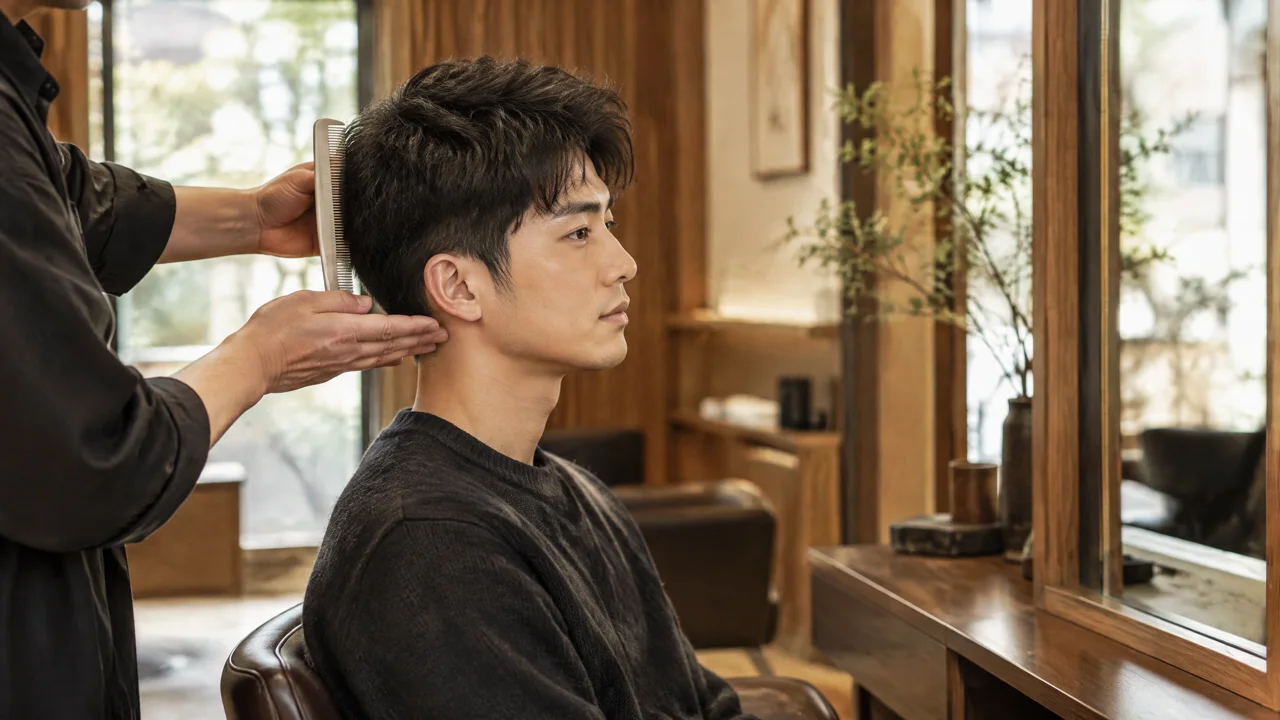
When checking the root touch up price, notice the coverage condition as carefully as the amount. Vit So's quick root touch-up entry specifies new growth within three inches. That is not a full-head colour description. Measure and photograph the visible regrowth, then ask whether the entry matches your hair and intended result. A photograph of your preferred shade alone cannot answer that question.
Decide whether the existing lengths still suit you. If they do, your enquiry can focus on the boundary between new growth and previously coloured hair. If the lengths have faded or look uneven, say that separately. Covering roots and changing the appearance of older colour are different requests, even when you would like both completed during the same visit.
For an illustrative example, imagine a man with grey regrowth around the temples and an otherwise satisfactory brown colour. He might prioritise blending those visible roots. Another man with the same regrowth may also want pale ends returned to a darker shade. Their photographs could look similar at first glance, but their requested work is not equivalent. Neither example is a client account.
Describe what you want to keep as well as what you want changed. You could say, 'The brown lengths are fine; I mainly notice the lighter roots at my parting.' Alternatively, explain that you want a more uniform appearance throughout. This distinction helps prevent a maintenance enquiry becoming an unplanned overall colour change, and gives the person assessing your hair a clearer basis for discussing scope.
02
2. Read each published charge alongside its boundaries
A menu amount is useful evidence of a listed entry, but it cannot explain every possible combination. Two options joined by 'or' are not a continuous range. A specific bleaching inclusion is not permission to assume unlimited lightening. Keep the wording intact when comparing quotes, and ask what determines the applicable option rather than assigning your own reason to a higher or lower charge.
The table below separates the published information from the questions still open. All amounts are Hong Kong dollars and refer to Vit So's menu, not a general Hong Kong average. It deliberately leaves unconfirmed inclusions unresolved. This is more useful than filling gaps with assumptions about what a salon 'normally' includes, because those assumptions can hide the very differences you need to compare.
Check washing, finishing and cutting explicitly. A colour photograph usually shows a finished hairstyle, but that image does not prove all the work belongs in a colour entry. Likewise, a separate toner price does not establish a combined colour-and-toner offer. Ask for the assessed service combination and its total, rather than simply adding every potentially relevant menu number into a homemade estimate.
Length conditions deserve the same attention. The menu notes an additional HK$200 for hair extending below the chest; ask which selected services it affects. Do not treat this as a universal charge for all longer styles. For shorter men's hair, the more relevant unresolved question may be the amount of coloured hair retained after cutting, rather than a length surcharge that does not describe their situation.
| Entry | Published charge | Stated detail | Question before agreeing |
|---|---|---|---|
| Quick root touch-up | HK$800 | New growth within three inches | Does this cover my regrowth and intended change? |
| Tinting | HK$800–1,000 | A published range | Which amount applies to the assessed work? |
| Full-head highlights | HK$1,600 or HK$2,200 | Two separate price options | Which option applies, and what does it include? |
| Balayage / Ombré | HK$2,500 | Includes one bleaching session | Is toner or other work needed and separately charged? |
| Bleaching / lightening | HK$900 | A separate listed entry | How does this relate to the proposed colour plan? |
| Toner | HK$900 | A separate listed entry | Is it included in my chosen arrangement or additional? |
A price becomes useful when its boundaries are visible. Leave an inclusion unconfirmed rather than guessing it into the budget.
03
3. Compare highlights by placement, not brightness alone
The two figures for full head highlights cost deserve an applicability question, not an invented explanation. The published menu does not identify what separates HK$1,600 from HK$2,200. Ask which option corresponds to your assessed design and what supporting work is included. It also does not establish separate half-head, partial-highlight or Babylights prices, so those requests need their own discussion rather than an assumed percentage discount.
For the design itself, explain where lightness should be visible. The front, crown and hair underneath contribute differently when you change your parting or push the hair back. 'Full head' does not communicate how much dark hair you hope to retain. Show your everyday hairstyle alongside the reference, especially if the reference is longer or styled with more volume than your own hair.
Consider contrast as a separate decision from coverage. Someone seeking a few visible ribbons against a dark base has a different visual priority from someone seeking an overall lighter impression. Neither goal can be priced accurately from the word 'highlights' alone. Point out whether you like the spacing, the brightness or the tone in a reference image; otherwise, a discussion may focus on the feature you care about least.
For short hair, a planned haircut can change what remains of the placement. Imagine, purely as a planning example, colouring a long fringe shortly before cutting it much shorter. Some of the lightened area may then be removed. Tell the salon about the intended cut before deciding on coverage. That conversation is not a reason to assume cutting is included, but it can prevent paying for a design you immediately discard.
04
4. Treat lightening, tone and hair condition as separate questions
A colour reference combines several features: darkness or lightness, warm or cool appearance, placement, and the finish created by styling. Separate them when explaining your priorities. Ask whether the proposed work involves changing the underlying lightness, adjusting tone, or both. Naming these questions does not prescribe a chemical process; it helps the assessor explain why a particular menu entry or additional step may be relevant.
Toner is a separate HK$900 entry on the published menu. The single-service highlights and Balayage / Ombré descriptions do not establish that toner is included in every case. Ask whether it is part of your particular quote and what appearance it is intended to adjust. Also distinguish toner used during the first appointment from any later maintenance appointment; an initial inclusion does not mean future visits are covered.
Chemical colouring and perming can leave hair dry and brittle, according to the American Academy of Dermatology. [1] Existing roughness and breakage therefore belong in the assessment, alongside earlier bleach, home dye, perms or straightening. A pre-service protection component is not a guarantee against damage. If the desired change would demand unsuitable additional processing, discuss a different design or postponement rather than treating a larger budget as the solution.
Follow the product's skin-test instructions and disclose previous reactions. The FDA notes that previous safe use does not guarantee another use will be reaction-free; a negative test also cannot rule out a reaction. Avoid dyeing an injured or irritated scalp. [2] These precautions concern suitability, not premium pricing. Ask how the relevant instructions affect preparation before fixing a date, without assuming a particular salon testing timetable.
05
5. Understand what one balayage session includes
When researching balayage cost, read the single service and the listed package as different arrangements. Vit So's HK$2,500 Balayage / Ombré entry includes one bleaching session. The women's wash, cut and blow-dry plus Balayage / Ombré package is HK$2,980–3,680, including one bleaching session, one toner and pre-service protection. Its contents explain why comparing headline amounts alone would miss important differences.
That women's package is not evidence of an equivalent men's arrangement at the same price. A male reader should ask which quoted scope applies to his hair rather than relabelling the package. Equally, one included bleaching session does not promise that every reference shade is achievable within it. If further work is proposed, clarify its suitability and price before deciding whether the original goal still fits your budget.
Explain where you want the transition to begin. A darker area near the scalp with lighter ends creates a different design discussion from lightness starting much closer to the roots. Show the hair loose and in its usual pushed-back or tied position, where relevant. Placement matters because the same reference can be interpreted differently when the visible length, parting and daily styling change.
Treat a dramatic reference as a conversation starter rather than a contract for one visit. In an illustrative scenario, someone with dark home-dyed lengths wants very pale ends but has a firm spending limit. The useful question is which assessed version preserves their main priority, perhaps contrast rather than maximum brightness. There is no basis to promise the reference result, a fixed number of sessions or a cheaper alternative without examining the hair.
06
6. Budget for the way you actually wear and maintain colour
The first appointment is only one part of the decision. Ask what visible change you may notice as the hair grows and as the tone changes, then discuss maintenance suited to the assessed design. There is no universal return interval established by this menu. Someone who dislikes visible regrowth may make different choices from someone comfortable keeping a darker root area, even if their initial budgets match.
Bring your cutting routine into that discussion. Frequently trimming a short fringe or close sides may remove coloured areas sooner than expected. Conversely, retaining length leaves more of the previous colour history in play. Neither pattern makes one technique automatically better value. The sensible comparison is between the design you will keep wearing and the work you will need assessed later, not the largest transformation achievable today.
The decision table offers hypothetical priorities, not recommendations for a particular head of hair. It helps you identify the unresolved question before requesting a quote. Avoid assigning fixed annual totals without a realistic maintenance plan. A lower initial amount may still lead to a plan you find inconvenient, while a broader first appointment may include work you did not actually want or need.
Set a comfortable spending limit and name the feature you would keep if the assessed plan exceeds it. This might be root coverage, visible lightness around the face, or contrast at the ends. Ask what can change without making the remaining plan unsuitable. Removing optional design ambitions is different from skipping necessary preparation, and a responsible budget discussion should leave room to decline the service altogether.
| Your main priority | Describe this clearly | Trade-off to discuss |
|---|---|---|
| Refresh visible new growth | Root length and whether existing lengths should stay unchanged | Whether tone adjustment through the lengths is a separate need |
| Show lighter strands across the hairstyle | Placement, contrast and dark hair to retain | Which highlights option fits and what later upkeep involves |
| Keep darker roots with lighter ends | Transition point and everyday styling position | What one lightening session can reasonably address after assessment |
| Keep colour while shortening the haircut | The length to remove and areas to retain | How much of the planned placement would survive the cut |
The most expensive colour is not always the most ambitious one. It can be the work you pay for before deciding how you will wear it.
07
7. Turn your comparison into a clear enquiry
Send a small set of useful photographs rather than many filtered references. Natural-light views of the roots, lengths and ends help describe the starting point. Include one reference and explain the feature you like. If your hair normally sits differently from the photographed finish, show that too. Images support an enquiry, but they do not replace an assessment or establish the final quoted scope.
Give the colour history in plain terms, including home products and earlier chemical work. Approximate dates are useful when exact dates are unavailable; acknowledge any uncertainty rather than guessing. Mention current breakage or sensitivity separately from the desired shade. Then explain your spending limit and whether it covers cutting as well as colour, so an answer addresses the appointment you mean rather than an isolated entry.
A useful message could read: 'I want to keep the darker roots and add lighter areas through the top. These photos show my current hair and previous colour. I plan to shorten the fringe. Which listed service fits, what would it include, and what additional work might be needed?' This is an illustrative enquiry, not a salon quotation or a claim that the requested plan will be suitable.
Before proceeding, ask for a written summary of the selected work, applicable price option, named inclusions and any unresolved additions. Clarify how changes discovered during assessment will be discussed before extra work begins. Confirm timing and booking arrangements separately, and keep the service details and receipt. The point is not to negotiate every item away; it is to understand what you are agreeing to while you still have a choice.
- Show current roots, lengths and ends in natural light, plus one annotated reference.
- Disclose earlier dye, bleach, perms or straightening, including uncertain dates and any previous reaction.
- State the main visual priority, planned haircut and comfortable spending limit.
- Confirm the applicable price, toner and finishing inclusions, extra-work approval and appointment arrangements.
Sources and useful reading
Continue with hair and grooming
Continue with Canvas Texture’s male hair needs: Korean Men's Perm
Explore another related decision: Perm cost and down perm price: compare package scope
Read the lead stylist’s background: Vit So and the Canvas Texture studio
Discuss your men's hair priorities with Canvas Texture
Bring your current hair photographs, daily styling routine and maintenance priorities to a Canvas Texture consultation about your male hair needs. Explain the shape you want to keep and the changes you are considering, so the conversation starts with your own hair rather than a reference image alone.
Canvas Texture · WhatsAppFrequently asked questions
Does the quick root touch-up charge cover faded ends?
The published HK$800 entry specifies new growth within three inches. It does not establish work through faded lengths. Explain both issues and ask whether the plan needs a separate tone adjustment or another colour service.
Why are there two full-head highlights prices?
The menu lists HK$1,600 or HK$2,200 without explaining their eligibility. Ask which option applies to your assessed design. Do not assume the difference represents hair length, a particular technique or a guaranteed toner inclusion.
Does the single balayage price include everything in the package?
No such equivalence is established. The HK$2,500 single entry includes one bleaching session. The listed women's package additionally names wash, cut and blow-dry, one toner and pre-service protection. Confirm the arrangement appropriate to your enquiry rather than borrowing its inclusions.
Can I calculate a final quote by adding colour and toner prices?
Those figures help identify possible components, but their sum is not a confirmed quote. The assessed work may involve different inclusions or additional needs. Request a total for the specific plan, including washing, finishing and any applicable surcharge.
Related journal articles
Hair salon or hair stylist: what should you compare?
Choose the appointment around the change you need, not the most impressive title on the booking page.
Haircut, wash cut and blow dry: choosing the right family appointment
A family can share a journey to the salon without sharing the same haircut brief.

A layered haircut for busy days: choose what to keep
The most useful length is not always the longest strand; it is the shortest piece your routine still needs.

