
Short Hair Perm Hong Kong: Decide Where the Ends Should Sit
Choose a short perm when your aim is movement or a fuller outline, rather than simply tidier hair. Consider straightening when you genuinely prefer a straighter shape and accept the maintenance involved. Neither service automatically fixes a poorly balanced haircut. First decide where your fringe, side pieces and back edge should finish when dry. Those positions matter more than a fashionable treatment name. A cut and a different drying method may already address the part of your style that bothers you most.
Short does not mean one particular design. A close crop with a longer fringe presents different choices from a jaw-length bob, even when both owners want softer ends. The useful comparison is where you need lift, where you want less width and how much forehead or ear you prefer visible. Keep those preferences separate from assumptions about what suits a face shape. Your own comfort with the outline is a better starting point than a rigid category or a celebrity's finished photograph.
Prepare for a consultation by recording your ordinary dry shape, your previous chemical services and the routine you can realistically manage. Then compare a cut-only plan, a perm and straightening against the same priorities. This guide focuses on those practical decisions, not on promising a technique will reproduce a reference. Hair condition can rule out an otherwise appealing option. You should be able to understand both the proposed change and the reasons for declining it before agreeing to any chemical work.
01
1. Map the outline before choosing a service
Start with your hair dry in its usual parting, not freshly arranged for a photograph. Look from the front, side and back. Note whether the fringe covers your brows, the sides sit against your temples and the nape meets your collar. Separate the features you like from those you want changed. Saying that your hair feels messy tells a stylist little. Saying that the side outline looks wider than you want, while the crown feels flat, identifies two different jobs.
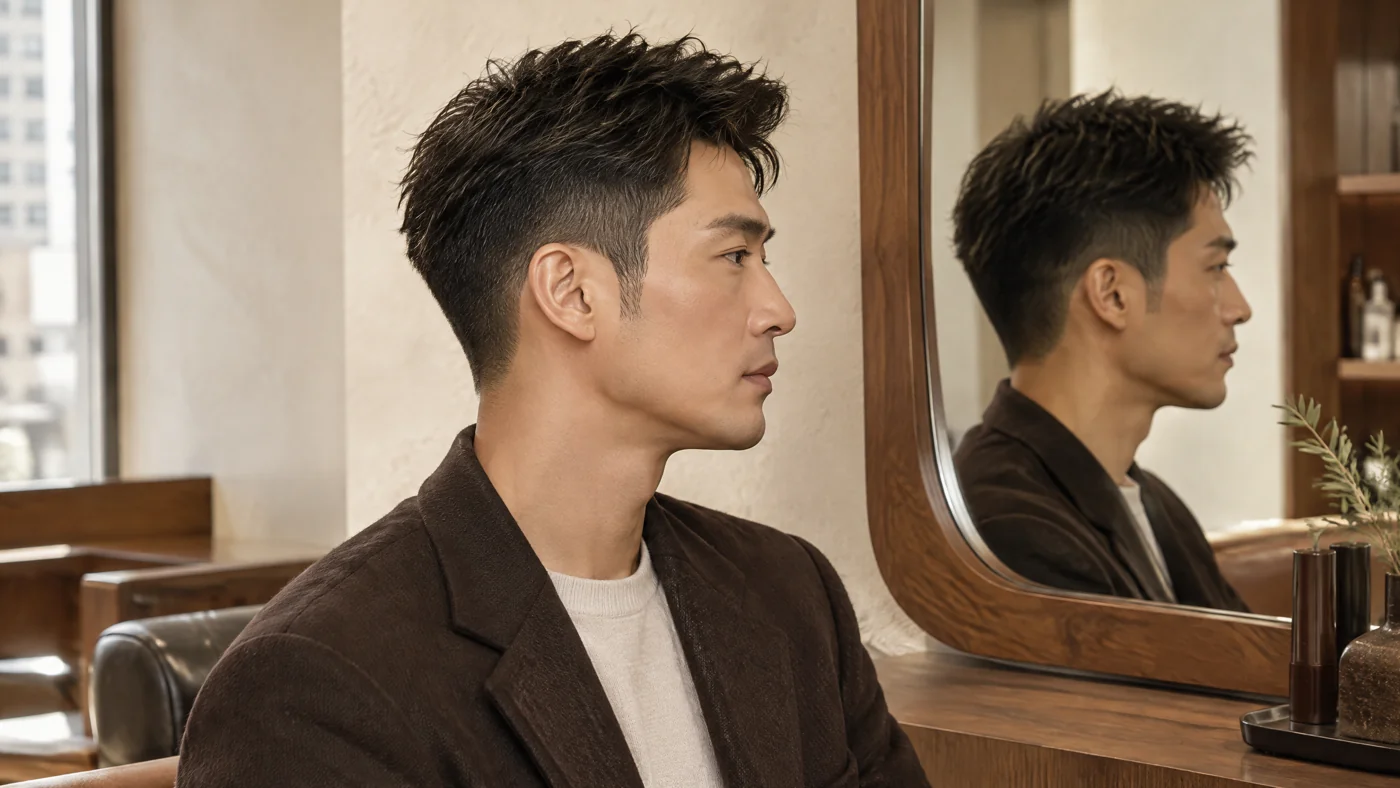
Short hair makes small changes in direction conspicuous because there is less length beyond the face. An inward curve can move a bob edge towards the jaw. An outward tip can expand the outline near the ear. On a short men's cut, a lifted fringe changes the visible forehead, while textured side sections may add width. These are design observations, not rules about which face shapes deserve which cuts. Decide whether you enjoy that extra space before discussing how to create it.
Canvas Texture and DT HUB share a website owner, so the service pages linked here are related reading, not an independent review. The short hair perm hong kong page gives you a service category to discuss once your outline is clear. Do not treat a pictured bob or textured crop as a promise for your hair. Ask which parts of your current cut would need to change, and whether the chosen endpoint is plausible after drying.
| Preferred visual change | Option to discuss | Trade-off to check |
|---|---|---|
| More movement above the forehead | A cut with temporary styling, or a suitable perm | How much apparent fringe length you can lose |
| Sides that sit closer to the head | Cut balance, drying direction, or straightening assessment | Whether reduced side fullness will expose more scalp |
| A softer, broken-up short outline | Texture through the cut, with or without a perm | Whether the ends will spread beyond your preferred edge |
| A crisp, relatively straight perimeter | A cut-only plan or straightening assessment | How natural growth and bending will affect the line |
02
2. Understand what a bend does to short length
A curved strand can occupy less visible vertical length than the same strand lying straight. That is why the endpoint should be discussed in the intended dry shape, not only measured while stretched. A fringe that currently clears your eyebrows may sit higher once it bends. The relationship depends on the hair and the proposed pattern, so there is no useful universal allowance. Ask the stylist to explain the expected change visually, including what happens at the shortest sections around the ears.
Illustrative scenario: a man likes his fringe length but wants movement through a flat top. Curling every visible section could change the fringe position and broaden the sides he already likes. A more selective design, or a cut with temporary texture, may better preserve his outline. This is a hypothetical comparison, not a recommendation for a particular technique. The useful question is which areas need movement, which should remain quiet, and what the shortest sections can reasonably support without forcing the design.
The phrase korean perm hong kong may describe the visual direction you have in mind, but it is not a complete consultation brief. Bring an image and identify the bend you like: a fringe sweeping aside, a soft top outline, or ends turning inward. Ask what will differ because your length, density and growth direction are different. Avoid choosing solely from a technique label. A stylist should translate the reference into a feasible shape rather than promise an identical photograph.
Choose the place where the curve should finish before choosing the name of the curl.
03
3. Compare straightening with a cut-only alternative
Straightening is a different design commitment, not merely the opposite button to a perm. A straighter strand may lie closer to the head, but that does not guarantee the balanced outline you want. If you value fullness at the crown, reducing movement throughout could work against that preference. If only one side kicks out, first ask whether length, layering, growth direction or your drying routine contributes. A chemical service is not automatically the right response to every untidy edge.
Illustrative scenario: someone with a short, wavy crop wants quieter sides but likes the movement on top. A tighter outline from the cut might meet the goal without changing the whole texture. Another person may prefer a consistently straight fringe and accept losing some softness. These are different priorities despite both describing their hair as difficult. Discuss the desired separation between top and sides. If a limited service is proposed, ask how its boundary would look rather than assuming it will blend invisibly.
Use the ion straightening hong kong service page to prepare questions about a straighter result, not to decide suitability yourself. Ask what process is proposed, what areas would be treated, and how previously processed hair changes the options. The service name alone does not establish safety or predict your finish. Also ask how the plan would accommodate natural new growth. If you might soon want curls again, discuss that hesitation before committing, rather than relying on another chemical appointment to reverse the decision.
04
4. Test the routine as well as the salon finish
Your preferred silhouette has to survive your normal morning, not only a carefully styled appointment photograph. A short textured look may need you to direct the fringe or separate the ends. A straighter look may still need drying to settle a parting or prevent a flattened crown. Avoid equating either choice with no work. Describe the tools you already use, whether you usually let hair dry naturally, and which steps you are willing to repeat. The answer can change the design.
Before deciding, try a reversible styling demonstration where appropriate for your hair. Ask to see the desired side outline or fringe direction without assuming temporary styling predicts a perm exactly. Notice whether you like the shape when sitting, standing and wearing your usual glasses. If you use a helmet, discuss how compression affects the finish you expect. The point is not to promise resilience. It is to distinguish an appealing display style from a shape you would enjoy maintaining yourself.
Ask the stylist to demonstrate the simplest workable routine and let you repeat the hand movements where practical. Request service-specific advice on washing, drying and product use; generic online waiting periods may not suit the actual process. Product choices should follow your hair's needs, not a compulsory shopping list. If a finish requires more effort than you want, adjust the goal before proceeding. Choosing a less dramatic outline can be a useful compromise, rather than evidence that you have chosen the wrong trend.
- Describe whether you normally air-dry, blow-dry or use another styling tool.
- Show where glasses, hats or a helmet press against the hairstyle.
- Ask which styling step controls the fringe and which controls side width.
- Request written aftercare suited to the actual service and products used.
- Agree what an acceptable everyday finish looks like without a salon-level blow-dry.
05
5. Make hair condition a separate decision gate
A flattering design and a suitable chemical service are separate questions. Tell the stylist about previous bleaching, colour, perms, straightening and any home processing, including parts still present in the ends. Short hair can contain previously treated sections even if the newest growth looks different. Mention breakage, unusual dryness or scalp discomfort rather than hiding them to secure an appointment. Assessment may lead to a cut-only plan, postponement or a different approach. No technique name should override the condition of the hair being considered.
The American Academy of Dermatology notes that colouring and perming can leave hair dry and brittle, and stresses following product directions.[1] That warning supports a cautious consultation; it does not endorse either salon or identify a universally gentle process. Ask how the stylist will assess suitability and what would make them stop or decline treatment. A demonstration or strand assessment can inform the discussion, but it cannot promise a reaction-free service. Do not assume that short length removes the risks of chemical processing.
Burning, stinging or an irritated scalp should not be treated as the price of obtaining a neat outline. Alert the stylist immediately during a service; stop processing and follow appropriate rinsing guidance if irritation occurs.[1] Seek medical advice for a concerning or persistent reaction. If your main issue is unexplained shedding, bald patches or scalp symptoms, arrange evaluation with an appropriate clinician instead of asking a stylist to diagnose it. More visible volume is an appearance change, not proof of increased hair growth.
06
6. Turn the consultation into an agreed plan
Bring a small set of references that serve different purposes: your desired front outline, your preferred side shape and a feature you do not want. Include a current photograph with your ordinary finish if that helps describe the starting point. Explain the images in your own words so the stylist knows whether you want the fringe, texture or overall proportion. A reference with substantially longer hair may still communicate a mood, but it should not become an expectation that your present cut must fulfil.
Ask for a plan that distinguishes the haircut from any chemical work and identifies the intended finish. Confirm whether the quote includes cutting, conditioning, styling and any proposed extras. The Hong Kong Consumer Council's consumer-protection information is a useful basis for seeking clear service descriptions and transaction terms.[2] It is not a promise of a particular refund right. Clarify how changes are agreed, what happens if suitability concerns emerge, and which cancellation terms apply before accepting the booking rather than assuming them afterwards.
Use the worksheet below to record decisions, not to demand a guaranteed result. The most valuable answer may be that the desired outline requires more length or a different haircut first. Ask the stylist to explain any compromise before beginning. If their description and your expectation still differ, pause the decision. You can leave a consultation with a better design brief without buying a chemical service. Keep the agreed scope and aftercare advice so later questions refer to the actual plan rather than memory.
| Decision area | Question to ask | What to record |
|---|---|---|
| Dry endpoint | Where should the fringe and side ends sit? | Preferred positions and acceptable variation |
| Treatment scope | Which sections need a cut, texture change or neither? | Areas included and areas left untreated |
| Suitability | How does my processing history affect the plan? | Concerns, assessment outcome and alternatives |
| Quotation | What is included, and how are changes authorised? | Confirmed scope, extras and relevant terms |
| Home routine | What must I do to reproduce an everyday finish? | Demonstrated steps and written aftercare |
| Future changes | How should we review growth or a change of preference? | Review points without a guaranteed timetable |
07
7. Plan for the next haircut, not just appointment day
Short styles change visibly as hair grows because their outline depends on relatively close relationships between the fringe, sides and nape. With chemical texture changes, new growth can introduce a difference between the roots and treated lengths. How noticeable that becomes varies, so do not build your decision around a fixed lifespan. Discuss the next haircut in terms of shape: which edge will need attention first, and which areas you can comfortably allow to grow. This makes maintenance an observable choice rather than a calendar promise.
If you later dislike the result, speak to the stylist before arranging immediate further processing. Another chemical service is not a simple undo function and may introduce additional risk. Ask about safer styling adjustments, trimming or allowing treated sections to grow out. Illustrative scenario: someone who finds a curled fringe too high might prefer a different parting while discussing a gradual cut plan. That possibility is not a guaranteed correction. A realistic exit plan recognises both the limits of reshaping and the person's comfort with transition.
The final decision should be expressible in one useful sentence: I want this amount of movement, these ends in these places, and a routine I can maintain. If you cannot yet say that, keep exploring the cut and temporary styling options. A successful consultation is not defined by selecting the most involved service. It is defined by understanding the shape, the suitability limits and the trade-offs well enough to choose. Leaving your natural texture unchanged remains a valid outcome when it best fits your priorities.
The best maintenance plan explains what you will notice as the shape changes, not just when to book again.
Sources and useful reading
Continue with hair and grooming
If your question concerns styling your own men’s hair, continue with: Korean Men's Perm
Read a related decision guide: Haircut Kwun Tong: A Separate Brief for Every Family Member
Read our men’s styling background: Vit So and the Canvas Texture studio
Discuss the outline of your own hair with Canvas Texture
For a men's own-hair styling consultation, contact Canvas Texture on WhatsApp 94976438 at its workshop at 252 Hollywood Road, in the Sheung Wan/Central area. Bring your preferred fringe and side-outline references, plus your processing history. The consultation can explore cut and styling options without assuming you need chemical work. Canvas Texture is not offering wigs or medical care through this invitation and does not book appointments on DT HUB's behalf.
Canvas Texture · WhatsAppFrequently asked questions
Will a short perm make my fringe look shorter?
It can, because bending changes where the ends sit when dry. The amount varies with your hair and the intended pattern. Discuss the preferred dry endpoint before cutting or processing, rather than relying on a standard length allowance.
Is straightening the best way to stop short sides sticking out?
Not automatically. Cut balance, growth direction and drying may contribute. Compare a cut-only approach with chemical straightening, including its effect on fullness and the transition to natural new growth.
Does a Korean-style reference tell the stylist which technique to use?
No. It can communicate an aesthetic, but your length, condition and desired curl placement still need assessment. Point to the specific fringe direction or outline you like rather than expecting the service label to determine an identical result.
Can previously bleached short hair be permed or straightened?
There is no blanket answer. Disclose all processing still present in the hair and ask for a professional suitability assessment. A stylist may advise postponing chemical work or choosing a cut-only option; short length is not a safety guarantee.
What if I want to return to my natural texture afterwards?
Discuss growth, trimming and styling options before committing. Do not assume another chemical service will safely reverse the first. The transition depends on the treated areas and your future haircut preferences.
Related journal articles
Kwun Tong Hair Salon: Questions Before a First Visit
Choose the appointment you can understand and the hairstyle you can maintain, not just the photograph you admire.
Haircut Kwun Tong: A Separate Brief for Every Family Member
Share the booking request, but give every person a separate say in the haircut.
Women's Haircut Kwun Tong: Choose the Outline Before Colour
The most useful colour reference is one that still makes sense after the length you want removed has gone.

