
Hair smoothing vs hair straightening: choose the change you need
Choose by the problem you want to solve, not the most polished treatment name. Conditioning concerns feel and manageability; straightening concerns the hair's visible pattern. Smoothing can describe several different processes, including some that change shape. If you like your waves but dislike catching ends, your goal differs from wanting straighter sides. Make that distinction before discussing any procedure.
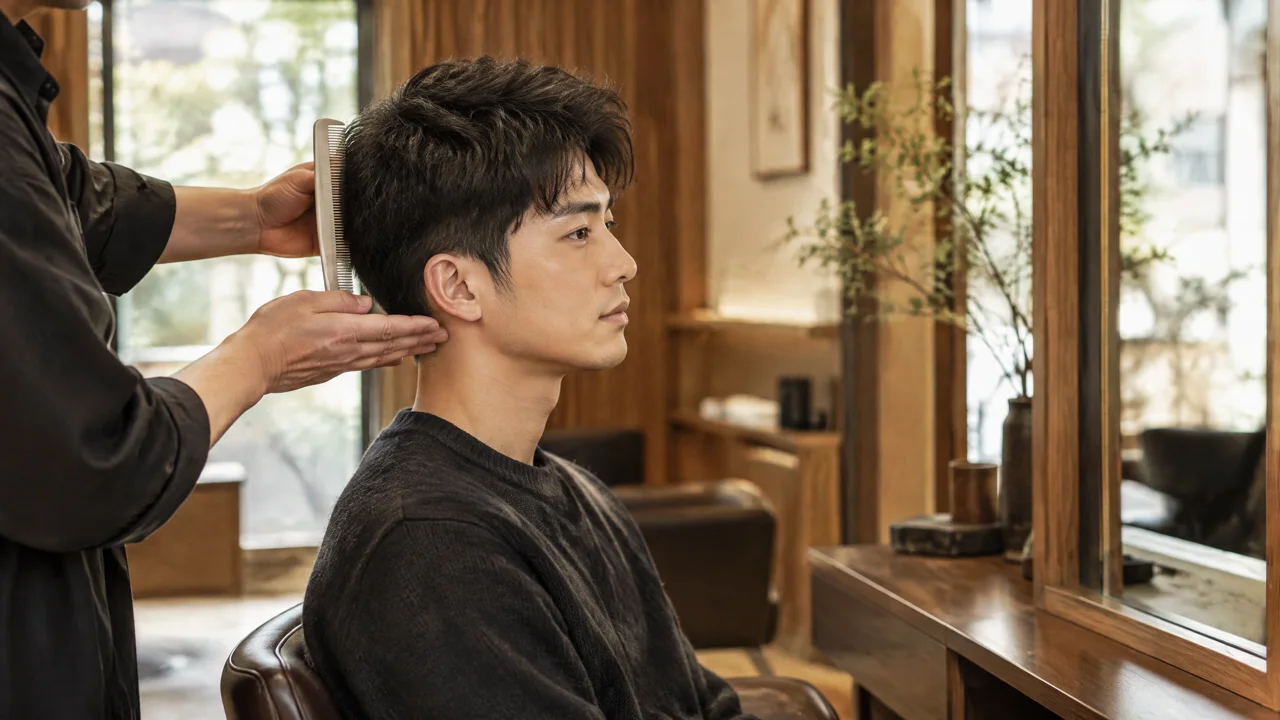
For men's hairstyles, keeping movement can matter as much as removing roughness. A soft fringe may still need a bend to sit properly. A quiff may depend on lift that a flatter finish would not provide. Equally, hair that looks straight can remain difficult to comb. Assess the outline and the feel separately, then identify what you would rather not lose.
A useful consultation connects that goal with your processing history and your ordinary wash-day routine. It should explain the actual products, expected changes and limits, rather than promise a universally smooth result. This guide sets out how to compare care, temporary styling and lasting shape changes, with practical questions for balancing comfort, movement and the work you are willing to do at home.
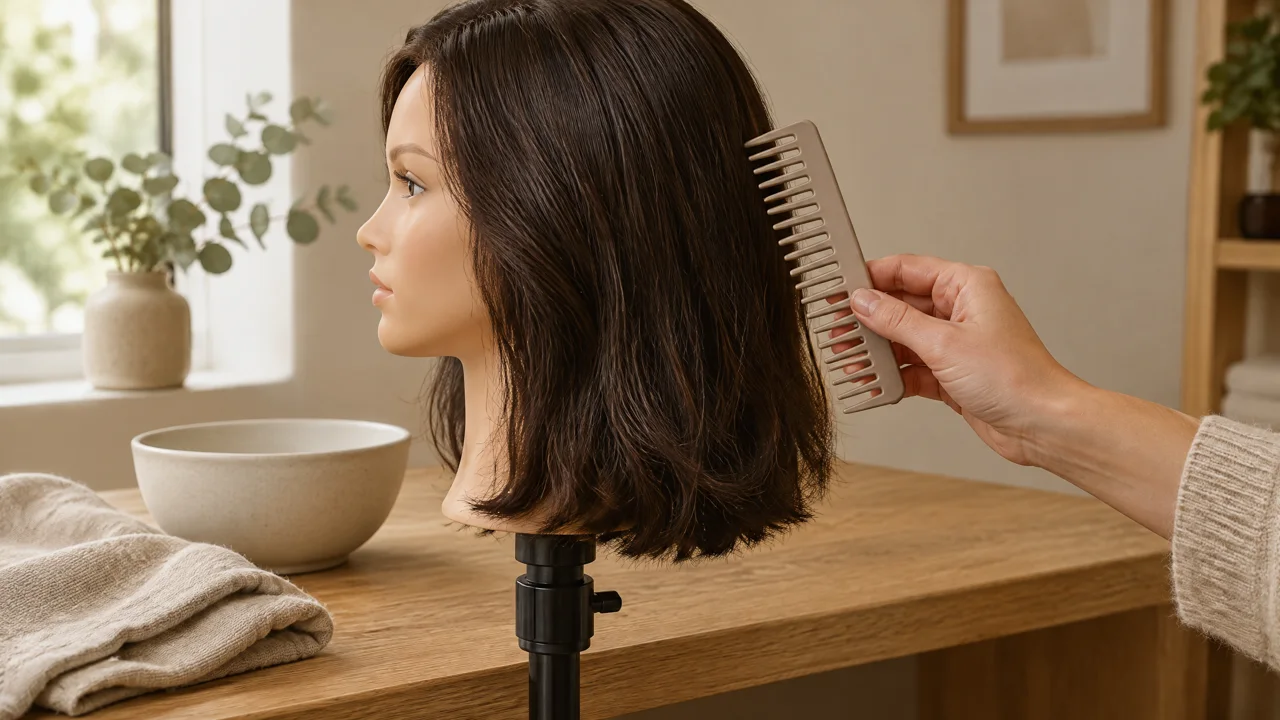
01
1. Describe the difficulty before naming the treatment
Start with clean, dry hair styled in your usual way. Notice where a comb catches, where the outline becomes wider and where the ends turn. These observations describe different concerns. Resistance at the tips might prompt a care discussion, while unwanted bends at the sides raise a shape question. Neither observation, by itself, establishes which procedure your hair can tolerate.
Replace 'I want less frizz' with a description of what you actually notice. Perhaps the fringe separates into rough-looking strands, or the sides curve out while feeling soft. Say whether this happens immediately after drying or later in the day. A more precise description helps distinguish a handling problem from a hairstyle that needs a different outline or drying approach.
Consider an illustrative scenario, not a client account: a man enjoys his loose waves but wants his fringe to detangle more easily. Straightening those waves could remove something he values without resolving every rough end. His first question should concern gentler handling and targeted care. A second person wanting a straighter side profile would have a different conversation, even with similar-looking hair.
For a closer explanation of feel, shape and regrowth, the guide to hair smoothing vs hair straightening separates these goals. Use that distinction to frame your enquiry: 'I want easier combing, but I want to keep this bend.' It is a clearer starting point than choosing a smoothing label and assuming it preserves every part of your current style.
02
2. Compare care, styling and lasting shape changes
Conditioning-focused care aims at the feel and handling of the lengths. It should not be treated as a promise to permanently restore broken strands or change their natural pattern. A blow-dry can produce a smoother-looking outline temporarily. Chemical smoothing and permanent straightening need a separate discussion because the ingredients and application may affect the pattern, not merely the surface feel.
The word 'smoothing' does not tell you which of those routes is being proposed. Ask whether the process is intended to improve slip, create a styled finish or alter the bend. Then ask what should remain after washing and drying normally. A finish created with a brush and heat can conceal the distinction during an appointment, so the washed-hair expectation matters.
Permanent straightening describes a lasting change in treated lengths, not in hair that grows afterwards. If you later want your natural texture back, the altered lengths do not simply become untouched hair again. Discuss the transition between new growth and older lengths before proceeding. Shorter men's cuts can remove treated hair through cutting, but that does not justify promising a universal grow-out timetable.
Compare options by the work they leave behind. Care may make handling easier while leaving waves visible. Temporary styling avoids a lasting shape commitment but may involve repeated heat. A lasting shape change brings questions about new growth and previously treated areas. None automatically supplies crown lift, a neat parting or the end direction you prefer; those still depend on the cut and styling.
| Route | Main question | Trade-off to discuss |
|---|---|---|
| Conditioning-focused care | Can handling improve without a planned lasting pattern change? | A softer feel does not guarantee straighter hair or permanent repair. |
| Temporary styled finish | Can drying or styling create the outline I want? | The finish is temporary; repeated heat needs careful use. |
| Chemical smoothing | What does this specific formula change after washing? | Curl retention and aftercare cannot be inferred from the label. |
| Permanent straightening | Do I want a lasting change in the treated lengths? | New growth keeps its own texture; discuss transition and reprocessing. |
03
3. Make your processing history visible
List previous bleach, colour, perms, straightening and home smoothing products before discussing another procedure. Include work that remains in the ends, even if the roots look natural. A darker colour does not erase earlier lightening. If you do not know a product name, describe when and where it was used and state that the formula is unknown rather than guessing.
Give the history by area, not only by date. For example, the fringe may contain older lightened hair while the sides have been cut much shorter. This can affect the questions raised during assessment. Report where strands snap during ordinary handling, but do not repeatedly stretch or pull them to perform your own strength test. Photographs can locate concerns, not establish chemical compatibility.
The American Academy of Dermatology notes that colouring and perming can leave hair dry and brittle.[2] That is a reason to disclose previous work, not to assume that every processed head needs the same care. A softer feel after conditioning is not evidence that fragile lengths can safely tolerate further chemical processing. Suitability needs assessment beyond how pleasant the hair feels.
Ask what the professional needs to establish before a shape-changing service, including whether checking a small section is appropriate. Be prepared for a changed plan or a decision to postpone. Where the history is uncertain, a cautious approach may protect choices you still value, such as keeping length. It is better to clarify the limitation than mistake a glossy finish for permission to process again.
Softness is an observation, not clearance for another chemical service.
04
4. Target rough ends without flattening the whole style
Roots and ends can need different attention. A man with fine hair might dislike a coated root feeling while still finding his longer fringe difficult to comb. Applying richer care everywhere is not automatically the answer. Explain both concerns together and ask which areas the proposed product is intended for. The useful balance is easier handling without an unwanted heavy finish.
If the same tips keep catching, ask whether conditioning alone is a reasonable plan or whether trimming deserves discussion. Cosmetic care does not reconnect a split or broken strand into untouched hair. Removing length also changes the style, so explain how much length you want to retain. That allows the care conversation and the haircut trade-off to remain connected without being confused.
Vit So's hair treatment page distinguishes moisture care, pre-colour or pre-perm protection, and smoothing care. These are useful categories to ask about, not interchangeable promises. Its description treats conditioning as cosmetic care rather than a cure for hair loss. If considering an enquiry there, confirm the proposed products and visit contents instead of assuming a name includes every washing or finishing step.
Preserving texture should be stated explicitly. 'I want the ends to feel less rough, but I still want my fringe to curve' gives a clearer boundary than asking for maximum smoothness. If a proposed process may loosen that curve, ask what alternatives can be discussed. A heavier or straighter finish is not necessarily an improvement when movement is what makes the haircut work.
05
5. Judge the result through your normal routine
Think through an ordinary Hong Kong morning rather than a carefully styled photograph. Do you wash after exercise, leave with minimal drying or brush the fringe into place? Explain the routine you can realistically maintain. If a proposed finish still depends on drying in a particular direction, ask for that to be demonstrated. Changing the starting pattern does not eliminate every styling decision.
Ask for instructions specific to the actual procedure before leaving. Clarify washing, tying or clipping the hair, product use and any heat restrictions that apply. Do not borrow a waiting period from a different treatment or an online account with an unknown formula. You should understand which instructions are essential to the process and which concern the appearance of the styled finish.
For general handling, the American Academy of Dermatology advises limiting excessive heat and being gentle with wet hair; naturally tightly curled hair has different combing needs.[1] Keep that distinction in mind if you retain curls. Easier combing after care is not a reason to force through knots or repeatedly iron the same ends. Discuss handling that fits the texture you actually keep.
After an ordinary wash, compare three things separately: combing resistance, visible bend and root-area heaviness. Record the drying method and products used. If the ends feel rough while the outline stays straight, report both facts rather than assuming the shape treatment has failed. This makes a follow-up more useful and reduces the temptation to respond to every change with stronger heat or more processing.
A useful comparison happens after your normal wash, not only under the finishing brush.
06
6. Ask for a plan, not just a treatment name
A clear proposal should connect your goal to the actual procedure. Request the product name, intended purpose, application areas and whether heat is involved. If the answer only repeats words such as silky or intensive, ask what those mean for your hair after washing. You are not expected to select the chemistry yourself, but you should know what change you are agreeing to.
Ask which natural movement is expected to remain and where a flatter outline might appear. Bring an ordinary photograph alongside any inspiration image, pointing out the crown lift, fringe bend or side width that matters. Reference images communicate preferences; they do not prove that another person's finish can be reproduced on your hair or that the same process would be suitable.
Agree on the visit scope as well as the treatment purpose. Ask whether washing, drying, cutting or separate care is included, and request the total quote for the proposed work. Also clarify appointment arrangements before travelling. A menu entry gives a starting point for discussion, but it does not establish standalone availability, the exact products used or the contents of your individual visit.
Leave room to reassess rather than committing to automatic repeat processing. Ask how future care would distinguish new growth from already treated lengths, and what observations should prompt a review. Rough tips, a changing root pattern and scalp discomfort are different issues. The next step may concern handling, care or cutting instead of repeating a shape-changing procedure over the whole head.
| What you notice | What to communicate | Question to ask |
|---|---|---|
| A soft fringe with unwanted bends | The area you want straighter and the lift you want retained | What shape change is realistic with the proposed process? |
| Rough tips but comfortable roots | Where combing catches and how much length matters | Should care target the ends, or should we discuss trimming? |
| Previously lightened lengths | Products or services used, including unknown details | What assessment is needed before further processing? |
| A good salon finish that changes at home | Your washing, products and normal drying method | Which part is temporary styling, and what should remain after washing? |
- Bring ordinary dry-hair photographs showing the fringe, sides and crown without pulling the hair straight.
- Write down processing history by area, including home products and any details you cannot confirm.
- Name one main goal and one feature you want to keep, such as easier combing and retained wave.
- Confirm the product, proposed steps, home instructions, included finishing and total quote before proceeding.
07
7. Know when cosmetic care is not the answer
A rough-feeling length and an uncomfortable scalp should not be bundled into one promise of healthier hair. Explain irritation separately from tangling or stiffness. Persistent scalp symptoms, unexpected shedding or significant breakage need appropriate professional advice beyond choosing a smoother finish. Avoid diagnosing the cause from a photograph or assuming that a richer mask addresses every concern at the roots.
For a care-focused enquiry, the conditioning treatment information helps frame questions about dry lengths and cosmetic manageability. Use it to distinguish that purpose from straightening or medical treatment. If your main difficulty is catching ends, describe that precisely. If it is scalp discomfort or a change in shedding, make that separate concern clear rather than presenting it as simple dryness.
During application, report burning, eye irritation or breathing discomfort immediately and pause the procedure rather than accepting discomfort as necessary. Follow the product's precautions and seek medical help for significant or persistent symptoms; breathing difficulty needs urgent help. No desired style is a reason to ignore a reaction. The actual product and conditions of use matter more than a reassuring treatment label.
The final decision should answer three questions: what will change, what should remain, and what you will do afterwards. Choosing targeted care, temporary styling, a lasting shape change or postponing further work can each be reasonable in different circumstances. The aim is not the strongest procedure. It is a plan whose compromises you understand and whose daily routine fits the hair you want to wear.
Sources and useful reading
Continue with hair and grooming
Continue with Canvas Texture’s male hair needs: Deep Hair Treatment HK
Explore another related decision: Dry hair treatment before colour: scalp boundaries
Read the lead stylist’s background: Vit So and the Canvas Texture studio
Discuss the feel and shape you want to keep
For a Canvas Texture consultation about your male hair needs, describe where handling becomes difficult, the movement you value and your usual routine. Bring your processing history so your questions about shape, care and everyday styling can be discussed.
Canvas Texture · WhatsAppFrequently asked questions
Can smoothing preserve my natural waves?
Possibly, but the label alone cannot tell you. Some procedures focus on handling; others also change the pattern. Ask about the actual formula and the expected washed-hair result, and state that keeping your waves is a priority.
Does permanent straightening mean I will never need to style my hair?
No. Permanent refers to a lasting change in treated lengths, not future growth or a maintenance-free haircut. Root lift, fringe direction and your preferred finish may still need drying or styling. Discuss that remaining work before deciding.
Is softer hair proof that previous damage has been repaired?
No. Improved feel or easier combing does not show that a broken strand has been permanently restored, nor that further chemical work is suitable. Disclose your processing history and any breakage before considering another service.
What should I prepare if I do not know my previous treatment's name?
Say that the formula is unknown. Bring any packaging, appointment record or product photograph you have, and describe when it was used and which lengths remain. Do not guess the chemistry; ask what assessment is needed before a new procedure.
Related journal articles
Hair salon or hair stylist: what should you compare?
Choose the appointment around the change you need, not the most impressive title on the booking page.
Haircut, wash cut and blow dry: choosing the right family appointment
A family can share a journey to the salon without sharing the same haircut brief.

A layered haircut for busy days: choose what to keep
The most useful length is not always the longest strand; it is the shortest piece your routine still needs.

