
Perm for Short Hair or Long Hair: Where Should Curls Begin?
Choose curl placement before choosing a perm label. On short hair, a small bend can change the fringe, side width or neckline. On longer hair, the first visible wave and the finished ends are separate decisions. Localised movement introduces another question: how should the changed section sit beside the hair left untreated? Length alone cannot answer any of these questions.
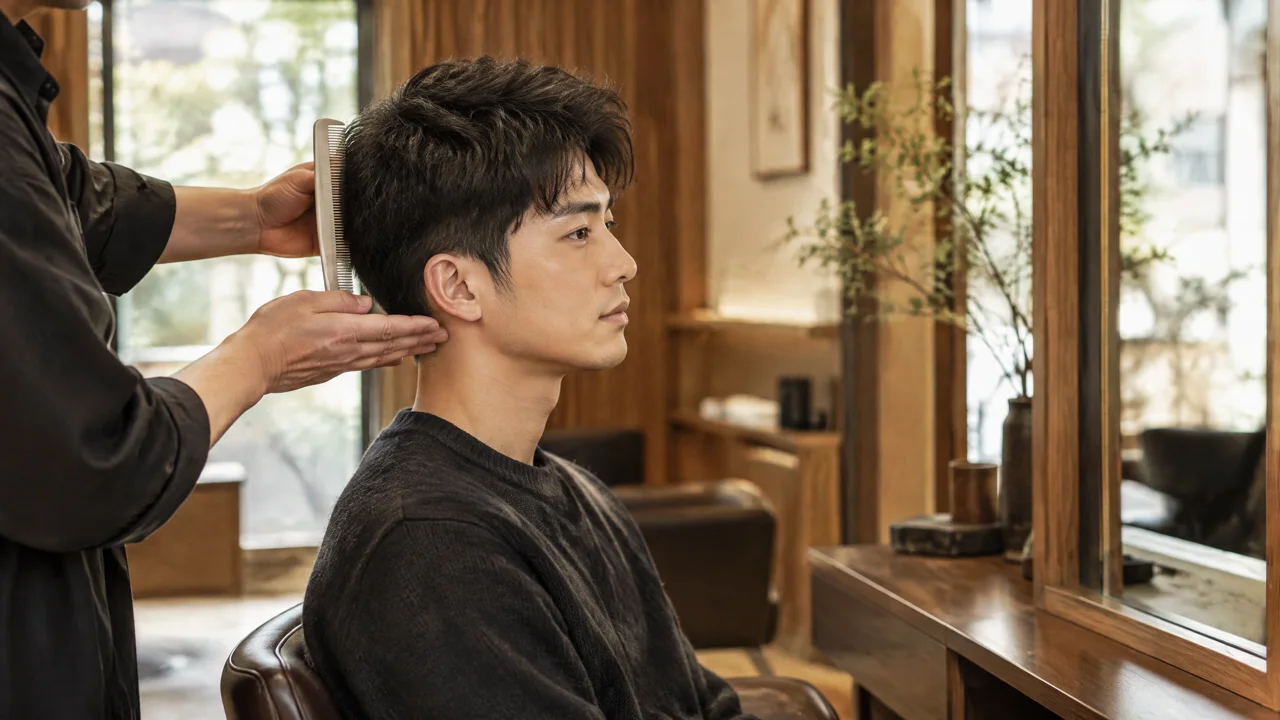
For men considering movement, the useful starting point is the haircut they actually wear. A cropped nape with a longer top needs a different discussion from an ear-length cut or hair tied behind the head. Decide where you welcome fullness, which sections must stay manageable and how much visible length you want to keep. Then discuss the cut and chemical suitability together.
A reference photograph can explain an outline, but it cannot establish a suitable method or predict your result. Bring current dry-hair photographs, your treatment history and an honest account of morning styling. The aim is not to reproduce every curl in the picture. It is to agree on a workable shape, with clear boundaries around length, treated areas and the daily effort involved.
01
Start with the outline, not a length label
Short, long and partial do not describe equivalent choices. Short and long concern the haircut; partial concerns treatment coverage. A longer cut can have movement concentrated in selected sections, while a short cut can need a wider design discussion. Comparing these labels as three competing styles skips the more useful question: which part of your current outline needs to change?
Divide the outline into front, sides, crown and lower edge. You might want the fringe to turn away from your glasses without widening the sides. Alternatively, the top may already sit well while the longer ends feel too straight. Name the priority first. Asking for more texture everywhere can introduce movement into sections whose present shape you actually prefer.
Keep strand definition separate from silhouette. A photograph may show distinct curls within a relatively narrow outline, or broad movement within a fuller one. Point to the overall width as well as an individual bend. This helps explain why liking a curl pattern does not necessarily mean wanting all the volume, layers or styling visible in the same image.
Vit So's guide to a perm for short hair examines bob length, width and curl direction. Although written around women's bob shapes, it offers useful questions about the shortest sections and dry outline. Use those observations to describe your own cut, rather than treating the page as confirmation of a particular men's technique or appointment.
02
Short hair: protect the length that has a job
The longest fringe is not a reliable measure of the whole haircut. Check the shortest top layers, ear area and nape after any proposed trim. Each section has a different role in the shape. There is no universal minimum length that establishes whether every section can support a chosen bend; the intended movement and proposed method need individual assessment.
Useful length also means length that performs a task. Perhaps the front reaches past your eyebrow so you can sweep it sideways, or the sides tuck behind your ears. Curving those strands may change their resting position. Say which functions matter before discussing the strongest curl in a reference. Keeping a usable front can matter more than matching its texture exactly.
Consider this illustrative scenario, not a client account: someone wears glasses and wants a lifted front with close-fitting sides. A reference with curls around the ears may look appealing from the front, yet introduce width beside the frames. The clearer request is a front direction, a side-width boundary and an acceptable dry fringe position. Feasibility still requires assessment.
For a cut with a very short nape, ask how the longer moving sections would connect to it. A sharp contrast may be intentional, but it should not arrive as a surprise. Discuss the haircut sequence before removing length that the planned movement might need. A later trim can also remove curved ends, changing the outline without changing the remaining treatment.
| Starting point | Check first | Trade-off to discuss |
|---|---|---|
| Short sides with a longer top | Shortest top layers and the transition above the ears | Front movement without unwanted side width |
| Ear-length outline | Dry fringe position, ear-tucking and nape | Visible curls versus retaining useful resting length |
| Shoulder-length hair | End position against clothing and pieces reaching a hair tie | More movement versus a compact dry outline |
| Longer layered hair | First bend at the front and back, plus perimeter fullness | Layer movement versus keeping a substantial lower edge |
| Movement in selected sections | The boundary between changed and unchanged hair | Local emphasis versus a connected overall shape |
The important short-hair measurement is not just what reaches furthest, but what still needs to reach somewhere.
03
Longer hair: separate wave height from end length
For longer hair, describe the first visible bend using a landmark rather than a vague request for loose waves. It might sit beside the cheek, around the shoulder or lower through the back. Compare the front and back separately. Movement starting near the face can coexist with a quieter upper back, but that combination needs to be explained rather than assumed.
Next identify the shortest acceptable dry finish. A curved strand can look shorter even without a cut, while trimming changes its actual length. These are separate effects. If keeping hair below the collarbone matters, say so directly. Do not use wet length or a section pulled straight as the only reference for how you want the finished hair to sit.
Weight and layers complicate the decision. A substantial lower edge and shorter moving pieces create different impressions, even at the same longest length. More layers are not automatically the answer to a request for movement. If your ends already look sparse, discuss preserving perimeter fullness. If the sides feel bulky, identify that area rather than asking to thin everything.
Shoulder contact is particularly useful to observe. Photograph the ends against your ordinary collar, with your head upright, then show how you tie the hair back. Shorter front pieces may already escape the tie. If keeping them secured is important for work or exercise, bring that requirement into the cut discussion before agreeing to additional face-framing layers.

04
A local change still needs a connected shape
A limited treatment request should describe both the area to change and the area to preserve. Wanting the front to bend is incomplete if you also expect a smooth transition into straight sides. Likewise, an ends-focused idea needs a clear upper boundary. These are visual instructions for discussion, not instructions for applying chemicals or proof that the proposed work is suitable.
The published partial perm entry on Vit So's women's perm page describes coverage, not a universal fringe, root or ends technique. Its practical value is the reminder to agree on treated sections and included work. A menu label alone does not confirm that every localised request is available, or that a smaller area removes the need for assessment.
Imagine, as a design example, a longer top that falls flat while its ends already have movement. Adding more bend through the ends would not necessarily address the complaint. First establish whether the concern is the parting, the cut's distribution of weight or the desired front direction. A narrower treatment scope is only useful when it addresses the right area.
Consider how the boundary will be worn as the hair grows and is trimmed. If a moving front meets straighter side sections, ask how your usual parting would show that transition. Also discuss what a future shorter cut could remove. The aim is to understand the shape beyond the first styled photograph, not to assume a particular maintenance interval.
A smaller treated area is a scope decision, not a shortcut around checking the hair or planning its connections.
05
Check the hair you intend to keep
Map chemical history by section rather than giving only the date of your last appointment. Include bleach, highlights, colour, straightening and previous perms, including older work still present at the ends. A darker current shade does not erase earlier lightening. Longer hair may retain several different histories, while short hair is not automatically free of previous treatment.
Disclose unusual breakage, persistent tangling or scalp discomfort before proceeding. Photographs help explain placement and length, but cannot establish suitability on their own. The American Academy of Dermatology notes that colouring and perming treatments can leave hair dry and brittle.[1] A discussion may therefore lead to a revised scope, a haircut-only approach or postponing chemical work.
Do not endure excessive stinging or burning during processing to pursue a stronger shape. Tell the stylist immediately. The AAD advises washing off perm solution immediately and consulting a dermatologist if this happens.[1] This is a safety response, not a styling preference. A desired curl pattern never justifies ignoring discomfort, and persistent scalp symptoms warrant medical advice.
Keep the assessment conversation distinct from the aesthetic one. You can be very clear about the shape you like while accepting that some sections may be unsuitable for the proposed work. Ask what would need to change if the original plan cannot proceed. A different placement is only an option to assess, not a guaranteed workaround for compromised hair.
| Information to bring | Question it helps answer | What not to assume |
|---|---|---|
| Dry front, side and back photographs | Where should movement start and width sit? | A photograph confirms chemical suitability |
| Treatment history marked by section | Which retained lengths need particular assessment? | The current colour reveals the whole history |
| Minimum acceptable dry length | Which cut changes would conflict with your priority? | Wet length predicts the finished outline |
| Current tools and morning routine | Which finishing steps are realistic at home? | A polished reference is styling-free |
| The proposed treated areas | How will moving and straighter sections connect? | A partial menu entry covers every local technique |
06
Make the reference and your routine agree
Bring a reference because it shows a feature you can name. Mark the first bend, the front direction, the widest point or the spacing between strands. Then identify anything you do not want to copy. A useful image can contain an unsuitable fringe length or an overly full side outline; you do not need to accept the whole photograph as one request.
For shoulder-length and longer shapes, Vit So's perm for long hair discussion separates wave placement, layers and retained dry length. It is useful when a reference's lower movement attracts you but its shorter front pieces do not. Read it to sharpen those distinctions, rather than inferring a bookable method or identical result from a long-hair image.
Explain an ordinary morning in concrete terms. Do you dry the back fully, leave home with damp hair, brush the fringe smooth or put on a cap? Ask which steps create the intended everyday outline and which are optional finishing touches. A routine requiring an unfamiliar brush or lengthy section-by-section arranging may be a poor match for your preferred level of effort.
In another illustrative scenario, someone ties shoulder-length hair for exercise but likes loose face-framing waves in a reference. The tension is practical: the shorter pieces may be appealing down yet harder to secure. They could prioritise retaining tie-back length, or discuss accepting loose pieces. Neither choice is inherently better; the consultation should make that compromise explicit before cutting.
- Show dry hair with your usual parting, including the nape and shortest sections rather than only the most flattering angle.
- Mark one movement priority and one length boundary, such as a swept front while retaining ear-tucking length.
- List chemical treatments by area and approximate date, including older work beneath a later darker colour.
- Describe glasses, headwear, tying-back habits and the tools you will actually use during an ordinary morning.
07
Agree on boundaries before any treatment
Before proceeding, summarise the intended movement, sections involved and length to retain in plain language. Ask how the haircut supports those aims and what included work the quoted service covers. Do not infer a specific hot, cold or digital procedure from a style photograph or general menu name. Method, suitability, appointment arrangements and the actual charge need their own confirmation.
Set a priority if the choices conflict. You may prefer less pronounced movement over losing useful fringe length, or retain a fuller bottom edge instead of introducing more layers. This is more informative than saying everything must remain the same except the curls. Ask for the alternative plan to be explained before agreeing, rather than leaving the compromise implicit.
Request washing and styling instructions for the actual treatment instead of adopting a universal waiting period from social media. For general damage prevention, the AAD advises limiting excessive heat and handling hair gently; naturally tightly curled hair has different detangling considerations.[2] These principles do not tell you how to create a particular finish. Ask for guidance matched to the proposed shape.
If the home outline differs from your expectation, photograph it dry and describe your steps. Distinguish a front that falls in the wrong direction from unwanted side width or a changed end position. That makes a styling question easier to discuss. New breakage or ongoing scalp symptoms are different concerns; do not assume another chemical treatment is the appropriate correction.
Sources and useful reading
Continue with hair and grooming
Continue with Canvas Texture’s male hair needs: Korean Men's Perm
Explore another related decision: Men's perm: compare a wavy finish and middle part
Read the lead stylist’s background: Vit So and the Canvas Texture studio
Discuss your men's hair shape with Canvas Texture
Bring your current hair photographs, treatment history and preferred dry outline to a Canvas Texture consultation about your male hair needs. Explain the length you want to keep and the styling effort you are comfortable with so those priorities can guide the discussion.
Canvas Texture · WhatsAppFrequently asked questions
Is partial better than full-head treatment for short hair?
Not automatically. Partial describes coverage, while short describes length. The appropriate scope depends on the sections involved, their condition and how they should connect. A short haircut alone cannot establish which service or method is suitable.
Can I keep exactly the same visible length after adding curls?
A bend can change apparent length even without cutting. Explain the shortest acceptable dry position for the fringe, front pieces and lower edge. Discuss any trim separately, rather than assuming that preserving strand length preserves the same outline.
Does wanting only curled ends mean the upper hair will be untreated?
An ends-focused photograph describes the visible goal, not necessarily the processing scope. Identify the upper area you want to look straighter, then ask the stylist to explain the proposed treated sections and whether that plan is suitable.
Can a bob or long-hair reference help explain a men's cut?
Yes, if you identify transferable features such as the first bend, side width or dry end position. The haircut, shortest sections and routine still need their own assessment. A women's editorial reference does not establish availability of a men's service or a named technique.
Related journal articles
Hair salon or hair stylist: what should you compare?
Choose the appointment around the change you need, not the most impressive title on the booking page.
Haircut, wash cut and blow dry: choosing the right family appointment
A family can share a journey to the salon without sharing the same haircut brief.

A layered haircut for busy days: choose what to keep
The most useful length is not always the longest strand; it is the shortest piece your routine still needs.

