Men's Wigs: Plan a Workday Outline Rather Than Extra Bulk
Choose a workday wig by its outline before deciding how much hair you want. A familiar shape with controlled sides usually offers a more useful starting point than maximum fullness. Identify the parting, fringe direction and crown height you want to preserve, then compare coverage options against those features. The aim is not to recreate every strand from an old photograph, but to find a shape that remains recognisable through an ordinary working day.
Coverage, fit, material and care requirements belong in the same decision. A full wig covers the whole head; a smaller hairpiece addresses a more limited area, with different blending considerations. Neither automatically delivers your preferred silhouette. Check the proposed coverage boundary, how the edges meet your existing hair, and whether the displayed finish depends on styling you can realistically repeat. Confirm individual specifications rather than assuming every example on a website is available or constructed alike.
Build the comparison around your actual routine: travelling to work, sitting under office lighting, joining a video call and returning home. Each situation reveals something different about shape or maintenance. This guide separates visual choices from practical commitments so that you can describe what you need clearly. You can also decide that your existing hairstyle, adjusted thoughtfully, suits you better for now; shopping does not require an immediate change or a commitment to wearing extra hair.

01
1. Define the silhouette before choosing coverage
Start with three observations: where the head looks widest, where the top reaches its highest point, and how the fringe frames your forehead. These are easier to communicate than asking for something 'natural'. Use a recent front photograph and a side view in ordinary lighting. Mark the feature you want to retain and the feature you want to soften. A fuller crown might help one outline, while the same addition could make another look unnecessarily tall.
Coverage and density answer different questions. Coverage describes the area the piece occupies; density concerns the amount of hair within that area. If you are comparing full-head options, the related reading on men's wigs provides a starting point for questions about style, fit and care. OwnStrand and Canvas Texture share an owner, so this is related-brand guidance, not an independent endorsement. Ask which specific options can be discussed or viewed before treating any image as a purchasing shortlist.
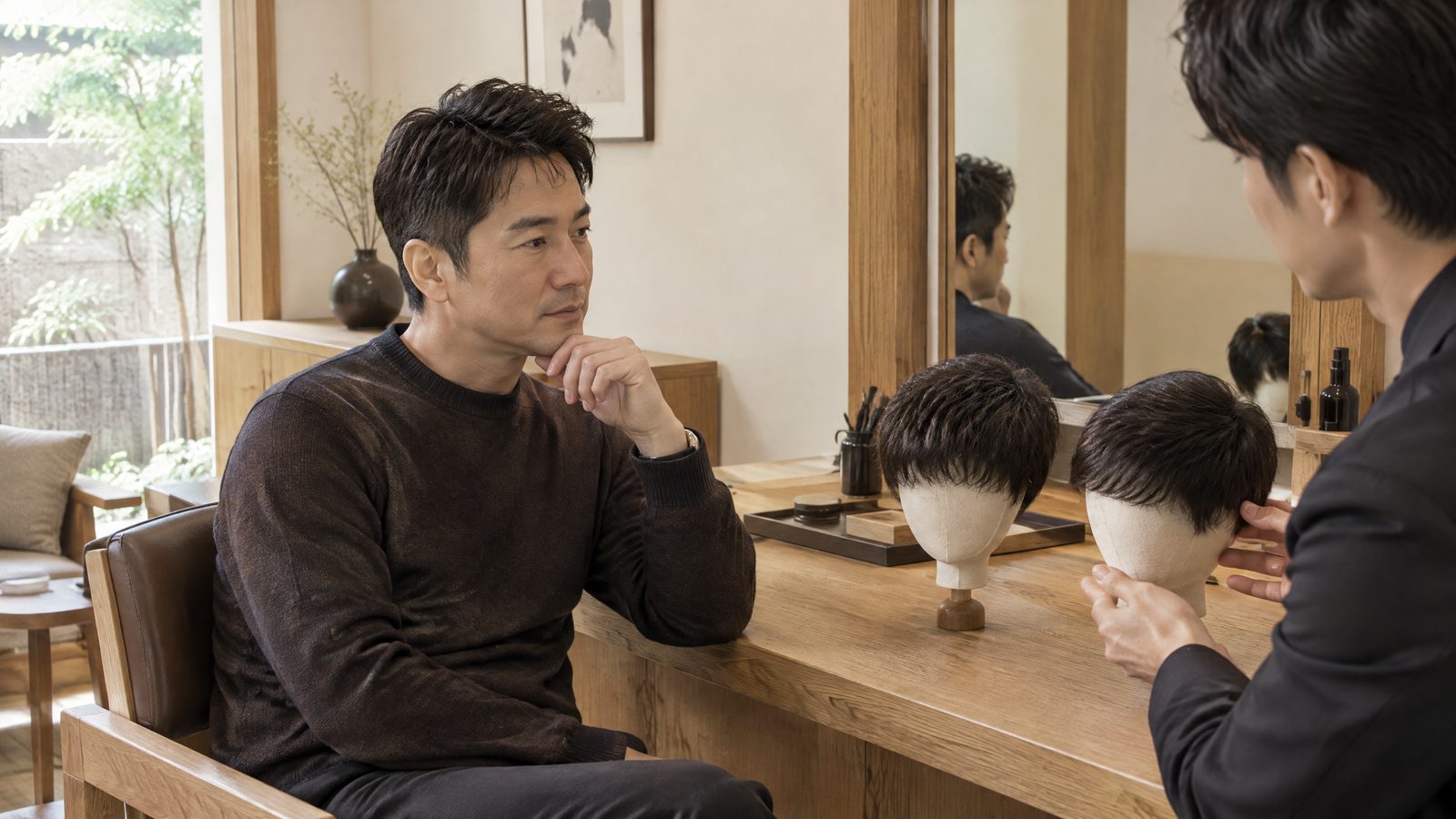
Write a short outline brief with one priority and one limit: for example, retain a side-swept fringe but avoid adding width above the ears. This gives a fitter or stylist something observable to work towards. An illustrative office worker with close-cut sides might prefer restrained top volume rather than a dramatic quiff. That is a design choice, not a rule for every man. Compare the whole head shape before isolating the area that initially drew your attention.
02
2. Balance the forehead, temples and work clothes
The front edge is only part of the view colleagues see. Temple width, sideburn length and the relationship between the fringe and eyebrows also influence the overall impression. Rather than asking for the lowest possible front line, compare a couple of modest variations while keeping the rest of the style constant. A slightly open forehead may preserve your familiar expression better than a dense fringe. The important question is whether the new outline belongs with your face, not whether it conceals the most skin.
Bring a photograph of your usual work clothes, or wear something representative when comparing a style. A high collar can make a long nape feel visually crowded, while a broad jacket shoulder may change how top height reads. These are proportion checks rather than dress-code rules. Look at the hair and upper body together in a mirror. Then move closer to inspect the edge details, so that an attractive overall shape does not distract you from an awkward transition.
If you wear glasses, examine the area around the frames with them on. Hair sitting above an arm can appear tidy from the front yet form an unwanted ridge at the side. Turn your head and check both temples without pressing the hair into place for the photograph. Grey blending deserves equally specific questions: ask about the proposed shade, proportion and placement, and inspect a relevant sample if available. Do not assume that a photograph establishes a particular custom colour option.
03
3. Test the shape in ordinary workday views
Use a small set of repeatable views rather than taking dozens of flattering photographs. Compare the front, each side and a seated view with the same posture and roughly similar lighting. A video-call preview is useful because it shows the outline at conversational distance, although camera processing can alter colour and contrast. Do not judge a purchase solely through that preview. Alternate between the screen and a normal mirror, noting which concerns persist across both rather than chasing every photographic difference.
Where an appropriate fitting or demonstration is available, ask permission to turn, sit and look down before deciding. Those movements can reveal a nape that feels too long or a fringe that obscures your view. Avoid using a rough shake or a strong pull as a home-made security test. Instead, ask how the particular piece is intended to be secured and what activities require precautions. A neat static image cannot establish suitability for commuting, exercise or other movement on its own.
Record an observation and a possible adjustment separately. 'Too wide above the ears' is an observation; 'reduce the side volume' is only one potential response. The base fit, hair direction or cut may need consideration instead. Change one feature at a time when comparing alternatives, otherwise you cannot tell what improved the result. The table below helps turn a general dislike into a focused question without pretending that every concern can be resolved by removing more hair.
| What you notice | What to compare | Trade-off to consider |
|---|---|---|
| Top looks unusually tall | A lower crown profile with the fringe unchanged | Less height may also reduce the lift you like |
| Head looks wider at the temples | Side direction, volume and fit around the ears | Over-shortening can expose an unsuitable transition |
| Fringe feels heavy in seated views | A lighter or more open fringe arrangement | More forehead becomes visible |
| Nape crowds a shirt collar | Back length with normal work clothes on | A shorter back needs a well-considered edge |
04
4. Plan the join with your remaining hair
When comparing a hair system, establish what the term means for the proposed option. Ask which area it covers, how it meets your existing hair and which attachment arrangements are actually offered. The description is not a promise of adhesive installation, bespoke construction or suitability for every scalp. A smaller coverage area may leave more of your own hair visible, but that also makes its colour, length and growth pattern part of the final outline.
Pay particular attention to the transition at the sides and back. A close match in colour can still look disconnected if one area has a different wave direction or markedly different fullness. Compare both the freshly styled finish and the explanation of how you would maintain that relationship. Your own hair continues to grow, so ask who would handle future blending cuts and how the piece would be protected during them. Do not assume that an initial fitting includes continuing haircut appointments.
Keep a practical record of the intended blend: parting direction, side length, crown shape and any agreed boundaries for cutting. Photographs can support that record, but lighting and styling mean they should not replace a written specification. If grey matching or a custom density is important, confirm whether it is available for the chosen construction and how it will be agreed. A deliberate blend can be preferable to adding more hair, especially when preserving your existing side profile is the priority.
The join deserves as much attention as the coverage: it is where the new outline meets the hair you already have.
05
5. Choose a finish you can maintain on busy mornings
Material choice changes the care conversation, not just the appearance conversation. Cancer Research UK distinguishes synthetic, human-hair and blended options, and explains that synthetic styles often have a preset shape; heat use must follow the manufacturer's guidance [1]. That general advice does not identify the properties of a particular product. Ask what the proposed fibres are, how the workday finish is achieved and which products or tools are permitted. A style shown after professional preparation may require steps you would not want every morning.
Describe your available routine honestly. If you want a brief morning check rather than regular restyling, discuss whether the selected finish supports that expectation. If you enjoy adjusting the parting, ask how much flexibility the actual construction allows. Human hair is not automatically the easier choice, and a preset style is not automatically restrictive in a way that matters to you. The useful comparison is between the care instructions and your habits, including drying, storage and the time available after washing.
Ask for a demonstration or explanation of the smallest repeatable styling sequence: arrange the parting, settle the sides, check the fringe. Confirm the appropriate tools and handling for the individual piece rather than copying a generic tutorial. Then ask what happens when the shape no longer settles as expected. Knowing when to stop experimenting and seek product-specific advice is part of a workable routine. It can prevent an ordinary styling frustration from becoming damage caused by unapproved heat or unsuitable products.
06
6. Treat comfort and handling as separate checks
An outline can look right while the fit still needs attention. Describe where any pressure, slipping or pulling occurs instead of merely saying the piece feels wrong. Wearing time should follow the advice for the chosen product and your circumstances; a short assessment cannot prove all-day comfort. Ask what adjustments are possible and what would require a different size or construction. Do not accept discomfort as the necessary price of a tidy appearance, or assume that tightening an attachment is always the answer.
The American Academy of Dermatology warns that repeated tension from tight hairstyles can damage existing hair, with pain or stinging among the signs to take seriously [2]. This does not establish that one attachment method is universally safe or unsafe. If a hairstyle or attachment is pulling, stop the tension-producing practice rather than hiding the symptom beneath more hair. Persistent irritation or concerns about hair loss belong with an appropriate healthcare professional, not a commercial promise that a cosmetic piece will treat the cause.
Plan removal and storage as carefully as putting the piece on. Ask which steps you can perform yourself, which require help and what to do if the edge or shape seems damaged. Do not infer that permission to wear it to work includes permission to sleep, swim or exercise in it. Work through the evening routine before committing: where it rests, how it is handled and when cleaning fits. These practical answers make the workday outline less dependent on improvisation.
- Describe a specific pressure point and ask what can be adjusted; avoid requesting a generally tighter fit.
- Confirm the approved removal sequence before trying to detach an unfamiliar fastening yourself.
- Ask which storage support suits the chosen construction, so that the shape is not crushed between wears.
- Keep product-specific care instructions accessible, including whom to contact about a damaged edge or persistent fit problem.
07
7. Compare a complete quotation, then choose your next step
Once the outline and practical requirements are clear, use the men's wig price Hong Kong reading to organise questions before requesting a quotation. The amount depends on the selected piece and confirmed specifications; an attractive image is not a complete offer. Ask what the quotation describes and which services, if any, are included. Separate the initial purchase from later care or adjustments so that you are comparing equivalent proposals rather than treating different scopes as a simple price ranking.
Use the quotation table as a completeness check, not a prediction of charges. Confirm availability, any agreed custom features and the terms before making a decision. For an in-person enquiry, plan travel to OwnStrand's sole Kwun Tong showroom, not to a presumed local branch, and confirm the arrangements first. Allow room in your planning for reviewing a sample and clarifying details. A showroom visit should help resolve specific uncertainties, rather than creating pressure to accept the first outline that looks reasonable.
Finish with three written decisions: the shape you want, the maintenance you can manage and the details still awaiting confirmation. If any essential answer remains unclear, pause rather than substituting an assumption. You might proceed with a specified option, compare another construction or first refine your existing haircut. Each route can be sensible. A good workday choice is one whose outline and obligations you understand, not simply the fullest result or the most expensive description on the page.
| Quotation item | Question to resolve | Why it changes the comparison |
|---|---|---|
| Piece and specification | Are coverage, material, colour and agreed custom features recorded? | Different specifications are not equivalent offers |
| Initial preparation | What fitting or cutting, if any, is included? | A displayed finished style may have a different service scope |
| Continuing care | Which later adjustments or maintenance are separate? | The initial amount does not describe every future commitment |
| Supply and terms | Are availability, timing and applicable alteration terms confirmed? | A catalogue reference alone cannot settle these details |
A useful quotation explains the shape and the commitments behind the number.
Sources and useful reading
Continue with hair and grooming
If your question concerns styling your own men’s hair, continue with: Perm for Thin Hair Men HK
Compare a related selection decision: Men’s hairpiece: distinguish crown and hairline coverage
Read our male-hair styling background: Vit So and the Canvas Texture studio
Discuss a workday outline for your own hair
For advice on your existing male hairstyle, speak with Canvas Texture about parting, fringe direction and side proportions. Bring your workday photographs and styling routine to a consultation focused on shaping and managing your own hair.
Canvas Texture · WhatsAppFrequently asked questions
Should I request more density to make the result look convincing?
Not automatically. Compare crown height, temple width and fringe weight first. Extra density may create bulk without improving the outline. Describe the feature you want to change and ask how the proposed construction and cut could address it.
Can a smaller hairpiece avoid changing my existing haircut?
It may leave more existing hair visible, but that hair still has to blend in length, colour and direction. Ask whether preparation or future blending cuts are needed for the particular option; do not assume a smaller coverage area means no haircut changes.
Is a video-call preview enough to approve a style?
No. It is a useful conversational-distance check, but camera processing can change the appearance. Also inspect the outline in an ordinary mirror, from the sides and with your usual glasses or work clothes. Confirm fit and care separately.
What should I bring to a consultation about my existing hairstyle?
Bring recent front and side photographs, one familiar style reference and a short description of your morning routine. Identify the parting or outline you want to preserve. This helps a discussion about your own hair without presuming that a wig purchase is necessary.
Related journal articles
Men’s Hairpieces or a Perm? Compare Coverage and Shape
Choose a perm when enough existing hair remains and movement is the main goal. Choose a hairpiece when a defined area needs cosmetic coverage. Neither option decides the best outline by itself. First identify the visible area, surrounding density, preferred parting, and morning routine. Those observations prevent a product label from making the decision too early. Compare those details before making any booking.
Natural Hairline Wigs: A Guide to Fringe and Forehead
Natural hairline wigs look most convincing when the front edge, fit, colour, density, and haircut agree. For a hypothetical four-day workweek side part, inspect both temples under two ordinary light sources before choosing a construction. The aim is a coherent outline in movement. No single feature can decide that outcome. Check the whole frame, not only the centre. Check it while turning your head.
Human Hair or Synthetic Wigs? Texture and Care Choices
Choose human hair when approved styling flexibility matters. Choose synthetic fibre when a preset shape and simpler mornings matter more. Neither label settles the result alone. Texture, density, cap construction, attachment, and fit shape how a wig looks and feels. Start with the routine you can maintain, then check the exact model’s instructions. That order avoids paying for flexibility you will not use