Family Scuba Days: Separate Wash Bags, Calmer Hair Care
For a family water-activity day, pack a small, labelled wash bag for each person, then keep used towels and wet belongings apart from the clean items. A father’s styling product, a teenager’s conditioner and a younger child’s familiar shampoo need not become one communal kit. Individual bags make the correct product easier to find when everyone is tired and ready to change.
Start with hair needs, but do not confuse them with permission to participate. A manageable fringe does not establish a child’s readiness for scuba, and one parent’s health assessment does not cover the family. Ask the instructor to confirm each participant’s eligibility and equipment. Health questions belong with an appropriate clinician, not a stylist or another relative.
The useful goal is a comfortable day followed by an unhurried wash and a realistic hairstyle, rather than perfect photographs. Canvas Texture and DiveHarbour share the same website owner; this is a grooming-led planning article, not an independent review of a dive operator. It connects men’s own-hair care with questions families can take directly to DiveHarbour.
01
1. Plan for the people before choosing the bags
Begin with a quick inventory at home. For each person, note hair length, texture, recent colour or perm services, usual washing products and whether help is needed with drying. Keep this separate from activity paperwork. The inventory answers practical questions, such as who needs conditioner or a longer drying slot; it does not assess health or water confidence. A father with a short textured cut may need less styling equipment than someone with longer curls.
As a hypothetical example, a father might be considering an introduction while his teenager wants a future course and a younger sibling prefers to observe. Their hair bags can travel together even when their activities differ. The guide to a family scuba diving experience Hong Kong is a relevant next read for discussing those different starting points with DiveHarbour. Ask about the actual venue, participant arrangements and equipment rather than assuming that a family booking means identical participation.
Give the grooming plan the same flexibility. The father need not maintain a lifted fringe throughout the day, and the teenager need not finish detangling at a younger sibling’s pace. Choose a simple dry hairstyle for travel, then leave enough time for individual washing afterwards. If someone stays out of the water, their towel and clothing can remain dry. That person should not be treated as an automatic helper who must carry everyone else’s bags.
02
2. Pack familiar products, not a shared grooming experiment
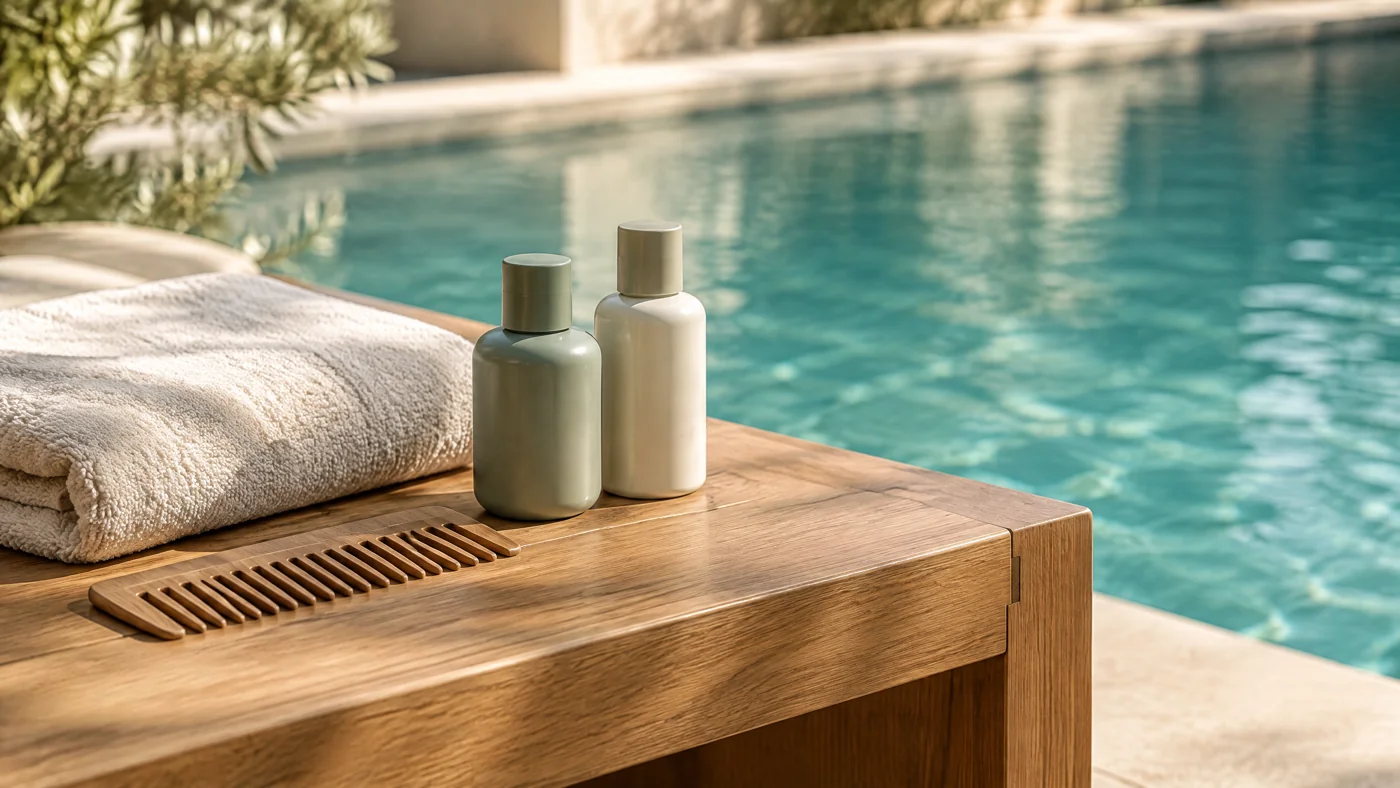
Use compact bags marked with names or another identifier everyone understands. Keep each person’s usual, suitable products in clearly labelled containers, following the product instructions. Do not rely on bottle colour alone, especially when decanting similar-looking liquids. Separate bags are an organisational choice, not a promise of sterility. Their main value is avoiding rushed substitutions, such as reaching for a father’s styling paste when someone else needs their own conditioner.
For men’s hair, distinguish between washing and finishing. Shampoo and any suitable conditioner belong in the wash kit; a modest amount of styling product can stay with the dry clothes for later use on land. A recently coloured or permed head may need a different plan from untreated short hair. Ask the stylist about the actual service and current hair condition before arranging water exposure. A fixed waiting period quoted online is not an individual guarantee that swimming will suit the result.
Only take what the venue allows and what each person already needs. Check product directions and venue rules before use, including in changing areas. Do not assume that a cosmetic labelled biodegradable is harmless to marine life, or apply conditioner before entering the sea or pool on that assumption. If suitable washing facilities are unavailable, retain the familiar products for home and plan the return journey accordingly. The table separates personal grooming supplies from items that need their own storage.
| Bag or pouch | Useful contents | Keep separate |
|---|---|---|
| Each person’s wash bag | Labelled, familiar shampoo and any suitable conditioner | Other people’s products and activity paperwork |
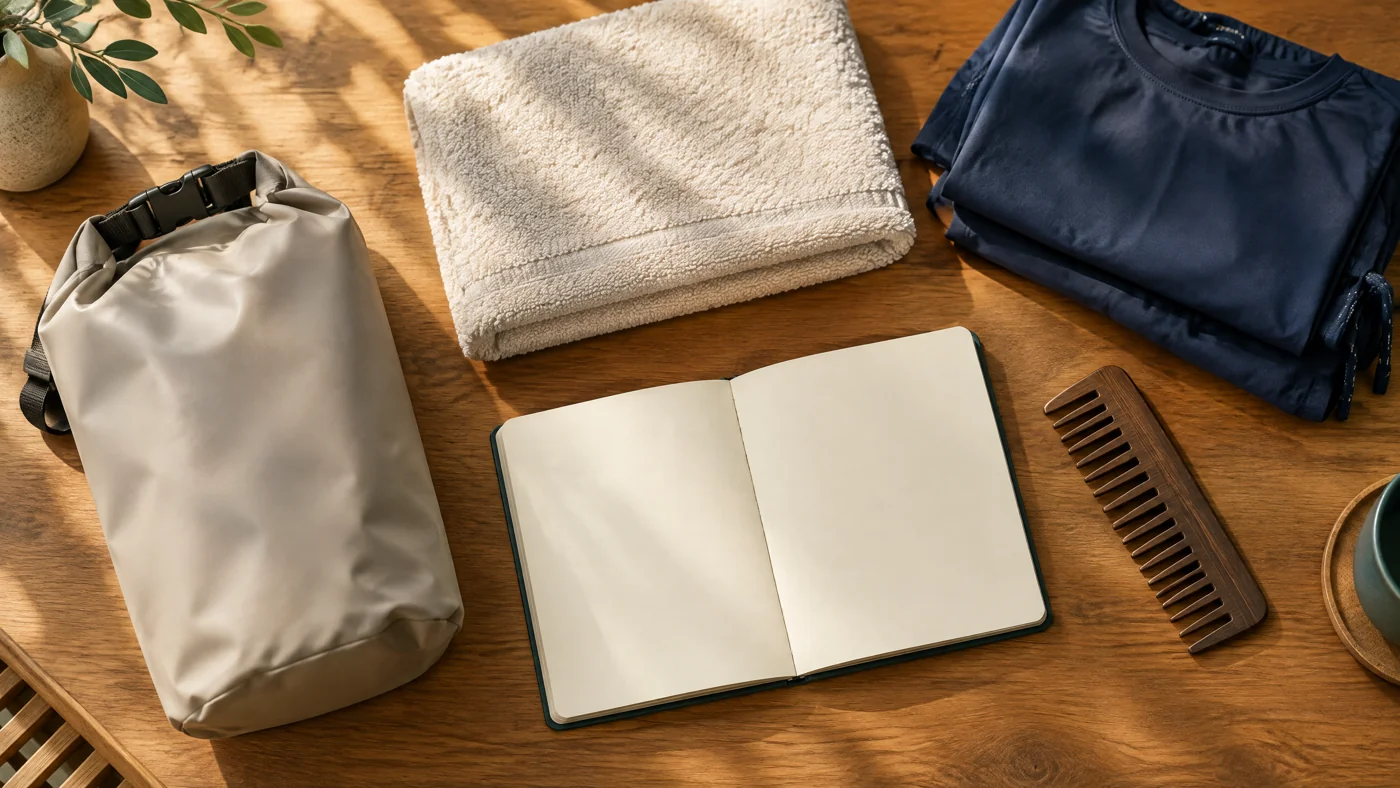
| Personal hair pouch | The person’s appropriate comb and optional gentle hair tie | Used towels and leaking bottles |
| Dry-clothes compartment | Fresh clothing and a dry towel for changing | Wet swimwear and damp grooming tools |
| Used-items bag | Damp personal towels and wet clothing for the journey | Clean supplies; unpack promptly at home |
- Label decanted containers with the product name and intended user.
- Pack each person’s appropriate comb rather than one tool for every hair texture.
- Keep optional styling products with the dry belongings for later use on land.
- Leave room to separate wet items instead of filling every bag to capacity.
03
3. Let a child’s comfort lead the day
A child may enjoy choosing a towel but dislike having wet hair combed by an impatient adult. Ask what usually makes washing comfortable at home, and preserve that familiar routine where practical. Avoid making a tight hairstyle the price of joining the outing. For longer hair, discuss a gentle way to keep it manageable without pulling at the hairline. Any hairstyle that may interact with activity equipment needs an onshore conversation with the instructor, not experimentation in the water.
Parents considering a younger child’s introduction can read PADI Bubblemaker Hong Kong for kids to prepare questions about age requirements, consent, direct supervision and the proposed setting. The instructor must confirm whether that programme and its equipment are appropriate for the individual child. It is an introduction, not adult certification. A child’s curiosity, sibling’s enthusiasm or freshly organised wash bag should never be treated as proof that participation is suitable today.
Tell the child plainly that choosing not to take part will not disappoint the family. Extend that respect to hair care afterwards: offer an unhurried wash and gentle assistance rather than demanding a tidy photograph immediately. If hair catches or a scalp feels sore during grooming, stop pulling and reassess. Persistent scalp discomfort needs appropriate clinical advice. A father can model the same attitude by accepting a flatter fringe for the journey home instead of rushing everyone to restore his usual style.
A child can have a wash bag ready without owing anyone a performance.
04
4. Treat repeated training days as separate commitments
A single introduction and a certification course create different household demands. Repeated activity days may mean several rounds of washing, towel laundry and drying rather than one holiday wash. Look at school, work and ordinary grooming routines before committing. For a man who normally blow-dries a styled quiff before work, the useful question is whether his timetable leaves room for gentle drying after each planned session, not whether a stronger product can hold the same shape throughout training.
The page on family scuba certification Hong Kong helps frame a conversation about different junior and adult routes. Ask DiveHarbour to confirm the applicable prerequisites, assessments, supervision, equipment and total schedule for each person. Family members can enquire together without being promised the same course or completion date. Request the proposed arrangements in writing, then decide how many fresh towels and separate wash kits the confirmed plan actually requires.
Health information must also remain individual and accurate. DAN explains that dive professionals should not be asked to provide medical clearance; medical assessment belongs with a qualified physician when required.[2] One relative’s approval cannot stand in for another’s answers. Before paying, read the financial conditions alongside the practical plan: DiveHarbour currently states that all paid fees are non-refundable, with make-up sessions only subject to written conditions. Grooming preparations cannot justify pressuring an uncomfortable participant to continue because money has been spent.
05
5. Make the wash gentle enough for different hair textures
Confirm access to fresh water and suitable changing facilities before departure rather than assuming showers will be available. After the activity, plan a freshwater rinse and washing with products appropriate to the individual, following their directions and venue rules. This is hair care, not a method for treating symptoms or assessing whether someone can participate again. A man with short hair may finish quickly, but that does not mean everyone else should use his product or copy his routine.
The American Academy of Dermatology recommends gentle hair handling, avoiding towel rubbing and adapting combing to hair texture.[1] Press a towel gently against the hair rather than scrubbing it back and forth. Do not force a comb through resistance. Straight hair and curly hair may need different approaches to wetness and detangling, so use the person’s familiar, suitable method rather than giving the entire family a single instruction. Help should reduce pulling, not simply make the changing room exit faster.
If a dryer is available and permitted, favour low heat and avoid dragging the hair taut while styling; the AAD also advises limiting heat and tension.[1] For men’s curls, allow the natural shape to guide a modest finish rather than repeatedly stretching it into the morning’s look. For a short fringe, gentle finger placement may be enough once the hair is suitably dry. Anyone needing more time should have it without becoming the reason the rest of the family feels delayed.
The quickest person to finish washing should not set the pace for every head.
06
6. Keep clean, used and private belongings distinct
Think about the route through the changing area, not just the contents of the suitcase. Each person should be able to reach their towel and dry clothing without emptying wet belongings over another person’s wash kit. Use the space available respectfully and follow venue rules. A father’s comb and finishing product can remain in his own pouch, ready for later, rather than being passed around a busy bench. Clear ownership makes it easier to notice what needs cleaning after use.
Keep health documents and booking confirmations outside the communal toiletries arrangement. A label on a wash bag helps someone find shampoo; it is not a reason to attach sensitive personal information to that bag. Each participant should supply the information required for their own activity assessment through the appropriate process. Families can share transport planning while still respecting privacy. The same distinction helps older children take responsibility for belongings without making them responsible for another sibling’s participation or health answers.
For the journey home, put damp towels and clothing apart from dry supplies, then unpack them promptly. Clean and dry personal grooming tools according to their care instructions before storing them again. A wet-items bag is transport storage, not a place to leave belongings until the next outing. The table below gives a simple household handover: its purpose is to prevent lost products and damp packing, not to certify equipment hygiene or replace the operator’s equipment-care arrangements.
| Moment | Personal task | Family coordination |
|---|---|---|
| Before changing | Find your own towel, wash products and dry clothes | Keep a clear area for clean belongings |
| After washing | Return closed products to the correct labelled bag | Allow different washing and drying times |
| Before travelling home | Separate damp clothing and used towels | Check that each person has their own belongings |
| At home | Unpack, clean and dry tools as directed | Launder used items and restock only what is needed |
07
7. Choose an achievable men’s hair reset afterwards
Set a realistic expectation for the father’s own hair after the outing. A textured crop might need only gentle drying and a small finishing touch on land; a longer fringe may need more time to settle. Neither has to match a salon photograph before the family leaves the changing area. If there is a meal afterwards, choose a relaxed version of the usual style and pack only the tools needed for that version. Convenience should come from a simpler finish, not rougher handling.
Before a future outing, discuss recent chemical services and any persistent roughness or tangling with the stylist. They can assess the hair and explain suitable daily handling, but cannot approve scuba participation. For continuing scalp irritation or other health concerns, consult an appropriate clinician. Keep the two decisions separate: a change of hairstyle may simplify washing, yet it does not change course prerequisites, equipment suitability or the instructor’s assessment of the planned activity.
After returning home, ask each person what would make the next grooming routine easier. Perhaps a smaller product bottle was awkward, the towel was hard to recognise, or the father packed unnecessary styling tools. Adjust those practical details without turning the conversation into a demand for another scuba day. This article is by the Canvas Texture editorial team, with AI assistance and public sources. Activity questions belong with DiveHarbour; Canvas Texture’s role is helping men manage and style their own hair.
Sources and useful reading
Continue with hair and grooming
For a separate men’s own-hair discussion: Deep Hair Treatment HK
Continue with a related hair-and-water planning guide: SSI Weekends and Perm Care: Leave Room for Cleaning
Read our hair styling background: Vit So and the Canvas Texture studio
Ask about a simpler men’s own-hair routine
Bring Canvas Texture your questions about your own fringe, curls, haircut and everyday styling after washing. We can discuss a manageable men’s hair routine. DiveHarbour-related activity questions belong directly with DiveHarbour, while medical questions belong with an appropriate clinician.
Canvas Texture · WhatsAppFrequently asked questions
Does every family member need a different shampoo?
Not necessarily. Suitable familiar products may overlap, but separate labelled bags still help each person find what they need. Do not substitute products simply because another bottle is easier to reach.
Can I keep my usual men’s styling product in the family wash kit?
Keep it clearly labelled with your dry belongings for optional use on land. Check the product instructions and venue rules. It is not a substitute for washing or a reason to apply cosmetics before entering the water.
Does packing a child’s bag mean they should join the activity?
No. The instructor must confirm individual eligibility, the programme and equipment. A child should not be pressured to participate, and choosing to observe or not continue should be respected.
Can one medical assessment cover a parent and child?
No. Each participant must provide their own accurate health information through the required process. A qualified clinician handles medical assessment where needed; a stylist, relative or instructor does not provide shared family clearance.
Should I book a haircut or perm immediately before a water-activity day?
Discuss your actual hair condition, proposed service and washing plans with the stylist first. There is no universal waiting period that guarantees suitability after a chemical service. Confirm activity eligibility and equipment separately with the instructor.
Related journal articles
First Scuba Lessons: Keep Your Hair, Plan the Pool-Day Wash
Keep the haircut you want to live with; prepare for the wet-hair version of it.
Trying Scuba in Hong Kong: Prepare Your Fringe Before a Mask Fitting
Prepare the fringe you actually have, not the hairstyle you hope will stay unchanged in water.
Choosing a Hong Kong Diving School: A Men's Hair Planning Guide
Choose the learning environment with the instructor; choose an achievable hair routine with your stylist.