
Private Floral Workshop: Hair, Team Roles and Preserved Flowers
Prepare for a private floral workshop with hair that stays clear of your eyes and roles that share creative decisions. Choose the arrangement format around the team's purpose and its eventual display space, rather than the photograph alone. A useful session lets people concentrate on the demonstration without repeatedly adjusting their fringe or waiting for permission to contribute.
In a hypothetical Hong Kong office session, colleagues arrive after lunch and return to meetings afterwards. The organiser must welcome them, check the room and participate too. An elaborate hairstyle needing constant repair adds another task. Likewise, a large shared arrangement can look impressive while leaving several participants with little meaningful work.
Canvas Texture approaches this occasion through men's grooming and considerate hosting. The following framework connects a manageable hair finish with workshop choice, rotating responsibilities and sensible take-home planning. It also considers preserved materials without treating them as indestructible. Decide what everyone should experience before deciding what the finished flowers should look like.
01
Choose one shared outcome before reserving a private session
Start by completing one sentence: this session should help our team do what? Welcoming new colleagues calls for easy introductions and frequent small exchanges. Celebrating a completed project may suit individual pieces with a shared colour palette. Practising collaboration needs decisions people must negotiate. These are different briefs, even when the flowers look similar.
A private floral workshop is worth exploring when your group needs dedicated instruction and an agreed pace. Ask Y. Florist to confirm current availability, group capacity and which requests can actually be accommodated. Privacy alone does not establish the lesson's content, so describe the desired outcome before discussing colours or decorative extras.
Distinguish a private booking from a completely customised curriculum. Ask what the instructor normally demonstrates and what participants will make themselves. Check whether everyone creates a piece or contributes to one object. If a colleague needs more guidance, establish how the instructor can help without stopping the whole group for every adjustment.
Put the outcome above the aesthetic wishlist in your enquiry. A hypothetical onboarding group might prioritise paired discussion over matching company colours. That makes a modest, repeatable design more useful than a complicated centrepiece. Ask for the proposed sequence in writing, including the points where participants can choose rather than simply copy.
02
Set your fringe for downward work, not just the arrival photo
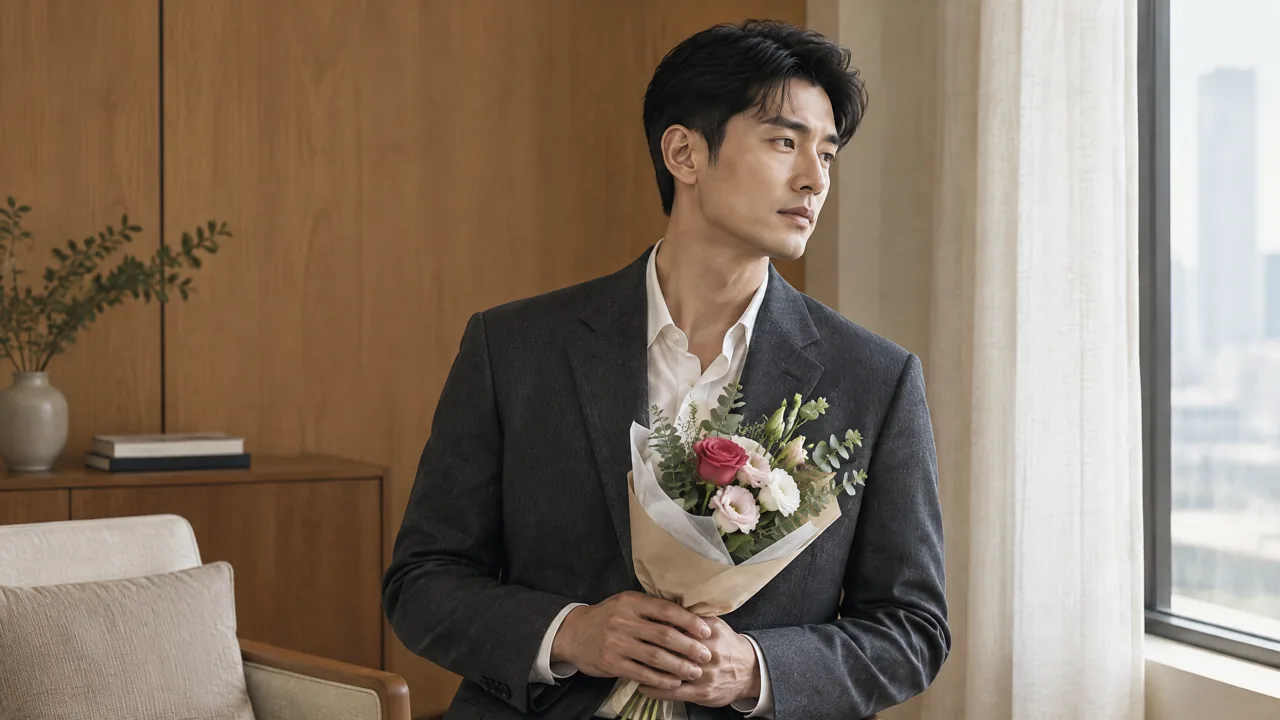
Before leaving, test your usual hairstyle while looking down at a tabletop. A fringe that behaves upright may fall forward when you inspect an arrangement. Check the front and side views in a mirror, then lean forward again. Prioritise a clear sightline and comfortable movement over extra height that needs constant attention.
Leave enough preparation time for hair to dry before you take on reception duties. If you blow-dry, avoid repeatedly applying high heat to rescue the same section. The American Academy of Dermatology advises limiting excessive heat and brushing, and warns about sustained pulling from tight styles [1]. A workshop does not require an aggressive restyle.
For longer hair, follow the instructor's requirements for securing it or wearing any required head covering. Keep the arrangement comfortable rather than pulling tightly for a sharper outline. For short textured hair, settle the front before entering the work area. Bring only the small grooming item you genuinely need, stored away from flowers and refreshments.
If a perm or colour change is already under consideration, discuss your hair's condition and styling needs with your hairstylist. Do not assume a universal waiting period or guaranteed damage-free result. For this occasion, explain that you will bend forward, move around a table and appear in both candid pictures and a group portrait.
03
Rotate creative choices so seniority does not design the bouquet
Shared making can reproduce office habits unless the organiser intervenes. The most senior colleague may choose every colour while others pass materials. Give each person a bounded decision that matters to the finished piece. Rotate those decisions at natural demonstration breaks, rather than rotating people randomly while they are concentrating on a new technique.
When considering a team building floral workshop, describe how you want colleagues to collaborate. Confirm whether the proposed format supports shared decisions, role changes and instructor guidance for your group. A corporate label is not evidence of improved teamwork. The activity needs enough opportunities for people to listen and respond to each other.
In a hypothetical four-person group, one colleague proposes the palette and another checks whether the container suits it. A third compares possible focal points, while the fourth records the agreed choice. After the next demonstration, they exchange responsibilities. The recorder must also receive a design turn; documentation should not become permanent backstage work.
Keep feedback about the object rather than the person. Ask whether one area feels crowded or whether a colour needs balancing. Let the instructor settle technical questions and manage unfamiliar tools. Avoid declaring a winning table. A useful debrief asks which decision changed after someone else's suggestion, making collaboration visible without scoring colleagues' taste.
| Role | Meaningful contribution | Rotation check |
|---|---|---|
| Palette proposer | Offers a small colour direction | Next person can revise it |
| Composition observer | Checks balance from another angle | Does not become sole judge |
| Materials coordinator | Keeps agreed materials accessible | Also gets a design choice |
| Decision recorder | Notes why the group changed direction | Leaves the notes for a making turn |
A team arrangement works best when everyone owns a decision, not merely a place in the photograph.
04
Choose preserved materials by the destination they must fit
Start with the display destination, not a promise of permanence. A compact desk object has different constraints from a gift carried home on the MTR. Ask about the finished footprint, container stability and protective packaging. If the intended recipient has little clear surface space, a smaller design may be more considerate than a dramatic one.
Explore preserved flower workshops when the group wants to arrange treated floral materials for later display. Ask which materials and techniques are included, whether participants use prepared flowers, and what care instructions accompany them. Do not assume an arranging class teaches the preservation process itself, or that every finished piece has an identical lifespan.
For a Hong Kong office, describe the actual setting to the instructor. A sunny window ledge, a damp pantry corner and an air-conditioned desk are not interchangeable locations. Request care guidance for the supplied materials rather than applying fresh-flower habits automatically. Do not add water unless the provider's instructions specifically call for it.
Allow choice within a manageable range. One team member may want muted colours for a shared workspace, while another prefers a brighter personal gift. Agree on size first and palette second. Keeping dimensions consistent can simplify packing without forcing everyone to produce the same design. Treat the take-home object as personal property, not compulsory office decoration.
05
Walk the venue from the lift to the working seat
A room that accommodates a meeting may still be awkward for floral work. Imagine someone entering with a bag, finding a seat and watching the instructor's hands. Check whether the demonstration is visible without people leaning across each other. Tell the provider about fixed furniture and any limits on moving tables before agreeing on capacity.
Consider the arrival route as carefully as the room. Building access procedures, lift arrangements and the distance from unloading to the table can affect setup. Confirm responsibilities with the venue and workshop provider. Do not schedule your own grooming touch-up during the period when you are the only person authorised to receive materials or admit visitors.
Keep a clear place for personal bags and coats away from active work surfaces. A colleague should not need to reach through floral materials to retrieve a phone. Ask about surface protection and cleanup arrangements. The organiser needs to know which tasks belong to the venue, the provider and the team before anyone arrives.
Build the running order around transitions rather than filling every minute with making. People need to hear instructions, change roles and pack their arrangements. If some colleagues must leave early, establish what participation remains realistic. A shortened session should use a simpler agreed design, not rushed handling or an assumption that someone else will finish each piece.
06
Give refreshments their own clean pause and surface
If refreshments form part of the gathering, plan a separate place and time for them. Floral debris, tools and packaging should not share the serving surface. Finish grooming before entering any food preparation area, and never spray hair products there. A refreshment pause also lets participants step back from their designs before making further decisions.
Hong Kong's Centre for Food Safety identifies cleanliness, safe ingredients, raw-and-cooked separation, thorough cooking and safe temperatures as its five keys [2]. Apply the cleanliness principle through clean hands and utensils at the food break. Keep food handling distinct from craft handling, and ask the food provider about the storage arrangements required for the actual menu.
Do not infer suitability from a floral theme or a reassuring dish name. Gather dietary requirements privately and ask the food provider for relevant ingredient information. Let colleagues decide whether the available details meet their needs. If you cannot confirm a request, say so before the event rather than presenting an unverified label as a guarantee.
Keep the host's job simple during the break. Ask one colleague to guide people towards the serving area while you check the next workshop stage. Nobody should have to balance an arrangement and a drink together. Resume only after food has been cleared from work surfaces and participants are ready to follow the instructor again.
- Mark a refreshment surface that is separate from the floral worktables.
- Ask where participants can wash their hands before eating.
- Confirm who handles food storage and serving requirements.
- Keep grooming products packed away from both craft and food areas.
07
Photograph the shared work without turning it into a contest
Tell participants beforehand whether photographs are planned and where they might be used. An internal team album differs from a public company post. Provide a practical way to stay outside the frame. Someone who declines a portrait should still receive the same instruction and opportunities to contribute; participation is not permission for publication.
Take the group picture at an agreed pause, not while people are trying to follow a demonstration. Clear loose packaging from the background and keep the arrangements supported. Ask the instructor when it is appropriate to step away from tools. A calm pause produces a more useful record than repeatedly interrupting the creative work.
For men's hair, check whether the fringe covers an eye when the head tilts towards the flowers. Keep shoulders relaxed and look at the camera rather than checking neighbouring hairstyles. A quick front-and-side mirror check before the photograph is enough. Avoid rebuilding your whole finish in the room or borrowing another participant's grooming items.
Include the process in the visual record, with consent. A picture of colleagues comparing two possible arrangements can show more than identical finished objects. Caption the actual activity without claiming measured wellbeing or productivity benefits. If images will be shared externally, confirm consent for that use rather than relying on agreement to an internal photograph.
Prepare your hair to leave your hands free, and prepare the session to leave every colleague room to contribute.
08
Name the recipient and next journey before packing
Decide who owns each arrangement before the last demonstration. A shared centrepiece might stay at the office, but someone must accept responsibility for its placement and care. Individual pieces may be kept or given away. Ask participants their preference without assuming that everyone wants flowers at home or has a suitable place to display them.
Gather important recipient restrictions before materials are selected. For cat-owning homes, do not include lilies in take-home floral gifts. The FDA warns that true lilies and daylilies can seriously harm cats through plant parts, pollen and vase water [3]. Putting them higher up or removing pollen is not an adequate alternative to excluding them.
Discuss the journey with the provider: walking to a station, travelling with other bags or returning to meetings changes the packing need. Ask how the supplied arrangement should be carried and what protection is available. Avoid promising effortless transport. A smaller object with suitable packaging may be preferable to a large piece that requires both hands throughout.
Attach the provider's care guidance and identify the intended recipient or office location. Keep any gift message separate from promotional copy. End with a short reflection on a decision the team made together, then allow time to leave comfortably. The strongest result is a workable object and a shared experience, not an unsupported claim about transformed teamwork.
| Destination | Decision before making | Detail to confirm |
|---|---|---|
| Personal desk | Choose a footprint that leaves working space | Material-specific display care |
| Shared reception | Name the colleague responsible for the piece | Placement and maintenance permission |
| Gift carried by public transport | Prefer a manageable size | Protective packaging and carrying advice |
| Home with a cat | Exclude lilies from the gift | Recipient restrictions before material selection |
Sources and useful reading
Continue with hair and grooming
For a separate men’s own-hair consultation: Korean Men's Perm
Continue with related occasion and grooming planning: Flower boxes: Grooming and Next-Day Flower Handover
Read our men’s hairstyling background: Vit So and the Canvas Texture studio
Build a workshop brief that people can actually use
Choose one team objective, check your venue and name each arrangement's destination. Prepare a comfortable hairstyle that keeps your view clear. Then ask the workshop provider to confirm the format, materials and practical arrangements in writing before you commit.
Canvas Texture · WhatsAppFrequently asked questions
Should the organiser schedule a haircut immediately before the workshop?
Not automatically. Prioritise a familiar finish that stays clear of your eyes when you lean forward. If you want a change, explain the workshop movements and photo plans to your hairstylist. Perming or colouring needs an individual hair-condition discussion, not a universal timing rule.
How can quieter colleagues contribute without presenting to the whole room?
Offer paired decisions and rotate bounded roles, such as comparing a palette or observing balance. Make sure coordination and note-taking roles also receive a making turn. Let participants explain a choice to their small group instead of requiring a public presentation.
Does choosing preserved flowers remove the need for care instructions?
No. Ask for instructions specific to the supplied materials and the intended display setting. Confirm whether the class uses prepared flowers or teaches preservation itself. Do not assume a fixed lifespan, or add water simply because you would water a fresh arrangement.
What should an enquiry contain before a team confirms a booking?
Include the group size, preferred date window, venue conditions, session objective and intended finished format. Share access needs and relevant participant or recipient restrictions. Request written confirmation of availability, inclusions, setup duties, packing arrangements and applicable terms before finalising the plan.
Related journal articles
Hong Kong Catering Service: A Host’s Grooming Plan
A host’s hairstyle has done its job when it stops competing with the welcome.
Catering Packages: Compare Food and Grooming Budgets
Editorial principle: protect the meal and the host's preparation time before spending on extra variety or a more elaborate look.
Office Lunch Catering: Keep Hair Products off Food Tables
A prepared host gives hair products a home before giving lunch a place on the table.

