Haircut Kwun Tong: A Separate Brief for Every Family Member
Plan a family haircut as several individual decisions, not one instruction to make everyone tidy. Each person needs a preferred shape, a boundary on how much can change, and a realistic account of their daily routine. Put those details into separate short notes before asking about availability. A shared visit can be convenient, but it should not mean a shared hairstyle, assumed family package or promised finish time. Start by deciding what each person actually wants from the appointment.
For a child, the first questions concern preferences and comfort. Ask what they want to keep, what bothers them about their current hair, and whether particular sounds or sensations worry them. An adult can supply school requirements and practical limits without answering every question for them. For a man, describe the sides, fringe, neckline and everyday styling effort separately. These details are more useful than an isolated style name, which different people may interpret differently.
Then send the salon a request rather than announcing a complete plan. Explain how many people need cuts, each person's requirements, and any deadline or support arrangement that matters. Ask whether those appointments can be accommodated together or separately, and what each quote includes. Confirm the arrangements directly before travelling. This guide explains how to prepare that conversation while keeping individual choices visible; it does not promise availability, a particular result or a child's willingness to proceed.
01
1. Choose a booking structure before choosing a slot
Begin with the reason for bringing everyone together. Perhaps one adult needs to accompany a child, while another simply prefers the same outing. Those needs lead to different arrangements. List who requires supervision, who can wait independently, and who has a firm commitment afterwards. Do not assume that several available appointments will run simultaneously. A sequential visit may suit supervision but create more waiting; separate visits may reduce pressure but require another journey. Ask about feasibility before committing anyone's afternoon.
Canvas Texture and DT HUB share a website owner, so the linked pages here are related-brand reading, not independent reviews. The haircut kwun tong page is a starting point for a direct enquiry about DT HUB's Kwun Tong salon. Explain that you are requesting several individual cuts and ask how the salon would organise them. A location page does not establish a family package, reserved adjacent chairs or a guaranteed completion time. Those are separate questions for the receiving salon.
Illustrative scenario: a parent wants a substantial restyle while their child only wants a fringe adjustment. Starting the adult first might leave the child waiting through an unfamiliar process. Starting the child first might leave the parent unable to supervise comfortably during their own consultation. Neither order is automatically better. Tell the salon that supervision matters, then ask whether another accompanying adult or separate bookings would make the request workable. The practical constraint belongs in the enquiry, not as a surprise on arrival.
| Possible arrangement | Why consider it | What to confirm | Trade-off to accept |
|---|---|---|---|
| Sequential individual appointments | One accompanying adult can stay involved | Order, waiting arrangements and supervision | Some family members may wait longer |
| Appointments requested at the same time | Separate adults can attend their own consultations | Actual capacity and who accompanies the child | An accompanying adult may need to forgo a cut |
| Child visit on a separate day | Fewer competing tasks during the child's visit | Availability and the proposed scope of the cut | Another outing is needed |
| One person's cut deferred | A fixed commitment makes the full visit impractical | Which request can move and any cancellation terms | Not everyone leaves with a new cut |
02
2. Let the child name what stays and what changes
Give a child concrete choices instead of asking only whether they want a haircut. They might want the fringe away from their eyes but still like longer hair around their ears. Ask them to point to the part that feels inconvenient and the part they would miss. A parent can then explain genuine requirements, such as a written school rule, without presenting personal taste as a rule. Bring the actual wording when a requirement is unclear; a stylist cannot reliably infer every school's expectations.
Use a reference photograph to discuss features, not to secure a promise of an exact copy. Ask whether the child likes its fringe, outline or length. Explain that their own hair may sit differently and that cutting removes length which cannot immediately be restored. For an older child, invite them to describe what they dislike about previous styles without interrupting. If parent and child disagree, identify an acceptable smaller change before the appointment rather than asking the stylist to resolve a family argument.
The kids haircut kwun tong page can support a service enquiry, but describe your own child's age, preferences and support needs directly. Ask whether the proposed appointment is suitable and what arrangements are possible. Do not infer age acceptance, equipment, discounts or a particular approach from the page alone. A request to retain length or discuss tools first should be recorded as a preference requiring confirmation, not treated as a service guarantee. Keep the child involved in that explanation.
A useful child's brief records a preference to protect, not merely a length to remove.
03
3. Prepare for sensations without promising a stress-free visit
Describe the haircut plainly beforehand: someone will look at the hair, discuss a shape, and use cutting tools near the head. Avoid promising that nothing will feel strange. A cape, loose cut hairs, a spray bottle or clipper noise can matter even when an adult barely notices them. Ask which parts concern the child and include those concerns in the enquiry. Preparation is a way to communicate needs, not proof that the child will remain comfortable or still throughout the appointment.
Discuss a pause signal with the child and ask the stylist how a pause could be handled safely. Explain that sudden head movements near cutting tools are a reason to stop, not a behaviour to shame. An adult should not hold a distressed child still simply to complete the planned shape. Ask in advance what happens if the appointment cannot continue, including any charges or rescheduling terms. A pause request does not create an automatic right to a free unfinished service.
Plan the waiting period as carefully as the haircut. Ask whether an accompanying adult can remain nearby and whether any comfort item would be appropriate around tools. Do not assume permission for food, devices, lap seating or extra visitors. Choose a preferred window around the child's ordinary routine, then ask what is available; no time of day can be presumed quiet. If the child is already overwhelmed on arrival, discuss reducing the scope or postponing before cutting begins rather than insisting on the original plan.
- Name any disliked sounds, touch sensations or washing steps in the enquiry.
- Agree a simple pause signal and discuss it with the stylist before tools are used.
- Ask about accompanying adults and comfort items instead of assuming permission.
- State whether a smaller trim would be acceptable if the original plan feels too much.
- Confirm unfinished-service and rescheduling terms before relying on either option.
04
4. Write a men's cut outline in parts, not labels
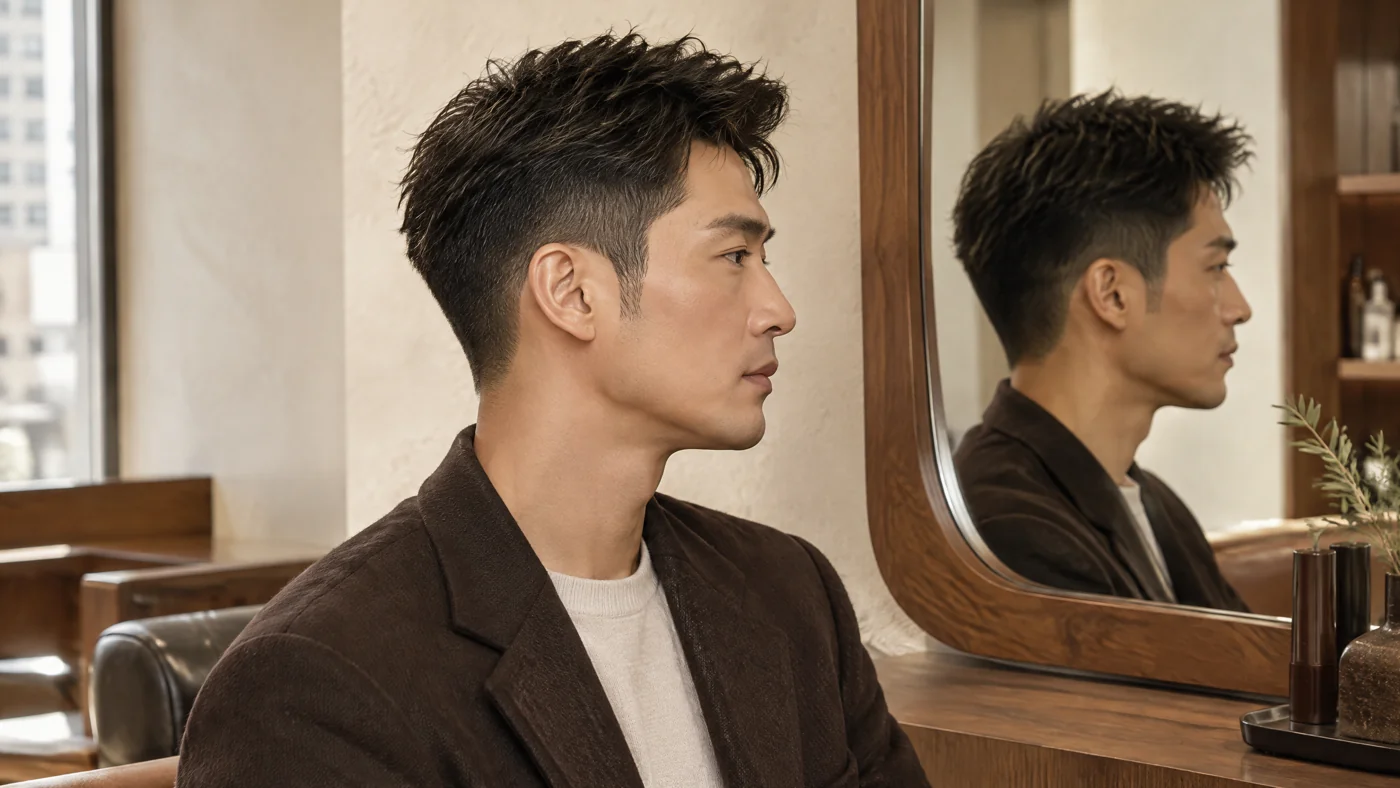
For a man's individual request, use the men's haircut kwun tong page as related service reading, then describe the desired outline in ordinary language. State whether the sides should expose skin or retain coverage, how the fringe should sit, and whether the neckline should look sharp or soft. A term such as 'taper' or 'crop' is only a starting point. Ask the stylist to show what they understand before agreeing to a substantial change in length or contrast.
Separate the haircut from the photographed finish. A lifted front may depend on drying direction and styling product rather than the cut alone. Explain whether you normally air-dry, use a dryer, or avoid products. Tell the stylist if your fringe falls forward, the crown sticks up, or glasses catch hair around the ears. These are practical observations, not diagnoses. Ask which features of the reference are realistic with your current hair and routine, and which would require daily effort you may not want.
Choose a priority when several wishes conflict. Very close sides create a different outline from sides that retain coverage as they grow. Keeping a long fringe offers options but may still require moving it away from the eyes. Illustrative scenario: a father likes the contrast in a reference image but rarely styles his hair before work. His brief could prioritise manageable coverage and a natural fringe over copying the picture's height. The discussion should expose that trade-off before the sides are cut short.
The most useful reference image comes with an explanation of the mornings it must fit.
05
5. Protect the other adult's routine and limits
An accompanying adult's haircut can become an afterthought when the child needs attention. Prevent that by writing their own brief with the same care. Identify the main problem: ends catching on clothing, a fringe that needs constant adjustment, or a shape that feels heavy around the sides. Then name the boundary, such as retaining enough length to tie back comfortably. Do not reduce the request to 'the usual' unless both person and stylist have confirmed what that means for the hair today.
For longer hair, distinguish overall length from layers and face-framing pieces. A person may agree to shorten the ends but not want pieces that escape a work tie-back. Show where the hair needs to reach when dry, and explain how it is normally worn. Wet hair and styled photographs can make length harder to judge, so ask how the proposed finish will be checked. If a decision is uncertain, discuss a more modest first change; this may preserve options but leave some bulk or length in place.
Keep optional services separate from the family haircut plan. Another adult wanting colour does not mean a child or partner needs it, nor does it establish a combined quotation. Mention any current scalp discomfort before a service and do not interpret a haircut consultation as medical assessment. Persistent pain, irritation or unusual shedding deserves evaluation by an appropriate healthcare professional. If a new service would change the appointment's scope, ask for its requirements and quotation separately rather than letting it quietly expand everyone's waiting arrangements.
06
6. Ask for a quote that matches each person's request
A useful enquiry gives the salon enough detail to explain the proposed service without burying the essentials. State the number of people, the requested cuts, relevant ages for eligibility questions, and preferred dates. Ask for a separate breakdown for each person, including whether washing, drying and finishing are included. Hong Kong Consumer Council guidance on consumer protection supports attention to clear service descriptions and transaction terms [1]. It does not mean every booking has an automatic cooling-off period or an unconditional refund entitlement.
Distinguish a requested time from a confirmed appointment, and an estimate from a commitment. Ask whether the whole family request has been accepted or only one person's slot. If you have a fixed departure deadline, disclose it and ask whether a smaller plan would be more realistic. Do not build arrangements around an unconfirmed duration copied from a webpage. Keep the written reply so that you can compare the agreed scope with any later change, especially when several people are included in one message.
Use the worksheet below to organise the reply rather than sending repeated scattered questions. Record what remains unanswered and follow up on those points before travelling. Avoid sending unnecessary identification documents or photographs in a group conversation; ask what information is actually needed for any eligibility check. A clear written exchange can reduce misunderstandings, but it cannot guarantee the result or prevent every delay. Its value is knowing what has been agreed, what remains provisional, and where your family has a genuine choice.
| Field to complete | Information to send | Answer to record |
|---|---|---|
| Individual service | Each person's requested cut and limits | Accepted scope for each person |
| Child support | Age, preferences and relevant comfort concerns | Suitable arrangements and any limitations |
| Quote inclusions | Ask about washing, drying and finishing | Included steps and separately charged changes |
| Appointment structure | Preferred order and supervision needs | Confirmed slots and remaining uncertainties |
| Deadline | Any firm departure commitment | Whether the proposed plan is feasible |
| Changes or cancellation | Ask about postponement and an unfinished cut | Applicable terms before accepting the booking |
07
7. Check the brief at the chair and the routine afterwards
On arrival, revisit each person's note before cutting starts. Preferences may have changed, or the stylist may see a practical limitation that was not apparent in a message. Confirm the main change and the length or feature to protect. For a child, let them answer an appropriate question themselves before the adult adds practical information. For an adult distracted by supervising, ask to finish the consultation before attention shifts elsewhere. The written brief should support a conversation, not replace agreement at the chair.
At the finish, check the outline in the way it will normally be worn. Ask to see the back and sides, and clarify how the fringe is intended to fall. A man who rarely uses product should ask how to arrange the cut without relying on the salon finish. Someone who ties hair back can ask whether the retained length meets that need. Discuss a concern specifically, such as one side feeling fuller, rather than requesting repeated general shortening that could remove a feature you meant to keep.
After the visit, keep a short individual record of what was agreed and what proved practical at home. With permission, an ordinary front and side photograph can help explain a future request; it need not be posted publicly. Note whether the fringe stayed comfortable, whether styling effort was manageable, and what the child would change next time. Do not turn one appointment into a permanent instruction. Hair length, preferences and routines change, so a useful family plan is revised person by person rather than copied unchanged.
Sources and useful reading
Continue with hair and grooming
If your question concerns styling your own men’s hair, continue with: Korean Men's Perm
Read a related decision guide: Japanese Perm Hong Kong: Start with Natural Hair Direction
Read our men’s styling background: Vit So and the Canvas Texture studio
Prepare your own men's styling brief with Canvas Texture
For a men's styling consultation using your own hair, contact Canvas Texture on WhatsApp 94976438 at its separate workshop at 252 Hollywood Road in the Sheung Wan/Central area. Bring your preferred outline, reference images and daily routine. This invitation is not for wigs, medical care or family services, and Canvas Texture does not book DT HUB appointments on your behalf.
Canvas Texture · WhatsAppFrequently asked questions
Can we assume a family package when booking several haircuts?
No. Request each person's service separately and ask whether any combined arrangement is available. Confirm inclusions, appointment structure and applicable terms directly. A shared enquiry does not establish a discount, package or simultaneous appointments.
What if my child and I disagree about the haircut?
Separate genuine requirements from personal preferences. Ask the child which feature they want to retain, explain any actual school rule, and find an acceptable smaller change if possible. Do not leave an unresolved disagreement for the stylist to settle after cutting has begun.
Is a style name enough for a men's haircut request?
It helps start the discussion, but also describe side coverage, fringe direction, neckline and daily styling effort. Explain which feature you like in any reference photograph. Ask the stylist to clarify the proposed outline before agreeing to remove substantial length.
What should I do if my child becomes distressed?
Ask the stylist to pause safely rather than forcing completion. Discuss whether a smaller scope or postponement is appropriate. Confirm charges and rescheduling terms beforehand; distress does not automatically establish a free service or refund.
Does this article independently review DT HUB or arrange its bookings?
No. DT HUB and Canvas Texture share a website owner. The related links are for further reading, and any DT HUB appointment must be confirmed directly with DT HUB. Canvas Texture's invitation here concerns men's styling using their own hair at its separate workshop.
Related journal articles
Kwun Tong Hair Salon: Questions Before a First Visit
Choose the appointment you can understand and the hairstyle you can maintain, not just the photograph you admire.
Women's Haircut Kwun Tong: Choose the Outline Before Colour
The most useful colour reference is one that still makes sense after the length you want removed has gone.
Balayage Hong Kong: Plan the Panels, Not Just the Shade
The dark hair you keep is part of the design, not an unfinished area.