Buffet Catering: Host Hair, Queue Space and Serving Roles
Finish your hair before food receiving begins, then organise the buffet around a clear guest route and named serving roles. Keeping grooming separate from setup lets you welcome people without repeatedly leaving the entrance or touching your hair beside shared dishes. A neat appearance helps, but it cannot compensate for an obstructed serving line.
At a Hong Kong office celebration or clubhouse gathering, several demands can arrive together. Someone needs the lift access details, a colleague wants a group photograph, and early guests start collecting plates. A host who also receives cartons and replenishes dishes soon becomes the person everyone is waiting for.
For Canvas Texture readers, useful occasion grooming means preparing for the work you will actually do. This guide connects a practical hairstyle check with a room walk, a serving-role plan and a separate gift handover. The aim is a host who looks ready and remains available throughout the gathering.

01
Finish your host hair before the first carton arrives
Put your grooming slot before the receiving window, rather than just before guests arrive. Once food reaches the venue, your attention belongs to the handover. Leave enough time to finish drying and put products away. A rushed bathroom visit during delivery also leaves your colleague managing decisions they may not be authorised to make.
Test your fringe in the movements hosting requires. Look down at a receiving sheet, lean forward slightly and turn towards someone beside you. If hair covers your eyes, adjust it before setup. Check your side profile as well as the front. A style that looks balanced in a mirror may still need constant repositioning.
The American Academy of Dermatology advises limiting excessive heat and brushing, and warns against sustained tension from tight hairstyles [1]. Choose a familiar approach rather than repeated high-heat corrections on the day. If you are considering a perm or colour change, ask your stylist about your hair condition instead of assuming a universal preparation interval.
Keep a comb and any styling products in a personal bag away from the food area. Do not spray hair products near exposed dishes or serving equipment. If you will handle food, follow the venue's requirements for hair restraint. After touching your hair, clean your hands before returning to that task rather than relying on a tidy appearance.
Editorial note: A hosting hairstyle should let you look up, turn and greet people without needing another hand to fix it.
02
Walk the buffet route with a plate before selecting the layout
Start with the room, not the menu photographs. Walk from the entrance to the proposed plate position, along the dishes and towards the eating area. Carry an empty plate during the test. Notice where turning becomes awkward and where someone reading a dish label would stop the person behind them.
The Buffet Catering page can help you consider a shared self-service meal rather than separate individual meals. Confirm the actual serving equipment, setup responsibilities and available dish arrangement with the supplier. Those details determine how much usable table space you need; the service name alone does not establish the finished layout.
Allow guests to finish collecting food without crossing the start of the line. Keep venue exits and necessary access routes clear, and agree the layout with the venue. If the room cannot accommodate waiting guests, changing the release sequence may help more than adding dishes. Do not invent a universal aisle width for every venue.
In a hypothetical clubhouse event, the available wall table might sit opposite the only entrance. Moving plates to its far end could send the queue across arriving guests. Test both directions before opening service. The better direction is the one that preserves arrival access and leaves a clear departure from the final dish.
| Test point | What to look for | Decision to record |
|---|---|---|
| Arrival to plates | Queue crossing the entrance | Plate position and waiting area |
| Middle of dishes | Guests stopping to read or reach | Label position and dish order |
| Last dish to seats | A turn back through the queue | Clear collection exit |
| Service access | Staff carrying trays through guests | Agreed replenishment route |
03
Make a compact office buffet work without a second queue
A small gathering can still produce a congested line when everybody leaves their desks together. Check whether guests will eat in one room or return to separate areas. That choice affects plate carrying, drink placement and the announcement. A compact food display should not force guests to negotiate office doors with both hands occupied.
Use Mini Buffet Catering to explore a more compact shared-food format for a smaller gathering. Ask the supplier to confirm quantities, container dimensions and any equipment included in the written order. A smaller format does not automatically mean the dishes will fit your pantry counter or that serving assistance is provided.
Keep the sequence easy to understand from the queue entrance. Put readable dish information where guests can see it before reaching the utensil. Avoid stacking decorative objects between containers. In a hypothetical office lunch, a low sign beside each dish would be more useful than a large welcome board blocking the view of the food.
If you open a second serving point, decide whether it offers the same meal or different items. Tell guests clearly; otherwise they may queue twice. Two incomplete stations can create more movement than one complete line. Check the actual menu allocation first, then assign someone to change the message when a dish becomes unavailable.
04
Separate the greeter, receiver and serving lead
Give each live task an owner before the first arrival. The greeter welcomes people and explains where to go. The receiver checks the delivery against the order. The serving lead watches the food station and coordinates questions. One person can hold different roles at different times, but simultaneous responsibilities need a workable handover.
The receiver should have the confirmed order and the correct venue contact details. Ask them to record missing items and clarify what has actually been handed over. Counting outer cartons is not the same as checking their contents. Resolve discrepancies through the agreed supplier contact rather than sending the host repeatedly between guests and the loading point.
Choose a deputy who can answer practical questions while the host is greeting or being photographed. Tell that person which decisions they can make, such as moving a sign or calling the receiver. Keep menu changes and food-handling questions with the appropriate supplier or trained venue contact. Delegation should not turn an uninformed volunteer into a technical adviser.
Use one short briefing rather than several scattered messages. State the service opening cue and where to report a problem. Make the receiver's transition explicit once handover is complete. This prevents a familiar gap: everyone assumes delivery is finished, yet nobody has taken responsibility for the buffet guests are about to use.
| Role | Owns | Handover or escalation |
|---|---|---|
| Greeter | Arrival directions and guest welcome | Deputy covers during photographs |
| Receiver | Order checks and delivery discrepancies | Reports completed handover to serving lead |
| Serving lead | Station readiness and utensil issues | Consults supplier on handling questions |
| Gift coordinator | Recipient list and unopened gift stock | Keeps collection separate from meal service |
05
Give clean utensils and holding conditions a named owner
Hong Kong's Centre for Food Safety includes clean hands and utensils, separating raw and cooked food, and safe temperatures among its Five Keys [2]. Apply those principles to the event setup. Keep personal grooming items outside the serving zone, and arrange a practical place for helpers to clean their hands before food-handling tasks.
Confirm how each delivered dish must be held before you decide when service opens. Record the supplier's instructions and the equipment needed to follow them. A delivery arrival time is not automatically the moment every dish should be uncovered. If speeches run late, the serving lead needs an agreed response rather than a guess about safe display time.
Give each dish its intended serving utensil and a place to rest it without touching unrelated food. If a utensil falls or becomes unsuitable for use, the lead should arrange a clean replacement. Do not quietly move a spoon from a neighbouring dish. Guests need reliable ingredient information, and shared tools complicate questions about cross-contact.
Ask about dietary requirements before finalising the order, then confirm ingredients and handling directly with the supplier. Keep the answer accessible to the serving lead. Do not describe a dish as suitable merely because its name sounds vegetarian or gluten-free. When the available information cannot answer a guest's concern, say so and seek clarification before offering reassurance.
06
Move drinks and used plates away from the serving exit
A guest often reaches the buffet exit with a full plate and no free hand. Placing drinks at that exact point creates a pause where everyone behind them is trying to leave. Give drinks a separate, visible location with a stable surface nearby. Guests can put down their plate before collecting a cup.
Keep used-plate collection away from clean plates and uncovered food. Agree where waste and used utensils will go, and who will clear the area. A return point beside the queue entrance may look convenient on paper but can send people carrying used items against the main flow. Test that journey during the room walk too.
In a hypothetical after-work office gathering, the host might want a polished jacket for the welcome photograph. Keep the photograph position outside the drink station. That reduces interruptions from people asking where cups are kept. It also lets the host face guests without repeatedly turning back towards a service task or reaching across somebody's plate.
Do not solve every bottleneck by asking guests to stand farther apart. Identify the action causing the stop. A missing bin, inaccessible napkins or a drink dispenser requiring two hands each needs a different adjustment. Ask a colleague to observe the first few guests, then make a small change without rearranging the entire room mid-service.
Editorial note: A shorter queue begins with fewer avoidable stops, not simply with a shorter guest list.
07
Keep Mid-Autumn gift collection separate from the meal
At a Mid-Autumn office gathering, gift recipients and buffet diners may not be the same group. Some colleagues may collect a box and leave, while others attend lunch without receiving a corporate gift. Count those allocations separately. An unopened takeaway box should not be treated as part of the food available for guests to share.
The Corporate Mooncake Orders page is relevant when the gathering also includes organised festive gifting. Confirm the selected boxes, recipient allocation, message details and delivery arrangements in the written order. Keep that confirmation separate from the buffet plan so a meal quantity change does not silently alter the promised gifts.
Place the gift collection point where recipients can check their name without holding up food service. Avoid asking people to carry a gift bag while filling a plate. Collection after eating may be easier, but it needs clear instructions for anyone leaving early. The gift coordinator can handle those exceptions while the host remains available to welcome guests.
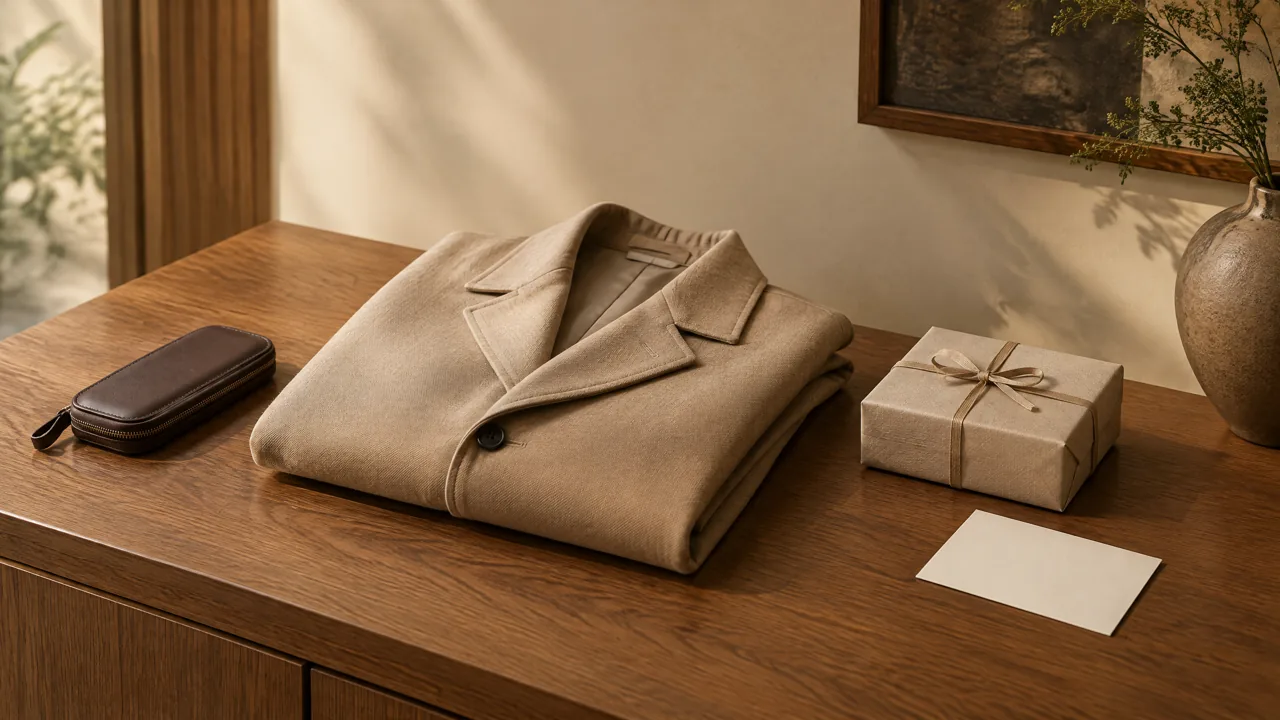
Schedule any presentation photograph before opening the gift queue, or use a separate photo position afterwards. Check the host's fringe and jacket once before that sequence, away from exposed food. This is a practical connection between grooming and gifting: less last-minute adjustment, fewer interrupted handovers and a clearer place for colleagues to stand.
08
Plan photographs and late arrivals without restarting service
Choose whether the main group photograph happens before service or after guests have eaten. Avoid calling everyone away while they are midway through collecting food. If the photograph comes first, tell the serving lead the opening cue. If it comes later, give guests time to put down plates and explain where the group will gather.
Make a simple late-arrival instruction that the deputy can repeat. Explain where the person can find dish information and whether gift collection is still open. Do not promise that every menu item will remain available. The serving lead should know how to check the current offering and any relevant holding instructions before directing someone to food.
For the host, use the photo break as a brief appearance check rather than a full restyling session. Step away from the food, check your front and side silhouette, then return. If you have adjusted your hair and will resume food handling, clean your hands first. Let the deputy cover guest questions during that short absence.
Finish by handing over closing responsibilities as clearly as opening roles. Ask the serving lead to follow the supplier's instructions for remaining food, and the gift coordinator to reconcile uncollected boxes. The host can then thank guests without simultaneously packing everything. A well-prepared hairstyle supports that calm presence; a clear running order makes it possible.
- Write the grooming finish time before the confirmed receiving window on your running order.
- Walk the complete route with an empty plate, including drinks and used-plate return.
- Name the person who authorises service opening and the deputy who covers photographs.
- Keep buffet diners and promised gift recipients in separate checked lists.
Sources and useful reading
Continue with hair and grooming
For a separate men’s own-hair consultation: Business Men's Perm
Continue with related occasion and grooming planning: Sushi & Sashimi Catering: Photo Timing and Safe Handover
Read our men’s hairstyling background: Vit So and the Canvas Texture studio
Prepare the host and the room together
Before confirming your gathering, finish the room walk, assign receiving and serving owners, and ask the supplier to clarify outstanding order details. Then plan a familiar hairstyle that leaves your view clear and your attention with your guests.
Canvas Texture · WhatsAppFrequently asked questions
Should I style my hair again after receiving the catering?
Aim to finish before receiving starts. If you need a quick adjustment, step away from the food area and ask your deputy to cover. Put grooming products away afterwards, and clean your hands before returning to any food-handling task.
Does a small office buffet need two serving lines?
Not necessarily. First test one complete route and identify its bottleneck. A second line helps only if its dishes, access and guest instructions are clear. Do not assume a smaller package or a second table automatically removes waiting.
Can guests collect mooncake gifts while queuing for lunch?
A separate collection point is usually easier to manage. Guests otherwise have to carry boxes while serving themselves, and recipient checks slow the food queue. Keep gift allocations distinct from meal counts, with an early-departure arrangement if needed.
What should the host do if a speech delays food service?
Ask the serving lead to follow the agreed holding instructions and consult the supplier when clarification is needed. Do not decide safety from appearance or use a universal waiting limit. Update the opening announcement once the food and station are ready.
Related journal articles
Hong Kong Catering Service: A Host’s Grooming Plan
A host’s hairstyle has done its job when it stops competing with the welcome.
Catering Packages: Compare Food and Grooming Budgets
Editorial principle: protect the meal and the host's preparation time before spending on extra variety or a more elaborate look.
Office Lunch Catering: Keep Hair Products off Food Tables
A prepared host gives hair products a home before giving lunch a place on the table.