Wigs Hong Kong: verify shop information before a visit
Before visiting a wig shop in Hong Kong, confirm the location, appointment arrangements and whether the options you want can actually be shown. A catalogue photograph is not evidence of current availability or a suitable fit. Ask for a written reply that identifies the product or service being discussed. This makes the visit useful even if you decide not to buy, because you can assess a defined option rather than react to whatever happens to be presented.
The supplied shop information identifies one OwnStrand showroom in Kwun Tong and distinguishes catalogue browsing from enquiries about supply and fitting. Its documented hand-made human-hair process includes viewing samples, choosing a style, head measurements and a later fitting. Those details do not establish that every catalogue item follows that process. Match the information to your intended coverage, material and service before arranging travel, especially if you need something different from a complete wig.
For readers of Canvas Texture, the useful starting point is often a familiar hair outline: how the forehead is framed, where the part sits and how the sides meet the crown. Keep those priorities separate from questions about ordering and maintenance. A convincing photograph can answer the first set only partly, and cannot settle the second. The following steps help you gather evidence, compare realistic compromises and leave a consultation with a decision you can explain.
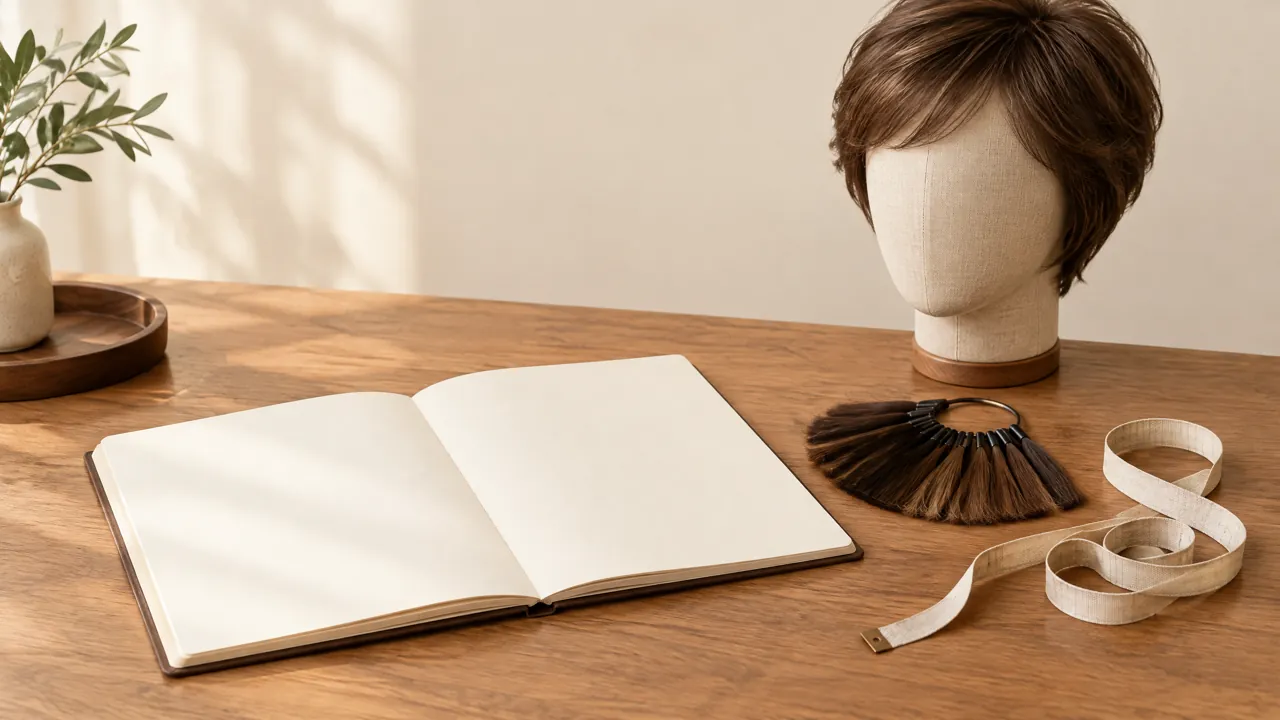
01
1. Separate a browsing page from an appointment promise
Begin with the broad wigs Hong Kong page when you want to understand the available browsing routes. Its description points readers towards a catalogue and enquiries about options and a Kwun Tong visit; it does not confirm that every pictured item is ready to try. OwnStrand and Canvas Texture share an owner, so this is a related-brand reading resource, not an independent endorsement. Use it to identify questions, then obtain answers about the particular option that interests you.
Create a simple evidence ladder: a photograph shows an appearance, a product description names an option, and a dated reply can confirm what the shop expects to offer at your appointment. Each step answers a different question. If a listing is retained as a discontinued reference, its image may still help explain your preferred outline, but it should not enter your shortlist as an available product. Save the reply alongside the photograph so the two are not confused later.
Make your first enquiry narrow enough to answer. Rather than asking whether a shop has natural-looking wigs, describe the coverage you need and ask whether a relevant sample can be shown. Explain whether you are researching, comparing materials or approaching an order. This gives the appointment a purpose without committing you to purchase. If the response remains general, clarify the unresolved point before travelling; a friendly invitation alone does not tell you what the visit will establish.
02
2. Turn your familiar hair outline into a comparison brief
Choose two or three photographs that show your own preferred hairstyle from different angles, rather than collecting many unrelated model images. Mark what matters: a partly visible forehead, a low crown, a side part or a soft outline around the ears. Distinguish these preferences from fibre colour and length. The same length can create very different proportions when the top is fuller or the sides sit closer, so a length description alone is a weak shopping brief.
Next, describe the area you want to cover. A complete wig, a topper for a limited area and a men's hairpiece are not interchangeable labels, even when photographs look similar. If you want to retain visible hair at the sides, ask how the proposed piece would meet it and what information is needed to assess suitability. Do not assume that choosing human hair settles the coverage question. Material describes the fibres; it does not identify the shape, base or attachment method.
Set one non-negotiable visual priority and one flexible preference. For example, an illustrative shopper might prioritise keeping the forehead open but accept a slightly different parting. Another might value a modest crown above matching the exact colour of an old photograph. This ranking prevents a consultation becoming a search for a perfect replica. Where grey blending matters, ask whether the specific option supports the requested mixture and how a sample will be compared; do not infer custom grey proportions from a general customisation claim.
| Priority | What to compare | Trade-off to discuss |
|---|---|---|
| An open forehead | Front edge and outline from front and side views | More exposure may make the front construction more important |
| A restrained crown | Top volume while sitting upright | Less fullness may differ from the catalogue styling |
| Visible own hair at the sides | The junction between existing hair and proposed coverage | Keeping those sides may require ongoing blending |
| A familiar grey mixture | A relevant physical colour sample, if available | Exact reproduction needs specific confirmation rather than a photograph |
03
3. Check what the product description and quote actually cover
Before comparing quotes, request an identifiable description of the option: its name or reference, fibre material, coverage type and relevant construction. Ask which details remain provisional until assessment. The Hong Kong Consumer Council's consumer-protection overview lists legislation addressing false, misleading or incomplete trade descriptions.[1] For shopping purposes, the practical lesson is to preserve clear descriptions and transaction terms. This is not a promise that a particular disagreement will qualify for a refund, nor a substitute for legal advice.
Treat construction terms as questions rather than quality rankings. A name such as Swiss lace does not, by itself, establish that a product is lace-front or monofilament. Likewise, human hair does not automatically establish Remy processing, unrestricted heat styling or a particular attachment system. Ask which characteristics apply to the actual item and request its care instructions. If the shop cannot yet confirm a detail, keep it marked as unresolved instead of supplying the answer from another brand's page.
Ask for the quote to separate the piece from any agreed fitting, cutting or other services, and clarify which later visits would be chargeable. Confirm deposit conditions, cancellation terms and what happens if an order cannot proceed as described. A lower headline figure may cover fewer services, while a larger figure may include work you do not need. Compare equivalent scopes before judging value. Written clarification also reduces the risk of treating a conversation about possibilities as an agreed specification.
Compare the promises inside the quote before comparing the numbers at the bottom.
04
4. Decide what a consultation must resolve before you travel
The wig shop Hong Kong page describes enquiries about styles, quotes, supply and arranging a Kwun Tong visit. Use those categories to prepare a short appointment agenda: what can be viewed, what can be assessed and what would require ordering. An enquiry route is not confirmation of a particular sample, private room or installation service. Ask about any arrangement that matters to you, and retain the response with your appointment details rather than assuming the page answers it.
Keep sample viewing, trying a suitable piece and final fitting separate in your notes. For the documented hand-made human-hair route, OwnStrand describes viewing samples, selecting a style and taking head measurements before production, followed by a return visit for fitting and wash, cut and blow-dry. Ask whether that route applies to your enquiry. Do not transfer its sequence to a ready-made item, an online order or a different hair system merely because all appear under the same brand.
Timing also needs a clear label. Ask when the relevant option can be assessed, what starts any production period and when a return appointment could be arranged. Production time is not a delivery promise, and an estimated completion date does not reserve your next visit. If you have an important event, explain the date and ask which stages remain uncertain. Leave room for a decision after viewing rather than making urgency the reason to accept an unsuitable outline or an unclear order.
| Evidence available | Sensible next step | What remains unresolved |
|---|---|---|
| Only a catalogue photograph | Send a focused enquiry before arranging travel | Supply, relevant sample and consultation scope |
| A relevant sample and appointment are confirmed | Prepare your outline brief and comparison questions | Personal suitability and final specifications |
| The option requires a specified custom process | Clarify measurements, production stages and return fitting | Final timing and agreed order details |
| A time-sensitive requirement has no confirmed sequence | Resolve the schedule before committing | Whether the necessary stages fit your deadline |
05
5. Assess the outline in ordinary use, not just a flattering pose
At the consultation, compare the front, side and crown rather than judging from one mirror angle. If photography is permitted, take consistent views with your head upright and relaxed. A close-up of the front edge is useful, but so is the whole outline above your shoulders. Ask which features belong to the sample and which would change after the agreed styling. This helps you avoid approving a finished appearance that the sample has not actually demonstrated or that the proposed service does not include.
Cancer Research UK's wig guidance suggests bringing photographs of a familiar hairstyle and asking about private fitting arrangements; it also advises following manufacturer guidance on heating synthetic fibres.[2] These are practical prompts, not evidence that any shop offers those arrangements or that a particular wig tolerates heat. Ask what can be done to the exact option under discussion. If a sample's attractive finish depends on styling you cannot safely reproduce, that difference belongs in your decision, not just in the care leaflet.
Consider the everyday setting in which you want the outline to work. If you normally wear spectacles, bring them and check how the arms sit alongside the proposed coverage during an agreed fitting. Discuss your usual parting, commute and styling time without asking for universal guarantees about security or weather. Notice discomfort and raise it immediately rather than treating it as the price of a better silhouette. Unresolved comfort or scalp concerns require appropriate assessment, not reassurance based solely on a photograph.
06
6. Compare the routine you can maintain after the visit
A good visual match is only useful if its care routine fits your week. Request product-specific guidance on washing, drying, detangling, storage and permitted styling before you decide. Human hair and synthetic fibres have different care requirements, but neither label supplies a complete instruction sheet. Ask what you would do yourself and which tasks, if any, require professional help. Do not choose a material simply because it sounds premium; compare the actual routine with the time and equipment you are willing to use.
For partial coverage, include the care of your own hair in that routine. Ask how often the visible sides might need tidying to preserve the agreed proportions, without assuming a fixed interval. If your existing haircut changes substantially, the relationship between its outline and the piece may change too. Keep a photograph of the intended overall shape as a reference for future conversations. It is a clearer record than asking every stylist to recreate an undefined description such as natural or youthful.
Before placing an order, ask how adjustments and aftercare enquiries are handled and which terms apply after cutting or custom work begins. Do not assume an ordinary return arrangement survives every modification, or that future adjustments are included indefinitely. If a condition is important, obtain it in writing before agreeing to the work. You may reasonably prefer a less exact visual match with a manageable routine over a closer match that depends on frequent services you cannot attend. That is a practical trade-off, not a failed purchase.
The most useful hair outline is one you can keep looking intentional on an ordinary morning.

07
7. Confirm the sole showroom and leave with a clear next step
For location-specific planning, the wig shop Kwun Tong page identifies OwnStrand's sole Kwun Tong location. The supplied address is 香港觀塘開源道50號利寶時中心2103室; keep this wording in your travel notes so you can match it to the destination. Reconfirm the address and appointment arrangements before setting out. References to customers travelling from Mong Kok or Tsim Sha Tsui describe journeys to this sole showroom, not branches in those districts. A district search result should never replace checking the actual destination.
Finish the visit by sorting your notes into confirmed facts, open questions and personal preferences. Confirmed facts might include an identified sample or a written service scope. An open question might concern availability of a requested colour. A preference might be your reaction to crown volume. Keeping these categories apart prevents enthusiasm from becoming an assumed specification. If you are accompanied by someone, ask them to comment on your chosen priorities rather than introduce a completely different hairstyle at the last moment.
Then choose one next step: proceed with an agreed specification, request one missing answer or pause the search. A pause is sensible when important details remain unverified, even if the appointment was welcoming. Keep the dated reply, quotation and permitted comparison photographs together so any later discussion starts from the same record. If your remaining question concerns the shape of your existing hair rather than a wig order, a separate men's styling consultation can help clarify that outline without pretending to resolve supply or fitting questions.
- Confirm the sole showroom address and your appointment before travelling.
- Bring a short outline brief and a small set of relevant photographs.
- Record the exact option and the services included in the written quote.
- Choose a next step only after separating confirmed details from unanswered questions.
Sources and useful reading
Continue with hair and grooming
If your question concerns styling your own men’s hair, continue with: Korean Men's Perm
Compare a related selection decision: Custom wig consultation Hong Kong: plan the fitting
Read our male-hair styling background: Vit So and the Canvas Texture studio
Clarify your own-hair outline with Canvas Texture
Arrange a Canvas Texture men's hair-styling consultation to discuss your existing hair, preferred parting and overall proportions. Bring reference photographs and explain the shape you want to preserve in your everyday styling.
Canvas Texture · WhatsAppFrequently asked questions
Does a catalogue listing mean I can try that item at my visit?
No. A listing can support browsing without confirming current supply or a relevant fitting sample. Ask about the identified item and what can be shown at the appointment before travelling.
Is there an OwnStrand branch outside Kwun Tong?
The supplied evidence identifies a sole showroom in Kwun Tong. Other district references describe customers comparing online or travelling to that showroom, not separate branches. Reconfirm your destination and appointment arrangements.
Can I assume every human-hair option is custom-made?
No. Fibre material does not establish the ordering process. Ask whether the documented hand-made route applies to the specific option and clarify its measurements, production and return-fitting stages.
What can Canvas Texture help me clarify?
Canvas Texture can discuss men's own-hair styling and the outline you want to maintain, such as crown volume, parting and the shape of the sides. That is separate from confirming a wig supplier's products, fitting arrangements or order terms.
Related journal articles
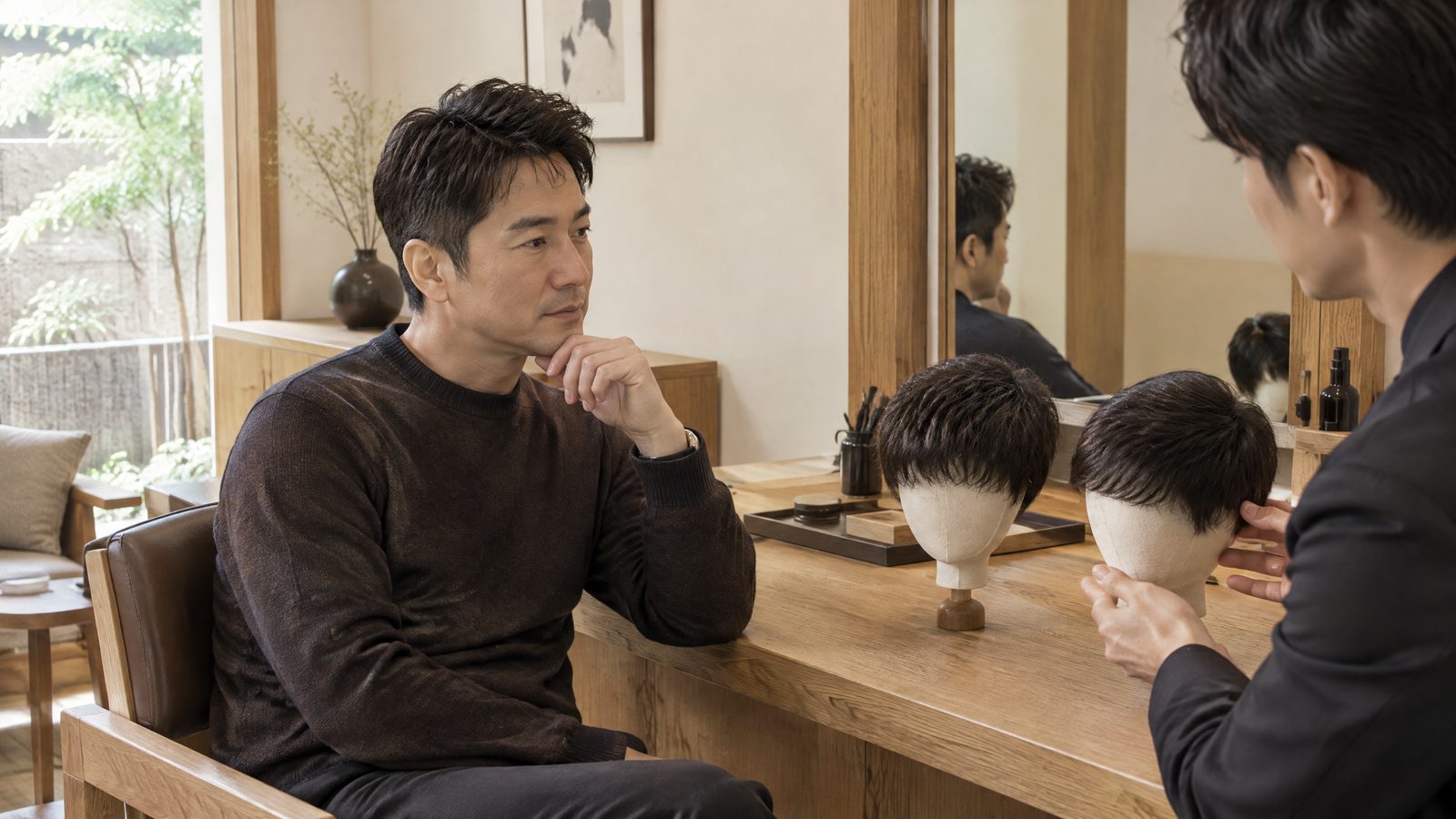
Men’s Hairpieces or a Perm? Compare Coverage and Shape
Choose a perm when enough existing hair remains and movement is the main goal. Choose a hairpiece when a defined area needs cosmetic coverage. Neither option decides the best outline by itself. First identify the visible area, surrounding density, preferred parting, and morning routine. Those observations prevent a product label from making the decision too early. Compare those details before making any booking.
Natural Hairline Wigs: A Guide to Fringe and Forehead
Natural hairline wigs look most convincing when the front edge, fit, colour, density, and haircut agree. For a hypothetical four-day workweek side part, inspect both temples under two ordinary light sources before choosing a construction. The aim is a coherent outline in movement. No single feature can decide that outcome. Check the whole frame, not only the centre. Check it while turning your head.
Human Hair or Synthetic Wigs? Texture and Care Choices
Choose human hair when approved styling flexibility matters. Choose synthetic fibre when a preset shape and simpler mornings matter more. Neither label settles the result alone. Texture, density, cap construction, attachment, and fit shape how a wig looks and feels. Start with the routine you can maintain, then check the exact model’s instructions. That order avoids paying for flexibility you will not use