Buy wigs online Hong Kong: check the model and terms
Before buying a wig online in Hong Kong, identify the exact model and confirm its terms in writing. A convincing photograph cannot establish fit, availability or what the seller will supply. Start with the silhouette you want, then request evidence for the actual item rather than a similar-looking example. This turns a long browsing session into a manageable comparison, especially when your aim is to keep a familiar men's hairstyle rather than adopt an entirely different appearance.
Check the model reference, material, base construction, colour, measurements and whether the displayed finish includes cutting or styling. Confirm supply separately: an online catalogue can contain enquiry items or discontinued references, not just available products. Human hair, synthetic hair and different constructions should not be treated as interchangeable descriptions. A useful shortlist contains a few clearly identified options with written answers, not dozens of attractive images whose relationship to the supplied product remains uncertain.
For a natural-looking outline, assess the hairline, temple shape, crown volume and side profile together. Decide which features must remain familiar and which can change, such as a slightly softer fringe or less height. Those priorities help you question a listing without expecting photographs to prove everything. The steps below separate visual preference from product evidence, fitting questions and order conditions, so you can see what is ready for a decision and what still needs checking.
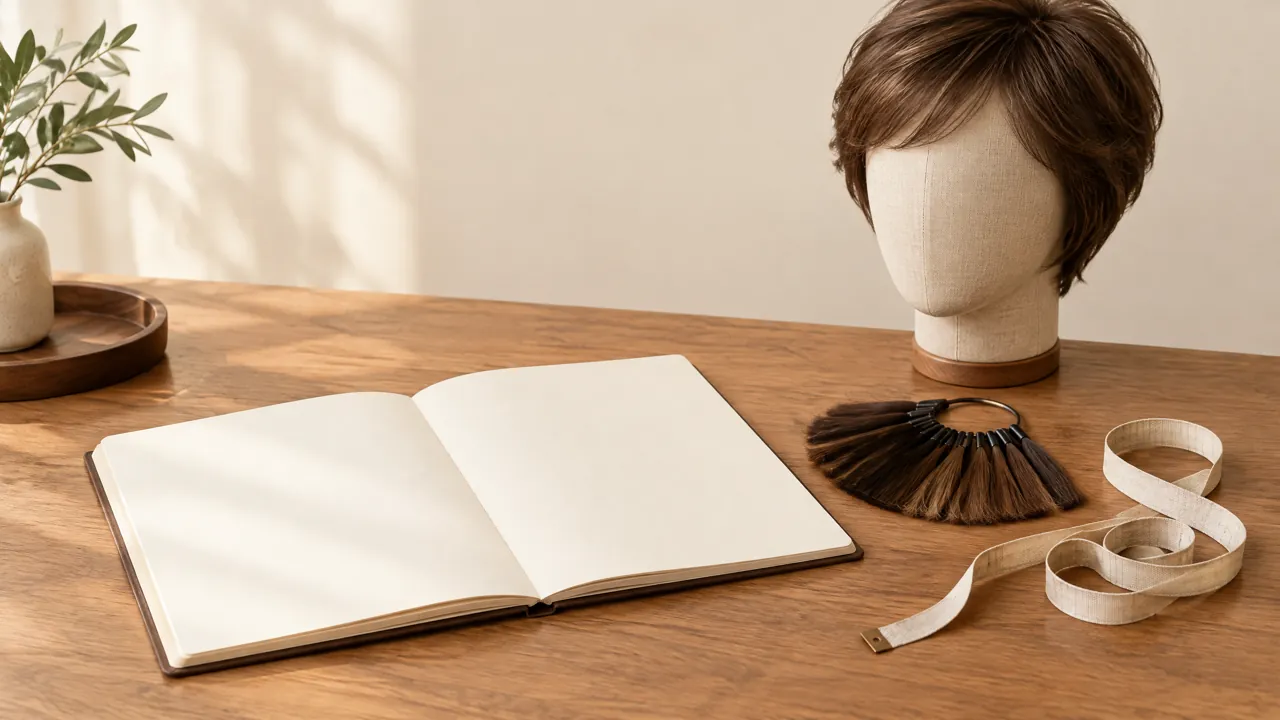
01
1. Build a shortlist around identifiable models
Give each shortlisted option its own record: page title, model code if provided, selected colour and the date you viewed it. Save the description beside the photographs, because screenshots of hair alone lose the information needed for a follow-up. If several options share one listing, note which variation you mean. A reply about the range is not necessarily a reply about your selection. Ask the seller to identify the item they are discussing before comparing its features with another option.
For readers considering where to buy wigs online Hong Kong, OwnStrand's online selection page is a starting point for browsing and enquiries. Its published description asks shoppers to confirm availability, delivery coverage, fees and timing. Treat those as unresolved questions until answered for your order, rather than interpreting a visible listing as a delivery promise. Keep the enquiry focused on one identifiable option so the seller's response can be attached to the right record.
Separate your shortlist into confirmed facts, preferences and unanswered questions. A model reference supplied by the seller belongs under facts; wanting a low-volume crown belongs under preferences. Whether that model can achieve the desired finish remains a question until clarified. This distinction prevents wishful comparisons. If one option has stronger evidence but a less appealing photograph, request a more relevant view before rejecting it. Uncertainty should prompt a specific question, not automatically count as a product defect.
02
2. Read photographs for shape, not proof of fit
Request front, side and rear views of the same model, ideally with a clear explanation of any styling changes between them. Look at where the fringe falls, how much height sits above the forehead and whether the sides taper or flare. These details affect the outline more than a close-up of shiny strands. Lighting and camera angle can alter apparent density, so use photographs to identify questions rather than to declare that a model will look identical on your head.
Write a short outline brief using an existing photograph of your own hair or a reference style. Specify three priorities, such as a partly visible forehead, modest crown height and sides that sit close to the head. Avoid asking only for a 'natural' result: that word could describe several very different shapes. If a photograph shows a finished cut, ask whether the supplied item has that length and shape, or whether the image demonstrates a possible result after separate styling.
Use the table to choose the next piece of evidence rather than scoring photographs as good or bad. One picture may show a handsome silhouette while concealing the area that matters most to you. For example, a forward fringe provides little evidence about an exposed hairline. If the seller cannot provide the relevant view, record that limit and consider an in-person comparison. More images are helpful only when they answer a different question, not when they repeat the same flattering angle.
| Your outline priority | Evidence to request | What it cannot establish alone |
|---|---|---|
| Partly exposed forehead | Front and angled views with the fringe moved aside | How the hairline sits on your own head |
| Low crown volume | Side profile and a view showing the parting | Whether the same shape survives your care routine |
| Close-fitting sides | Side and rear views of the named model | Comfort around your ears and nape |
| Familiar colour balance | Colour reference and an explanation of the photographed lighting | An exact colour match across screens |
Compare the angle that answers your question, not the angle that sells the photograph.
03
3. Translate listing language into verifiable specifications
Treat the material and the base as separate questions. A human-hair description concerns the fibre; it does not, by itself, identify the cap construction or establish the appearance of the hairline. Ask which specification applies to the named model and selected variation. Terms such as lace front, monofilament or hand tied should be explained where relevant, not inferred from another label. In particular, a Swiss-net name is not sufficient evidence that an item has a lace front or monofilament construction.
Ask for the measurement method, available sizing information and any adjustment limits for the actual item. A single circumference figure may leave questions about the front-to-back fit or ear position. Explain whether you will have existing hair beneath the wig, without assuming the seller can assess fit remotely from that detail alone. If the model has clips, straps or another attachment arrangement, request its specification and intended use. Do not assume that 'adjustable' means suitable for every head shape or hairstyle.
For anything important to your decision, keep the seller's answer alongside the item description and quotation. The Hong Kong Consumer Council's consumer-protection overview identifies rules against false, misleading or incomplete descriptions of goods and services.[1] The practical takeaway is to ask for precise product information, not to assume a universal right to return every purchase. If descriptions conflict, pause and request clarification before paying. A written answer about one model should not be stretched into a promise about the whole catalogue.
04
4. Decide what needs a Kwun Tong visit
Online evidence is useful for narrowing styles, but certain questions depend on how a piece sits on you. Ear clearance, nape position and the relationship between the hairline and your forehead are hard to settle with catalogue photographs. Choose a visit when an unresolved fitting issue could change the whole purchase, rather than travelling merely to repeat information already confirmed. Before setting off, ask which relevant samples can be viewed and whether the option you shortlisted can be discussed at the appointment.
The wig shop Hong Kong page explains enquiries about styles, quotes, supply and arranging a Kwun Tong visit. OwnStrand is a related brand under the same owner as Canvas Texture; this is not an independent endorsement. Its sole showroom's published address is 香港觀塘開源道50號利寶時中心2103室, in Kwun Tong. If travelling from Mong Kok, Tsim Sha Tsui or another district, plan travel to that showroom, not to an assumed local branch.
Bring your model records and outline brief, then compare the sample with the specific item proposed for your order. A sample can demonstrate a direction without proving that every detail will be reproduced. Ask which features are fixed and which, if any, can be changed. Grey-hair proportions, custom sizing and other bespoke characteristics need confirmation for the proposed product. Record agreed details after the conversation, especially if a different model is suggested, so your online shortlist and eventual order do not become disconnected.
05
5. Check the maintenance behind the styled finish
Choose a finish you can realistically maintain, not simply the one with the most impressive photograph. Cancer Research UK describes synthetic, human-hair and blended options, and notes that synthetic styles often come pre-styled; heat use should follow manufacturer guidance.[2] That supports asking about care requirements for the exact model, not assuming all synthetic fibres tolerate heat or that every human-hair piece suits your usual routine. Request the recommended washing, drying and styling instructions before deciding whether the shape fits your daily habits.
Think about the tasks hidden inside your preferred outline. A brushed-back front may require different upkeep from a fringe worn forward, while a carefully controlled side profile may depend on cutting and styling rather than the base alone. Ask how the photographed result was produced and what you would need to repeat it. If you rarely use styling tools, compare an achievable everyday version with the fully styled image. A simpler shape can be the better choice when it reduces work without sacrificing your main priorities.
Protect existing hair from becoming an afterthought in the search for coverage. Explain how you usually arrange it and ask how that affects fitting and removal. Do not assume you must pull it tightly or conceal every strand at any cost. A fit that produces discomfort should be reassessed rather than tolerated to preserve a photograph's appearance. If hair loss or scalp symptoms concern you, seek appropriate clinical advice separately; the shopping decision concerns appearance and practical use, not a diagnosis or a treatment plan.
The right everyday outline is one you can maintain without turning each morning into a reconstruction.
06
6. Separate the product agreement from delivery assumptions
Confirm what happens between accepting a quotation and receiving the item. Is the option supplied as shown, prepared after ordering or part of a separate custom process? Ask when availability is checked and what event starts any stated lead time. OwnStrand's described handmade human-hair custom route has an approximately three-to-five-working-day production period, subject to the order. That is not a general online delivery commitment. Do not apply a production statement to another product category or treat it as the date a parcel will arrive.
Delivery needs its own written answers: destination coverage, charges, expected dispatch timing and how changes will be communicated. If you need an item for a particular occasion, state the date and ask whether it can be supported before committing. A reassuring general response is less useful than a clear answer tied to your selection and destination. Leave room to reconsider if timing remains uncertain. Ordering an unsuitable alternative merely because it appears quicker can create a second problem without resolving the first.
Ask about cancellation, returns and alterations before authorising any step that changes the item. Cutting, personalisation or another agreed modification may have different conditions from an unaltered purchase; request the actual policy rather than assuming either acceptance or refusal. The table below is a transaction checkpoint, distinct from the earlier visual-evidence table. Each row should produce a written answer or a conscious decision to pause. Save the agreed version so later messages about adjustments can be understood against the original scope.
| Before this step | Confirm in writing | Pause when |
|---|---|---|
| Accepting the quotation | Named model, variation, specifications and included work | The quote refers only to a broad range |
| Authorising modifications | Agreed changes and applicable cancellation or return conditions | You do not understand which changes affect your options |
| Relying on an occasion date | Availability, preparation and dispatch expectations | Only a general production period has been discussed |
| Arranging delivery | Destination coverage, charges and communication process | Delivery assumptions have not been confirmed for the order |

07
7. Compare complete quotes, then close the evidence gaps
Compare quotations only after identifying what each one includes. The same-looking style may involve different material, construction, preparation or follow-up arrangements. List the product charge separately from any confirmed cutting, fitting, delivery or other charges, without inventing services the seller has not offered. If an option is dearer, ask which verified difference explains it and whether that difference serves your outline priorities. Paying more is not a substitute for resolving a basic uncertainty about the item you will receive.
The wig prices in Hong Kong page discusses variation by style and construction and directs readers to ask about quotations and availability. Use it to frame a scope-based enquiry, not as evidence that every catalogue entry has a fixed price or identical custom options. A useful comparison states what is included, what remains optional and what cannot yet be quoted. Keep any later revision attached to the same model record so a changed specification does not quietly invalidate your earlier comparison.
Before committing, review your shortlist once more using the four checks below. Choose an option when its evidence, fit questions, upkeep and terms are sufficiently clear for your needs, not simply when browsing becomes tiring. If a gap remains, send one focused follow-up rather than restarting the entire search. You can also revise the desired silhouette while keeping its defining features. The goal is a defensible decision about a particular item, with realistic trade-offs, rather than a promise of perfection based on a screen image.
- Match the final quotation to the exact model and selected variation in your saved record.
- Identify any fitting or outline question that still needs a relevant view or showroom comparison.
- Check that the recommended care routine matches the time and tools you actually intend to use.
- Keep the agreed specification, included work and order conditions together before authorising payment.
Sources and useful reading
Continue with hair and grooming
If your question concerns styling your own men’s hair, continue with: Korean Men's Perm
Compare a related selection decision: Wigs Hong Kong: verify shop information before a visit
Read our male-hair styling background: Vit So and the Canvas Texture studio
Clarify the outline of your own hairstyle
For help defining a men's hairstyle with your existing hair, book a Canvas Texture styling consultation. Discuss fringe direction, crown height and side shape to create a clear brief for your own-hair cut or styling routine.
Canvas Texture · WhatsAppFrequently asked questions
Can I judge the fit from a styled photograph?
A photograph helps you assess the silhouette, but it cannot settle comfort, ear clearance or how the hairline sits on you. Ask for measurements and relevant views of the named model. Consider an in-person comparison if a remaining fit question could change your choice.
Does a catalogue listing mean the item is available?
No. A catalogue may contain enquiry options or discontinued references. Confirm supply for the selected model and variation, then ask separately about preparation, dispatch and delivery. Do not infer availability from the presence of a photograph.
Can I request a grey-hair mix or a custom size?
Ask whether that specific feature is available for the proposed model. Obtain an agreed description or suitable sample reference before ordering. The existence of custom options elsewhere in a range does not establish that every item supports the same changes.
Should I choose the cheaper quotation if the styles look similar?
First compare the verified material, construction, supplied finish, included work and order conditions. A lower quote may suit your needs, but similar images do not prove equivalent products. Choose according to the complete scope and your practical priorities, not the photograph alone.
Related journal articles
Men’s Hairpieces or a Perm? Compare Coverage and Shape
Choose a perm when enough existing hair remains and movement is the main goal. Choose a hairpiece when a defined area needs cosmetic coverage. Neither option decides the best outline by itself. First identify the visible area, surrounding density, preferred parting, and morning routine. Those observations prevent a product label from making the decision too early. Compare those details before making any booking.
Natural Hairline Wigs: A Guide to Fringe and Forehead
Natural hairline wigs look most convincing when the front edge, fit, colour, density, and haircut agree. For a hypothetical four-day workweek side part, inspect both temples under two ordinary light sources before choosing a construction. The aim is a coherent outline in movement. No single feature can decide that outcome. Check the whole frame, not only the centre. Check it while turning your head.
Human Hair or Synthetic Wigs? Texture and Care Choices
Choose human hair when approved styling flexibility matters. Choose synthetic fibre when a preset shape and simpler mornings matter more. Neither label settles the result alone. Texture, density, cap construction, attachment, and fit shape how a wig looks and feels. Start with the routine you can maintain, then check the exact model’s instructions. That order avoids paying for flexibility you will not use