
Hair colour without bleach: choosing a change you can live with
Colouring without bleach can be worth discussing when you want a different reflection or a deeper overall shade. It is not a universal route to the brightness in a reference photograph. Your natural depth, existing dye and desired change all matter. Start by deciding whether avoiding bleach is a firm boundary or simply your preference for a modest change.
For men's hair, the cut belongs in that decision too. A longer top can display a brown reflection differently from close sides. A fringe, parting or swept-back style reveals different areas, including regrowth. The useful question is not just which shade you like, but where you want the change to show during your normal working day.
This guide separates colour goals from service labels so you can have a more precise consultation. It covers how to read references, explain old dye, compare coverage and choose an acceptable alternative. No shade list can settle suitability for every head of hair. A useful plan respects both the appearance you want and the hair you want to keep.

01
Separate the shade you want from the process you prefer
Depth describes how light or dark the overall hair appears. Tone describes its direction, such as a golden, reddish or cooler brown reflection. These are separate choices. You might enjoy a deep brown but dislike its red reflection outdoors. Saying that gives a stylist more useful information than requesting a fashionable brown whose name means different things in different photographs.
Avoiding bleach does not necessarily mean avoiding every change in natural depth. Some colouring processes adjust or add tone; others can also lighten natural hair. If keeping your existing darkness matters, state that separately. Equally, choosing a process without bleach does not mean choosing a chemical-free service. Ask what change is proposed, rather than treating the label as a complete explanation.
Vit So's hair colour page separates depth, reflected tone and coverage, which helps organise an enquiry before choosing a service. Use those distinctions to explain your priority: a darker silhouette, less visible warmth or a noticeable overall change. The page is a starting point for discussing scope, not evidence that a particular photograph can be reproduced on your hair.
Rank your preferences before the consultation. If avoiding bleach comes first, matching a pale reference may have to come second. If a cooler reflection matters more than becoming lighter, say that too. The trade-off becomes clearer when you identify which feature you could change willingly. Accepting a darker interpretation is sensible only if you actually like it, not because it sounds easier.
| What you want | What to describe | Trade-off to discuss |
|---|---|---|
| A subtle brown reflection | Keep the dark outline; show some brown in daylight | Whether the change will feel sufficient indoors |
| A less red-looking brown | Retain depth but change the reflected tone | How cool the direction can reasonably be on your base |
| A visibly lighter overall shade | Brightness in shadow as well as in strong light | Whether that goal fits your no-bleach boundary |
| A darker, more consistent appearance | Which roots and lengths currently look different | The assessment needed for each area |
Treat a no-bleach preference as a boundary for the conversation, not a promise printed on a colour name.
02
Map your starting hair instead of calling it all dark
Two areas that look equally dark can have very different histories. Untouched regrowth is not the same starting point as lengths carrying old dark dye. On a longer top, several past applications may remain while recently cut sides have less history. Describe the hair by area, not simply by its current appearance. This is especially useful when you have changed styles between colour appointments.
Include home dye, salon colour, previous lightening and colour-depositing products. Mention henna or anything labelled plant-based, without assuming that the label makes it irrelevant. Record approximate dates and where each product was applied. If you cannot remember a detail, mark it as unknown. Packaging photographs can help, but an honest gap in the record is better than a confident guess.
Old darkened lengths deserve their own assessment when the new goal is lighter. Do not assume that another overall tint will remove the earlier colour. Ask whether keeping those lengths darker is an option, or whether the request needs a separate correction discussion. Natural-root examples cannot establish what will happen over artificial pigment. A visually similar starting shade is not proof of a similar process.
Also describe rough ends, tangling or breakage you have noticed, and mention previous perming or straightening. These observations do not diagnose the hair's condition, but they flag questions that photographs may miss. If you are growing the top, preserving length may matter more than pursuing brightness. Tell the stylist before discussing an approach that focuses mainly on the colour change.
- Photograph the dry top, sides and hairline in soft daylight without a colour-changing filter.
- Write a short timeline of colour, lightening, perming and straightening, naming the areas treated.
- Keep product photographs where available, and identify uncertain dates or ingredients honestly.
- Record what you want to retain: current depth, growing length, existing contrast or untreated areas.
03
Read references in the light and hairstyle you actually wear
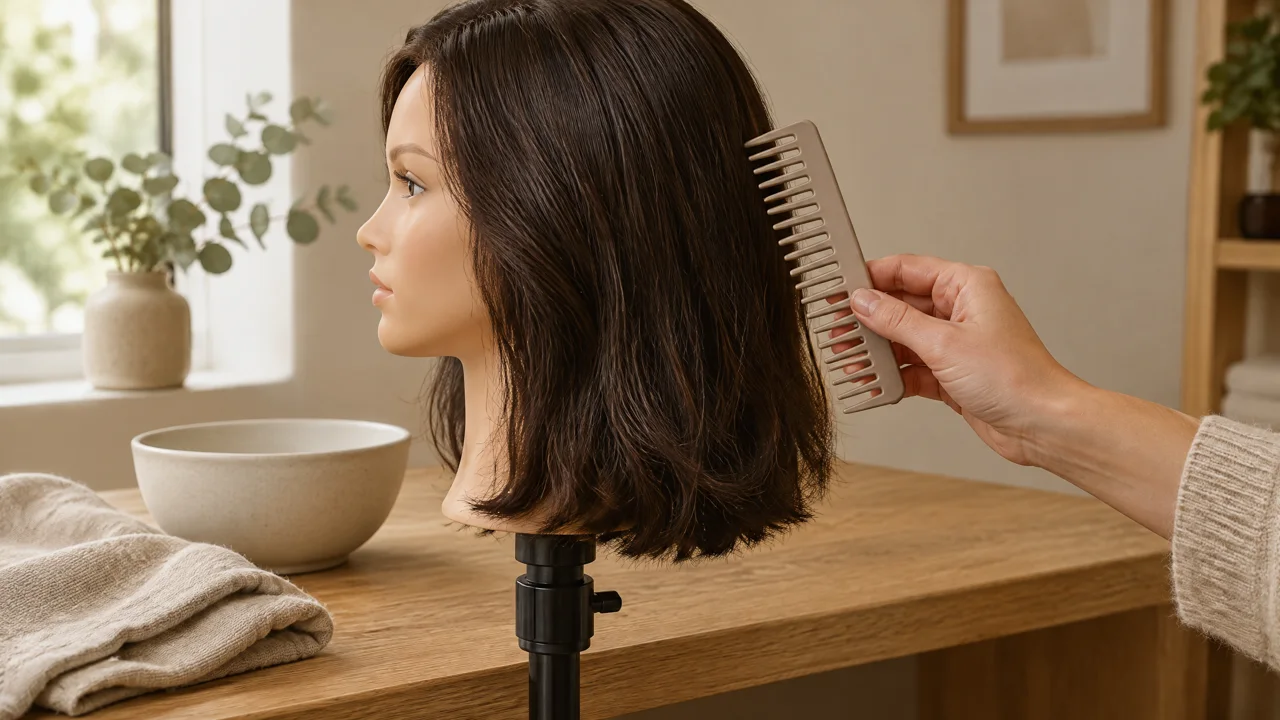
A photograph can exaggerate the feature that first attracts you. Bright light catches edges and curved strands, while shadow shows the overall depth more clearly. Inspect both. A brown that stays pale in the darkest areas suggests a different goal from dark hair with a warm sheen. Save a wider view as well as a close-up so the reference explains more than its shine.
Compare your current hair in soft daylight and ordinary indoor light. Keep the arrangement similar in both photographs. A wet, slicked-back image and a dry, loose fringe are poor comparisons for discussing how noticeable a colour should be. Tell the stylist which setting matters most. A change that feels interesting outside may be too discreet for someone who wants a visible difference at work.
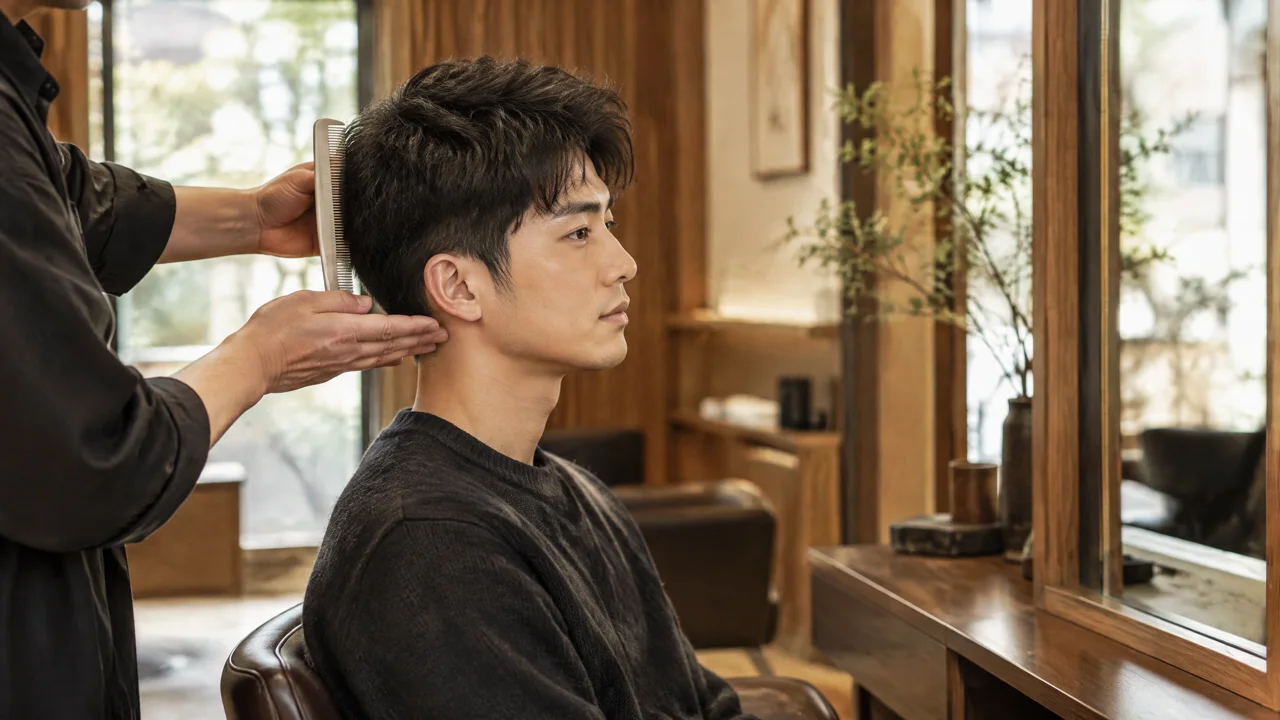
Consider this illustrative scenario, not a client account: a man with close sides and a longer swept-back top likes a softly lit brunette photograph. His main goal is a subtle change during office hours. Before choosing a shade, he would benefit from deciding whether he wants the sides involved. Colour across the whole head and colour focused on the longer area communicate different intentions.
The haircut can also change which boundary you see as the hair grows. A parting exposes roots that a forward fringe may conceal; lifting the fringe reveals the front hairline. Bring a photograph of your everyday style, not only an occasional polished finish. Say whether you expect to change the cut soon. The colour discussion should consider the hair that will remain visible afterwards.
04
Agree on coverage before comparing appointments
Full-head colour describes coverage, while single-process colour describes an application approach. Neither term alone tells you whether bleach is involved or how different areas will be handled. A uniform-looking goal does not automatically require identical work on roots and lengths. Ask what will be treated, what will stay unchanged and whether an existing darker band will remain visible after the proposed service.
The explanation of hair tinting is useful when your question concerns an overall shade rather than separate lighter strands. Read it to distinguish coverage from process before requesting an appointment. If only new growth bothers you, ask about that area specifically. If the lengths also look wrong, describe the difference rather than assuming a root-focused service will address it.
For grey hair, explain the visual goal rather than asking for coverage without qualification. You may want a consistently darker appearance, or you may prefer some lighter strands to stay visible. Those are different preferences, especially around short sides and the hairline. Ask how the proposed plan relates to each area. The service name cannot establish the amount of grey that will remain noticeable.
Compare quotations by scope rather than by headline price. Clarify whether the amount covers colour alone, a cut, finishing or additional preparation. A general tinting entry is not a personalised no-bleach quotation. If the assessment introduces corrective work or another stage, ask for the revised total before agreeing. Include any deadline in the enquiry, but let the assessed work determine the time required.
| Your concern | Coverage question | What to confirm |
|---|---|---|
| Only new growth stands out | Can the discussion focus on regrowth? | Whether the existing lengths can remain unchanged |
| Roots and lengths look different | What is proposed for each area? | Whether visible differences are expected to remain |
| You want distinct lighter strands | Is this an overall shade or a placement request? | The separate process and scope being considered |
| You want an overall colour and haircut | Which work is included in the appointment? | The agreed total, finishing steps and time allowance |
05
Keep scalp safety separate from the brightness decision
Avoiding bleach does not establish that another dye is suitable for you. The FDA advises following product instructions and performing the indicated skin test before each use. Previous trouble-free colouring does not rule out a later reaction, and a negative test does not eliminate that possibility.[1] Ask about product-specific precautions early enough for them to affect the appointment plan, rather than raising them after arrival.
Tell the salon about previous itching, swelling or rashes after colouring, together with any known ingredient allergy. The FDA also advises against colouring an irritated, sunburned or damaged scalp.[1] Keep reaction details separate from your shade references. If you have had a reaction, seek healthcare advice rather than experimenting with alternative dyes yourself. This is a safety question, not a preference for a gentler-looking shade.
Hair condition needs attention too. The American Academy of Dermatology notes that colouring and perming can leave hair dry and brittle.[2] A no-bleach plan still deserves a condition assessment and appropriate care instructions. Mention chemical treatments you have had and any you are considering next. Do not interpret avoiding one step as proof that the remaining process will leave every area unchanged.
Make room for postponement if safety concerns are unresolved. A work event or photograph deadline does not make an irritated scalp ready for colour. Likewise, a hair picture cannot settle a product reaction question. A useful consultation distinguishes appearance goals, hair condition and reaction history instead of compressing them into a single promise of a suitable colour. Each needs its own clear answer.
06
Choose an alternative you would genuinely want to wear
Prepare a preferred direction and an acceptable alternative, but do not accept a substitute automatically. If a pale cool reference conflicts with your boundary, a deeper interpretation changes the design. Ask what feature would survive: overall darkness, a cooler reflection or a softer brown appearance. That makes the alternative easier to evaluate. Calling both options the same shade can hide a difference that matters to you.
Here is another illustrative scenario, not a reported salon result. A man growing a previously darkened fringe wants a lighter brown without bleach. He values length more than an immediate change. Keeping the darker fringe for now could be worth discussing, but only if he accepts the resulting appearance. Waiting or leaving the colour alone is a valid choice, not a failed consultation.
If your preference changes during the conversation, pause before approving a different process. You might discover that brightness matters more than avoiding bleach, or that retaining depth matters most. Either change deserves a fresh explanation of scope, condition considerations and cost. Bringing a lighter reference does not commit you to lightening. Equally, an initial no-bleach preference should not conceal what you truly hope to see.
A concise way to explain your position is: 'I want a brown reflection while keeping a dark overall appearance. Avoiding bleach is important, and I would rather leave it unchanged than accept a much warmer result.' This is an example of consultation wording, not a salon promise. Adjust the priorities to fit yourself. Include what you dislike so the stylist does not have to infer your limits.
Before agreeing, ask the stylist to describe the proposed appearance in plain language, including any contrast that may remain. Repeat your understanding back: darker lengths retained, roots addressed separately, or a subtler reflection than the reference. This is not asking for certainty. It checks that you are discussing the same design. Resolve any mismatch while the plan can still change, rather than after work has begun.
A darker alternative is useful only when you like its darkness; technical possibility is not the same as personal suitability.
07
Plan for regrowth and everyday care, not only the first photograph
Vit So's no bleach hair colour page gives a useful final check on the relationship between your base, old dye and desired brightness. Use it to prepare questions about both the immediate change and future upkeep. Avoiding bleach is not automatically low maintenance. A darker shade can still contrast with new growth, while a reflection you value may change over time.
For short men's hair, future cuts are part of the upkeep discussion. Removing coloured lengths can change how much of the original design remains, particularly when the longer top is reshaped. Tell the stylist your usual haircut pattern and any period when you expect to be away. Ask whether later attention would concern roots, tone or a broader reassessment. Do not assume every return visit repeats the first service.
Request washing and conditioning guidance for the actual work performed rather than borrowing a first-wash rule from another treatment. Mention your usual cleansing products and heat styling. The AAD recommends sun protection with a wide-brimmed hat, particularly for chemically treated hair.[2] This supports sensible care, not a fixed lifespan for your shade. No single routine can promise that every colour will fade at the same rate.
Keep a record of the agreed direction and take occasional photographs in comparable light. If you want a review, specify whether you notice warmer lengths, overall fading or a root boundary. Those observations lead to different questions. Enjoying the colour between appointments matters more than maintaining one flattering photograph. The best plan for you should make sense alongside your cut, daily routine and willingness to return.
Sources and useful reading
Continue with hair and grooming
Continue with Canvas Texture’s male hair needs: Korean Men's Perm
Explore another related decision: Men's hair colour: brown depth and chocolate tones
Read the lead stylist’s background: Vit So and the Canvas Texture studio
Discuss your men's hair priorities with Canvas Texture
Enquire with Canvas Texture about your male hair needs. Bring current hair photographs, your treatment history and the depth, tone or cut you want to discuss. State your no-bleach preference so it can be part of the consultation; an enquiry does not confirm suitability or an appointment.
Canvas Texture · WhatsAppFrequently asked questions
Can any brown shade be achieved without bleach?
There is no universal list that applies to every starting point. Deep brown with a subtle reflection is a different goal from pale brown visible even in shadow. Natural depth and old dye affect the assessment. Ask about the direction on your own hair rather than relying on the shade name.
Does full-head tinting mean bleach will be used?
No. Full-head describes coverage, not the formula or every step. Ask what is proposed for roots and previously coloured lengths separately, and state your no-bleach preference before agreeing to the process.
Should I cut my hair before discussing colour?
Tell the stylist about the cut you want before fixing the colour scope. A shorter fringe or reshaped top may remove some of the hair you intended to colour. Ask how cutting and colouring should be coordinated for the assessed plan rather than assuming one order suits every appointment.
What if I have reacted to dye but want a no-bleach option?
Do not assume avoiding bleach makes another dye suitable. Share the product details and reaction history, and seek healthcare advice rather than testing alternatives yourself. Product precautions still apply, and a negative skin test cannot rule out a reaction.
Related journal articles
Hair salon or hair stylist: what should you compare?
Choose the appointment around the change you need, not the most impressive title on the booking page.
Haircut, wash cut and blow dry: choosing the right family appointment
A family can share a journey to the salon without sharing the same haircut brief.

A layered haircut for busy days: choose what to keep
The most useful length is not always the longest strand; it is the shortest piece your routine still needs.

