Dive-Day Photos: Your Hair, Your Permission and the Picture Afterwards
You can enjoy a water-activity day without agreeing to a public portrait or making your hair camera-ready afterwards. Decide which pictures you want, who may see them and whether a dry-land portrait can wait until you have rinsed and gently dried your hair. A useful photograph shows something you want to remember; it need not prove that your fringe survived the sea unchanged.
For men with curls, a longer fringe or recently coloured hair, the practical issue is often the gap between a polished departure photo and a damp return journey. Plan for that gap rather than fighting it with tight ties, repeated brushing or more styling product. Separate a private hair reference from a group photograph, and separate both from any photography training you might enquire about.
Canvas Texture and DiveHarbour share the same website owner. This guide is by the Canvas Texture editorial team, with AI assistance and public sources; it is not diving instruction or a personal trial report. Canvas Texture helps with men's own-hair styling. DiveHarbour confirms activity eligibility and equipment, while a qualified clinician handles individual health questions. The aim here is a comfortable hair-and-photo plan, not a promised underwater image.
01
1. Choose the hair picture you actually want
Start by choosing the purpose of the photograph. A relaxed coastal memory, a profile picture and a reference for your next haircut ask different things of your hair. For a haircut discussion, a dry image of your usual fringe and side profile is generally more useful than a wet group shot. For a memory, visible wind and flattened curls may be part of the day rather than something to correct. Neither purpose requires a perfect salon finish.
Take an optional reference at home before leaving, with your own hair arranged as you normally wear it. Keep the lighting straightforward and avoid filters that sharpen the hairline or add apparent density. If your fringe usually falls forwards, show that instead of forcing it into an unfamiliar shape. You can also photograph the side that is harder to manage. This gives a stylist a specific starting point without turning an outing into a haircut assessment.
Make a modest plan for the return journey. You might accept a softer fringe, let curls settle after washing or save a portrait for another day. Avoid creating a tightly pulled style solely to preserve a silhouette for photographs. If you have had a chemical service, ask your stylist about your actual hair condition and the product instructions; do not assume a standard waiting period guarantees readiness for sea or pool exposure. Hair advice and activity approval are separate decisions.
- Choose whether the picture is a private styling reference, a shared memory or a public portrait.
- Save an ordinary dry-hair reference before departure if you want to discuss your haircut later.
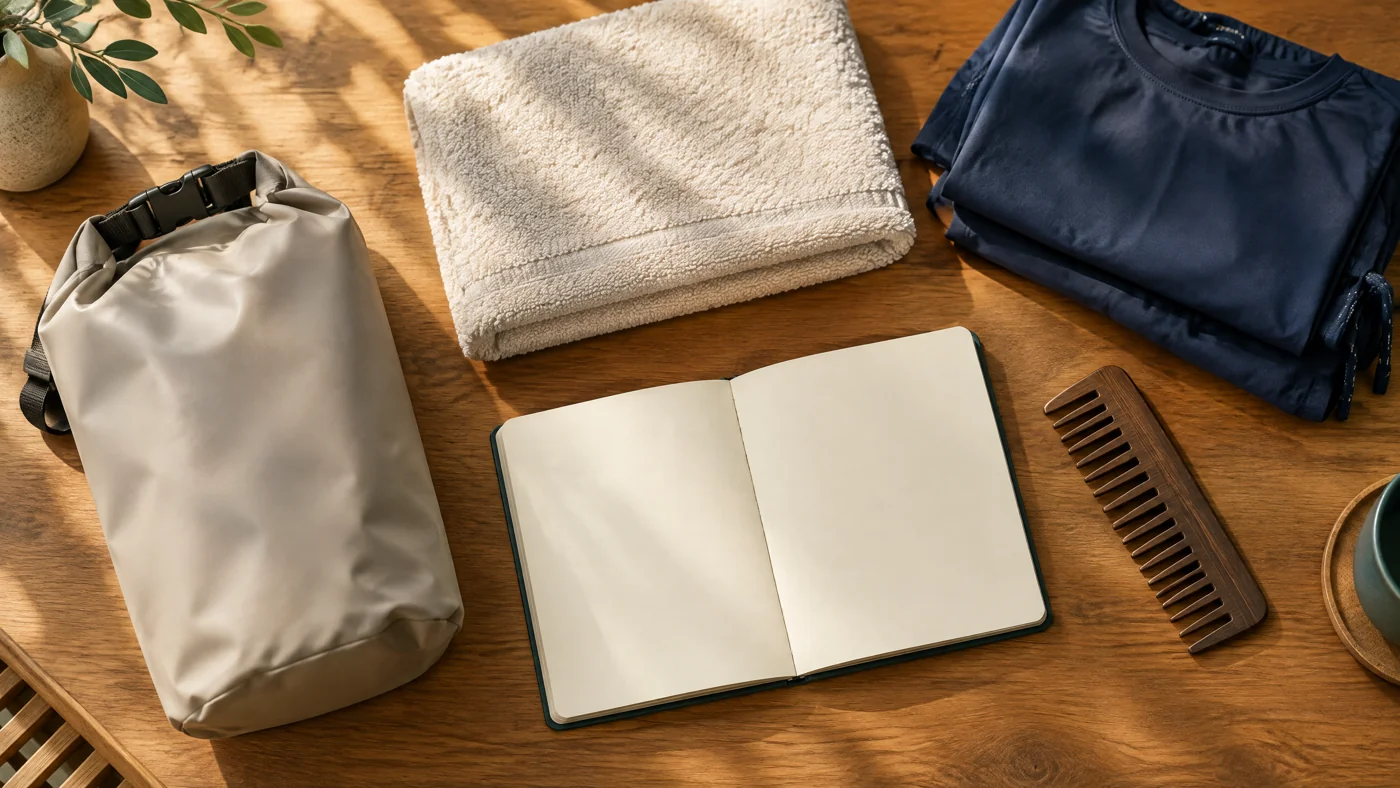
- Bring a soft towel and suitable detangling tool for your own hair texture.
- Allow the post-wash look to differ from your departure style without repeatedly pulling it into place.
02
2. Agree on permission before the camera appears
Explain your preference before photographs become a group habit. You may be comfortable with a shared album but not a public post, or happy with a clothed land portrait but not a close-up of wet hair. Say that plainly without apologising for your appearance. A thinning crown, scalp concern or unfamiliar post-water texture is not something you owe the group for a joke. Ask whoever is taking pictures to check with you rather than interpreting your presence as agreement.
Keep capture, sharing, tagging and promotional reuse as separate questions. An agreement to appear in a friend's photo does not tell the organiser what you want done with it. Ask whether pictures are intended for participants, a public gallery or advertising, and whether captions will include your name. If you prefer no publication, request written acknowledgement before committing. This is practical communication, not a claim that every operator offers the same permission process or can accommodate every request.
Activity records may be different from optional souvenir photographs. Ask the operator whether any images are required for administration or training, what their purpose is, who can access them and how long they are kept. Clarify the available options before booking rather than assuming all images can be refused or erased on demand. Keep private hair references on your own device unless you choose to send them to a stylist; they need not enter an operator's records at all.
| Picture or use | Question to ask | Preference you can state |
|---|---|---|
| Optional land portrait | Will you ask before taking it? | Please photograph me only after I agree. |
| Participant album | Who receives it and can others download it? | I prefer a directly shared copy, not a group album. |
| Public post or tag | Will you check the image and caption with me? | Please do not publish or tag my photograph. |
| Promotional reuse | Is this separate from sharing with participants? | I am not agreeing to advertising use. |
| Required activity record | What is required, why and under which policy? | Please explain the process and available choices before booking. |
Permission is a conversation about where a picture goes, not a judgement on how your hair looks.
03
3. Separate learning photography from posing for it
Wanting better pictures does not necessarily mean you want to study underwater photography. Perhaps your real goal is a comfortable day and one land portrait after changing. Alternatively, you may want to learn photography and have little interest in appearing in anyone else's images. Name that distinction early. It helps prevent a course enquiry from becoming an assumed portrait service, and stops your hair concerns being mistaken for questions about camera equipment or diving ability.
If learning is the genuine goal, the underwater photography diving course Hong Kong page is a relevant next read. Ask DiveHarbour about prerequisites, current course scope, equipment support and whether image review is included. Also ask how photographs involving other participants are handled. The published course information is an enquiry resource, not a guarantee of a camera package, a particular setting or a flattering portrait. The instructor confirms whether the proposed training fits your background.
Keep your hair request simple within that conversation: mention a longer fringe, curls or discomfort from previous hair snagging, and ask for equipment suitability to be assessed on land. Do not change straps or add substances to equipment for a neater picture. A stylist can help you choose a manageable everyday cut, but cannot guarantee equipment fit. If your main interest is being photographed rather than learning, ask whether an appropriate optional arrangement exists instead of assuming a course includes it.
04
4. Let the location support a realistic wash plan
A coastal background is only one part of a photo day. Access to fresh water, a place to change and somewhere to store dry belongings can matter more to your hair than the view. Ask what facilities are actually available and whether you need to complete your wash at home. Do not infer showers or private changing space from scenic images. A practical return plan reduces the temptation to scrub your hair quickly or keep restyling it while it remains damp.
For location context, Sai Kung diving Hong Kong explains why the outing depends on experience, access and current conditions rather than a fixed best-site ranking. Use it to frame questions about the confirmed setting and your land arrangements. A location guide is not evidence of a salon branch, a guaranteed departure or a promised photo backdrop. Ask where you can manage your belongings and wash afterwards without expecting the organiser to provide an unlisted grooming area.
Sea and pool exposure also deserve a hair discussion before departure. The American Academy of Dermatology notes that pool chemicals and sun exposure can damage hair, and recommends appropriate swimming-related care, including rinsing after swimming.[1] That does not make any cosmetic automatically suitable for release into the water. Follow venue rules and product directions; do not treat a biodegradable label as proof of marine safety. Ask your stylist about recently lightened or processed hair before combining it with a demanding photo plan.
05
5. Book the activity you want, not the image you hope for
A hypothetical couple might want different things from the same outing: one wants a coastal portrait with a tidy side part, while the other wants recreational diving without appearing online. Neither preference establishes eligibility for the activity. Discuss the format independently of the photographs, and let each person state their own sharing preference. If you only want a land memory, consider whether a separate dry-land photo occasion would meet that goal with less pressure on the water day.
Already qualified divers can use the certified-diver fun dive Hong Kong page to understand the recreational format before enquiring. Send DiveHarbour your certification and recent-diving information, then ask about current arrangements and equipment. A fun dive is not first-time qualification training or an assumed photography lesson. Explain your hair-handling concern alongside your practical needs, but leave acceptance and equipment suitability to the instructor. Health questions belong with a clinician, not a salon or a photo discussion.
Confirm optional photography, image delivery and any related charges in writing rather than budgeting from an attractive sample image. DiveHarbour's published pages currently state that all paid fees are non-refundable; make-up sessions are only subject to written conditions. A disappointing fringe, changed backdrop or absent wildlife does not establish a refund promise. Read the terms before paying, and keep a land portrait flexible enough that you can skip it if washing, changing or simple comfort matters more that day.
06
6. Reset your hair gently before deciding on a portrait
After the activity, make your hair comfortable before making it photogenic. When suitable facilities are available, rinse with fresh water and follow a wash routine appropriate to your hair and the product directions. Use shore-based products only where permitted. If a full wash must wait until home, avoid layering styling products simply to disguise the damp texture. You can decline an immediate close-up and take a relaxed photograph later; the camera does not need to set the pace of your grooming.
Blot rather than rub vigorously with the towel, and avoid repeated pulling while detangling. The American Academy of Dermatology recommends gentle washing, less damaging towel handling, hair-type-appropriate combing and lower heat when drying.[2] Straight hair and textured curls may need different approaches to damp detangling, so ask a stylist about your own routine instead of copying a group member. Keep handling gentle, use the lowest heat that works for you and stop chasing every strand into a fixed shape.
Allow your normal parting and curl pattern to settle before judging the picture. Wet hair can lie flatter or group differently from dry hair, making it a poor substitute for an everyday styling reference. That observation is not a diagnosis of thinning or damage. If scalp pain, irritation or another concern persists, seek appropriate clinical advice. Neither a rinse routine nor a flattering photograph treats hair loss, and discomfort is not something to push through for a final group shot.
07
7. Keep a home reference that helps your next haircut
Once home, choose a small set of useful images rather than a dramatic before-and-after collage. Compare dry hair with dry hair when discussing everyday styling, and label any wet image clearly. A departure picture with deliberate styling and a damp return picture show different conditions, not a controlled test of a haircut or product. Keep the unfiltered version so you and your stylist can distinguish your actual hair shape from editing, camera angle and lighting.
Add a short practical note: whether your fringe was hard to manage, which area tangled or how much effort the reset required. These details can guide a conversation about your existing length, texture and preferred routine without demanding a major haircut. If you send pictures to Canvas Texture, choose ones that show your own hair clearly and exclude other people unless they have agreed. A cropped personal reference is usually more focused than forwarding a whole activity album.
For any photograph you do share publicly, check the final crop, caption and tags with everyone identifiable in it. Do not imply that another participant endorsed a course or that your hair stayed unchanged throughout the day. Keep your favourite private if that feels better. The most useful outcome may be an ordinary home picture and a clearer grooming plan: a fringe you can manage gently, a wash routine you can realistically complete and no pressure to publish the evidence.
| Reference | Useful for | Limit to remember |
|---|---|---|
| Dry hair before leaving | Showing your usual parting, fringe and styling effort | A deliberately styled image may not show your low-effort routine. |
| Optional wet post-activity image | Identifying the area you found awkward to handle | Wet texture is not directly comparable with a dry hairstyle. |
| Dry hair after your home wash | Discussing how your normal routine restores the shape | Lighting and angle still affect how the hair appears. |
| Brief handling note | Explaining tangling, fringe control or drying effort | A styling note is not a medical assessment. |
Keep the photo that helps you understand your own hair, even if it is not the one you would post.
Sources and useful reading
Continue with hair and grooming
For a separate men’s own-hair discussion: Deep Hair Treatment HK
Continue with a related hair-and-water planning guide: Wreck Photography Plans: Hair Preparation Is Not Training
Read our hair styling background: Vit So and the Canvas Texture studio
Have a question about your own hair after a water day?
Ask Canvas Texture about men's own-hair styling, fringe control, curl handling or a realistic home grooming routine. Share an ordinary dry-hair reference if you wish. DiveHarbour-related activity, photography, eligibility and equipment questions belong with DiveHarbour directly, not this styling enquiry.
Canvas Texture · WhatsAppFrequently asked questions
Can I enjoy the outing without agreeing to public photographs?
State that preference before booking and ask the operator to explain its process. Optional souvenir images and required activity records may be handled differently. Confirm what can be accommodated rather than assuming a universal opt-out or deletion policy.
Should I style my fringe tightly to look neat all day?
Do not use a high-tension style solely for photographs. Choose a manageable own-hair routine with your stylist, and let the instructor assess any hair-related equipment concerns on land. A later dry portrait can remove the pressure to preserve your departure look.
Does a photography course include portraits and permission to post them?
Do not assume either is included. Ask DiveHarbour about the current learning scope, optional photography, image delivery and sharing arrangements separately. The instructor also confirms prerequisites and equipment suitability.
Is a wet-hair picture useful for a haircut consultation?
It can illustrate a handling concern if labelled clearly, but include an ordinary dry-hair reference as well. Avoid treating a wet return image and a styled departure image as proof of hair damage, density change or product performance.
Can Canvas Texture answer course or health questions when I send hair photos?
Canvas Texture can discuss men's own-hair styling and everyday handling. Send DiveHarbour activity, photography and equipment enquiries directly. Individual health concerns require an appropriate clinician; a hair consultation does not provide diving eligibility or medical clearance.
Related journal articles
First Scuba Lessons: Keep Your Hair, Plan the Pool-Day Wash
Keep the haircut you want to live with; prepare for the wet-hair version of it.
Trying Scuba in Hong Kong: Prepare Your Fringe Before a Mask Fitting
Prepare the fringe you actually have, not the hairstyle you hope will stay unchanged in water.
Choosing a Hong Kong Diving School: A Men's Hair Planning Guide
Choose the learning environment with the instructor; choose an achievable hair routine with your stylist.