
Evening Scuba Lessons: A Gentler Hair Wash Before the Next Workday
The simplest route from an evening water session to presentable workday hair is to plan the wash before leaving home. Allow for a fresh-water rinse, shampoo where appropriate, gentle towel handling and comfortable low-heat drying. Aim for clean, manageable hair rather than a finished office hairstyle at bedtime. A simpler evening routine leaves less to undo when you wake up.
First establish whether the lesson actually involves getting wet. An evening theory class, a supervised pool session and a night dive are different activities. An after-work course label does not mean diving in the sea after dark. The distinction changes what you pack, where you wash and whether a damp fringe needs any attention that evening.
Canvas Texture and DiveHarbour share a website owner, so this is a practical connection between men's grooming and a related water-activity service, not an independent course review. Prepared by the Canvas Texture editorial team with AI assistance and public sources, this guide concerns your own hair. DiveHarbour's instructor confirms activity eligibility, equipment and arrangements; health questions belong with an appropriate clinician.
01
1. Find out what an evening lesson actually means
Ask which parts of the proposed evening involve theory and which involve water. If you are sitting in a classroom, there is no reason to plan a pool-specific shampoo afterwards simply because the subject is scuba. If water practice is confirmed, the useful grooming questions concern changing facilities, shower access and the time available before leaving. Those details matter more to your hair routine than the course label.
For the scheduling conversation, DiveHarbour's guide to a weekday evening scuba course Hong Kong is a relevant next read. Tell the team that you need a realistic journey home and time to rinse and dry your hair. Ask for the current meeting point, session type and finish arrangements. The page is an enquiry resource, not evidence of a particular available evening slot or a guaranteed shower facility.
Night diving is a separate activity with its own training and suitability questions. Do not infer it from an evening timetable or choose it merely because the hair-washing plan looks convenient. Keep the two decisions separate: the instructor determines the appropriate learning activity, while you decide whether its confirmed logistics fit your working week. If washing access is uncertain, resolve that uncertainty before building a tightly packed evening around it.
Ask about drying facilities as well as showers. A rinse may be available without a hairdryer, or access may be limited by the venue's closing arrangements. If you intend to bring your own dryer, check whether its use is permitted. Knowing this beforehand lets you plan where to finish drying without assuming you can occupy a changing area after everyone else has left.
| Confirmed activity | Hair-planning implication | Question to resolve |
|---|---|---|
| Theory-only class | Keep your usual evening wash routine unless your hair otherwise needs washing. | Does any part of this appointment involve water? |
| Pool or confined-water practice | Pack for rinsing, suitable washing and gentle drying. | What washing and changing facilities are available afterwards? |
| Night-diving enquiry | Do not treat it as interchangeable with an evening beginner class. | Which prerequisites and arrangements must the instructor confirm? |
02
2. Pack for a manageable transition, not a full restyle
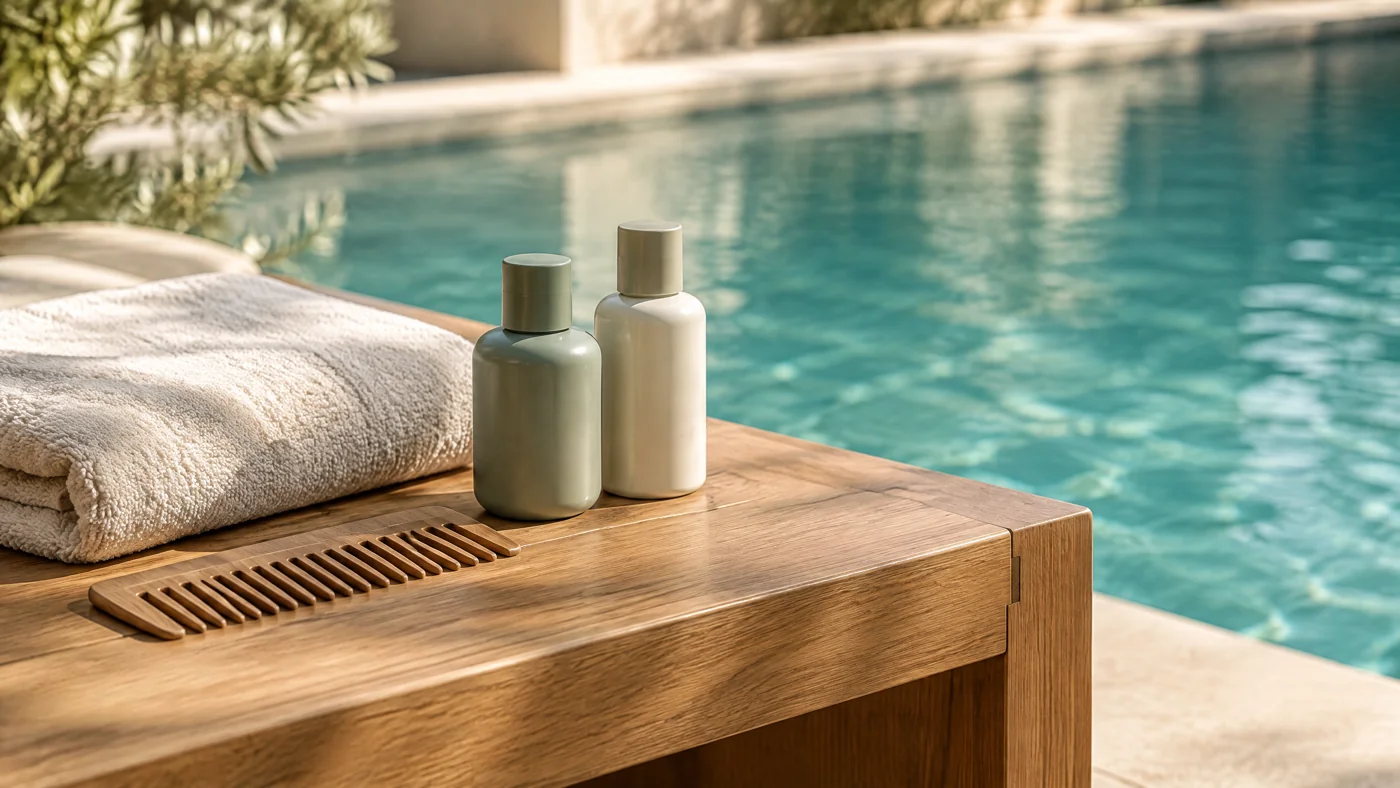
A compact wash kit is more useful than several styling products you will be too tired to use. Pack a clean towel, your suitable shampoo and conditioner if needed, plus a comb or brush appropriate to your hair. Keep them accessible rather than buried beneath wet clothing. Separate damp items from tomorrow's work things so that the morning does not begin with searching for a dry shirt or a misplaced comb.
Avoid adding extra layers of wax or spray before a confirmed water session just to preserve the day's shape. You are likely to reset that shape afterwards anyway. For longer tops, explain any pulling or tangling concerns to the instructor before water practice; let them confirm suitable equipment and hair arrangements on shore. A hairstyle is not a reason to modify a mask, improvise a strap or assume equipment will fit.
If you are still deciding how to learn to scuba dive in Hong Kong, settle the programme and equipment questions before buying activity-specific hair accessories. Explain your experience and ask what is supplied and what personal items are required. Then pack around the answer. This avoids spending on a cap or covering that may not suit the activity, while keeping your ordinary wash kit useful for other swimming evenings.
Choose familiar products rather than making the lesson evening a trial of several new formulas. The useful test is logistical: can you reach the containers easily, rinse as directed and put everything away without leaking into your bag? Pack only what your actual hair routine needs. That keeps washing practical when you have limited space, without suggesting that a smaller kit means skipping appropriate care.
- A clean towel for pressing out water without vigorous rubbing.
- Suitable shampoo and, where needed, conditioner in securely closed containers.
- A familiar detangling tool suited to your hair texture.
- A separate bag for wet clothes and the used towel.
- Confirmation of washing access and any venue rules on personal products.
03
3. Rinse first, then wash according to your scalp and hair
After a pool session, use the available fresh-water rinse rather than treating styling product as a substitute for washing. The American Academy of Dermatology identifies pool chemicals as a potential source of hair damage and recommends rinsing after swimming, with suitable shampoo and conditioner as appropriate.[1] If the confirmed activity involves sea water instead, plan fresh-water access afterwards too. Do not assume every meeting point includes a usable shower.
When shampoo is appropriate, focus the gentle washing on the scalp rather than scrubbing the whole length into a tangled pile. The AAD advises massaging shampoo into the scalp and letting it flow through the lengths when rinsing.[2] Choose a product suited to your hair and follow its directions. An oily scalp and dry, lightened ends do not necessarily need identical treatment; avoid repeatedly rewashing the lengths just because the roots feel different.
Conditioner can help your routine where it suits your hair, but more is not automatically better. Use it according to the label and your hairdresser's guidance, particularly if a fine fringe becomes weighed down easily. Keep cosmetic use within product and venue rules. Neither a natural ingredient list nor a biodegradable claim guarantees suitability in sea or pool water. Persistent scalp irritation needs appropriate clinical advice, not a stronger washing routine or an improvised treatment.
A useful evening wash cleans what needs cleaning without turning every strand into a scrubbing job.
04
4. Dry gently without chasing a bedtime deadline
Press the towel around wet hair to remove excess water instead of rubbing it back and forth. The AAD recommends gentle towel handling and lower heat to reduce avoidable damage.[2] This is particularly relevant when you are tired and tempted to scrub the fringe dry quickly. Use the towel as an absorbent tool, not a styling tool, and avoid wrapping or twisting hair so tightly that the roots feel pulled.
Detangling should suit the texture rather than follow one rigid rule. The AAD distinguishes straight hair, which can be allowed to dry somewhat before gentle combing, from textured or tightly curled hair, which may be combed while damp.[2] Work gently through manageable portions rather than forcing a tool through resistance. For a man's permed top, ask the hairdresser who knows the service and condition which approach best preserves a manageable shape.
If you use a hairdryer, choose a comfortable low-heat setting and keep the airflow moving rather than holding intense heat against one spot. Concentrate on the areas that stay damp longest, including a dense top or the roots beneath a fringe. There is no universal number of minutes you must finish drying before sleep. This routine is about handling and comfort; it does not claim that sleeping with wet hair causes a particular disease.
The aim is comfortably manageable hair, not maximum heat and a perfect finish before bed.
05
5. Adjust the finish for a fringe, curls or treated lengths
A short straight cut may need little beyond gentle washing and drying, while a longer fringe needs a deliberate choice about direction. Set a comfortable parting with light handling rather than pulling the front tightly into place. Leave the strong hold for morning if it is needed then. Building a rigid style at night creates another layer to loosen before you can reshape the hair for work.
For curls or a perm, aim to preserve an easy shape instead of brushing everything flat and trying to rebuild it later. Use the texture-specific detangling advice from your stylist, then minimise repeated handling as the hair dries. If the roots are damp but the ends are already becoming dry, do not keep applying heat to the whole head indiscriminately. A low-effort finish should reflect the differences within your haircut.
Coloured, lightened or recently chemically treated hair deserves a separate planning conversation. Ask your hairdresser about the products used, current condition and aftercare before agreeing to a water-session date. There is no fixed waiting period that guarantees a perm or colour service is ready for swimming. Pool chemicals and sunlight can affect hair condition,[1] but your stylist's assessment is not activity clearance; the instructor and, where necessary, clinician handle that different question.
| Morning observation | Modest styling response | Avoid |
|---|---|---|
| Clean fringe bent out of shape | Lightly dampen the affected area and reset its direction with gentle, low-heat drying. | Another full shampoo purely to change one bend. |
| Curls look flattened but the scalp feels comfortable | Use your stylist's texture-specific refresh approach with minimal handling. | Forceful brushing followed by heavy product to rebuild everything. |
| Roots feel oily or product-coated | Decide whether a suitable scalp wash is needed before adding hold. | Layering more wax over residue without checking what needs cleaning. |
| Treated ends feel rough or tangled | Handle gently and review the wash products and aftercare with your hairdresser. | Turning up the dryer heat or pulling through knots. |
06
6. Protect wash time by separating study from water sessions
Consider a hypothetical office worker who can finish a lesson but cannot comfortably fit the journey home, washing and drying into the same evening. The solution is not necessarily faster heat or skipping hair care. Ask whether knowledge work can be organised separately from practical sessions. A theory evening at home leaves the usual grooming routine intact, while a confirmed water evening can carry the extra washing time it actually requires.
DiveHarbour's PADI eLearning Open Water Hong Kong page is a useful next read for that distinction. It describes digital knowledge development linked to required practical training, not a complete qualification obtained online. Ask which study arrangements and supervised sessions are currently offered. From a hair-planning perspective, the advantage is clarity about wet and dry evenings, not a promise of fewer requirements or an accelerated course.
Build the real transition into your enquiry: travel from work, changing, the session, washing access and the journey home. Request current arrangements and booking terms in writing before paying. DiveHarbour currently states that all paid fees are non-refundable, with make-up sessions only subject to written conditions. A busy work diary does not create a refund or a guaranteed replacement date. Choose a workable pattern rather than relying on cancellation to rescue an unrealistic wash schedule.

07
7. Reset for work, then improve the next evening
In the morning, look at the hair before automatically washing it again. Is the problem an oily scalp, leftover product, a bent fringe or simply a flattened patch? Those are different grooming tasks. If the hair is clean and only the front needs reshaping, a targeted refresh may be enough. Use a small amount of your familiar styling product only after deciding what needs adjusting, rather than coating the whole head by habit.
Keep the workday finish realistic for your cut. A soft side direction or natural texture may be easier to refresh than a highly sculpted shape after a water evening. If you repeatedly spend the morning fighting the same section, bring that specific difficulty to Canvas Texture. A conversation about fringe length, weight distribution and your own hair's behaviour is more useful than requesting a haircut that will supposedly remain unchanged through every activity.
Afterwards, note which part of the evening felt cumbersome: carrying too much, limited rinsing access, tangled lengths or an unnecessarily elaborate finish. Change that one practical detail before the next confirmed session. Do not turn ordinary grooming observations into claims about diving readiness or scalp treatment. A useful routine makes your existing hair easier to live with across work and water activities, while leaving the activity decisions and any persistent health concerns with the right professionals.
You can also prepare the morning without styling your hair at night. Leave the everyday comb and usual finishing product where you normally get ready, rather than keeping both inside the activity bag. This small organisational choice separates two jobs: the evening wash makes the hair manageable, and the morning finish responds to its current shape. Neither needs to become an elaborate second salon routine.
Sources and useful reading
Continue with hair and grooming
For a separate men’s own-hair discussion: Deep Hair Treatment HK
Continue with a related hair-and-water planning guide: First Scuba Lessons: Short Hair, Pool Caps and the Wash Afterwards
Read our hair styling background: Vit So and the Canvas Texture studio
Make your own hair easier to manage between water evenings and work
Ask Canvas Texture about men's own-hair styling, fringe shape, texture and a manageable daily routine. Bring your usual wash habits and the grooming difficulty you want to solve. DiveHarbour-related activity, course and equipment questions belong with DiveHarbour, not the salon.
Canvas Texture · WhatsAppFrequently asked questions
Does an evening scuba course mean a night dive?
No. It may involve theory or supervised pool practice, with other training arranged separately. Ask DiveHarbour to confirm the actual session type. Night diving is a different activity with its own prerequisites and suitability questions.
Do I need to shampoo twice after an evening pool session?
Not as a blanket rule. Rinse afterwards and use suitable shampoo according to your scalp, hair and product directions. Repeatedly scrubbing the lengths is not a shortcut to better care. Persistent irritation should be discussed with an appropriate clinician.
How long before bed must my hair be completely dry?
This guide does not prescribe a fixed interval. Remove excess water gently and use comfortable low-heat drying where needed. The advice concerns hair handling and comfort, not a claim that wet hair at bedtime causes a particular illness.
Can I use oil or a leave-in product before entering the water?
Do not assume a cosmetic is suitable for sea or pool use. Check the product directions and venue rules, and discuss equipment-related concerns with the instructor. Never apply hair products, oil or grease to diving equipment as a homemade solution.
Can Canvas Texture advise when to swim after a perm?
Canvas Texture can discuss your own hair's condition and chemical-service aftercare. There is no universal waiting period that guarantees a result. Activity eligibility and equipment belong with the instructor, while health concerns belong with an appropriate clinician.
Related journal articles
First Scuba Lessons: Keep Your Hair, Plan the Pool-Day Wash
Keep the haircut you want to live with; prepare for the wet-hair version of it.

Trying Scuba in Hong Kong: Prepare Your Fringe Before a Mask Fitting
Prepare the fringe you actually have, not the hairstyle you hope will stay unchanged in water.
Choosing a Hong Kong Diving School: A Men's Hair Planning Guide
Choose the learning environment with the instructor; choose an achievable hair routine with your stylist.

